
 Table of Content
You're already spending on traffic. Ads, SEO, social, email. But if the people landing on your site aren't buying, signing up, or filling out that form - the traffic means almost nothing.
A lot of marketers get it, but let’s be honest - they prefer to launch a new campaign than dig into why the current one’s not delivering. It’s easier to move on than to face the tough questions regarding poor outcomes. CRO tools force that question, and a good one gives you the data to actually answer it.
This isn’t one of those massive lists packed with anything that sounds like “optimization.” These are 11 platforms you should pay attention to in 2026 - each one stands out and brings something genuinely different.
What Are CRO Tools?
A CRO tool is software that helps you understand why visitors aren't converting - and then helps you fix it. That sounds simple. In practice, it covers a lot of ground.
Some tools show you visual heatmaps showing exactly where people click. Others run A/B tests, letting you compare two page versions. You’ll find tools that record visitor sessions, track form drop-offs, and now, more platforms lean on AI to predict what visitors will do next-before they even do it.
The core job is the same across all of them: close the gap between the traffic you're getting and the results you want.
How CRO Tools Work
Most platforms combine several techniques into one interface. Here’s what these techniques are for:
User behavior tracking: Behavior tells you what visitors actually do on your site - what pages they visit, how long they stick around, where they bail out. It’s the foundation all the other strategies rely on.
Heatmaps: Visualize this behavior visually. Click heatmaps to show where people tap or click. Scroll maps show how far down a page. Move maps track cursor movement. Together, they tell you what's drawing attention and what's being ignored.
Session recordings: Let’s you watch individual visits like a video replay. Seeing someone hover over a button for ten seconds and then leave tells you something a bounce rate never could.
A/B testing is a way to see which version of a page works better. You show versions to different people and see which one gets better results. This is a way to find out what people like. You need to have a lot of visitors for this to work.
When you learn about CRO you usually start with the basics. After that A/B testing is a step because it shows you what really works to get more conversions. You do not have to guess what will work. A/B testing helps you figure out what actually improves conversions. If you want to know more about the tools you can use for A/B testing you should read our guide called Best A/B Testing Tools to Get Conversions. It is a helpful guide that goes into a lot of detail about A/B testing platforms.
Funnel analysis maps the route from entry to conversion and pinpoints exactly where users drop off. So if 60% abandon their carts at checkout, you know that’s where the problem is-not the homepage.
Personalization is when you show things to different people. You show them things that're just for them, based on who they are or where they came from or what they did on your site.
Surveys and feedback tools: It goes straight to the source and collects direct input from visitors - popups when someone’s about to leave, surveys after a purchase, quick polls on the page. Honestly, sometimes the fastest way to figure out why something isn’t working is just to ask.
Benefits of Using CRO Software
Better conversion rates on existing traffic. More leads, more signups, more sales - without spending more on acquisition. This is the obvious one.
Understanding friction points. CRO tools show you where your site frustrates people. A confusing navigation, a slow-loading form, a CTA that nobody sees - these are problems you can't fix without seeing them.
Decisions grounded in data. Opinions about what looks good or what users probably want are fine starting points. Data from actual users is better.
Lower customer acquisition costs. If you get more people to do what you want you will not have to spend much money to get new customers. If you get as many people to do what you want you will have to spend half as much money to get new customers.
Targeted, personalized experiences. It's better than pages that are one-size-fits-all. Consistently showing a returning user something different than a first-time visitor, or adjusting content based on device, location, or source.
Top CRO Tools & Software in 2026
1. Entail
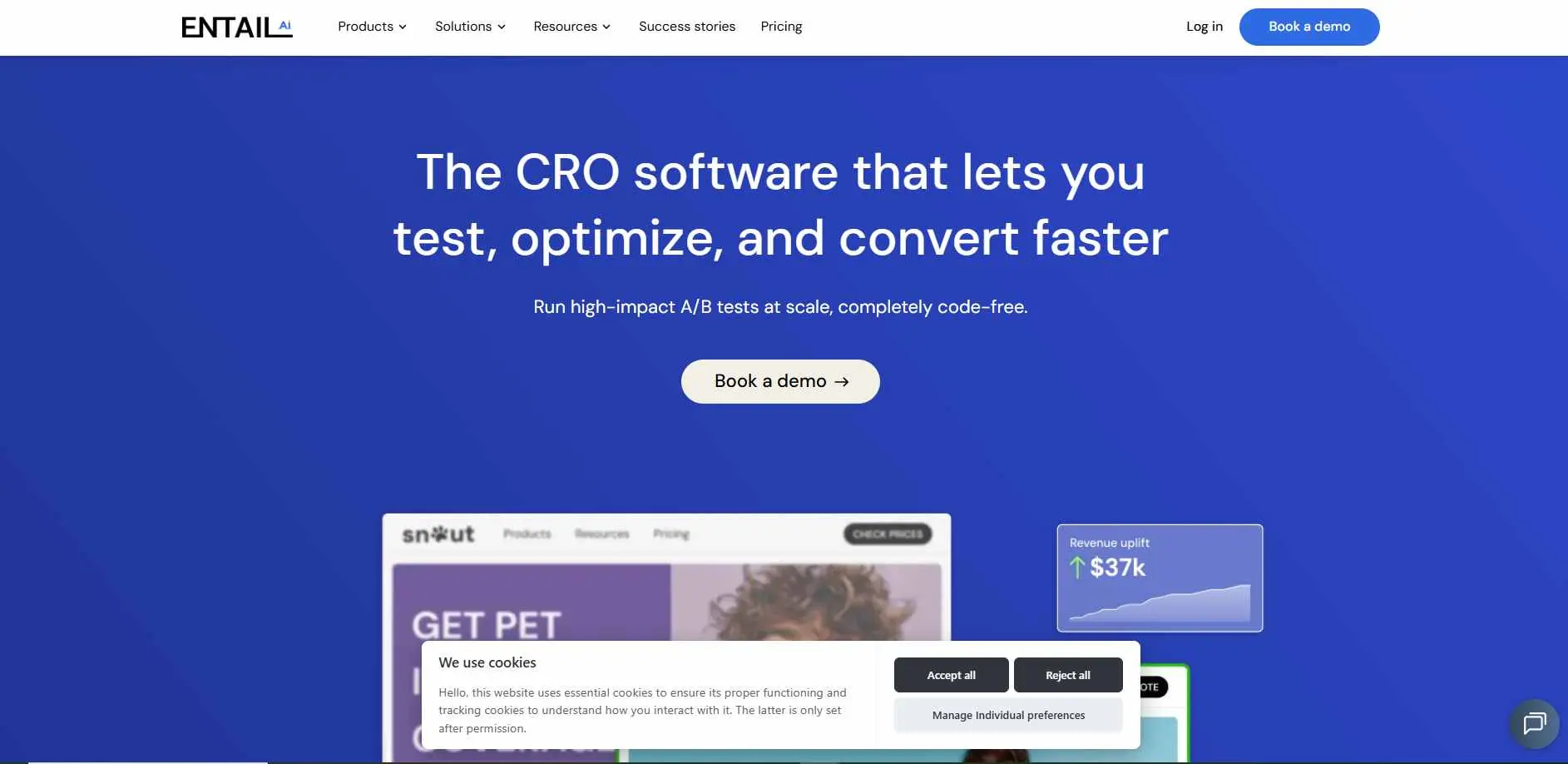
Most conversion rate optimization platforms think of every page as its little world. Entail does things differently. It is made for content pages like blog posts, guides and resource articles. It automatically makes special calls to action and conversion tools that are related to what each part of the page's about.
Best for: Content-heavy sites looking to convert organic traffic.
Key Features:
- Site-wide A/B testing that deploys in under 2 minutes, no code required
- Auto-generates CTAs and conversion widgets based on each page's intent and context
- Tracks performance at both the widget level and the full page level - including the dollar value each page contributes to revenue
- Tests load before the page renders, so there's zero speed impact
- ROI guarantee within 3 months or your money back
Key features include automated CTA generation at the section level, real-time intent detection, and the ability to run this across hundreds of content pages simultaneously. For teams publishing at scale - whether that's an SEO content operation or a large media site - this solves a genuine problem.
2. Lyssna
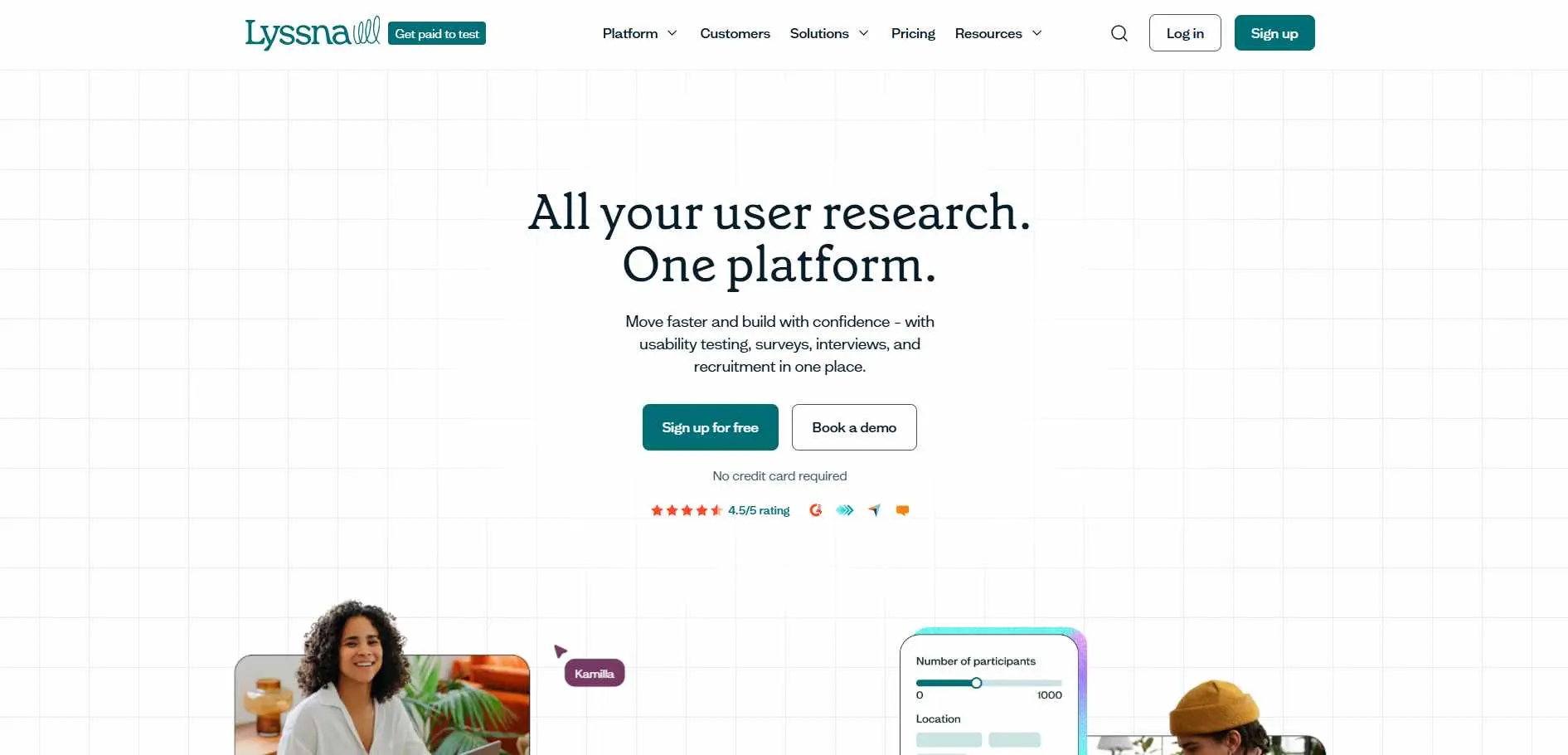
Lyssna (previously UsabilityHub) sits slightly upstream from most tools on this list. Rather than optimizing a live page, it's used to test ideas, wireframes, and prototypes with real participants before anything goes into production.
Its test types include first-click tests, five-second tests, navigation tests, and prototype testing. The research panel covers over 35 demographic targeting filters, so you can reach specific audience segments rather than testing with whoever happens to be online.
Key Features:
- Prototype and design testing with real users
- First-click testing to validate navigation and layout decisions
- Participant recruitment panel if you don't have your own research pool
- Survey tools and card sorting for information architecture decisions
Best for: UX and product teams that need real user feedback before building or launching.
3. Mouseflow
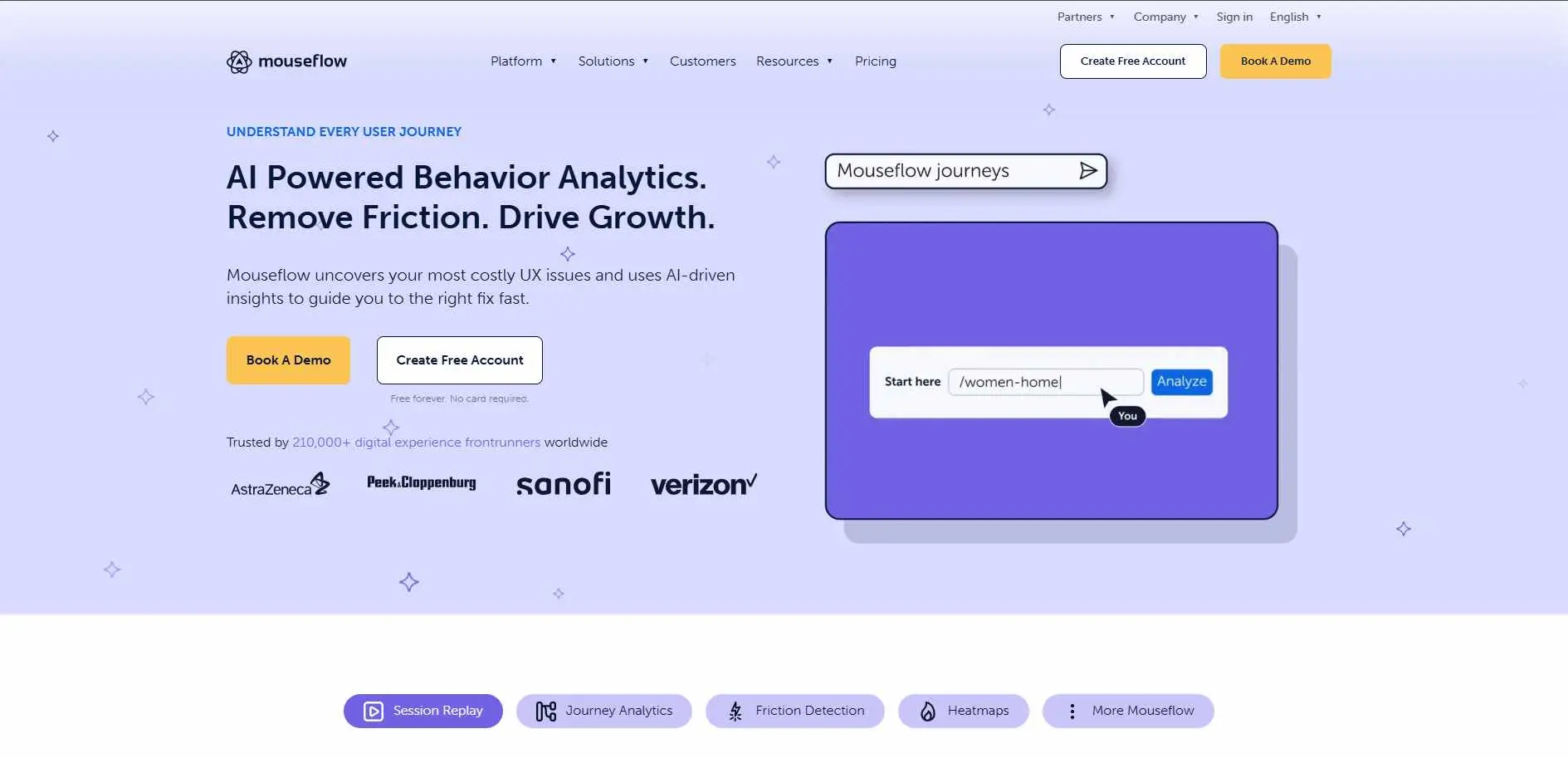
Mouseflow does behavioral analytics well. It offers six types of heatmaps (click, move, scroll, attention, geographic, live), non-sampled session replays, and conversion funnel tracking. More than 165,000 businesses use it, which isn't a trivial number for a tool in this space.
Where Mouseflow genuinely stands out is form analytics. If people are starting to fill out a form on your website but then stopping, Mouseflow can tell you which part of the form they are getting stuck on and how long they spend on it before they give up. This is really useful for any website that has a checkout process, a sign-up form or a long form that people have to fill out to get something.
Best for: UX professionals and product teams tracking where visitors get stuck.
Key Features:
- Six automatic heatmap types per page
- Session recordings with filtering by device, behavior, or segment
- Conversion funnels with drop-off analysis at each step
- Form analytics that show which fields cause abandonment
- 40+ integrations including HubSpot, Optimizely, Kameleoon, and WordPress
4. Personizely
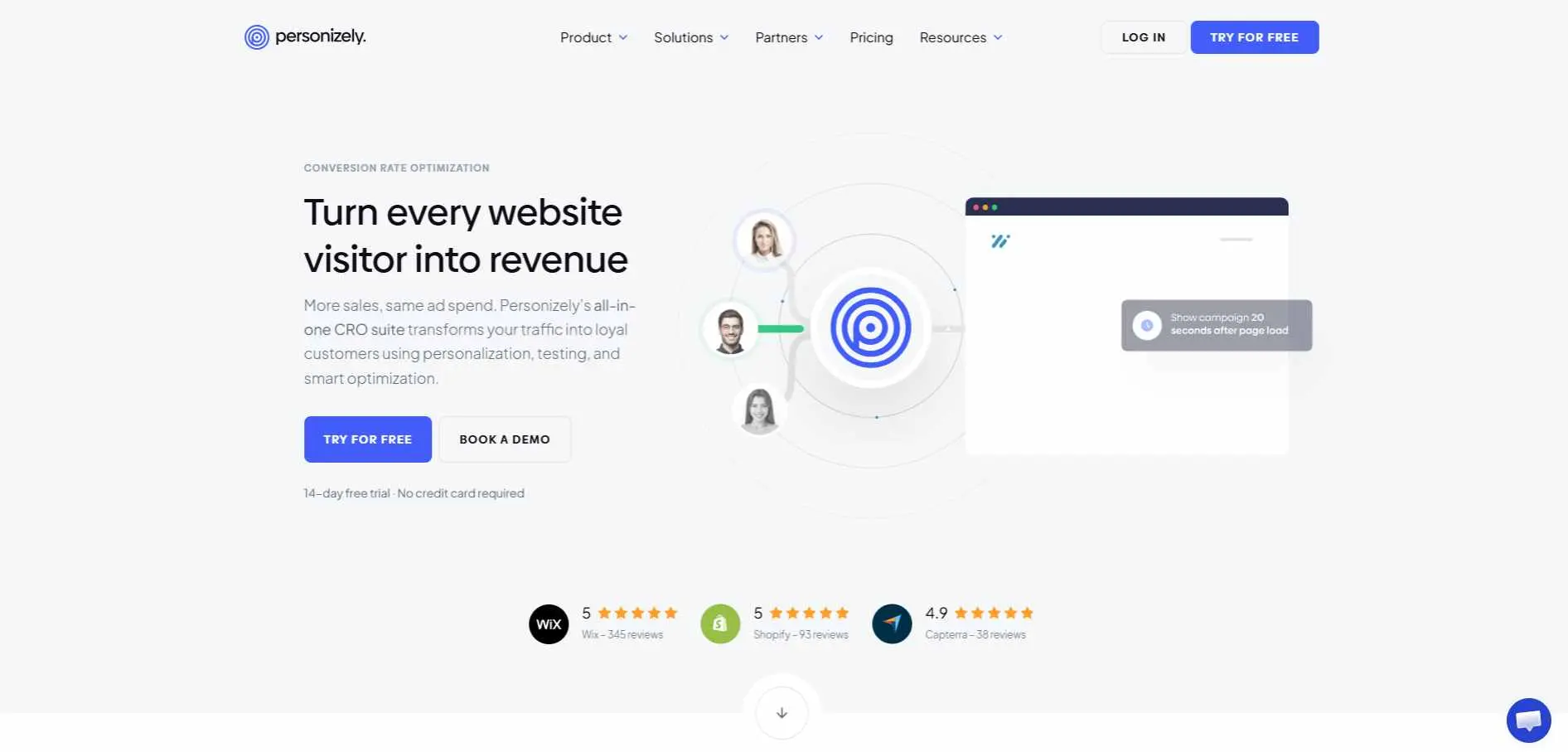
Personizely focuses on acting on behavioral data rather than just collecting it. Its toolset covers A/B testing, website personalization, popups, upsell widgets, and cart abandonment triggers - a set of features that's particularly useful for online stores.
The price-based A/B testing and upsell capabilities are included in standard plans, features that competitors often put behind higher tiers. The segmentation options are reasonably deep for a mid-market tool.
Key Features:
- Dynamic content blocks that change based on user behavior and segments
- AI-powered product recommendations
- Popup and overlay tools with behavioral triggers
- Integrations with Shopify and major e-commerce platforms
- Best for: E-commerce brands running A/B tests and personalization campaigns.
5. Crazy Egg
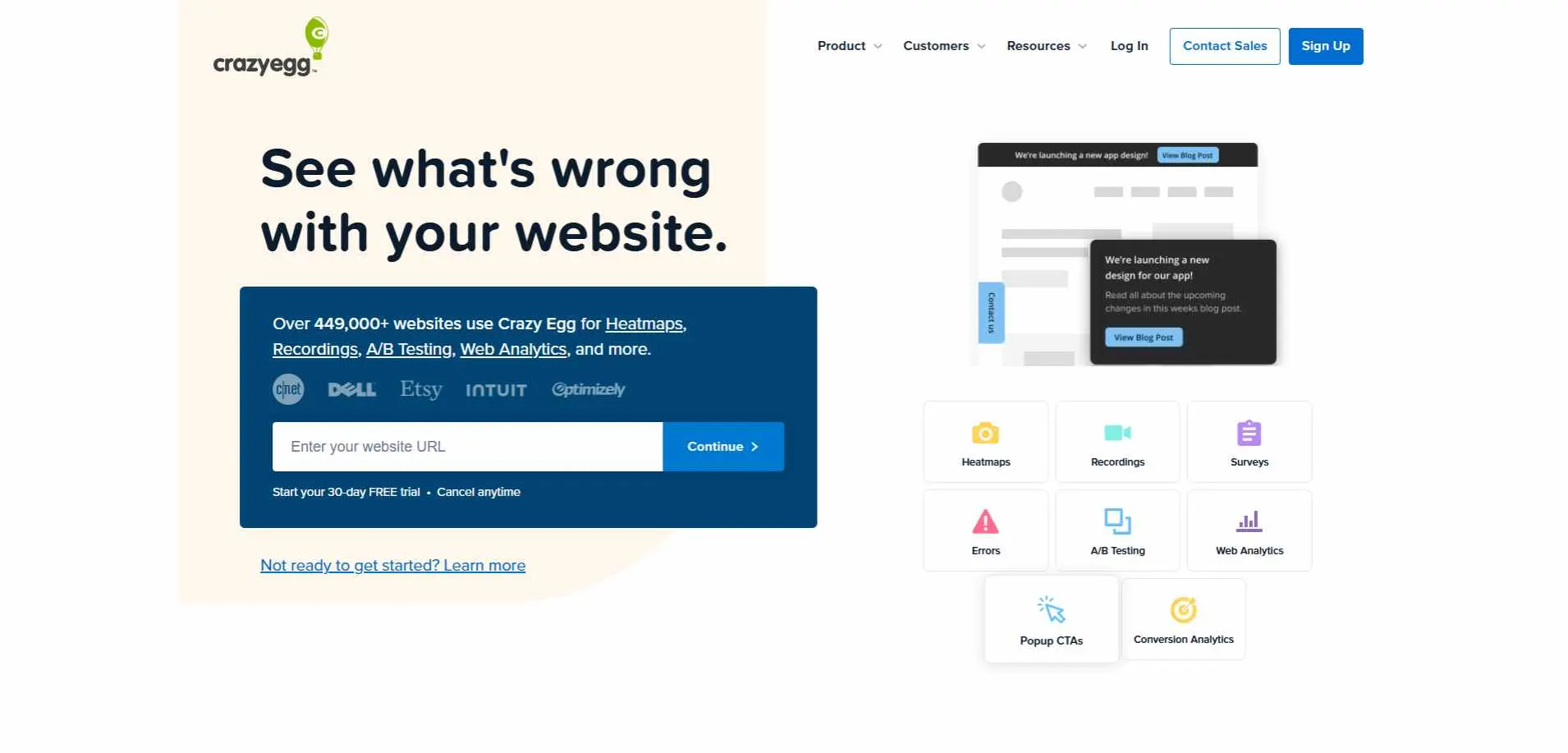
Crazy Egg is the third most-used site optimization tool on the internet. That breadth of adoption has something to do with its pricing - plans start at $29/month - and something to do with how much it packs in at those price points. It has, A/B testing, traffic analysis, surveys, and error tracking are all included.
Best for: Small to mid-sized businesses wanting heatmaps, recordings, and basic A/B testing in one affordable tool.
Key Features:
- Click, scroll, and confetti heatmaps
- Session recordings
- Simple A/B testing with a visual editor
- Accessible pricing for teams without a dedicated CRO budget
6. Kameleoon
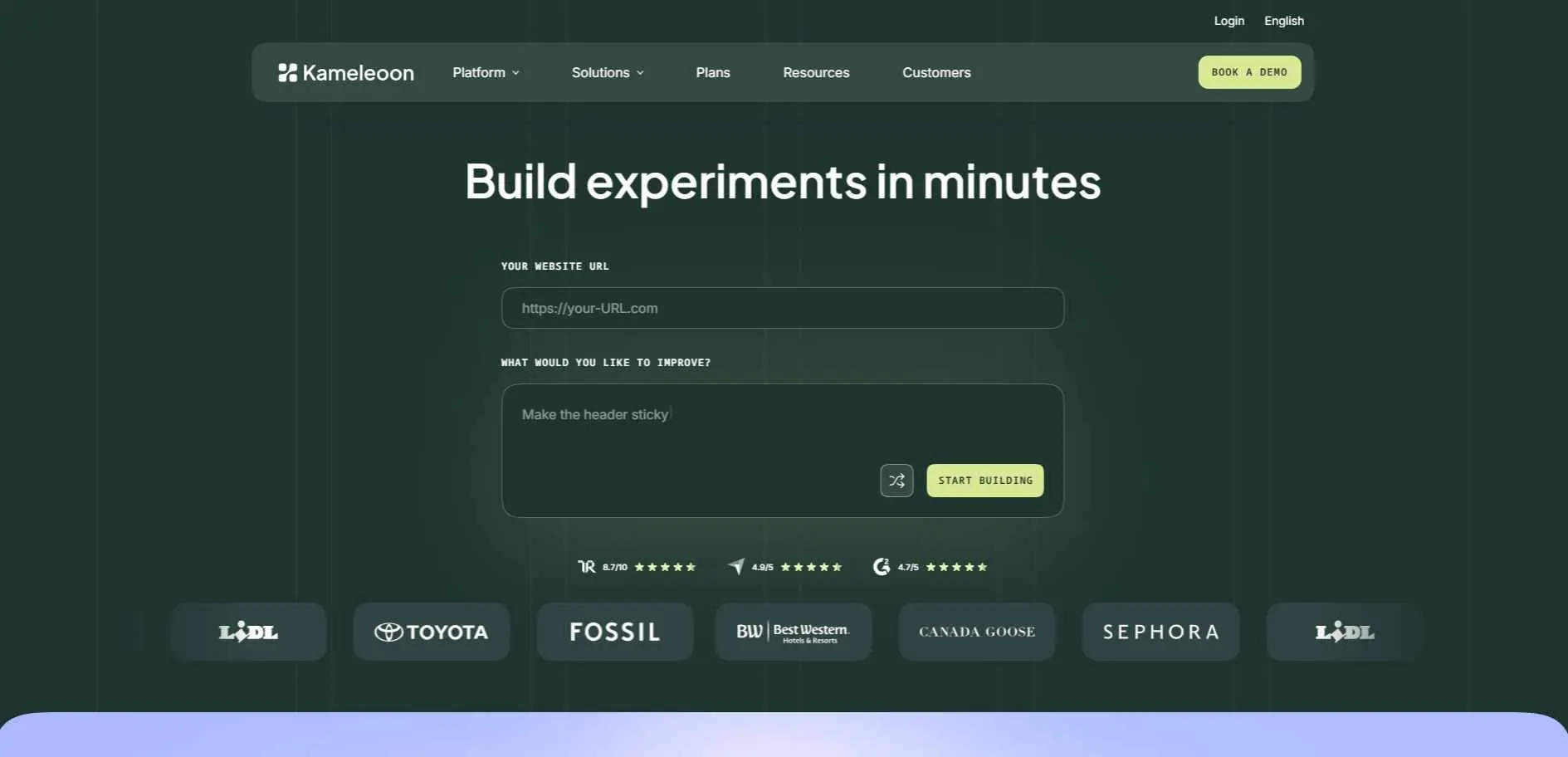
Kameleoon has evolved from a standard A/B testing tool into an AI-led experimentation platform. Its newest addition, Kameleoon Agent AI, analyzes your pages in real time and generates experiment recommendations based on how users are actually behaving - not based on generic best practices.
It covers web experimentation, feature flag management, and full-stack personalization. The Starter plan begins at $495/month, which puts it out of reach for most small businesses. Enterprise pricing is custom.
Best for: Enterprise teams running structured experimentation programs.
Key Features:
- A/B testing, multivariate testing, and server-side experiments
- Feature flagging for product and engineering teams
- Kameleoon Agent AI, which analyzes pages and recommends high-impact experiments based on user behavior
- Native HIPAA and GDPR compliance baked in
- Starter plans from $495/month
7. Unbounce
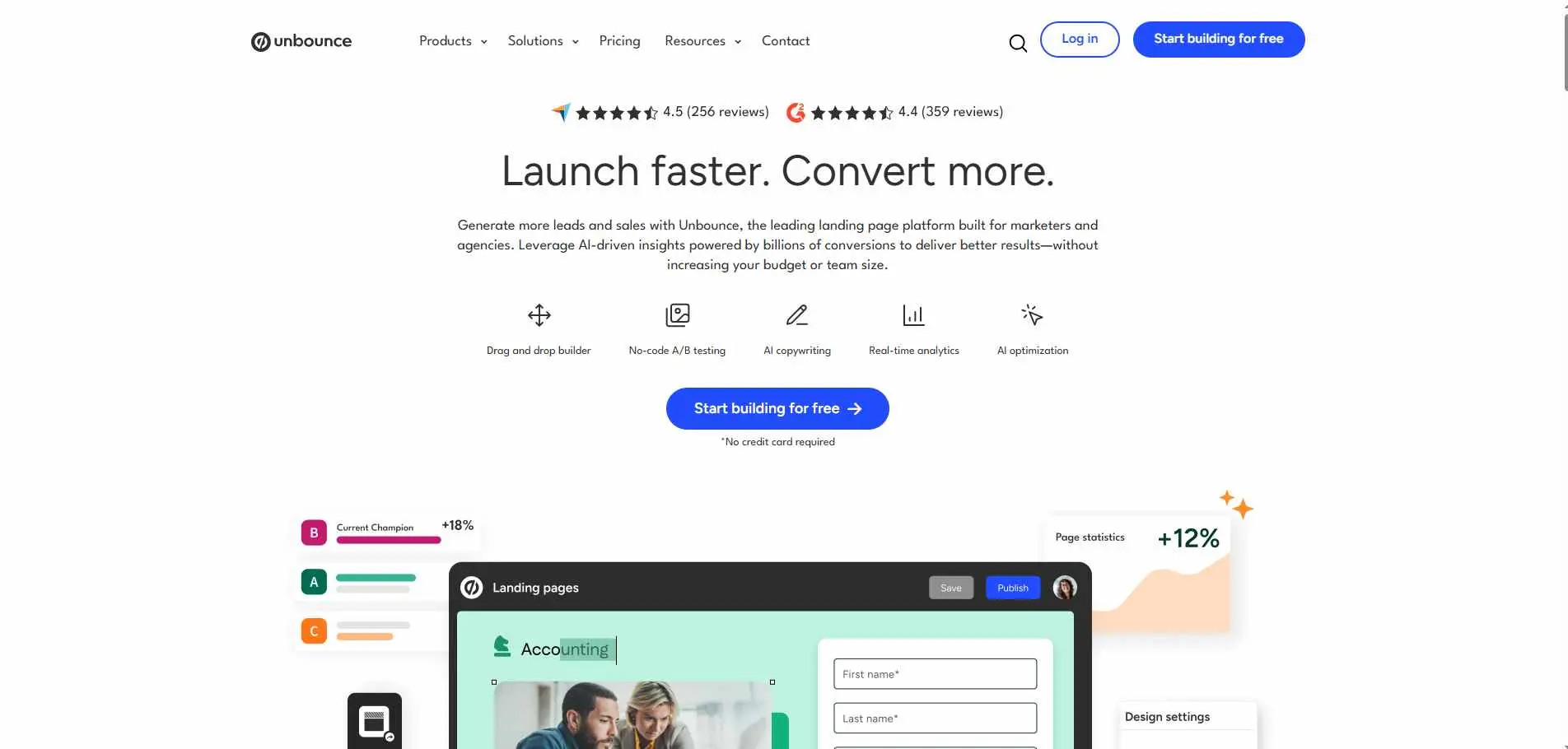
Unbounce is a tool to make landing pages. It is also a tool to help you get more people to do what you want. Unbounce has a feature called Smart Traffic. This feature uses computers to look at the people who visit your site and figure out which version of the page they will like best. It sends each person to the version that's most likely to work. This is better, than sending half of the people to one version and half to another.
Best for: Marketing teams running paid campaigns who need landing pages that convert.
Key Features:
- Drag-and-drop landing page builder with 100+ templates
- A/B testing and multivariate testing
- Smart Traffic - uses machine learning to route visitors to the page variant they're most likely to convert on
- Dynamic text replacement to match ad copy with landing page messaging
8. AB Tasty
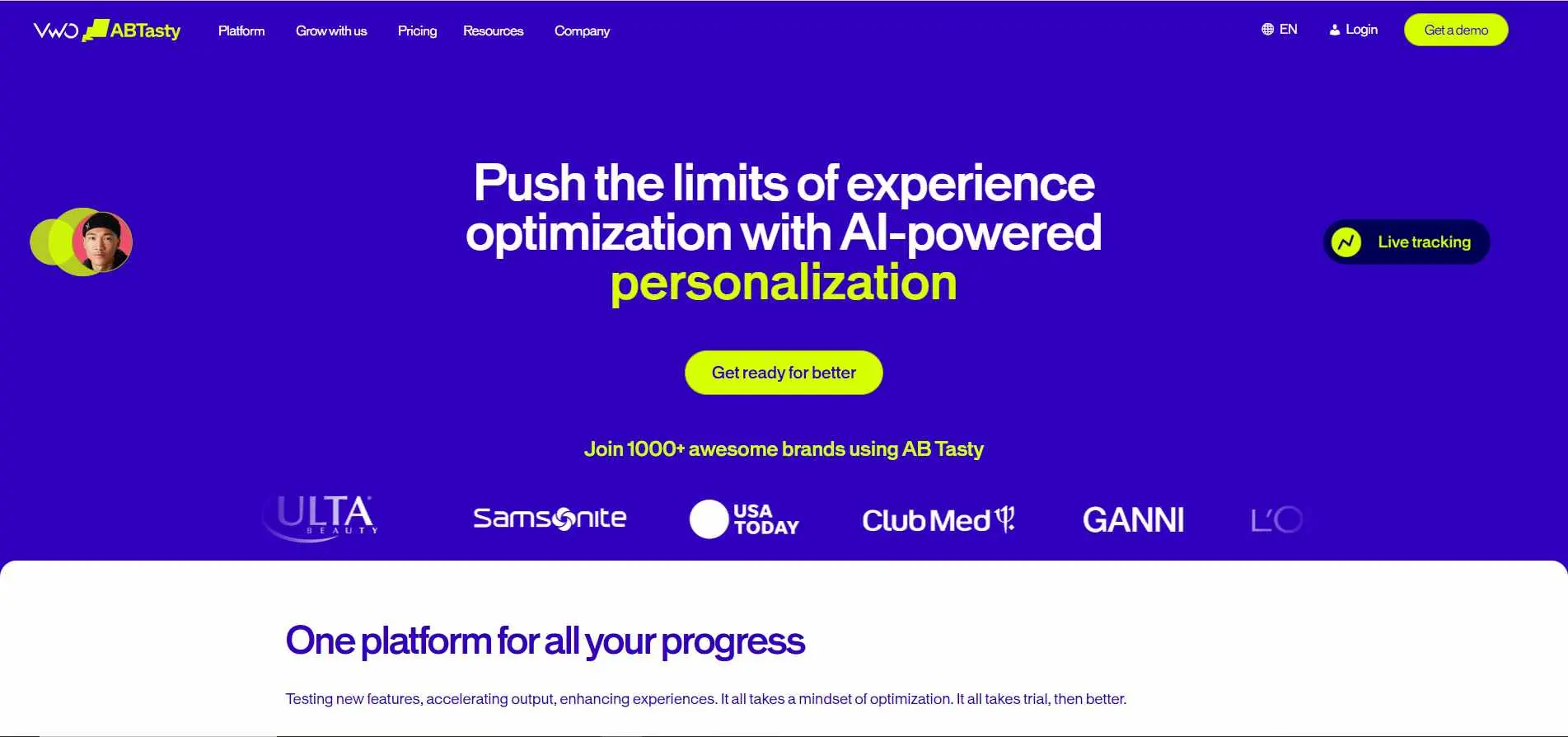
AB Tasty is a platform that helps you try out things and make your website more personal. It is not a simple tool for testing things. You can use it to try out versions of a page, test how different things work together, see how people move through your website and try out new features on your website and mobile app. AB Tasty also helps people who're not good with technology create and start tests without needing a developer to help them.
Best for: E-commerce and digital experience teams combining A/B testing with personalization.
Key Features:
- A/B testing, multivariate testing, and split URL testing
- AI-powered personalization engine
- Feature flags and progressive rollouts for product teams
- Audience segmentation and targeting tools
- Customer support that consistently gets flagged in reviews as a differentiator
9. Pathmonk
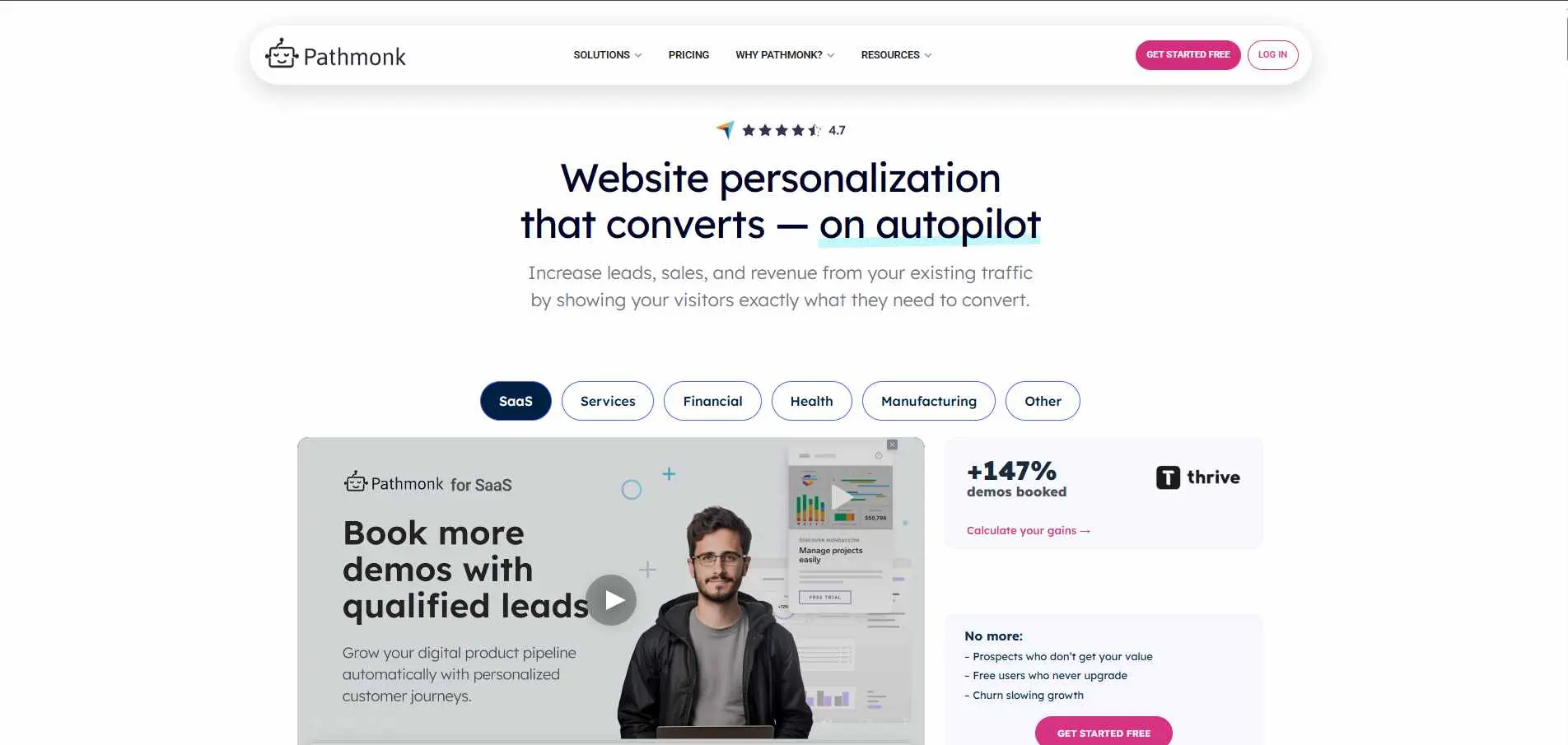
Pathmonk takes a fully automated approach. Rather than requiring you to configure segments, design variations, and write rules, it uses AI to detect visitor intent in real time and adapts the page experience automatically. No fixed targeting criteria. No manual rules to maintain.
Plus, it doesn’t use cookies-an important factor now that third-party tracking keeps getting shut down or blocked. The analytics break out into three types: what happened, what’s coming next, and what moves to make.
Best for: Growth teams wanting cookieless AI personalization without manual setup.
Key Features:
- Real-time behavioral analysis and content adaptation
- Intent-based personalization without manual segment building
- Automated conversion optimization across the buyer journey
- Privacy-first approach with no reliance on third-party cookies
10. Cometly
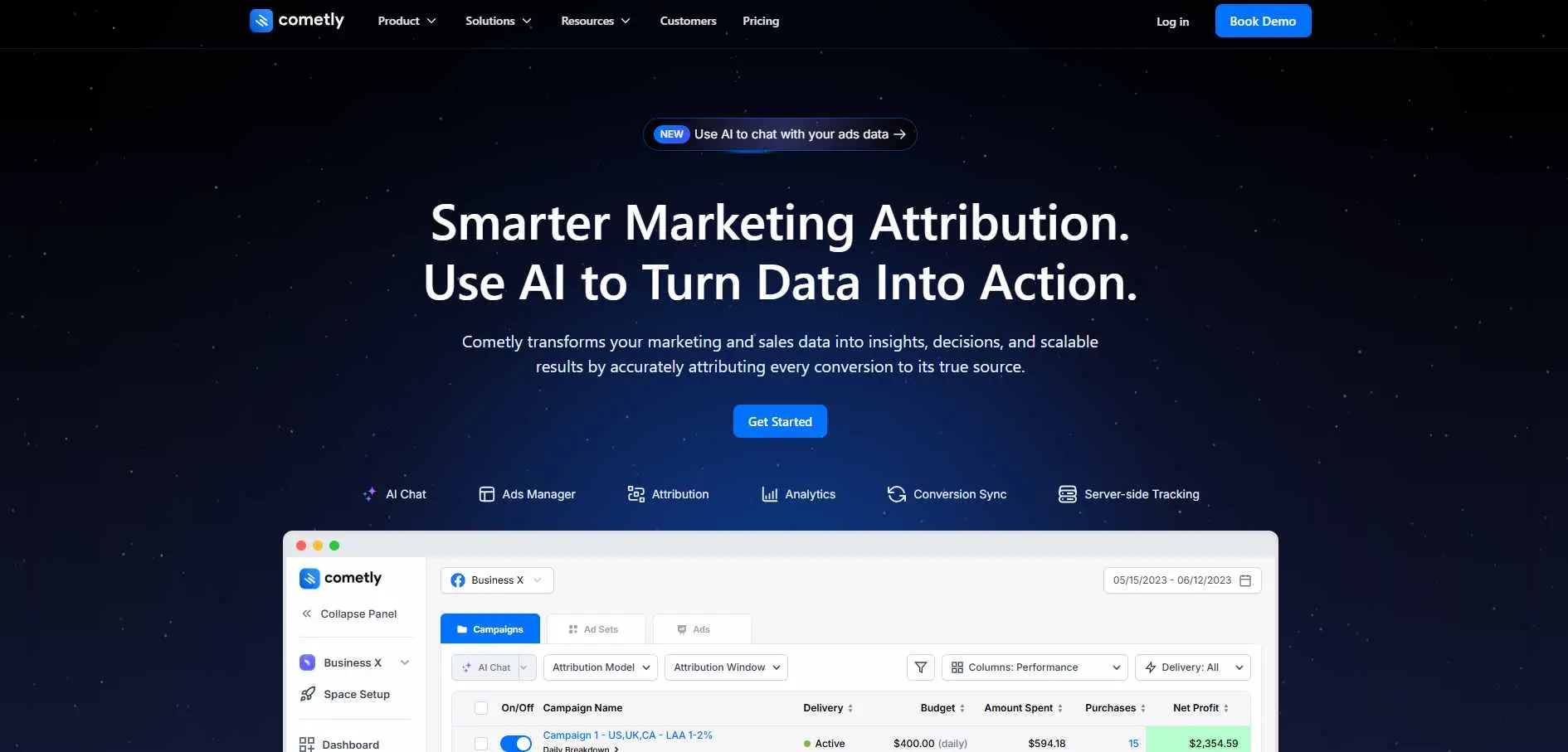
Cometly isn't a heatmap or A/B testing tool. It's an AI-powered marketing attribution platform, and it belongs on this list because conversion rate problems often aren't page problems - they're attribution problems. When you don't know which ads are driving actual revenue, you can't invest correctly.
The platform uses server-side tracking and its own Comet Pixel to capture conversion data more accurately than native ad platforms, particularly in the wake of iOS trackingchanges.
Best for: Performance marketers who need accurate ad attribution across multiple channels.
Key Features:
- Server-side tracking that catches conversions when the browser fails
- A dashboard that works across platforms like Meta, Google, TikTok, LinkedIn and more
- AI-powered recommendations for scaling high-performing campaigns
- Full customer journey view from ad click to closed revenue
11. Omniconvert
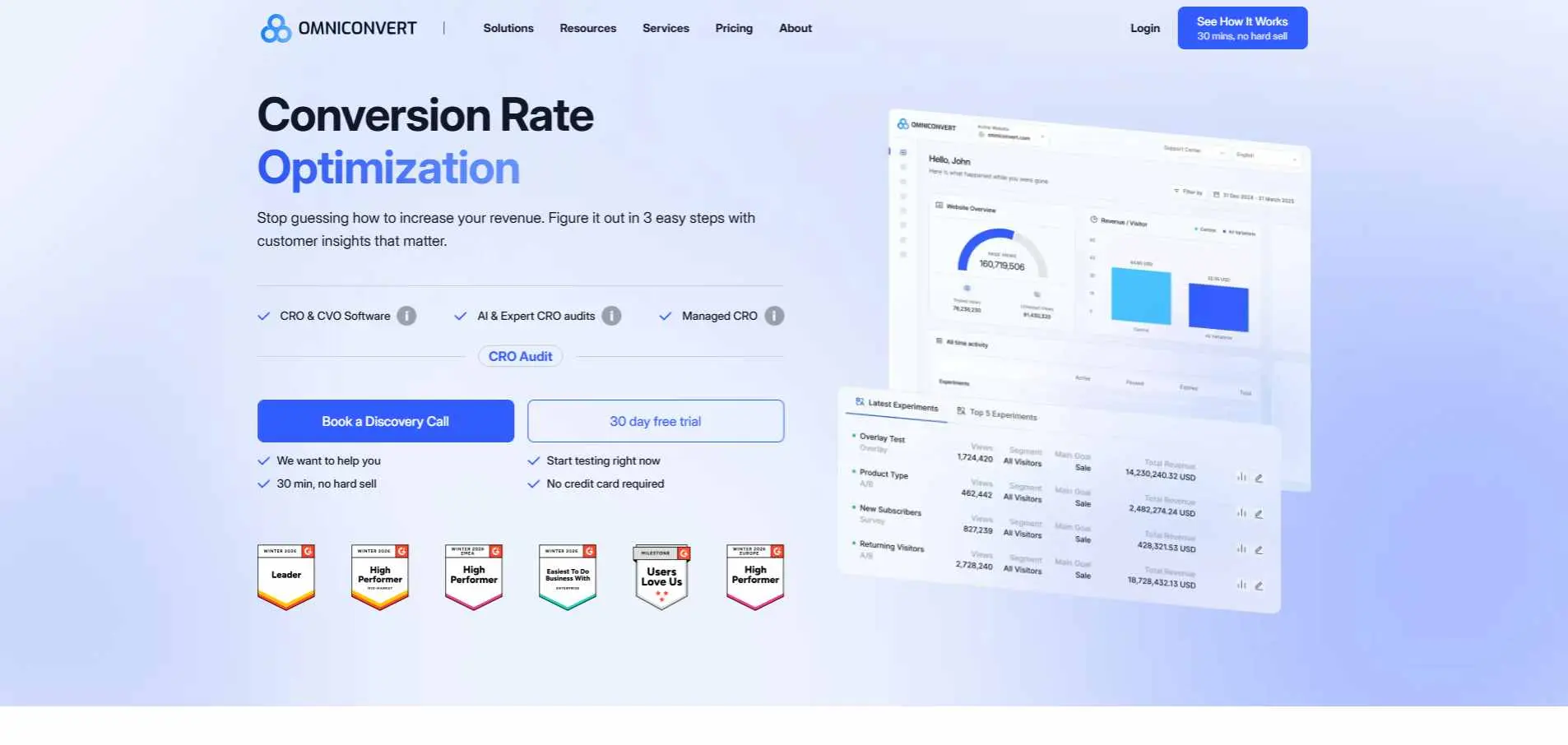
Omniconvert isn’t just about A/B testing. It integrates personalization, customer surveys, analytics, and puts a clear focus on e-commerce brands. Where it distinguishes itself is segmentation depth - over 40 criteria including traffic source, user behavior, geolocation, browser, and even current weather conditions.
Best for: E-commerce businesses running complex A/B tests with deep audience segmentation.
Key Features:
- A/B testing, on-site surveys, and personalization in one platform
- REVEAL feature - automated RFM (Recency, Frequency, Monetary) segmentation to identify your most valuable customers
- Deep Shopify, GA4, and GTM integrations
- Free plan for up to 50K tested users; paid plans from $350/month
- Extensive audience targeting including UTM, device, geo, and behavioral segments
How to Choose the Right CRO Software
Start with your goal. A SaaS company trying to increase free trial signups needs something different from an e-commerce brand reducing cart abandonment. The tools that work for lead generation campaigns aren't always the tools that work for product-led growth.
Factor in your team. A solo marketer doesn't need an enterprise experimentation platform with a six-figure price tag. Crazy Egg or Pathmonk will often do more for less. Larger teams with dedicated CRO specialists and dev resources will get more from Kameleoon or AB Tasty's feature depth.
Check the technical requirements. Some tools need developer involvement for installation and custom event tracking. Others are genuinely no-code. Unbounce and Pathmonk lean toward no-code. Kameleoon and Omniconvert give more control to technical teams.
Understand the pricing model. Some platforms charge by monthly visitors. Others charge by sessions, pageviews, seats, or ad spend. Run the numbers against your actual traffic before committing.
Use the free trials. Almost every tool on this list offers one. A/B testing tools are easy to evaluate on paper and occasionally frustrating to use in practice. Spend two weeks with the actual product before you pay for a year.
When we think about it the best Conversion Rate Optimization tools are the ones that help with the problem we are having. If the issue is with the website page, a tool that only does one thing can work better than a big tool that does lots of things. So our guide on Best Landing Page Builders to Increase Conversions in 2026 is really useful to read with this article because it explains how people can make, test and improve landing pages that get conversions. The Conversion Rate Optimization tools and the landing page builders are very helpful, for this.
Conclusion
CRO in 2026 is no longer just about running split tests on button colors. The better tools combine behavioral tracking, personalization, predictive analytics, and AI that acts on data without waiting for a human to configure it.
But the tool is secondary to knowing where your conversion problem actually lives. If it's on content pages, Entail. If it's attribution, Cometly. If it's form friction, Mouseflow. If it's landing pages for paid campaigns, Unbounce. Picking the most popular tool on a list and hoping it fixes something undiagnosed is how CRO budgets disappear.
Figure out the bottleneck first. Then pick the tool that addresses it.