 Table of Content
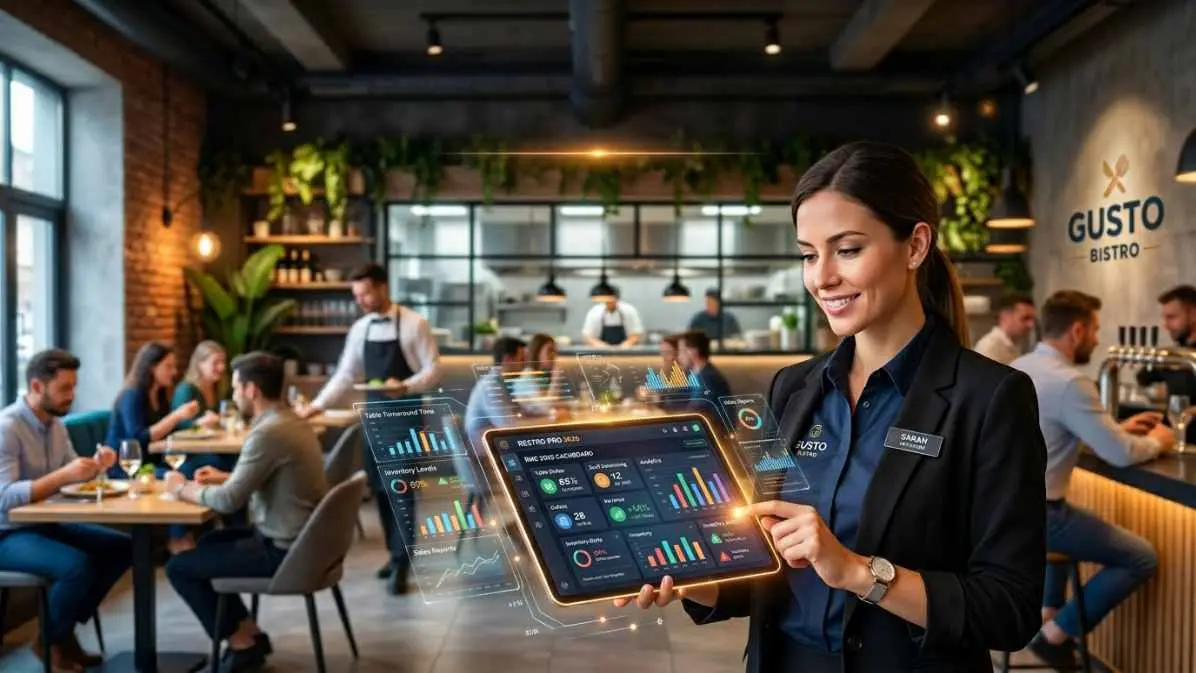
Running a restaurant in 2026 means juggling online orders. third-party delivery, guest loyalty, real-time inventory, and a team that turns over constantly. You also have to think about guest loyalty and real-time inventory.
On top of that you have to manage a team that is always changing. Most people who run restaurants are still using spreadsheets and group chats and different apps to try to keep everything working.
The right restaurant management software pulls those pieces together. Not perfectly, and not without tradeoffs - but well enough that operators who use it spend less time firefighting and more time running their business. Here are the ten platforms worth knowing this year.
What is Restaurant Management Software?
Restaurant management software covers any digital tool that helps a food service business operate - point-of-sale systems, reservation platforms, inventory trackers, staff scheduling tools, accounting software, and guest CRM. Some platforms do several of these at once. Others do one thing very well.
The category is broad, which is actually useful: it means most restaurants can find something that fits their specific pain points rather than paying for features they'll never use.
Who Needs It?
Any food service business benefits from at least some version of this software - full-service restaurants, fast-casual chains, ghost kitchens, hotel restaurants, cafes, and bars included. Even a solo operator running a catering business or food truck can use online ordering and payment tools productively.
The more relevant question is where the biggest friction is in your operation. That's usually where to start.
Benefits of Using Restaurant Management Software
Faster operations: Orders reach the kitchen quickly in no time, payments settle in seconds, and front-of-house now communicates directly with the kitchen. During a packed service, those seconds compound across every table.
Better customer experience: Online ordering, reservation tools, and loyalty programs run without your team manually tracking anything. Guests get a consistent experience regardless of who's working that shift.
Reduced operational costs: Inventory accuracy Avoid over ordering and wasted supplies. Smart scheduling means you’re not spending money on too many people during off-peak hours or scrambling when it gets busy. Each of these savings may not appear to be a lot, but over the course of a month they add up to a great deal.
Improved inventory control: With real-time tracking you always know what you have in stock, what is running low and what you need to order. For restaurants that serve a lot of people this feature can be worth the cost of the software.
The logic is the same as what order fulfillment software delivers for e-commerce businesses: centralized stock visibility prevents costly over-ordering and stockouts, whether you're running a kitchen or a warehouse.
Better staff productivity: Scheduling tools take into account who’s available and what’s expected in sales, saving managers time and cutting down on paperwork. With reduced scheduling errors, fewer people fail to show up and less last-minute chaos.
Increased revenue opportunities: Online ordering opens a direct channel. Loyalty programs bring guests back. Reservation systems fill more covers per night. Most operators underestimate how much money is left on the table before they set these up.
Top 10 Restaurant Management Software in 2026
1. Owner
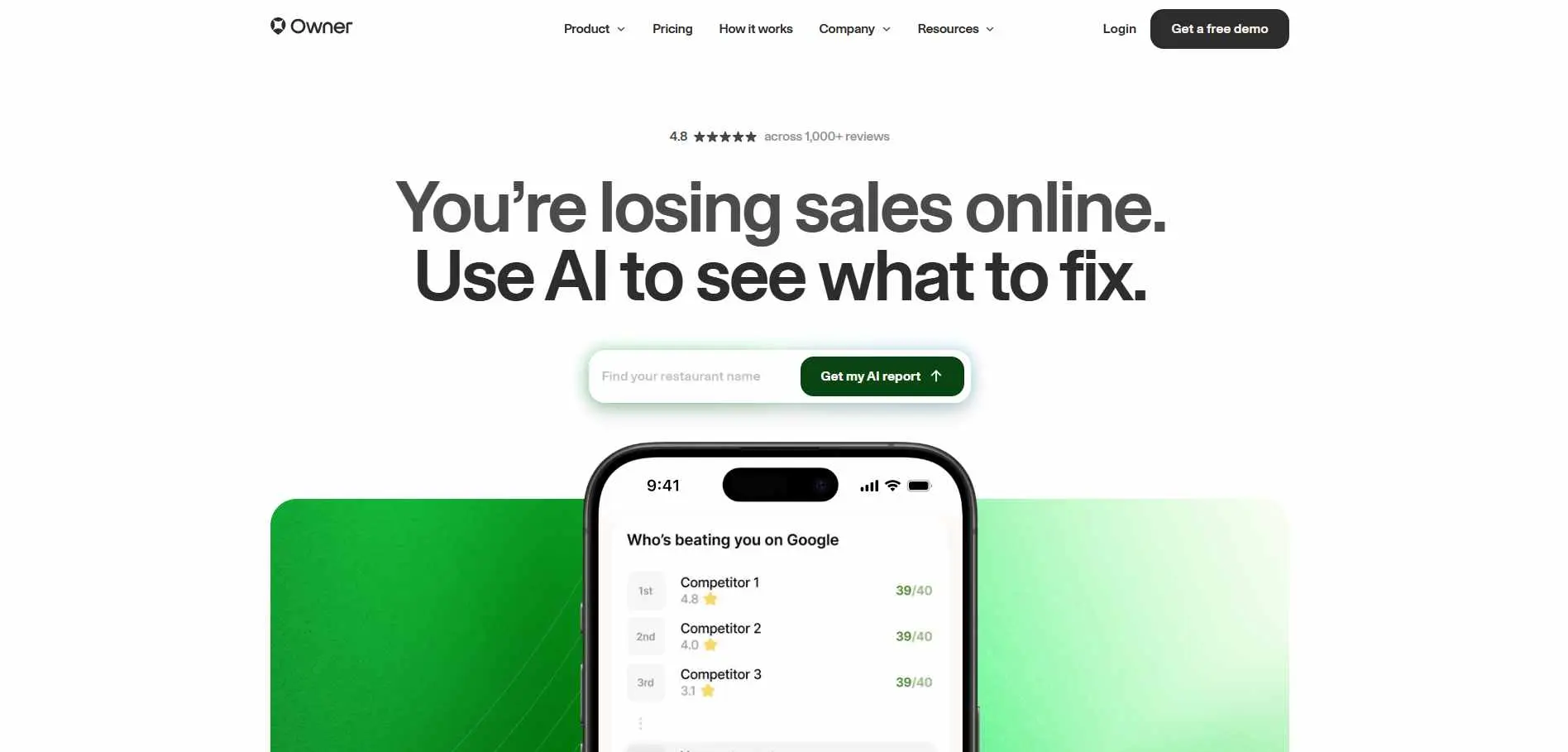
Owner is aimed squarely at independent restaurants that want to compete with chains - without a marketing team or a large tech budget. Everything runs through one platform - your branded website, commission-free online ordering, SMS marketing, and even a loyalty program.
Best for: This setup works best for independent restaurants looking to boost direct orders and break away from third-party delivery apps.
Key Features:
- Commission-free online ordering with a branded storefront
- Automated SMS and email re-engagement campaigns
- Loyalty program with points and rewards
- Restaurant website builder
- Google and Yelp review management
What separates Owner from general marketing tools is that most of the work runs on autopilot. Guests who haven't ordered in 30 days get a message. Regulars get rewards without your team tracking anything manually. For a single-location operator, that's a meaningful time save.
2. BentoBox
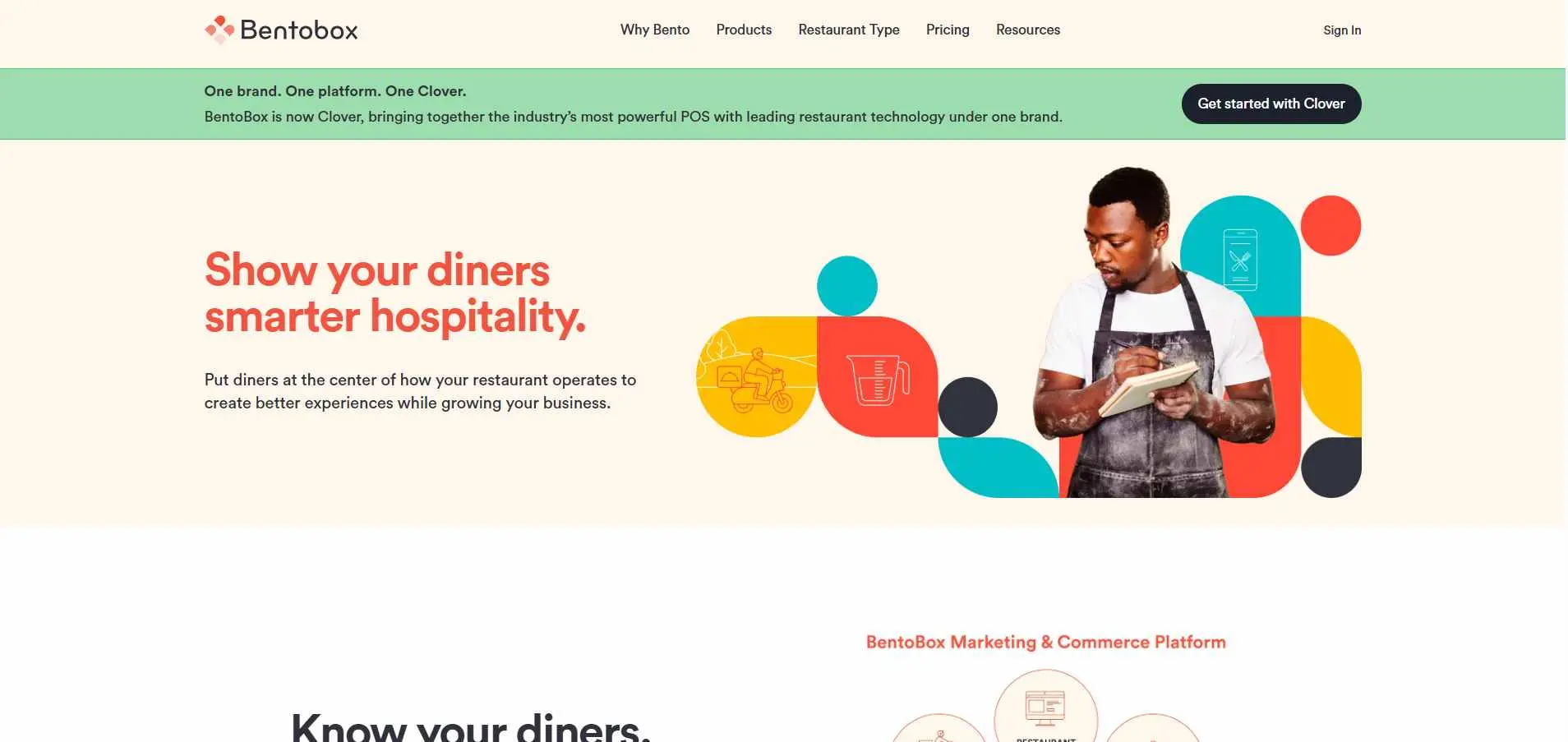
BentoBox handles the digital front of the house - professionally designed restaurant websites, online ordering, and guest marketing. If your current website is slow, hard to update, or not built for ordering, BentoBox fixes that cleanly.
Best for: Restaurants that need a polished web presence with built-in revenue tools
Key Features:
- Professional restaurant website builder
- Online ordering and gift card sales
- Email marketing and guest data capture
- Catering and event management pages
- Integrations with major POS systems
BentoBox isn't a full operations platform. It doesn't replace your POS or your scheduling tool. But for the web-facing side of your business, it handles things better than most all-in-ones manage to.
3. OpenTable
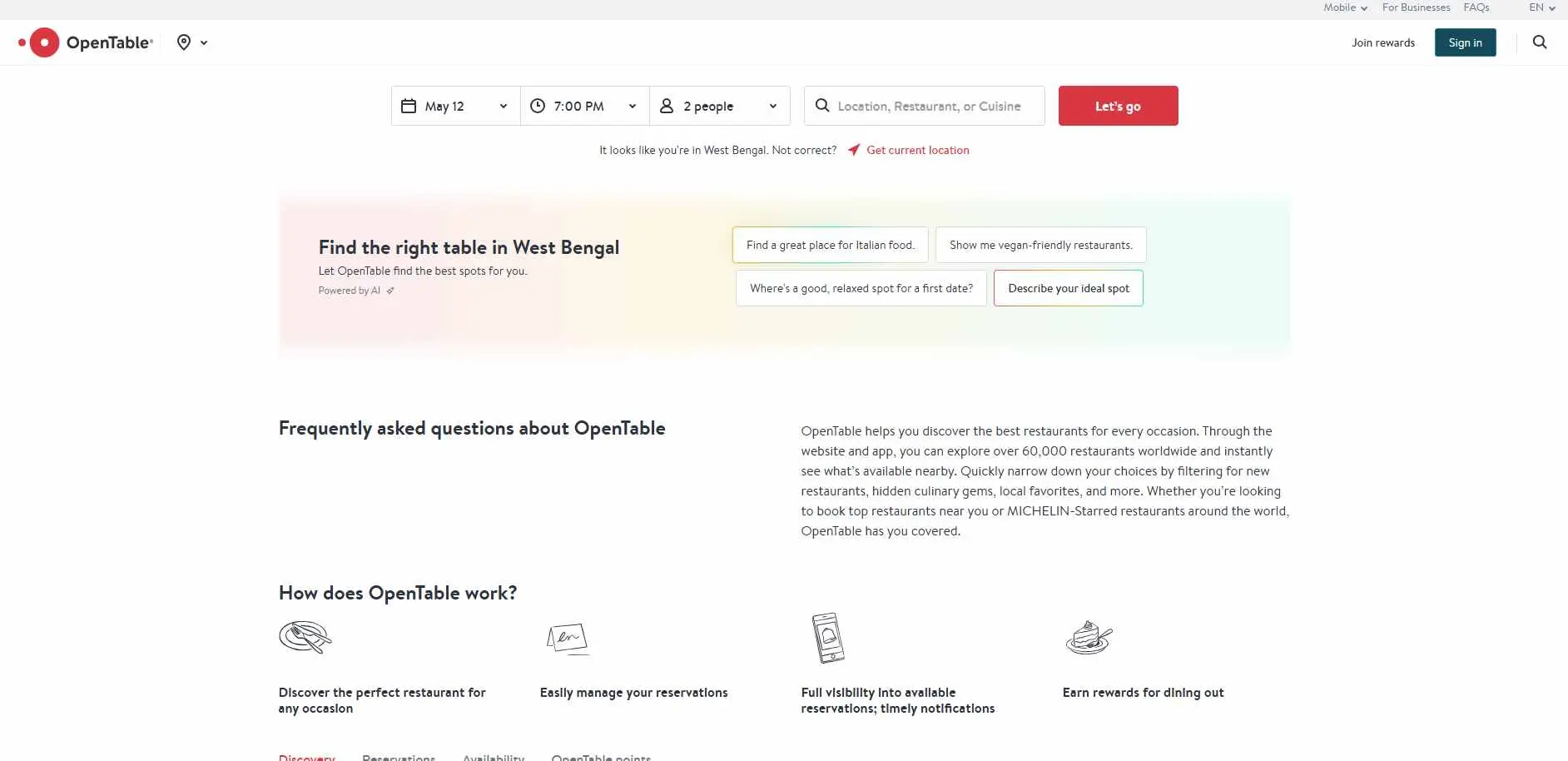
OpenTable is the biggest name in restaurant reservations. It’s more than table booking, it provides operators with detailed guest profiles - dining history, preferences, special occasions - so your team can personalize service before your guest arrives.
Best for: Full-service restaurants with moderate to high reservation volume
Key Features:
- Online reservation management with real-time availability
- Guest profiles with dining history and preferences
- Table management and floor plan tools
- Automated post-dining review requests
- Exposure to OpenTable's broad diner network
Worth knowing: OpenTable charges per-cover fees on top of the subscription. At high volume, that cost is real. But the network exposure - being discoverable by millions of active OpenTable users - is real value that a standalone booking tool won't give you.
4. Supy
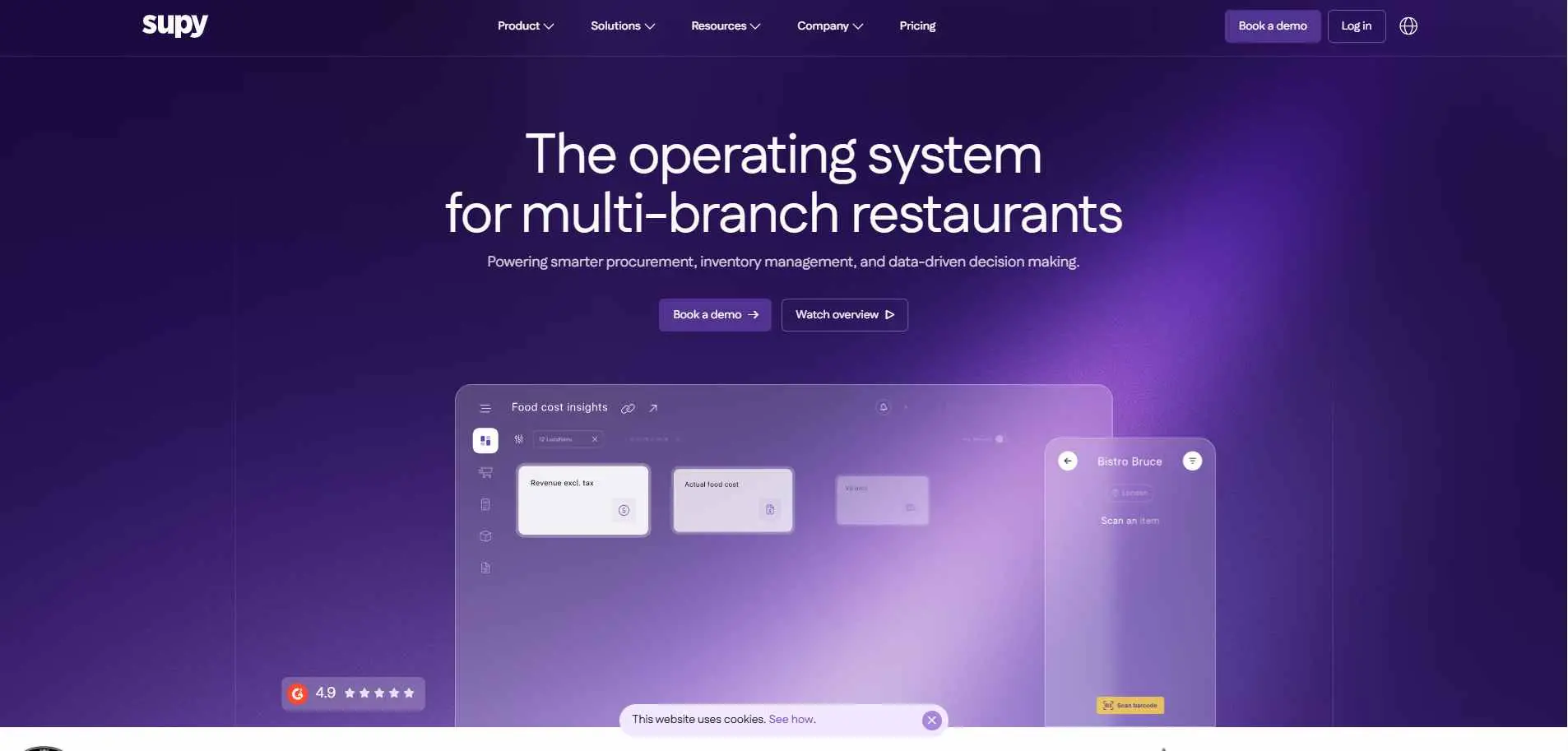
Supy is built for restaurant groups that need tight control over their supply chain and food costs. It connects purchasing, inventory, and recipe costing across locations in a way that's genuinely useful for operators managing scale.
Best for: Restaurant groups and cloud kitchens running multiple locations
Key Features:
- Real-time inventory tracking across locations
- Automated purchase orders and supplier management
- Recipe costing and menu engineering tools
- Waste tracking and variance analysis
- POS integrations
Food cost is where most restaurants lose money quietly. Supy makes that loss visible - and manageable - in a way that basic inventory spreadsheets can't.
5. Toast POS
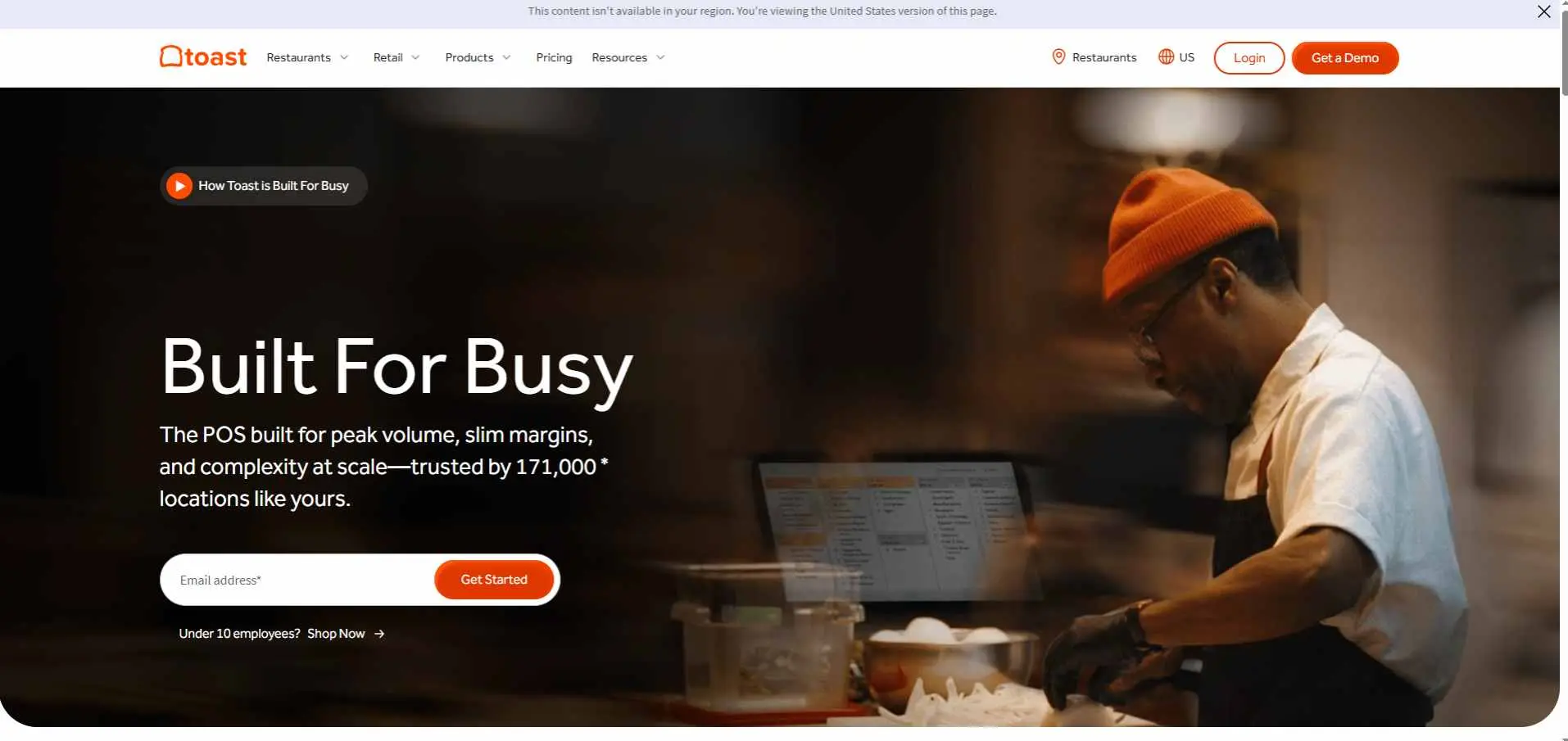
Toast is everywhere. This is easily one of the top POS systems out there for restaurants, and it’s obvious why. It was built just for restaurants—you notice it right away. The hardware withstands heavy use, whether it’s heat or spills, and the whole workflow seems crafted by an expert familiar with kitchens. The add-ons fill in the gaps, covering whatever else you need.
Best for: Restaurants of any size needing a reliable, full-featured POS
Key Features:
- Durable, restaurant-grade hardware
- Online ordering and delivery integrations
- Kitchen display system (KDS)
- Payroll, scheduling, and HR tools
- Detailed sales and labor reporting
Toast has grown well beyond point-of-sale into a full operations platform. For restaurants starting from scratch on their tech stack, it's often the right first tool to build around.
6. 7shifts
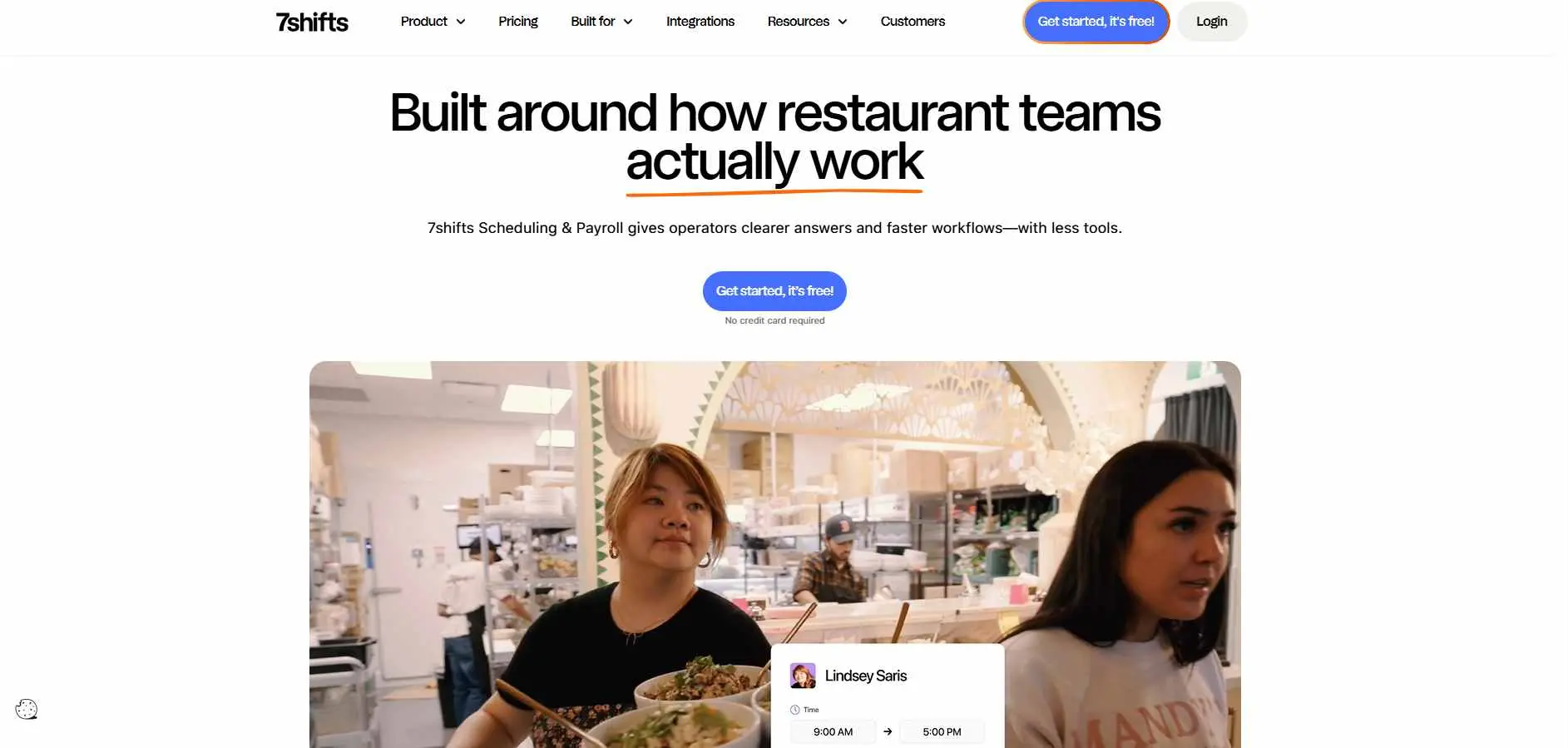
7shifts focuses on one specific problem - restaurant workforce management - and does it better than most. Scheduling, communication, time tracking, and labor cost control are all in one app designed around how restaurant teams actually work.
Best for: Restaurants with complex scheduling needs across multiple roles
Key Features:
- Drag-and-drop scheduling with sales-based forecasting
- In-app team communication and announcements
- Labor cost tracking and compliance alerts
- Time clocking with tip pooling support
- Free plan available for smaller teams
The sales forecast integration is the feature that stands out. 7shifts pulls data from your POS and suggests staffing levels based on expected demand - which takes most of the guesswork out of weekly scheduling.
7. Restroworks
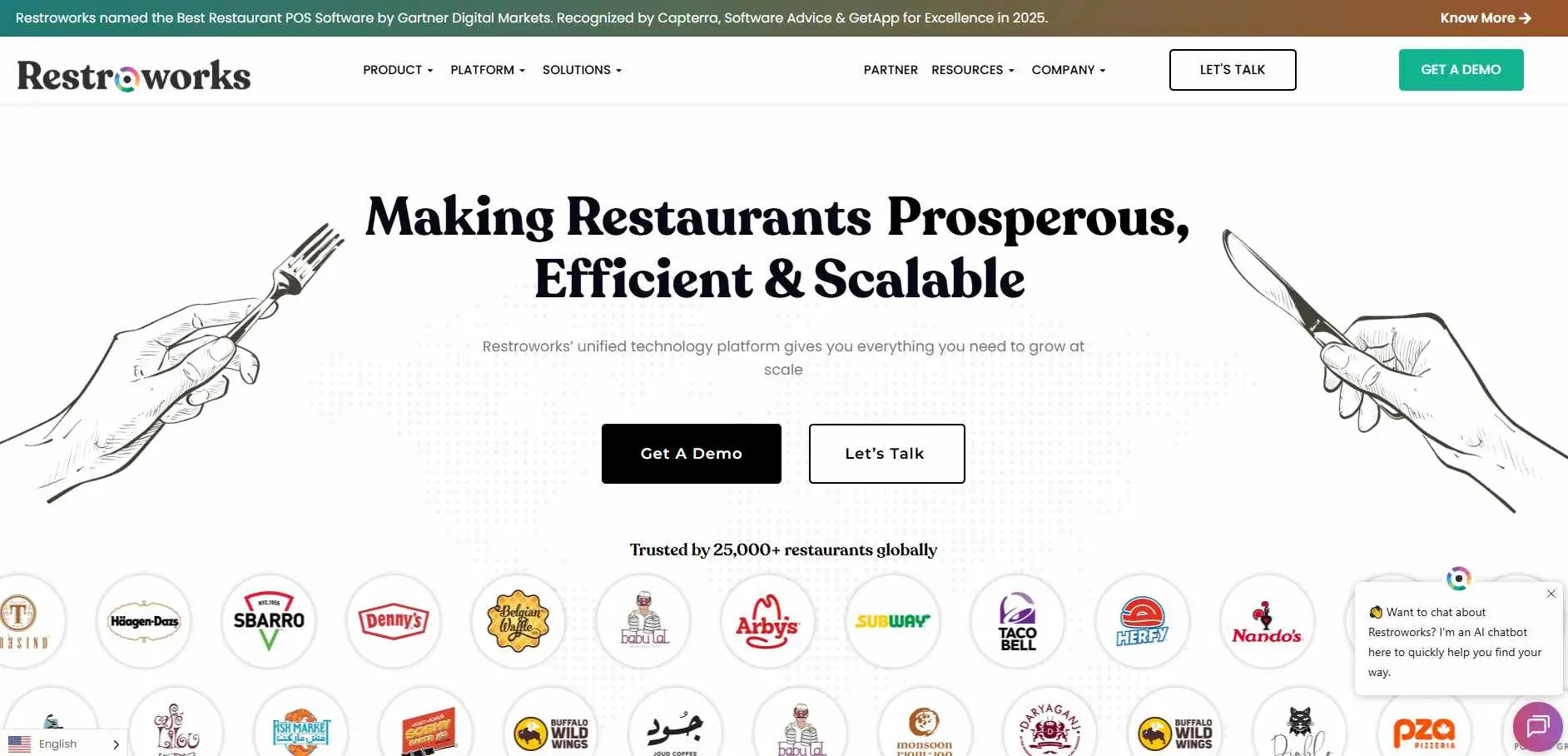
Restroworks (formerly Posist) is a cloud-based restaurant platform built for chains that need to standardize operations across locations without a large IT team. You’ll find this used everywhere - across Asia, the Middle East, and other restaurant hotspots where business is booming.
Best for: Restaurant chains looking for a scalable cloud POS and operations hub
Key Features:
- Cloud POS with offline mode
- Central menu management across locations
- CRM and loyalty program tools
- Analytics and reporting dashboard
- Supply chain and inventory management
For a growing group with ten or more locations, Restroworks provides the kind of operational consistency that's hard to achieve when each location is running different software.
8. Restaurant365
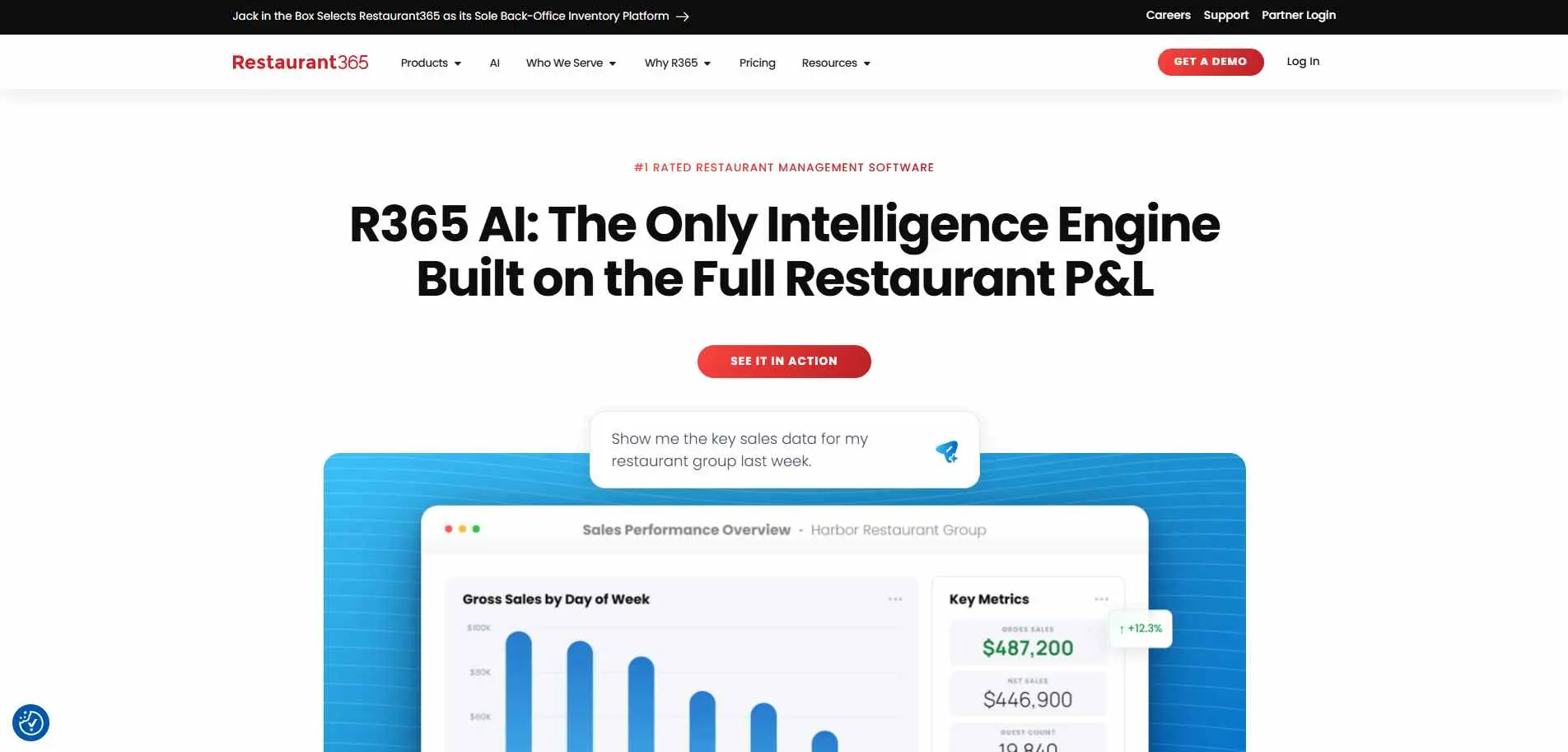
Restaurant365 stands apart - it’s for owners and operators who want to see every dollar coming in and going out. It rolls accounting, food cost analysis, and payroll into one system that actually gets how a restaurant P&L operates.
Best for: Multi-unit restaurant groups with complex financial reporting needs
Key Features:
- Restaurant-specific accounting and bookkeeping
- Food cost and labor cost tracking
- Accounts payable automation
- Payroll and HR management
- POS integration with real-time financial sync
This isn't the right fit for a single-location cafe. But if you're running five or more units and wrestling with QuickBooks to get restaurant-relevant numbers, Restaurant365 solves that problem directly.
9. SevenRooms
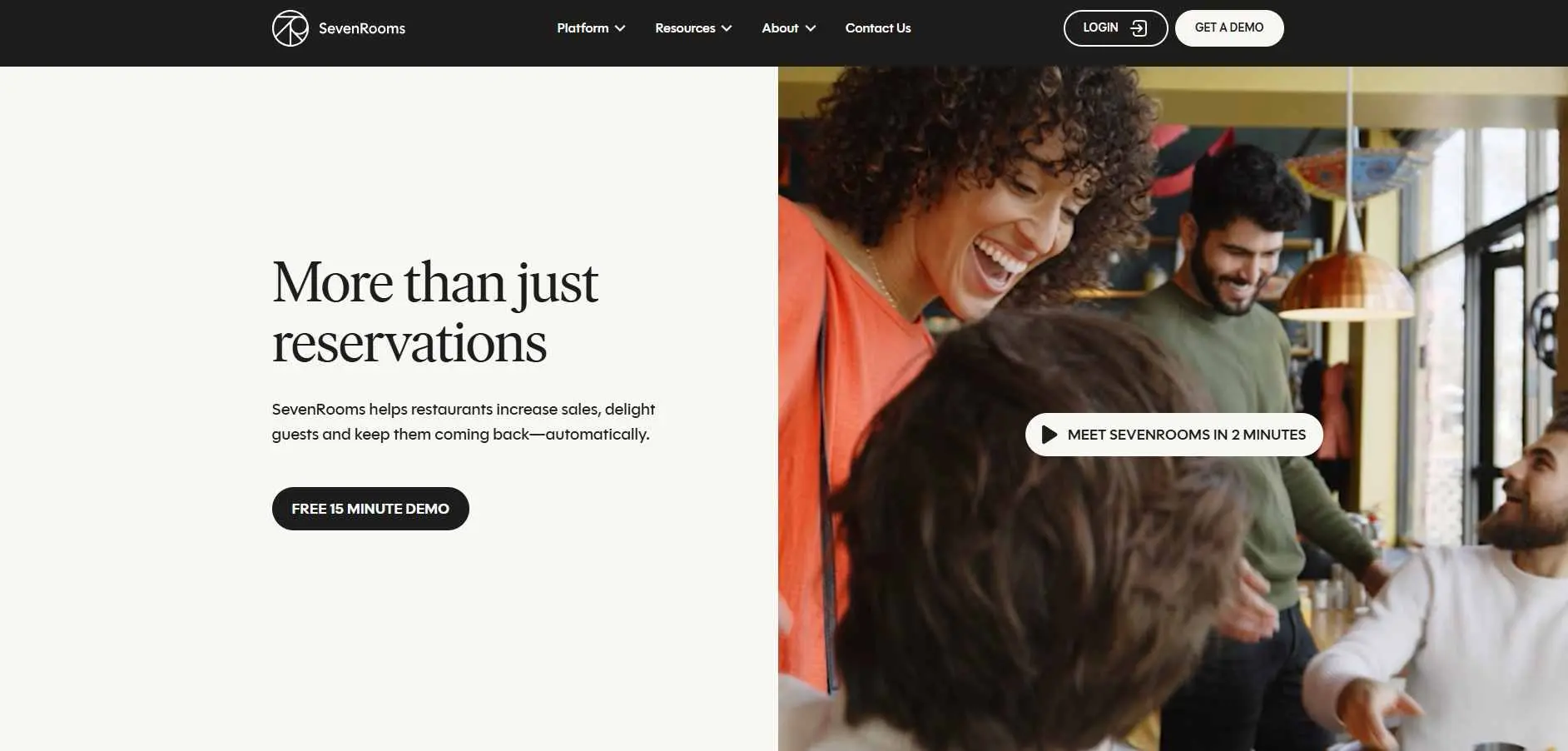
SevenRooms goes deeper on guest data than most reservation tools. It's used by hotel restaurants, upscale dining groups, and any operator where knowing the guest - their preferences, past visits, special occasions - is part of the service model.
Best for: Upscale restaurants and hotel F&B focused on personalized guest retention
Key Features:
- Reservation and waitlist management
- Guest profiles with detailed notes and visit history
- Marketing automation and direct booking tools
- Table and seating management
- Loyalty program integration
When a guest books their third anniversary dinner and SevenRooms flags it automatically, that's the kind of detail that turns a one-time visitor into a regular. The platform is built around making those moments repeatable.
10. MarketMan
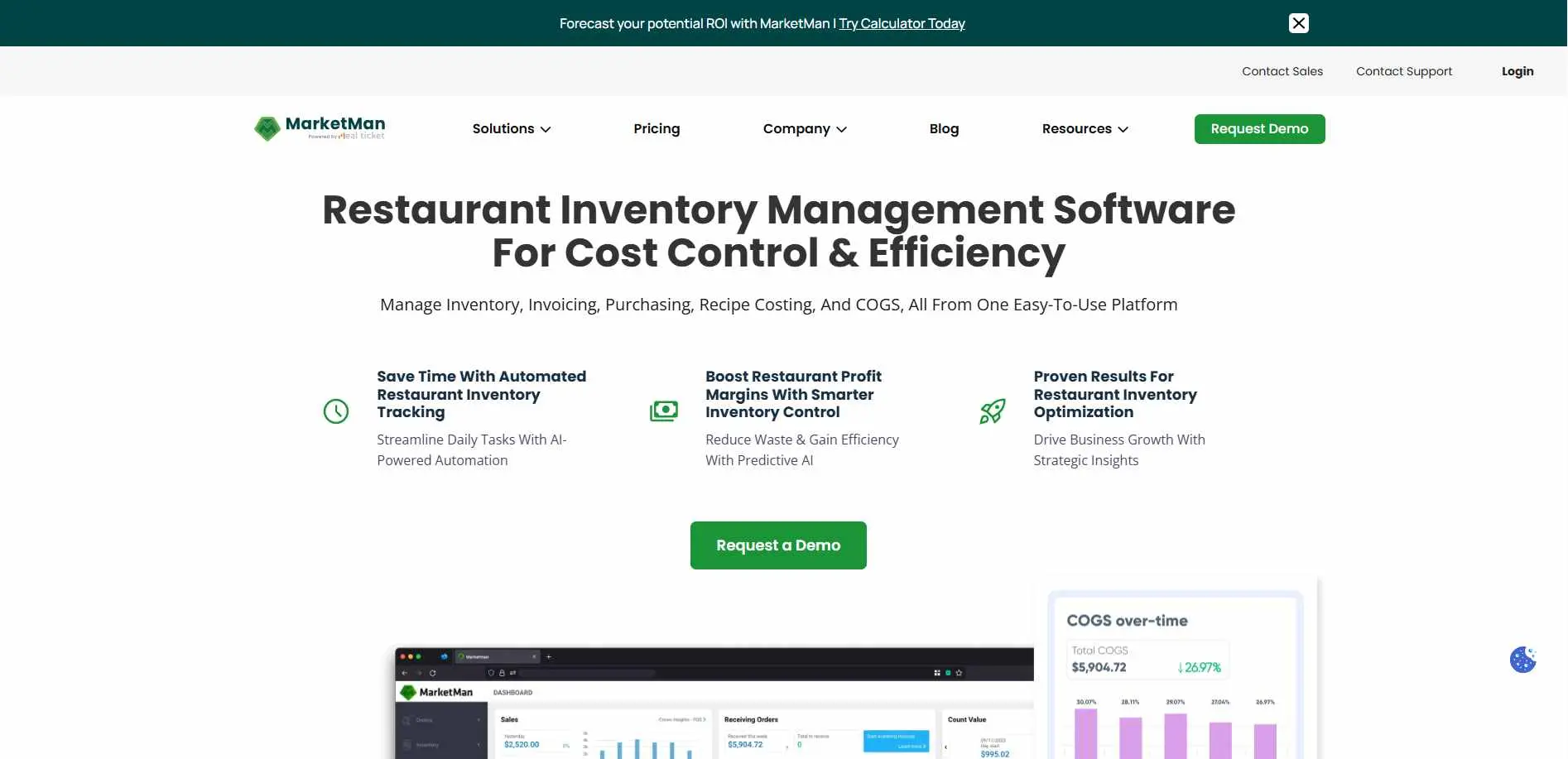
MarketMan handles the messy, back-of-house world of purchasing and inventory. It’s straightforward, thoughtfully designed, and, honestly, helps managers and head chefs save time weekly.
Best for: Restaurants that want tighter purchasing control and lower food waste
Key Features:
- Automated inventory counting and tracking
- Purchase order management and supplier communication
- Recipe costing tied to live ingredient costs
- Budget alerts and variance reporting
- Integrates with most major POS systems
The recipe costing feature is what makes MarketMan genuinely useful. When ingredient costs change - which happens constantly - it recalculates your actual food cost automatically. That removes the gap between your theoretical cost and what you're actually spending.
Conclusion
No single restaurant management platform handles everything. The right one really depends on your restaurant, your team’s size, and the main challenges you’re trying to solve - whether it’s wasted hours, money, or just sheer chaos.
For an all-around POS, Toast is a reliable starting point. For staffing, 7shifts. For reservations and guest data, OpenTable or SevenRooms. For food cost control, Supy or MarketMan. For independent restaurants focused on direct revenue, Owner is worth a serious look.
Start with one problem. Pick the tool that solves it well. You can layer in more from there.