
 Table of Content
Somewhere right now, a bot is clicking an ad that costs someone $6 a click. It will never buy anything, call anyone or read a page. The advertiser sees the charge, the clicks, and a conversion rate that mysteriously slid.
Click fraud tools exist to stop that, but they don`t all fight the same fight. Some sit on top of a Google Ads account and block bad IP addresses for a few dozen dollars a month. Some scan billions of programmatic impressions to find invalid traffic, then give quotes over the phone.
If you buy a product that protects against something other than what is causing your issue, you`re paying for protection that won`t solve the problem.
The pricing information below is obtained directly from manufacturer/vendor websites and other product review sites.
Which Kind of Fraud Are You Fighting?
All seven of these tools can be used by advertisers that are running paid search and social campaigns, often alongside the wider toolkit agencies lean on to scale their marketing output. ClickCease, Fraud Blocker, ClixTell, ClickSambo, ClickFortify, Spider AF, and TrafficGuard will all monitor clicks, rate those clicks based upon whether they appear to be legitimate or not, and then place bad IP addresses into an exclusion list.
The other three work at a different scale. CHEQ, Pixalate and Anura cover broader invalid traffic, including bots, click farms, form fraud and ad supply chains, and they usually sell through demos and custom quotes.
One more thing to know: ClickCease and CHEQ are related. CHEQ bought ClickCease in 2020, and ClickCease used to be called CHEQ Essentials.
Prices at a Glance
Tool | Starting Price | Covers | Best For |
| ClickCease | About 99/month | Google, Meta, Microsoft | The default pick |
| Fraud Blocker | About $79/month | Google, Meta | Click-metered pricing |
| ClixTell | About $15/month | Google, Bing | Small teams, call tracking |
| ClickSambo | About €49/month | Google, Meta | EU-based SMBs |
| ClickFortify | About $20/month | Google, Meta | Very small budgets |
| Spider AF | About $120/month | Google, Yahoo, Meta, Microsoft | High clicks, APAC |
| TrafficGuard | $49/month | Google Search, apps, affiliate | Search plus app installs |
| CHEQ | Custom | Major platforms, forms | Enterprise |
| Pixalate | Custom | CTV, mobile, programmatic | Accreditation needs |
| Anura | Custom | Click farms, lead fraud | Lead-gen advertisers |
Best Click Fraud Protection Software
1. ClickCease
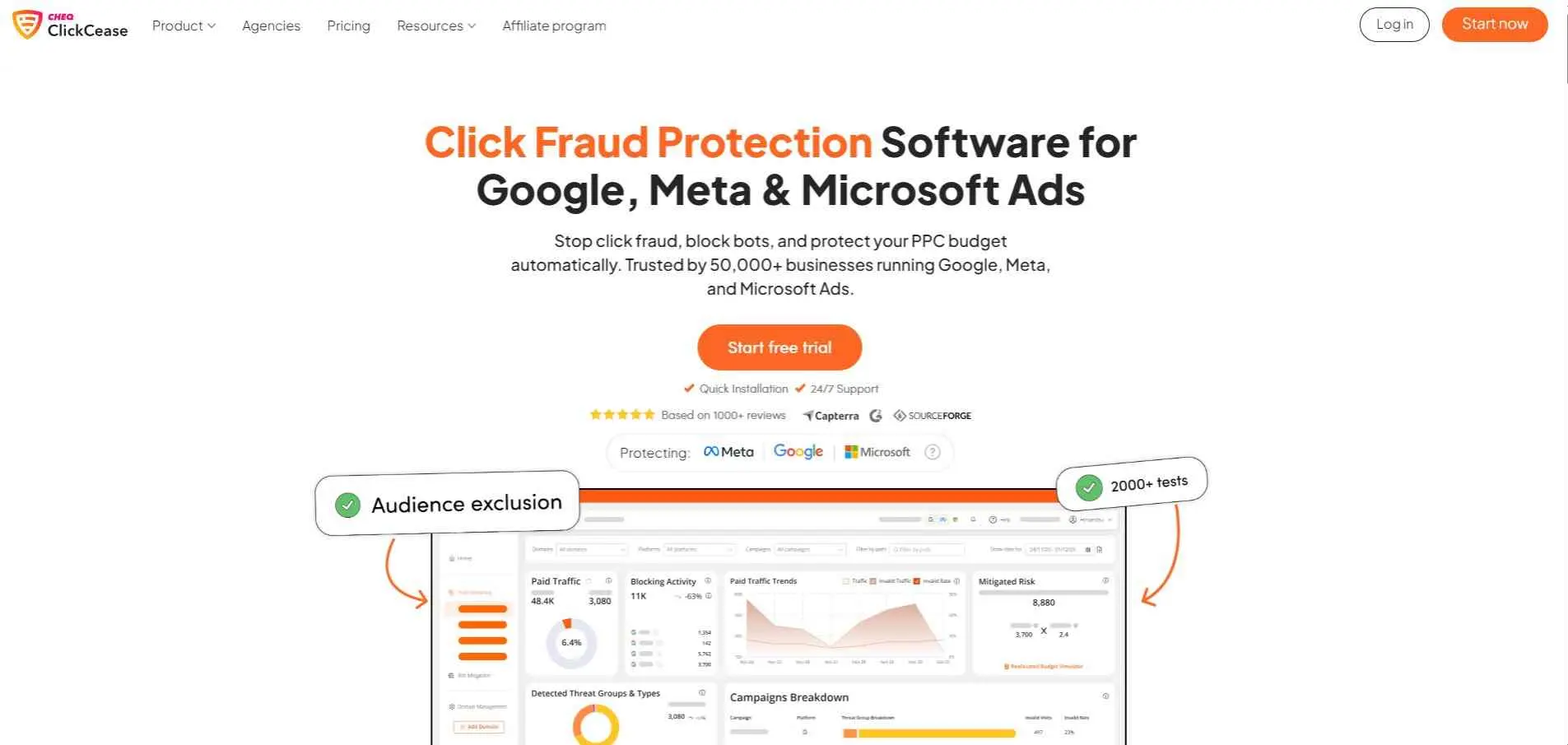
ClickCease has the biggest customer base in this category and the most third-party reviews. It blocks fraudulent clicks across Google, Meta and Microsoft ads and added a feature that stops ad pixels firing on invalid users. Pricing is all over the map: one guide lists $63 to $93 a month billed annually, while ClickCease`s own comparison page quotes $99 monthly or about $84 annually. Some users complain about annual lock-in. Its own blog also calls it the strongest overall choice, which is what you`d expect.
What it does: Automatic IP blocking, pixel protection, fraud reports.
Best for: Advertisers who want the established, widely reviewed default.
2. Pixalate
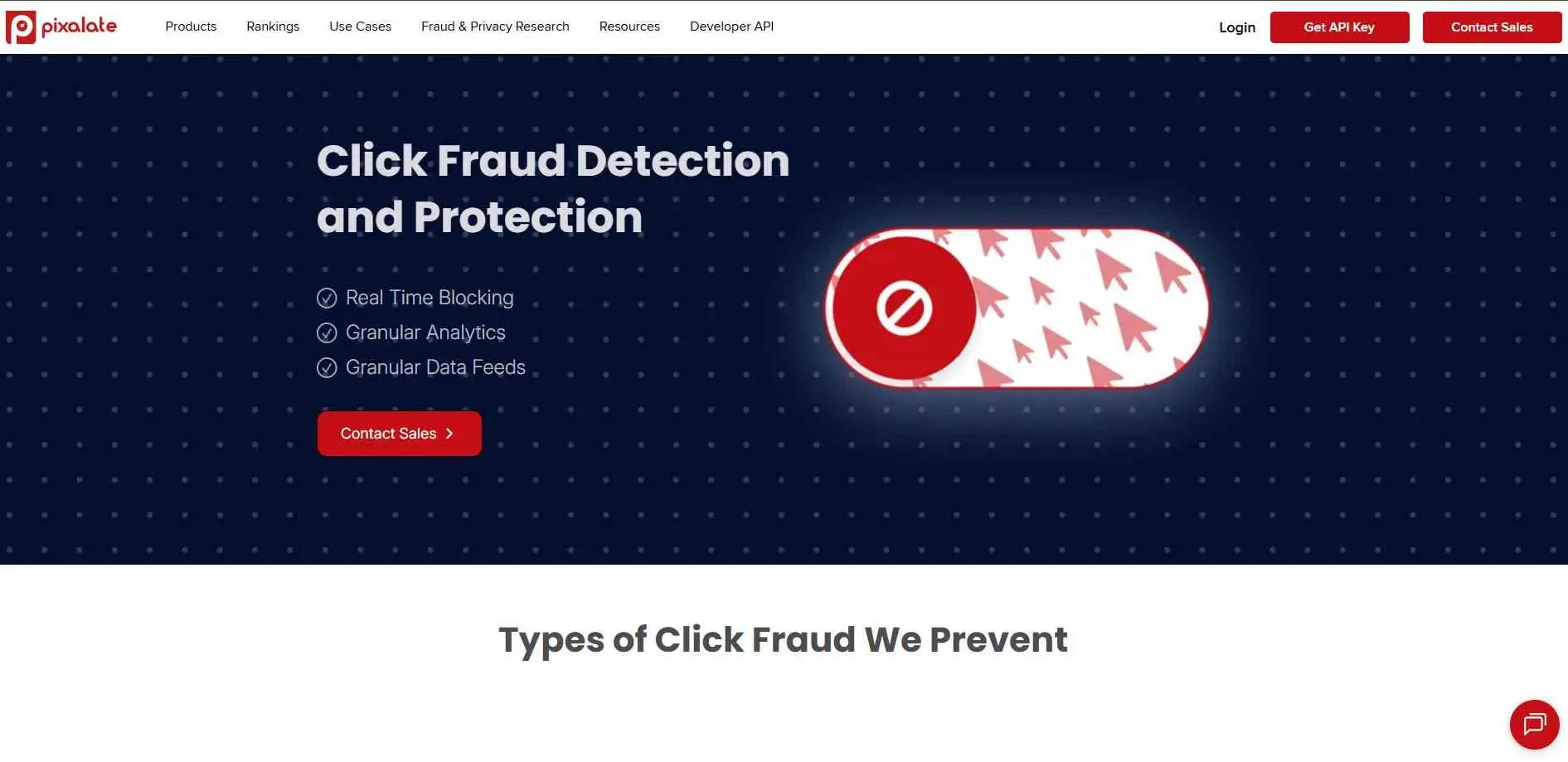
Pixalate has Media Rating Council accreditation for sophisticated invalid traffic and a TAG certification. It’s built for connected TV, mobile apps and programmatic, and it shares its forensic data with you. If you only run search ads, it’s probably more than you need. One review warns it doesn`t offer PPC click blocking, so it`s the wrong tool for a Google Ads account. Pricing is custom.
What it does: Invalid traffic detection and benchmarks across programmatic, mobile and CTV.
Best for: Publishers and brands that need accredited measurement.
3. Spider AF
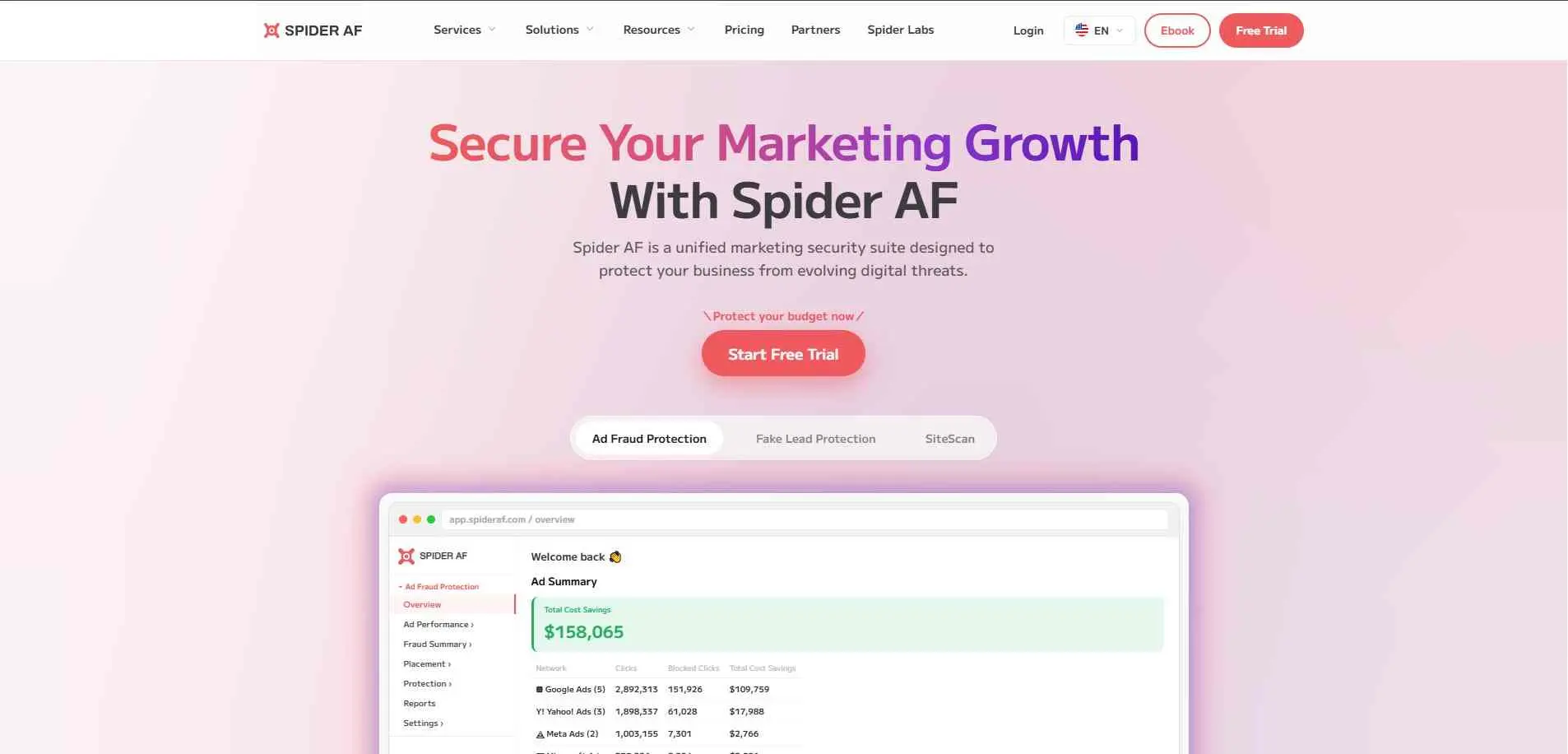
Spider AF comes from Tokyo-based Spider Labs and sells separate products, including ad fraud protection, fake lead protection and affiliate bot protection. The ad fraud plan is about $150 a month, or $120 billed annually, for up to 500,000 clicks on one source, though a competitor lists a much lower click allowance, so confirm it. It covers Google, Yahoo, Meta and Microsoft and is strongest in Japan and wider APAC. G2 shows 4.7 from just 12 reviews.
What it does: Click fraud blocking, fake lead filtering, placement controls.
Best for: High click volumes and APAC campaigns.
4. TrafficGuard
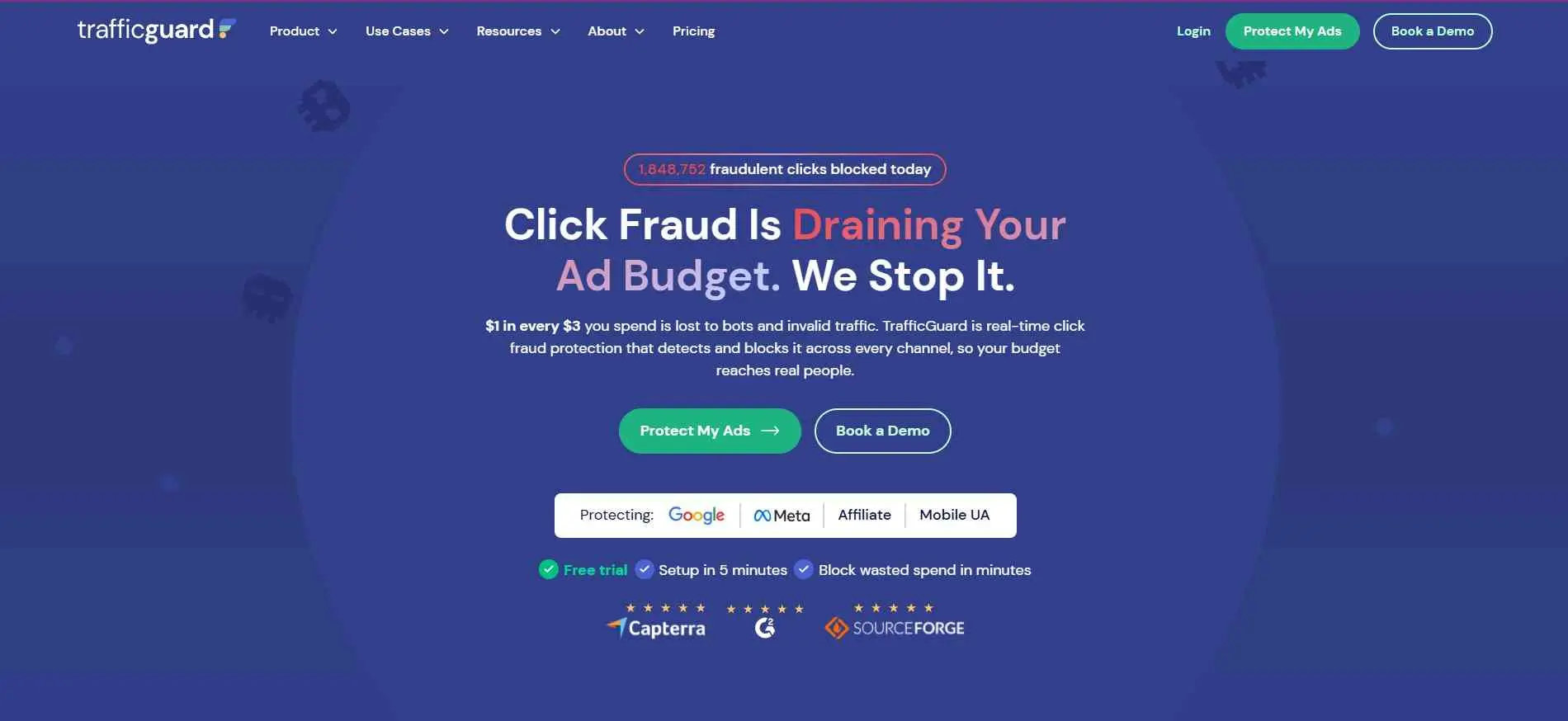
TrafficGuard spans more than search. It also covers app installs, affiliate traffic and programmatic. Pricing is unusual: a free detection-only tier, a $49 a month Shield plan that covers Google Search for one domain up to $30,000 in monthly ad spend, and a paid tier at 2% of spend. It doesn`t cover Microsoft Advertising. A 7-day trial applies to paid plans.
What it does: Real-time click scoring plus affiliate and app-install monitoring.
Best for: Advertisers with search, app and affiliate traffic to watch.
5. Fraud Blocker
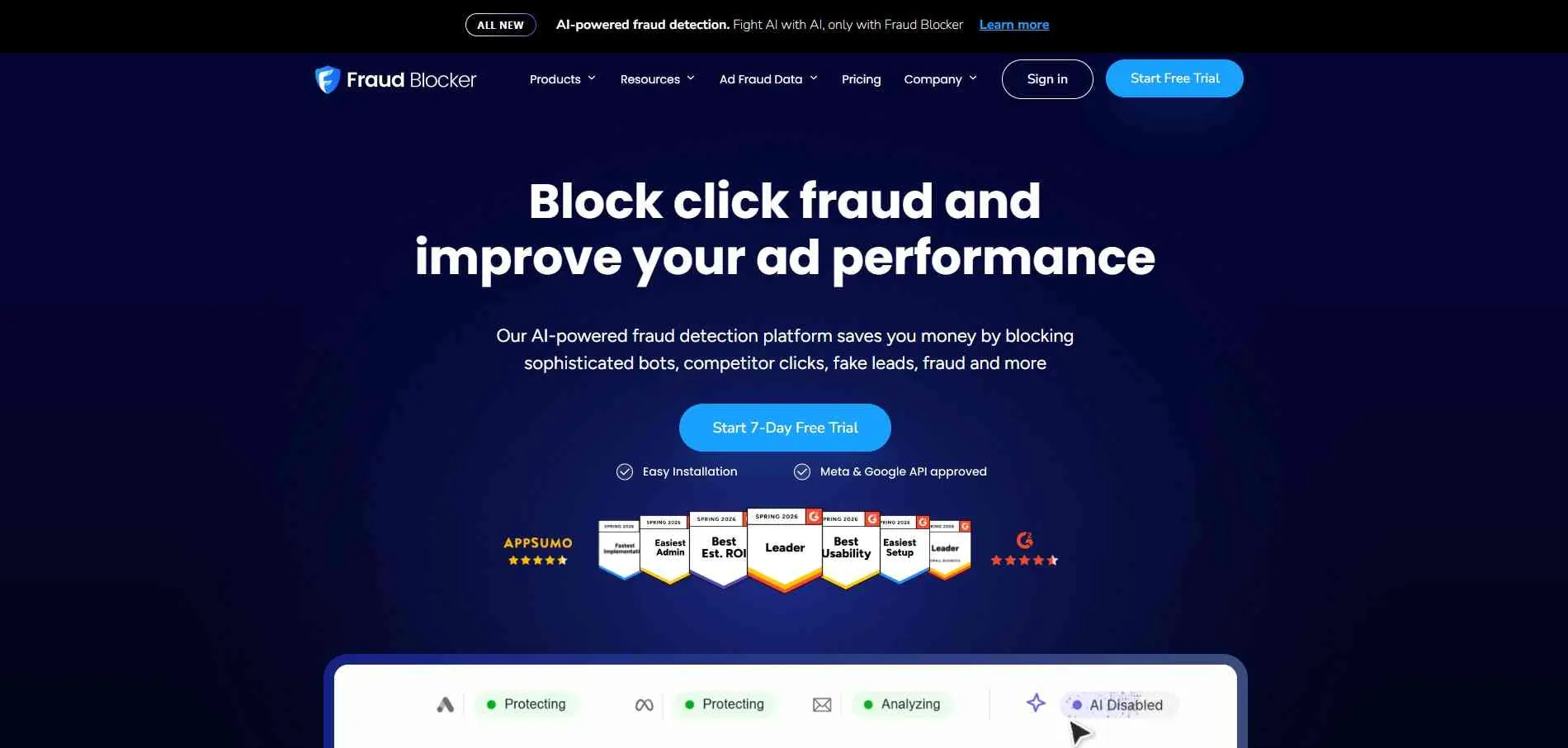
Fraud Blocker covers Google and Meta, not Microsoft, and charges by clicks. Its own listing gives $79 a month for 5,000 clicks and $99 for 10,000, though a competitor quotes larger allowances, with a 7-day trial and it holds a 4.6 on G2 from 68 reviews. One competitor says protection pauses when you hit your monthly click limit, so ask about that before sizing a plan. Fraud Blocker also publishes its own "ClickCease alternatives" article.
What it does: Real-time click scoring and blocking, click-volume tiers.
Best for: Google plus Meta advertisers with predictable click volume.
6. ClixTell
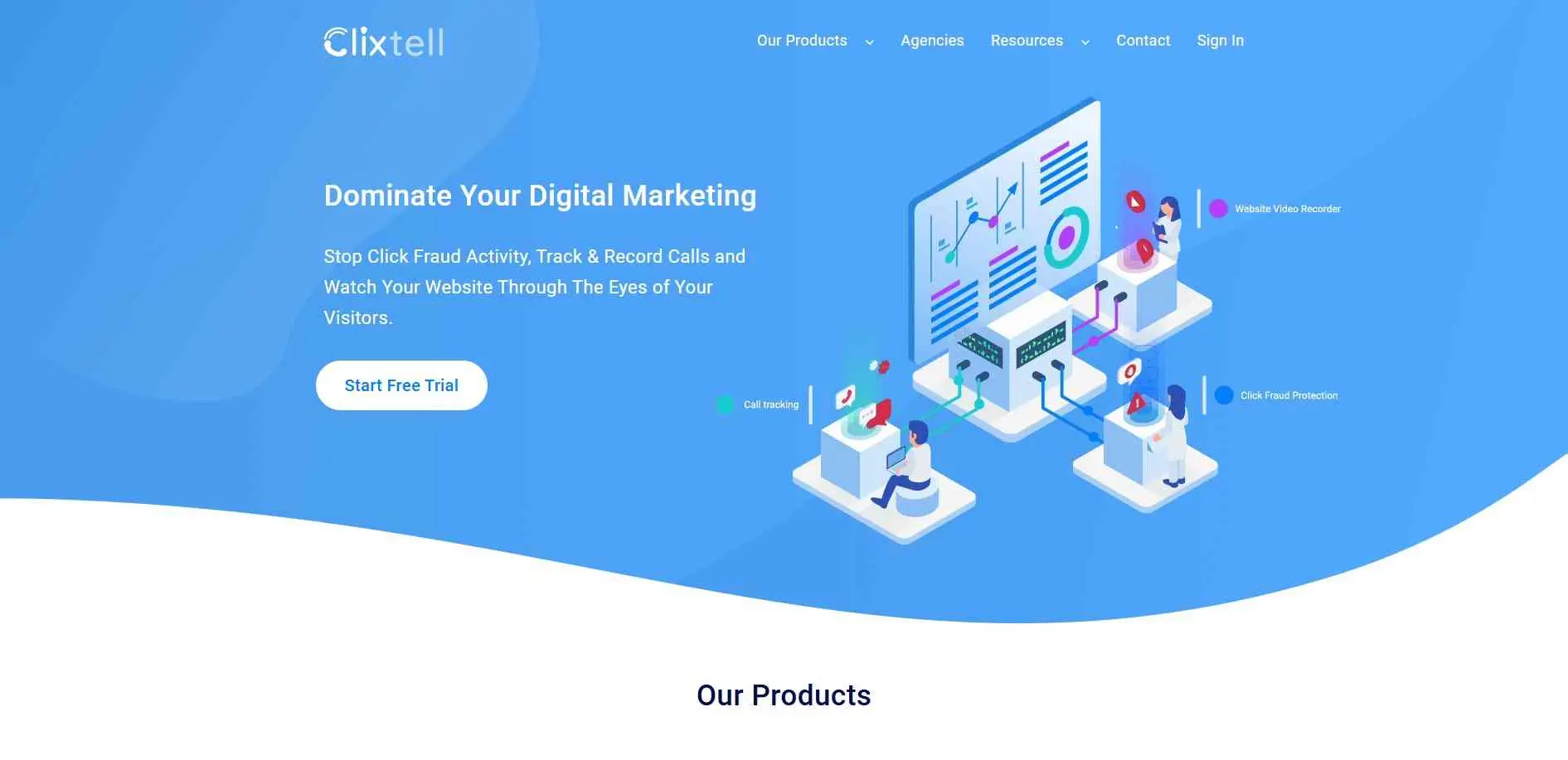
ClixTell is the cheapest to start and bundles call tracking. Listings give $10 or $15 for the basic plan, but one review notes the cheapest tier only alerts you and doesn`t auto-block, so you`d move up to the $30 to $50 plan for real protection. The top plan is listed at $75 to $80. G2 rating is 4.5. It`s popular with small teams and agencies that want fraud protection and call tracking in one place.
What it does: Click fraud detection, call tracking, Google and Bing coverage.
Best for: Small teams and agencies on a tight budget.
7. ClickSambo
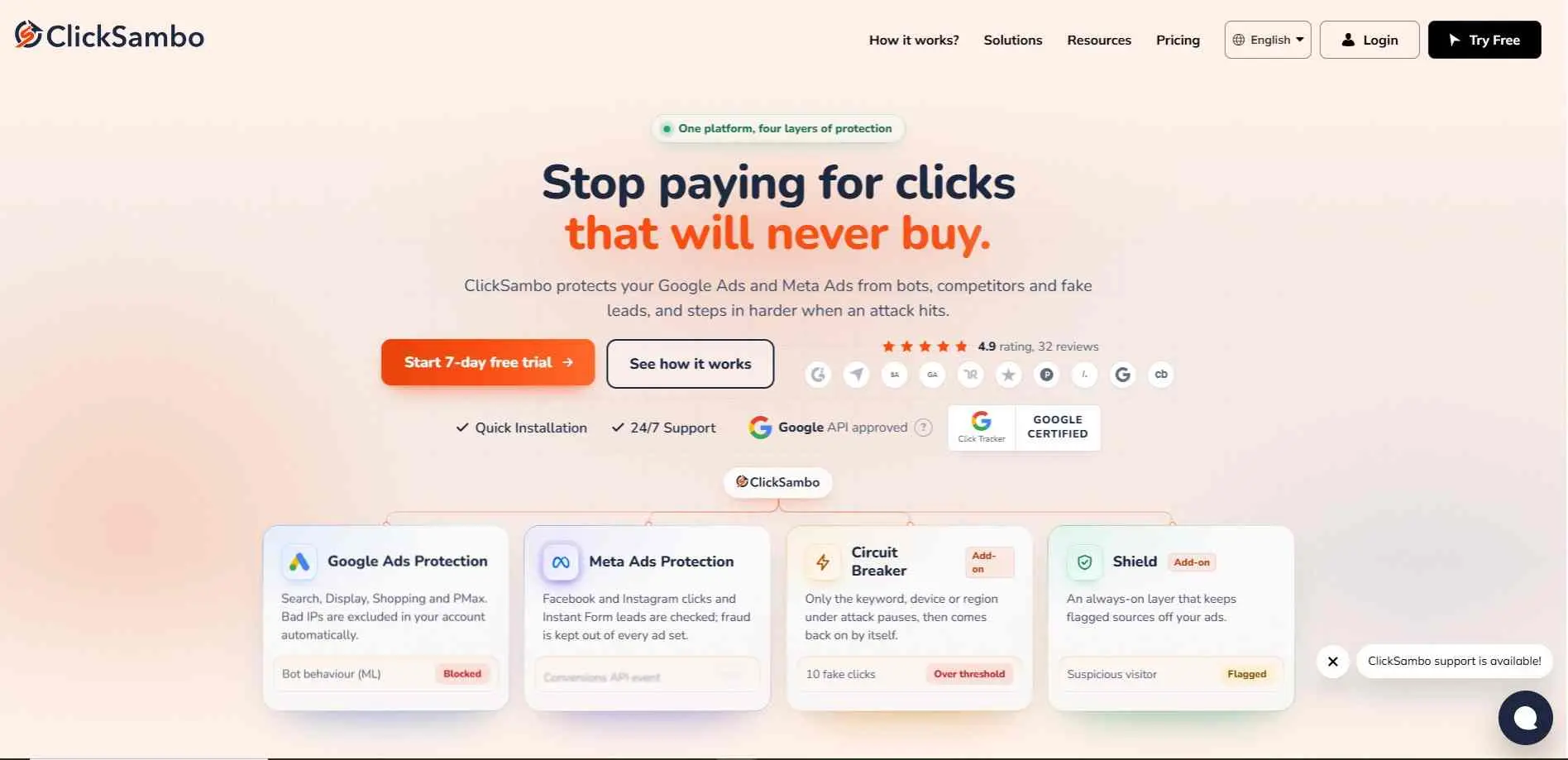
ClickSambo is run from Estonia and built around EU data rules. It scores clicks in Google Ads (Search, Display, Shopping, Performance Max) and Meta. It also sends clean conversion signals back to those platforms, so you’re not feeding them bad data. And it produces the refund reports you’d attach to an invalid-click claim. On Meta, where you can`t block IPs directly, it pushes bad visitors into an exclusion audience through the Conversions API. Its own site lists €39 a month, Slashdot shows $38, and Software Advice says pricing is on request.
What it does: Click scoring, signal feedback to ad platforms, refund evidence.
Best for: European small businesses running Google and Meta.
8. CHEQ
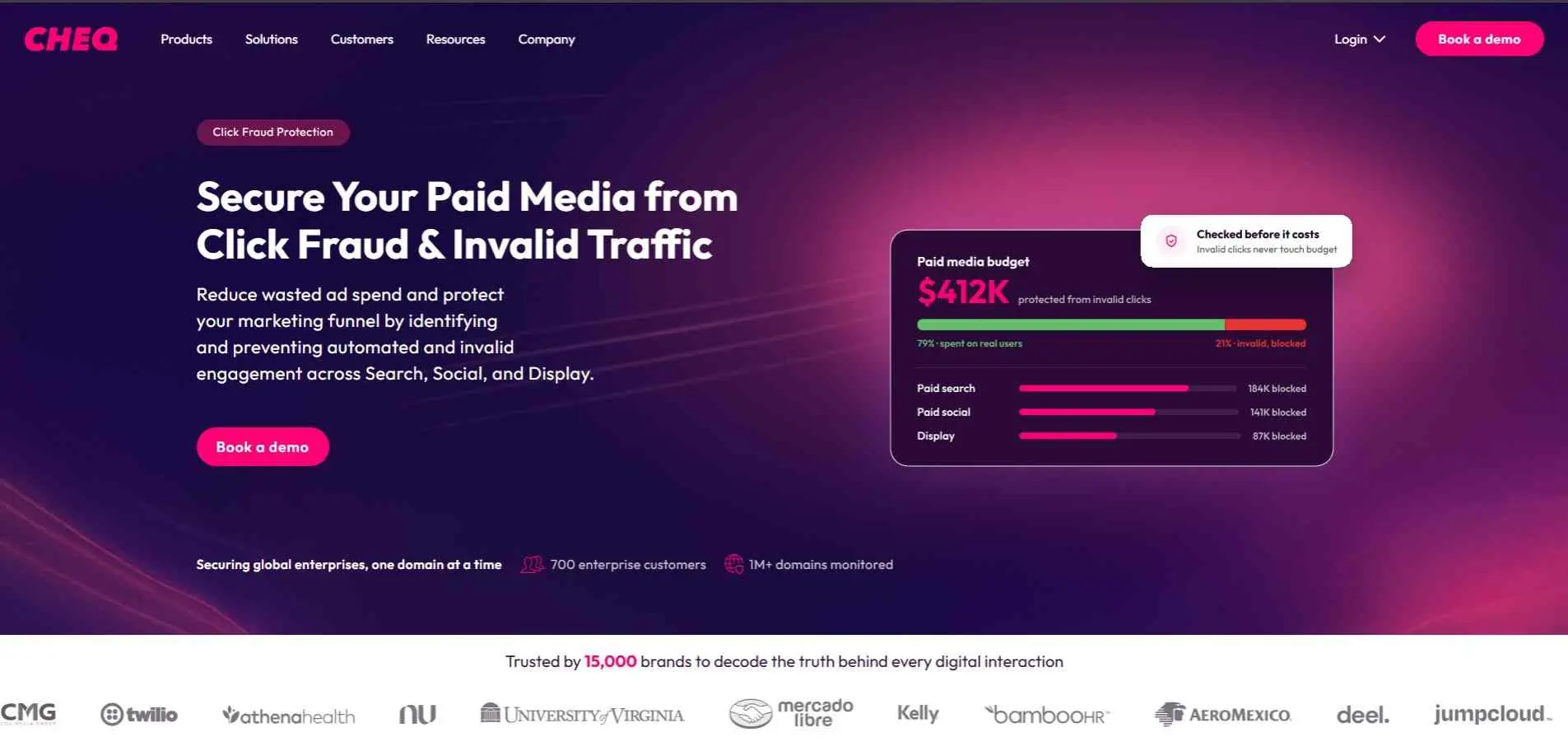
CHEQ is the enterprise end. It handles Google, Microsoft, Meta, LinkedIn, and TikTok. It stops more than just clicks, and checks for website visitor validation, form-fill fraud, and fake account creation too. They didn’t publish prices online. Expect a demo and a custom quote. One review notes annual lock-in complaints from ClickCease users who move up to it.
What it does: Click and funnel fraud protection across major ad platforms.
Best for: Enterprises that want one vendor from click to form submission.
9. Anura
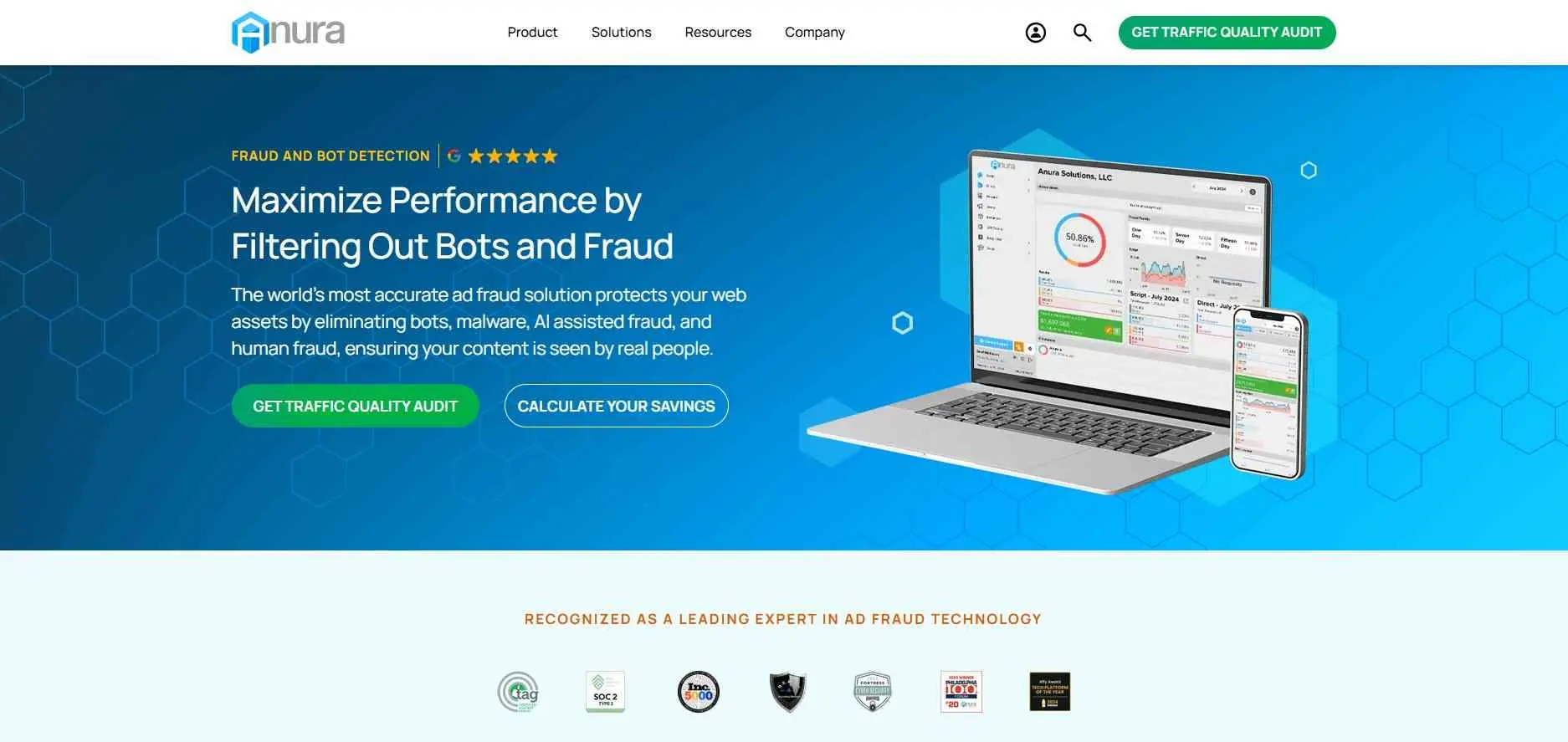
Anura detects click fraud, bots, click farms and hijacked devices, before and after the click, and is TAG certified. One review rates it a good fit for lead-gen advertisers who want session-level validation. It`s a smaller brand than ClickCease or Lunio, and pricing is by request, with a free trial available on request.
What it does: Real-time fraud scoring for clicks, leads and traffic.
Best for: Lead-gen advertisers fighting click farms.
10. ClickFortify
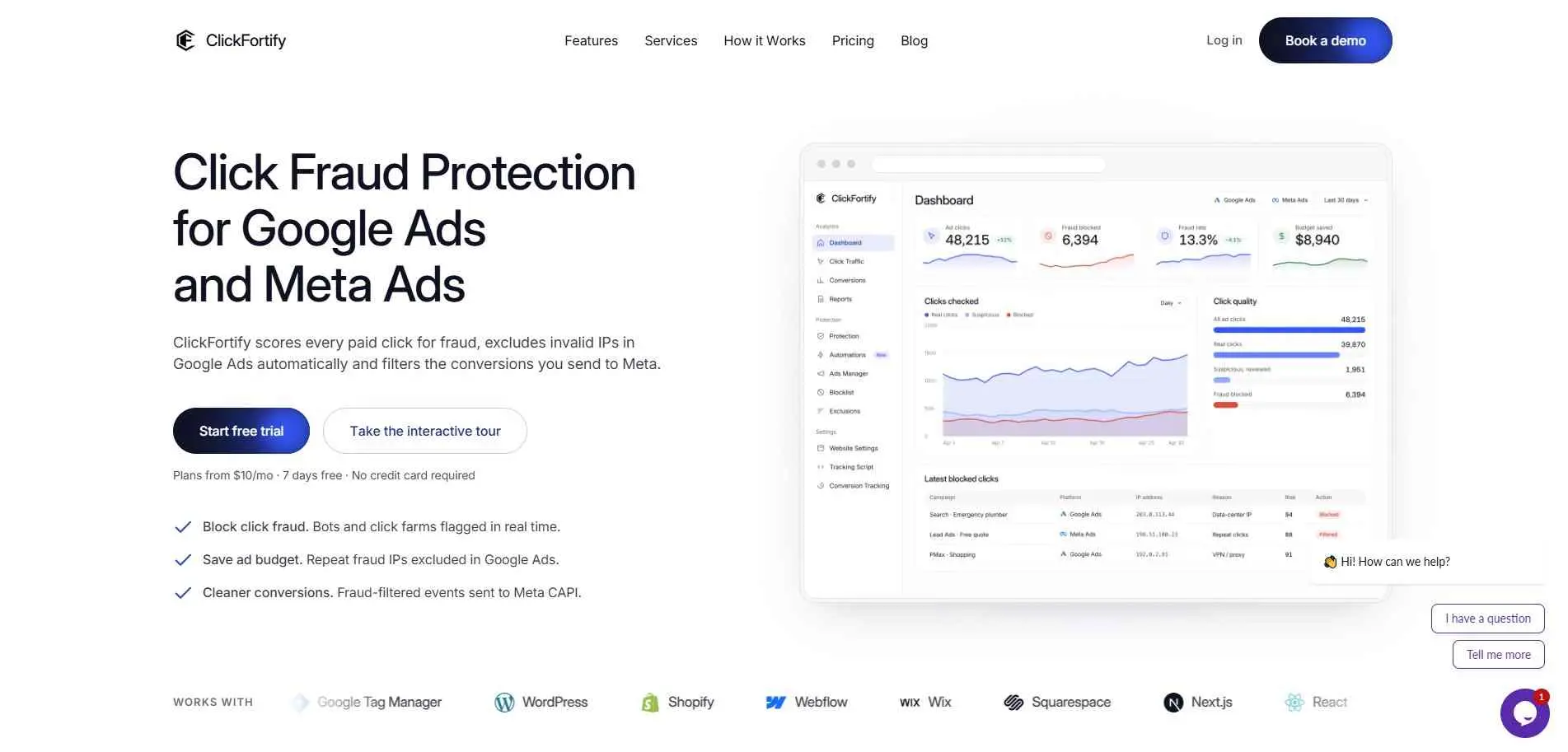
ClickFortify is aimed at small advertisers on Google and Meta, with prices listed around $8 to $10 a month and a 7-day trial. That`s far below everyone else here, and the tradeoff is less independent coverage. It ranks 7.4 out of 10 on one directory, though that directory sells sponsored placements, so weigh the score lightly.
What it does: Basic Google and Meta click protection.
Best for: Very small ad budgets that can`t justify $60 a month.
How to Read the Reviews
Most "best click fraud software" pages are written by someone with a stake. ClickCease, Fraud Blocker, ClickSambo and others publish comparisons of their own, and at least one directory sells "sponsored" slots next to its rankings.
Fraud-screening has become table stakes well beyond PPC too - several referral marketing platforms now build in similar anti-fraud tools to validate traffic before it’s rewarded.
They`re useful for details, but check the date and the author before trusting a ranking. G2 and Capterra, and a trial on your own account, are better checks.
Final Words
Figure out if your issue is bad search clicks or invalid traffic across that wide network. Deciding whether to check ClickCease, Fraud Blocker, ClixTell, or contact CHEQ, Pixalate, and Anura is pretty tough. Run a trial for a couple weeks. Check what actually gets blocked against your own reports. Don`t overthink it until you see real data coming in. If a tool cannot show what it stopped, it has not earned a renewal. A cheap plan sending only alerts will not save you much money. Ask every vendor the exact same questions. Find out what it blocks, what it misses, and what happens when you cancel.