

 Table of Content
A referral program sounds easy until you have to run one. You need to track who referred whom, decide what each person gets, deal with refunds, stop people from gaming the offer, and somehow get your existing customers to remember that the program even exists.
The software handles most of that work.
The bigger question is which software fits your business. A Shopify store selling consumer products doesn`t need the same setup as a large brand running referrals across several markets. Some tools are built around e-commerce. Others make more sense for SaaS, subscriptions, or larger referral programs with more complicated rules.
So this list looks at the practical differences rather than treating all 10 platforms as interchangeable.
Quick Comparison
Platform | Good Choice For | Main Strength | Platform Style |
| Mention Me | Established consumer brands | Referral testing and customer advocacy | Referral specialist |
| ReferralCandy | E-commerce brands | Easy referral and affiliate setup | Ecommerce-focused |
| Friendbuy | Larger referral programs | Attribution and testing | Enterprise |
| ReferralHero | Startups and growth teams | Referrals, contests, and waitlists | Self-serve |
| Yotpo | E-commerce brands | Loyalty and referrals together | Ecommerce suite |
| Lootly | Growing online stores | Loyalty, referrals, and affiliates | E-commerce suite |
| Talkable | Mid-market ecommerce | Campaign testing and management | Managed platform |
| Referral Factory | Teams building their own programs | Flexible campaign builder | Self-serve platform |
| Extole | Large organizations | Complex incentive programs | Enterprise |
| Referral Rock | SaaS, services, and ecommerce | Referrals, ambassadors, and affiliates | Referral platform |
1. Mention Me
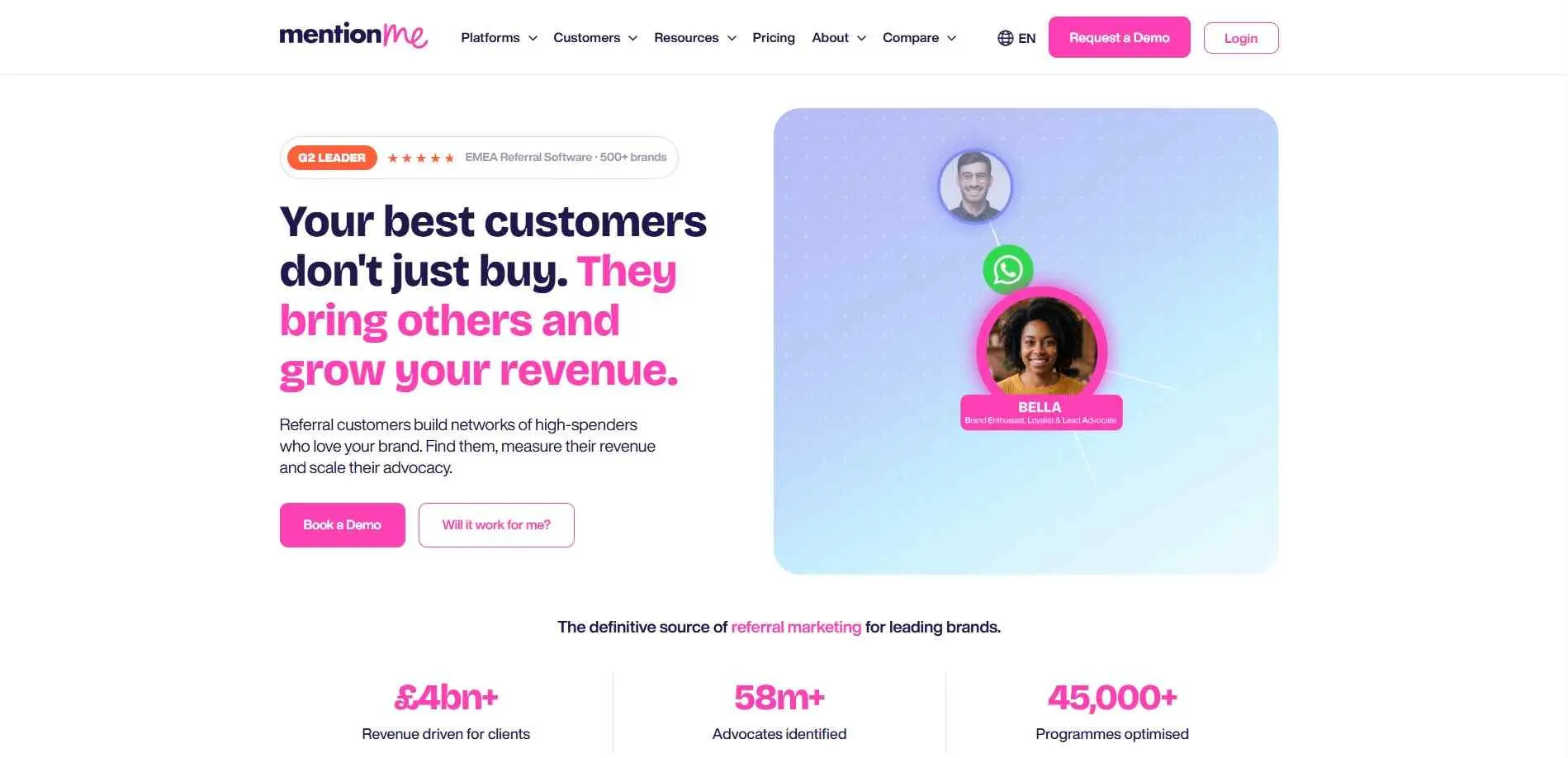
Mention Me focuses on marketing instead of trying to be a full e-commerce platform. It provides brands with tools to manage journeys, run tests, segmentation, and customer advocacy. One of its more distinctive ideas is Name Share, which lets customers refer to someone by entering that person`s name. The platform also uses referral data and propensity signals to decide when to ask a customer for a referral.
Key Features
- Name Share referral journeys
- A/B testing and customer segmentation
- Referral analytics and customer advocacy tools
- Propensity-to-refer signals
Pros & Cons
- Pros: Strong focus on referrals, interesting approach to word-of-mouth, useful testing tools.
- Cons: Better suited to established brands than a minimal store.
Best For
Established e-commerce and consumer brands that want referrals to become a serious customer acquisition channel.
2. ReferralCandy
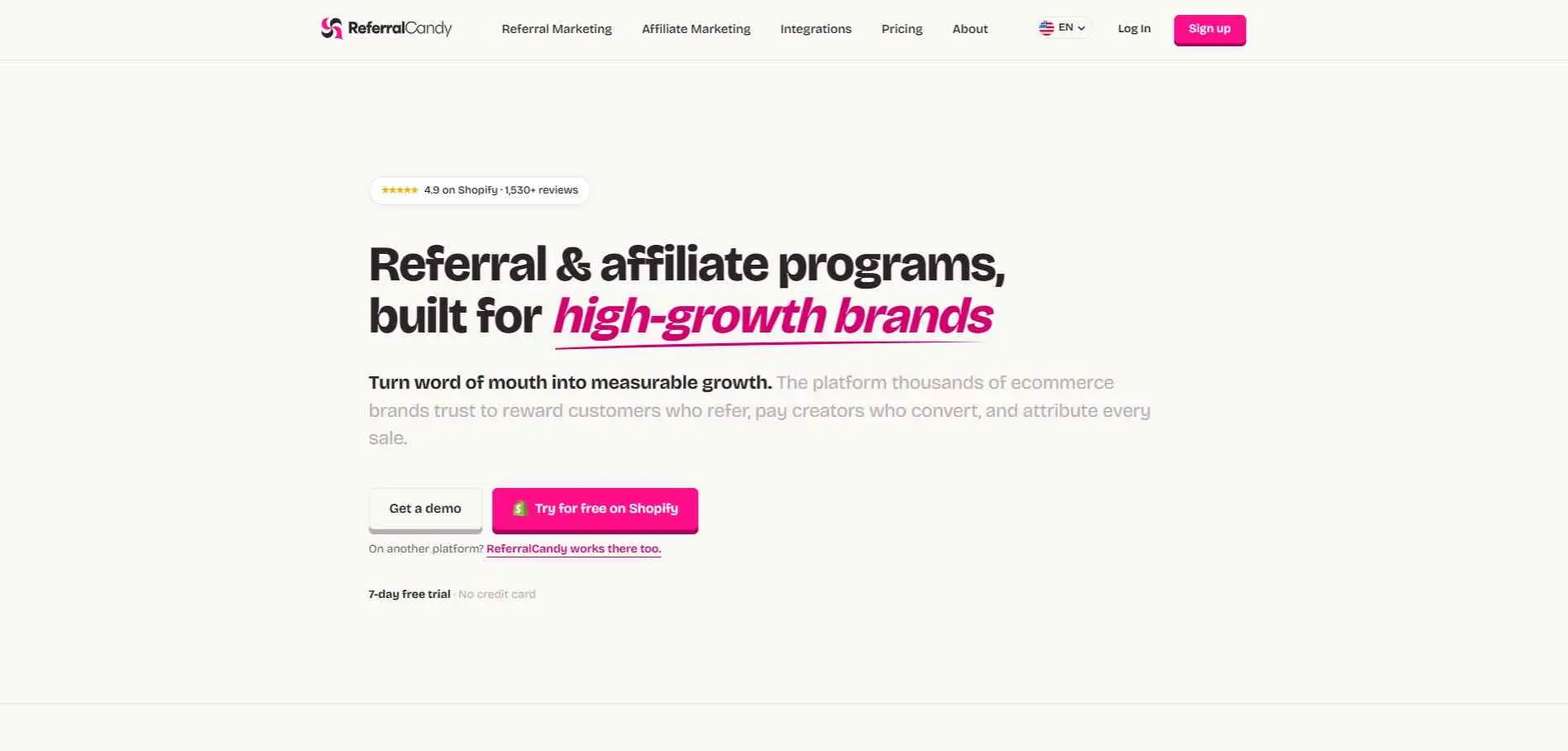
ReferralCandy is tailored for e-commerce brands who would like to set up a customer referral program without needing to reinvent the wheel from the ground up. ReferralLink handles referral links, coupon codes, reward tracking, and even asking your customers for referrals after they purchase from you.
A big plus is that it also allows you to manage affiliate programs from the same dashboard. This is beneficial in case a shop intends to bring partners. Support platforms: Shopify, BigCommerce, WooCommerce, and others.
Key Features
- Referral links and custom coupon codes
- Cash, store credit, and tiered rewards
- Post-purchase referral widgets
- Referral and revenue tracking
Pros & Cons
- Pros: Easy e-commerce setup, clear workflow, supports both referrals and affiliates.
- Cons: Less suited to complicated enterprise programs than platforms built specifically for large teams.
Best For
Shopify and other e-commerce brands that want to get a referral program running without a long implementation.
3. Friendbuy
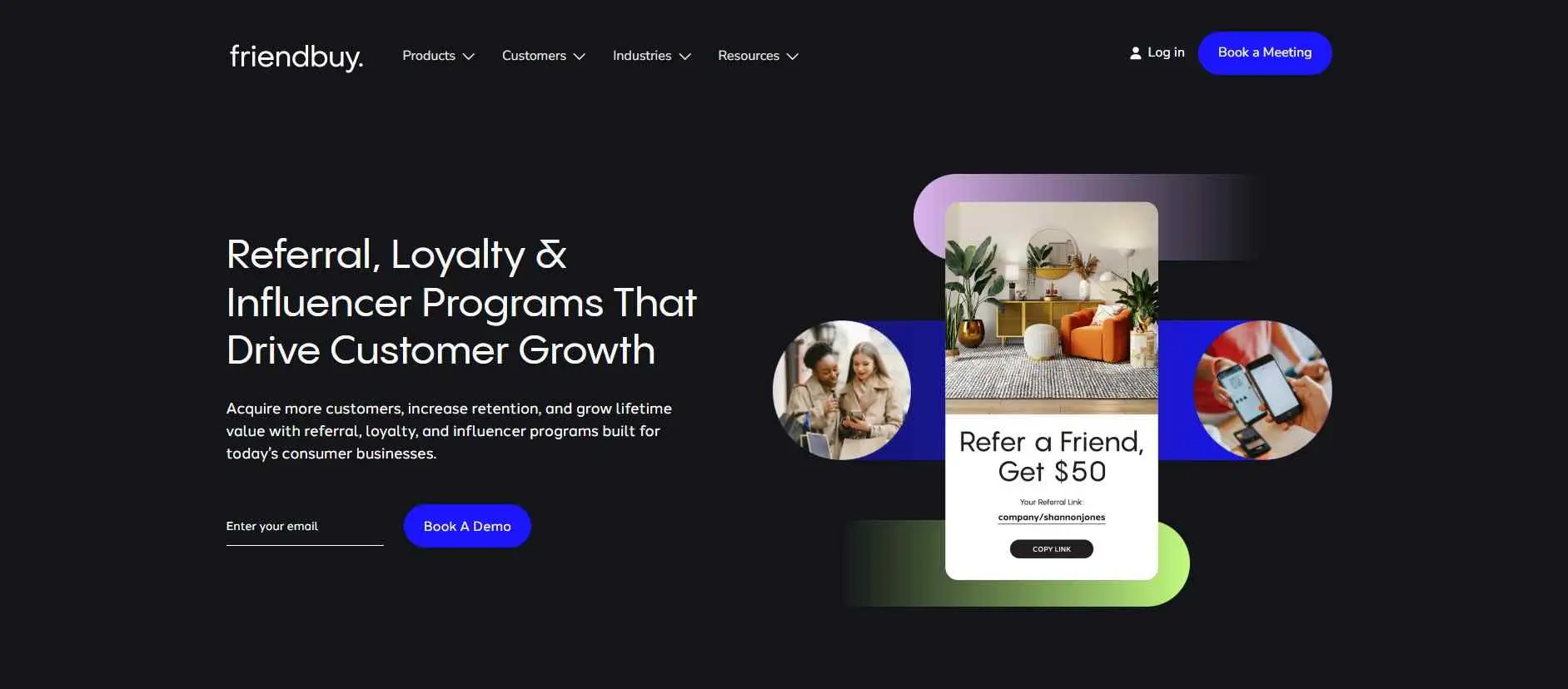
Friendbuy is intended for those who want precise control over reference attribution and also testing. Instead of viewing referrals as a generic discount widget, it follows the path from share to click to conversion and allows teams to test offers on both ends of the referral. It also includes reward validation and fraud controls, which can matter when referral payouts become large enough to affect acquisition costs.
Key Features
- Referral attribution and validation
- A/B testing for offers and referral experiences
- Fraud and reward controls
- Detailed referral funnel reporting
Pros & Cons
- Pros: Strong tracking, useful testing tools, built for complicated referral flows.
- Cons: More software than a small business usually needs.
Best For
Larger e-commerce, subscription, financial, and consumer businesses where referral attribution needs to be reliable.
4. ReferralHero
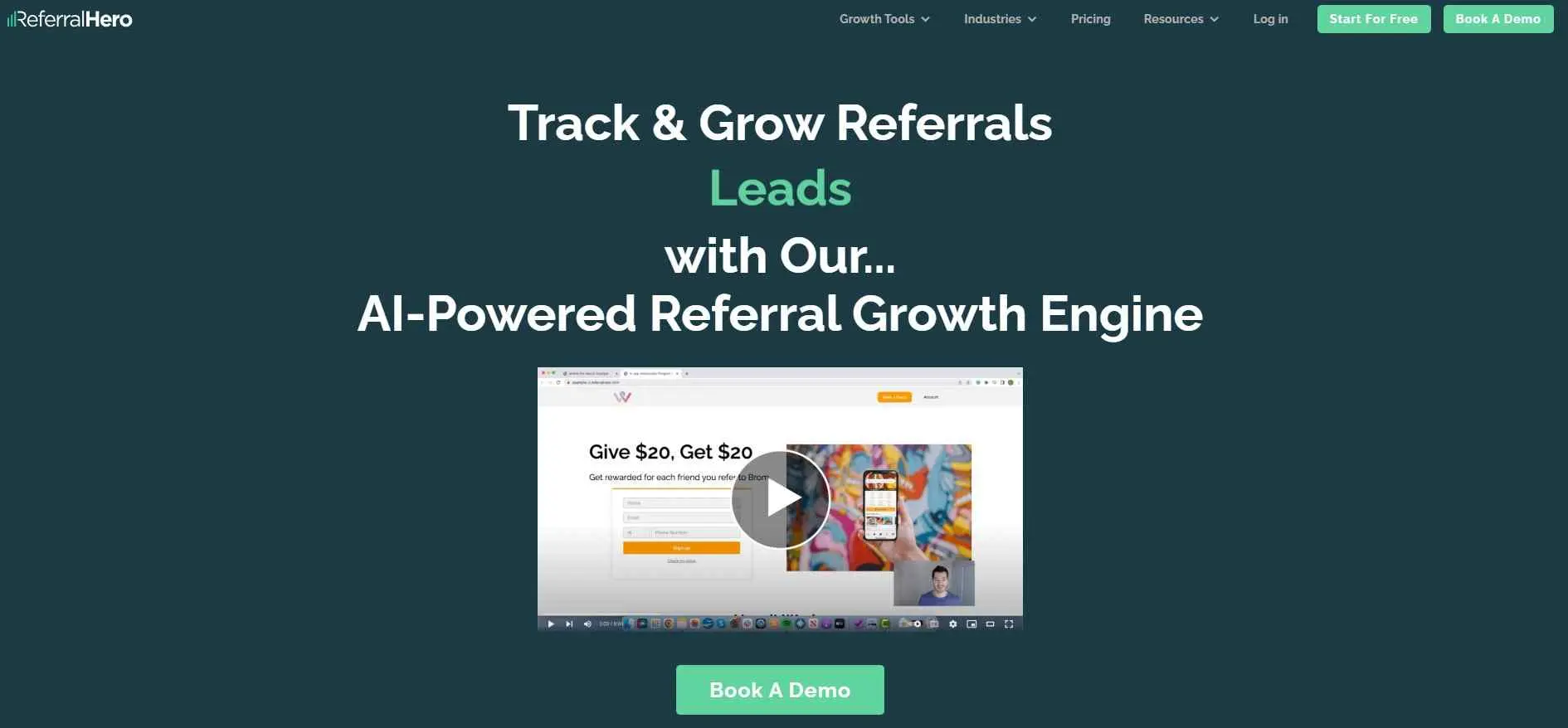
ReferralHero is a broader growth platform with referral campaigns sitting alongside waitlists, contests, and affiliate campaigns. It gives marketers referral links, coupon codes, email automation, analytics, and anti-fraud tools without requiring a large technical setup. There is also a free plan for very small campaigns, which makes it easy to try before committing to a paid plan. Cash and gift card payouts are available as well.
Key Features
- Referral links and coupon codes
- Automated referral emails
- Anti-fraud tools
- Analytics and campaign reporting
Pros & Cons
- Pros: Easy to experiment with, a useful free plan, and several campaign types in one platform.
- Cons: The platform can feel broader than necessary if referrals are your only goal.
Best For
Startups, growth teams, and smaller businesses are testing referral campaigns alongside other customer acquisition ideas.
5. Yotpo
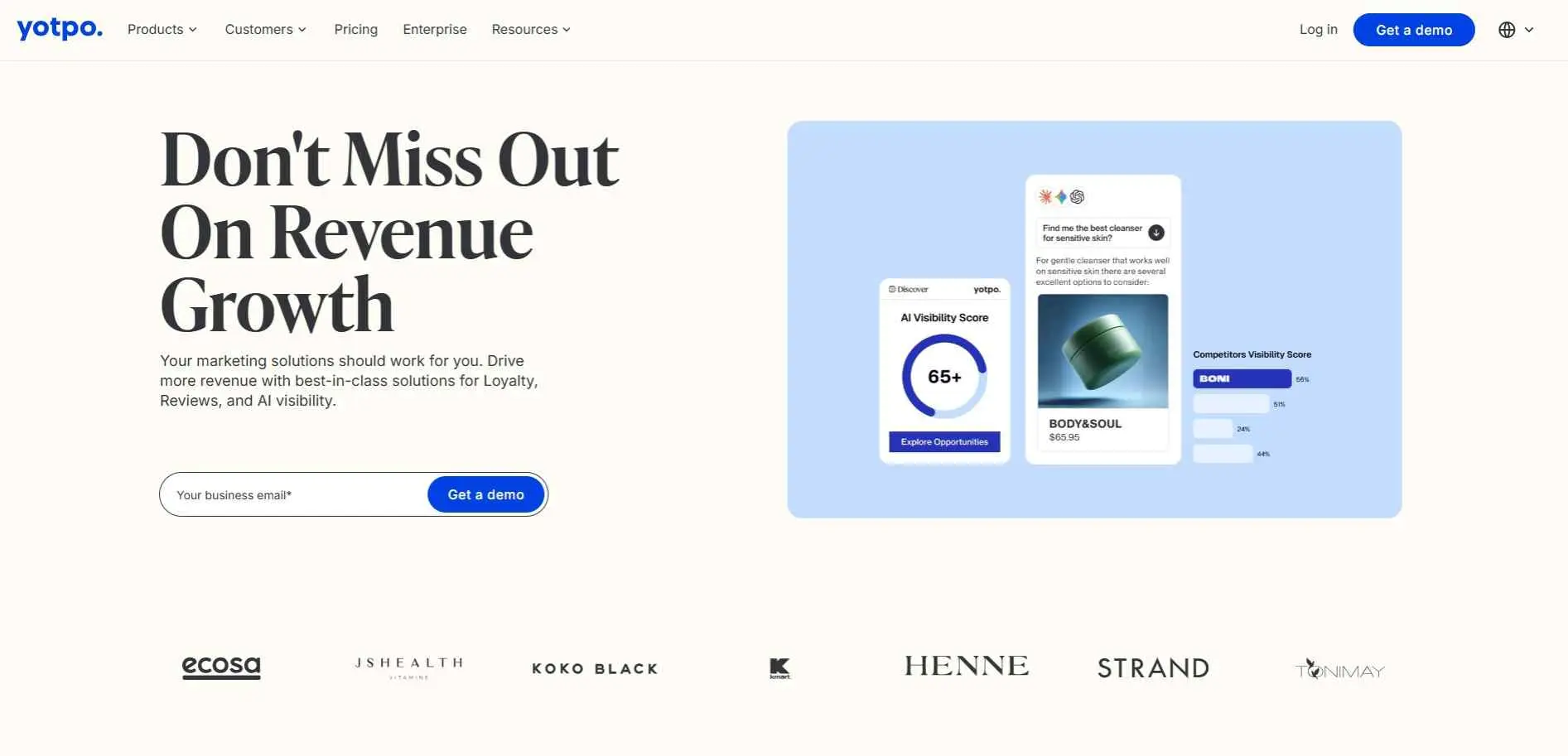
Yotpo approaches referrals as part of the wider loyalty picture. Its Loyalty & Referrals product lets e-commerce brands reward both the customer and the friend who is referred. All rewards - like points, coupons, and other incentives - are kept in one system. Features include referral email flows, referral modules, and fraud prevention. Higher pricing plans include loyalty tools and checkout options.
Key Features
- Two-sided referral rewards
- Referral email flows
- Referral modules for the storefront
- Fraud prevention
Pros & Cons
- Pros: Good fit for e-commerce, combines loyalty and referrals, plenty of reward options.
- Cons: Can be more than you need if you only want a simple referral program.
Best For
Online stores that already care about customer loyalty and want referrals inside the same system.
6. Lootly
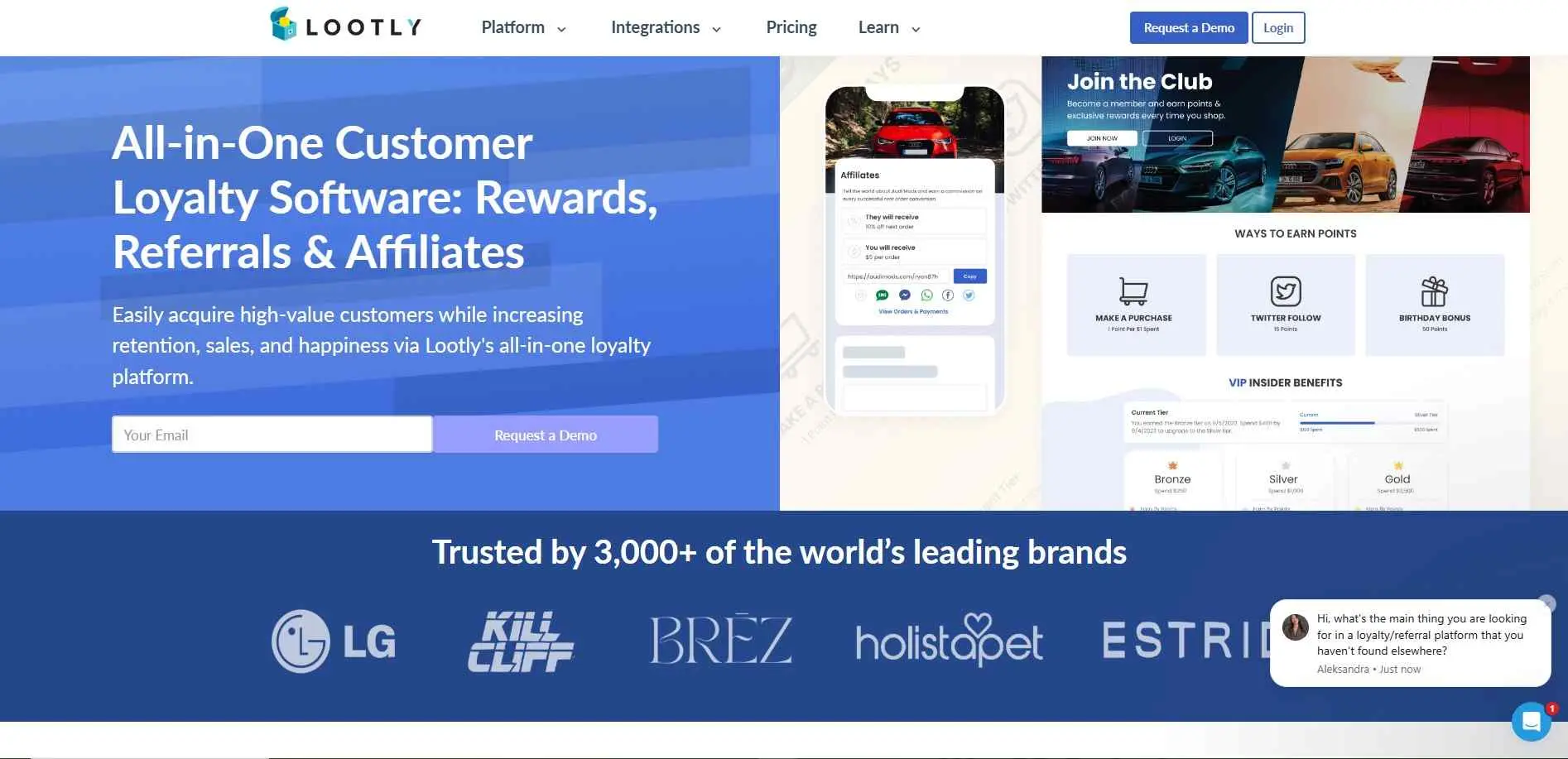
Lootly sits somewhere between a referral tool and a full loyalty platform. Along with referral links and sharing, it gives brands points programs, VIP tiers, affiliate campaigns, and customer reward pages. That makes it more useful for a store that wants referrals to sit inside a broader retention strategy. The platform also offers integrations, API access, and unlimited customers, orders, and affiliates on its paid plans.
Key Features
- Referral links and multiple sharing methods
- Loyalty points and VIP programs
- Affiliate campaigns
- Personalized rewards pages
Pros & Cons
- Pros: Referrals, loyalty, and affiliates live in one place; strong e-commerce focus.
- Cons: Not the obvious choice if referrals are the only thing you want to manage.
Best For
Growing e-commerce brands that want one platform for loyalty, referrals, and affiliate marketing.
7. Talkable
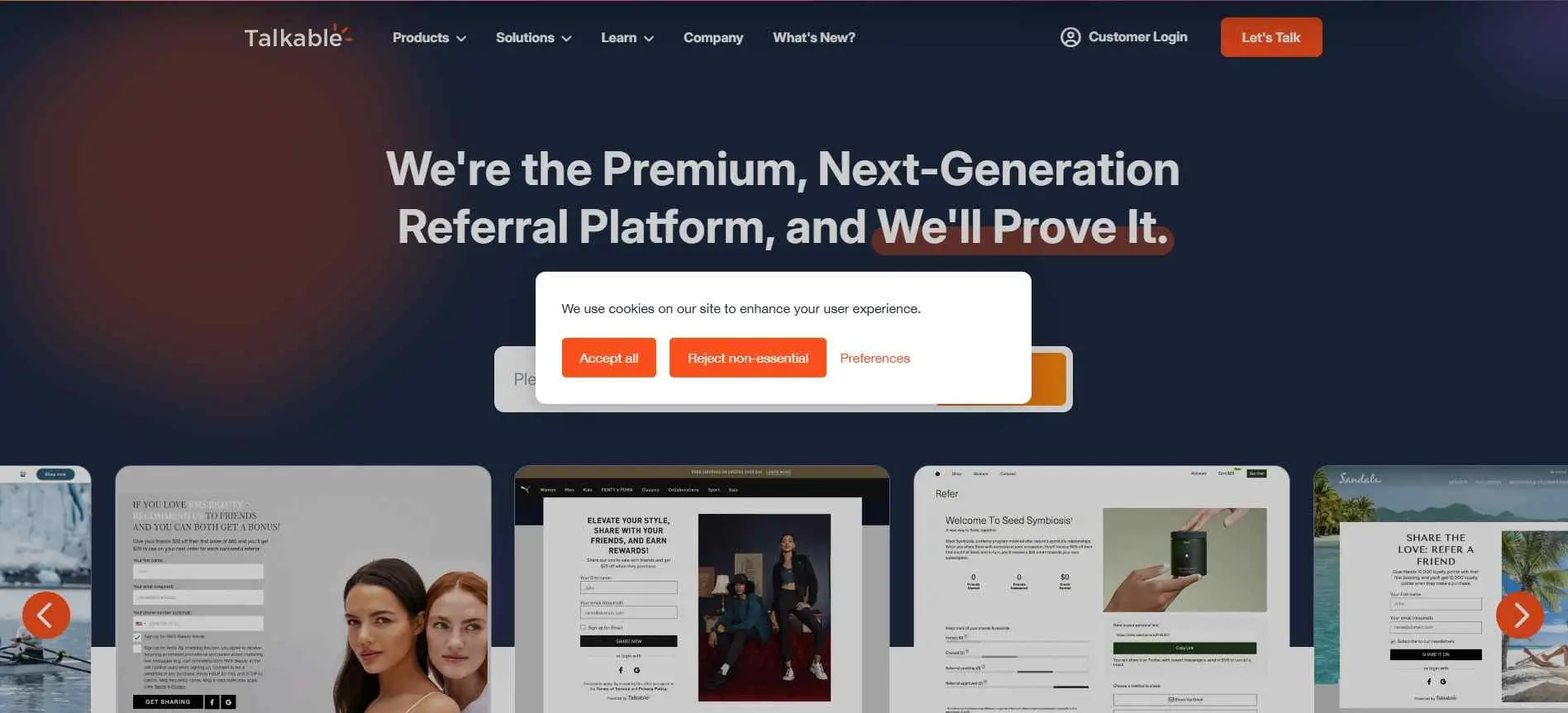
Talkable is built for e-commerce teams treating referrals as a real acquisition channel, not a launch-and-forget widget. You get offers, placement controls, segmentation, A/B testing, fraud checks, and reporting - the standard toolkit, but all in one place. What sets the pitch apart is the emphasis on testing after launch: different offers, different audiences, different customer flows, rather than shipping one program and calling it done.
Key Features
- Referral campaign management
- A/B testing and audience segmentation
- Fraud controls
- Reporting and performance tracking
Pros & Cons
- Pros: Strong campaign controls, good testing options, and managed support are available.
- Cons: Better suited to serious referral programs than to minimal stores.
Best For
Mid-market and enterprise e-commerce brands that want ongoing testing and management rather than a referral widget they set up once.
8. Referral Factory
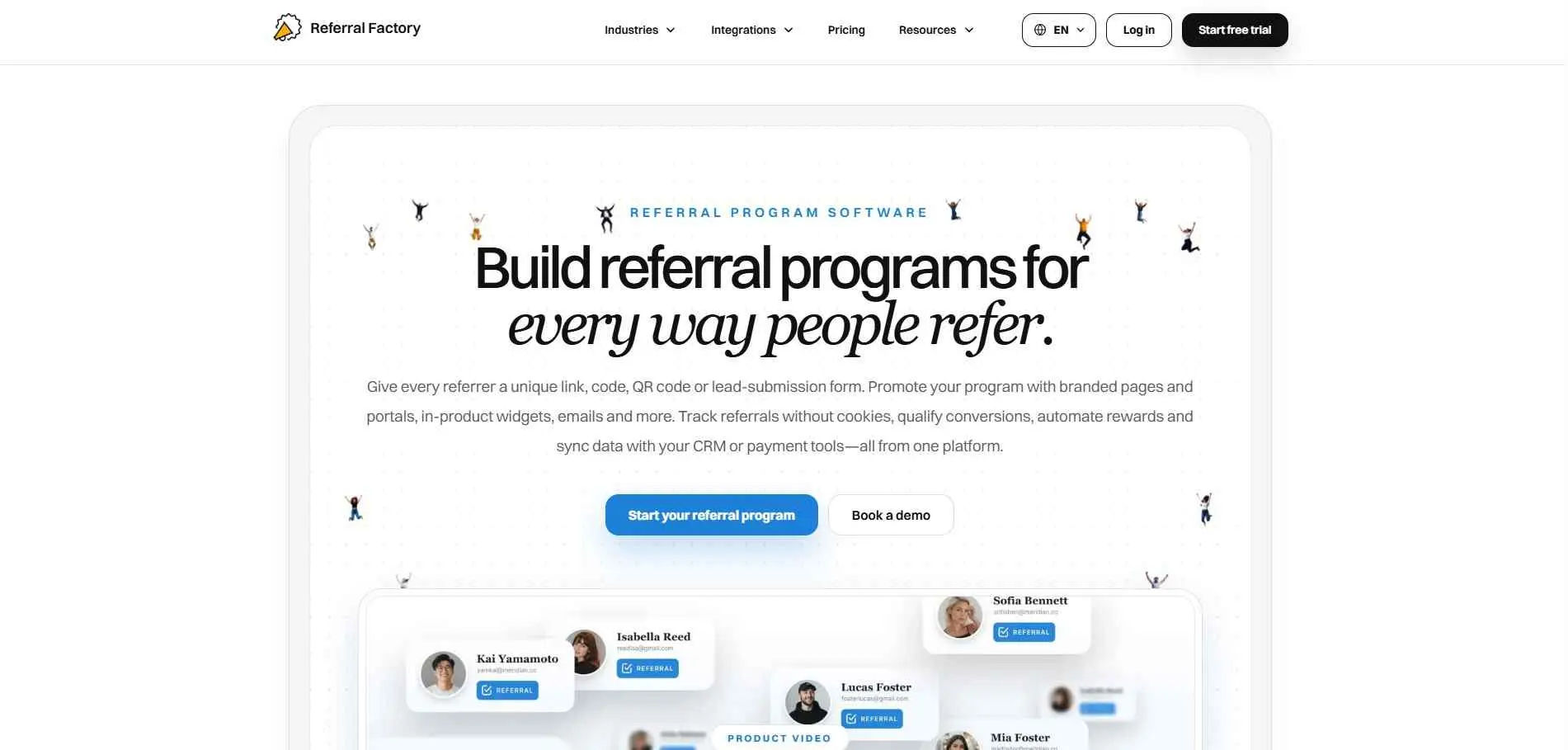
Referral Factory is for teams running referral campaigns in-house rather than farming them out. You get links, codes, QR codes, branded portals, widgets, rewards, analytics - the full kit—plus integrations with HubSpot, Salesforce, Stripe, and Zapier. Reward types aren`t locked down, so you`re not stuck with one format. Once you`re big enough to care about white labeling, SSO, or managed support, those show up as add-ons - smaller teams probably won`t need them.
Key Features
- Referral links, codes, and QR codes
- Branded referral portals and website widgets
- Referral analytics and tracking
- Fraud alerts and reward controls
Pros & Cons
- Pros: Flexible setup, lots of campaign controls, and useful for different business models.
- Cons: Some advanced capabilities are aimed more at mid-market and enterprise teams.
Best For
Companies that want control over their referral campaigns without handing the whole program to an agency.
9. Extole
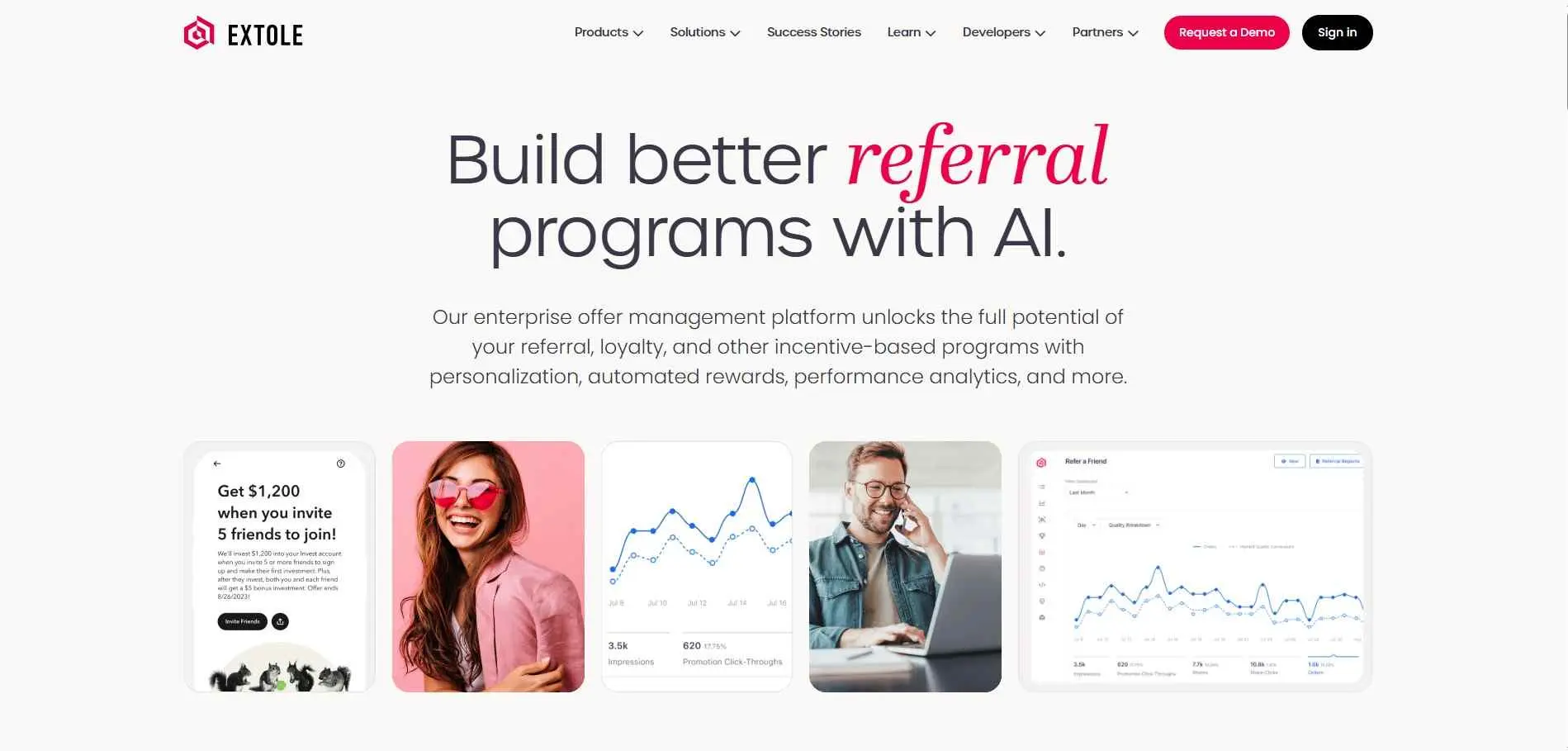
Extole is aimed at companies whose referral and loyalty programs have gotten too complicated for a basic refer-a-friend tool. It covers customer journeys across web, app, in-store, wherever - rewards, targeting, fraud controls, reporting, one platform. It`s not just referrals either: loyalty, ambassador, and influencer programs run through the same system.
Key Features
- Cross-channel referral and incentive programs
- Flexible rewards and reward rules
- Fraud protection
- Real-time reporting and data integrations
Pros & Cons
- Pros: Handles complex programs, strong targeting and reward controls, built for large organizations.
- Cons: Too much platform for a small business with a basic referral campaign.
Best For
Enterprise brands running referral, loyalty, ambassador, influencer, or other incentive programs across several channels.
10. Referral Rock
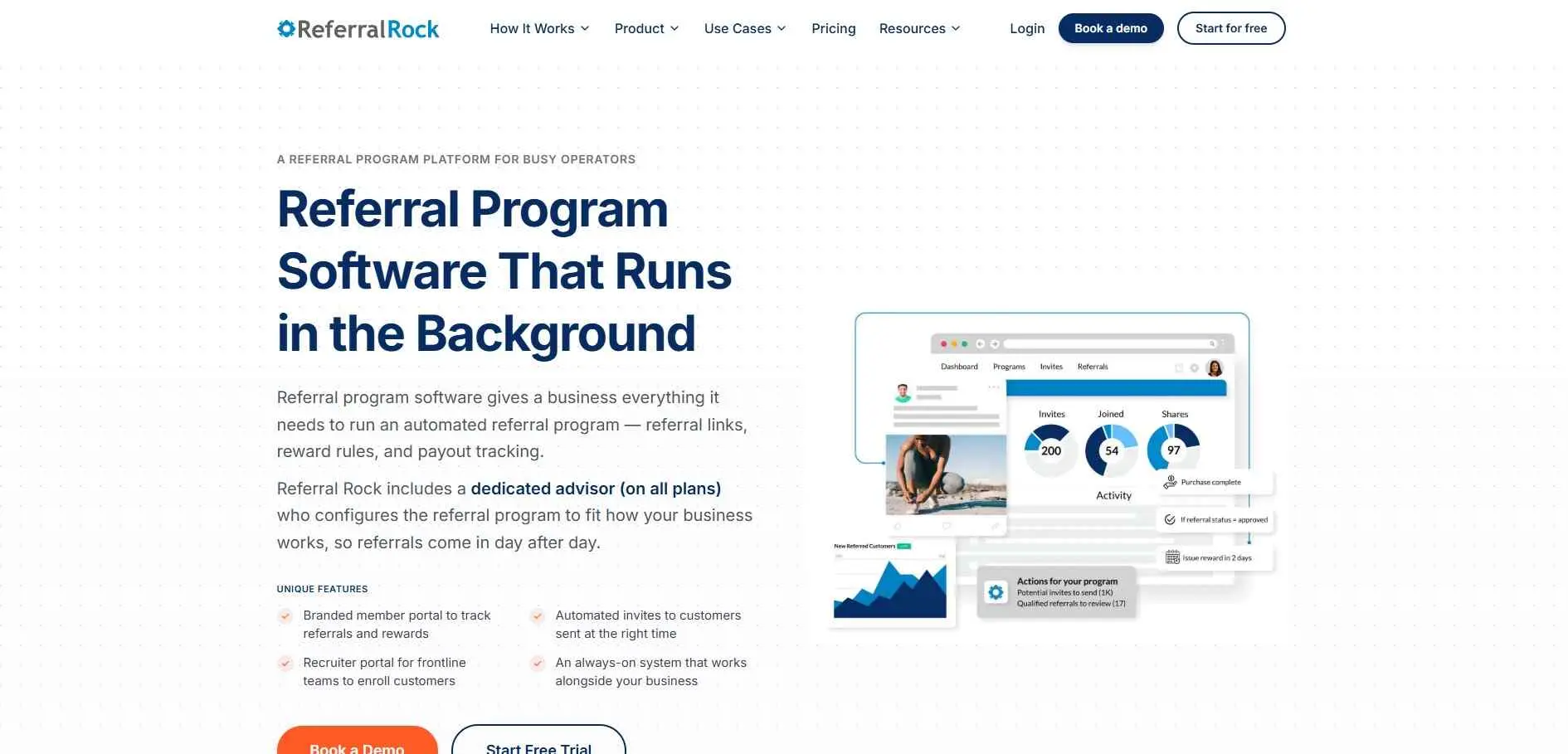
Referral Rock is for teams who`ve outgrown a plain refer-a-friend widget. One account covers customer referral, ambassador, and affiliate programs - member portals, referral links, QR codes, automated emails, reward management. If you`re juggling more than one program type, this is built for that; if you just need a single simple referral link, it`s overkill. It hooks into CRMs and e-commerce tools and delivers a program adviser with every plan to help with the setup.
Key Features
- Customer referral and ambassador programs
- Affiliate program management
- Branded member portals
- Referral links, QR codes, and automated emails
Pros & Cons
- Pros: Flexible, works across many business models, and is useful when referrals may expand into ambassador or affiliate marketing.
- Cons: More expensive and involved than basic referral apps.
Best For
SaaS companies, professional services, franchises, e-commerce brands, and businesses wanting to have referral, ambassador, and affiliate programs all in one app.
How to Choose Referral Marketing Software
First, decide what kind of referral program you`re actually trying to run.
A small online store might need nothing more than a referral link, a discount for the new customer, a reward for the existing customer, and automatic tracking. There is no reason to buy a huge enterprise platform for that.
A larger company is dealing with different problems. Maybe referrals need to work across several websites. It might be rewarded depending on the customer`s value. It could be that the marketing team wants to test five different offers at the same time.
That`s where the bigger platforms start earning their keep.
Another aspect to consider is where your customers will see the referral offer. People act differently depending on where they see something - a screen after buying, an email, their account page, a QR code on a box, or a message inside an app. So pick your software based on how your customers really act, not based on which one has the most features.
What should you check before buying?
- Tracking: Make sure referrals can be followed from the initial share through to the actual conversion.
- Rewards: Check whether you can use discounts, cash, store credit, gift cards, points, or the type of reward your customers will actually care about.
- Fraud control: Look for protection against self-referrals, duplicate accounts, fake conversions, and other easy ways to abuse the program.
- Integrations: Your referral platform should fit with your e-commerce platform, CRM, email tools, and analytics rather than creating another isolated system.
- Testing: A good referral program usually needs tweaking. Being able to test the reward, wording, placement, or audience can make a real difference.
- Reporting: Reporting should tell you who`s actually driving referrals, how many of those turn into real conversions, and whether the rewards you`re paying out are worth it.
Best referral marketing platforms by use case
- Best for e-commerce: ReferralCandy
- Best for referral-focused brands: Mention Me
- Best for detailed attribution: Friendbuy
- Best for startups: ReferralHero
- Best for loyalty and referrals together: Yotpo
- Best for loyalty, affiliates, and referrals: Lootly
- Best for managed referral programs: Talkable
- Best for self-managed campaigns: Referral Factory
- Best for enterprise incentive programs: Extole
- Best for referrals plus ambassador programs: Referral Rock
Bottom Line
There isn`t much point in choosing referral software because it has the longest feature list. For most e-commerce stores, ReferralCandy is the boring-but-correct starting point. ReferralHero makes more sense if you`re small and just want to poke at a few growth campaigns before committing to a real budget.
If referrals are already pulling real weight in your acquisition mix, Mention Me, Friendbuy, and Talkable give you more room to test, segment, and actually manage the thing.
If you want loyalty and referrals in one, both Yotpo and Lootly are worth comparing.
Referral Factory is a good middle ground for teams that want to build and control their campaigns, while Referral Rock is useful when customer referrals may eventually turn into ambassador or affiliate programs.
For larger organizations with complicated incentive programs, Extole is the more natural fit.
The best referral tool is the one your customers will actually use.
Keep the experience simple, make the reward easy to understand, and check that the math still works once you add in software fees and reward payouts