
 Table of Content
Manual prospecting is dead weight in 2026. Reps still burn hours copy-pasting names, titles, and emails out of LinkedIn tabs into a spreadsheet. Most of that time isn't selling. It's data entry with extra steps. Lead scraping tools fix that by pulling contact and company data automatically, which frees your team up to actually talk to people instead of hunting for their email address.
Here's a rundown of 10 lead scraping tools worth using for B2B prospecting right now - what each one is good at, where it's weak, and who should actually pick it. Some are no-code and built for reps who've never touched an API.
Others are developer frameworks for teams that want to build their own pipeline. A few skip scraping almost entirely and focus on verifying the data you already have. I've tried to be honest about which is which, because half these "best of" lists just list ten tools and call it a day.
What is Lead Scraping (and Why It Matters for B2B in 2026)
Lead scraping is when a tool automatically finds and collects contacts and companies information from places like websites, directories and LinkedIn profiles. It pulls out the important information, such as the name, position, email and company instead of a person having to do it manually.
It's also why "lead generation tools" and "contact data enrichment" have started to mean roughly the same thing. A raw scraped list isn't worth much on its own anymore. Most B2B teams need verified, enriched contact data - not just a pile of names to complement their wider marketing productivity tools
How We Evaluated These Tools
A few things we weighted heavily:
- Ease of use - how much setup a tool needs before it's producing usable lists, and whether someone without an engineering background could run it solo
- Data accuracy and verification - whether emails and phone numbers get checked against real signals, or just pattern-guessed from a name and a domain
- Integrations - how cleanly the tool connects to your CRM and the rest of your stack, so the data doesn't sit in a CSV nobody opens
- Scalability and compliance - whether it holds up at volume without getting your IP blocked or creating legal exposure
10 Best Lead Scraping Tools for B2B Prospecting in 2026
1. SyncGTM
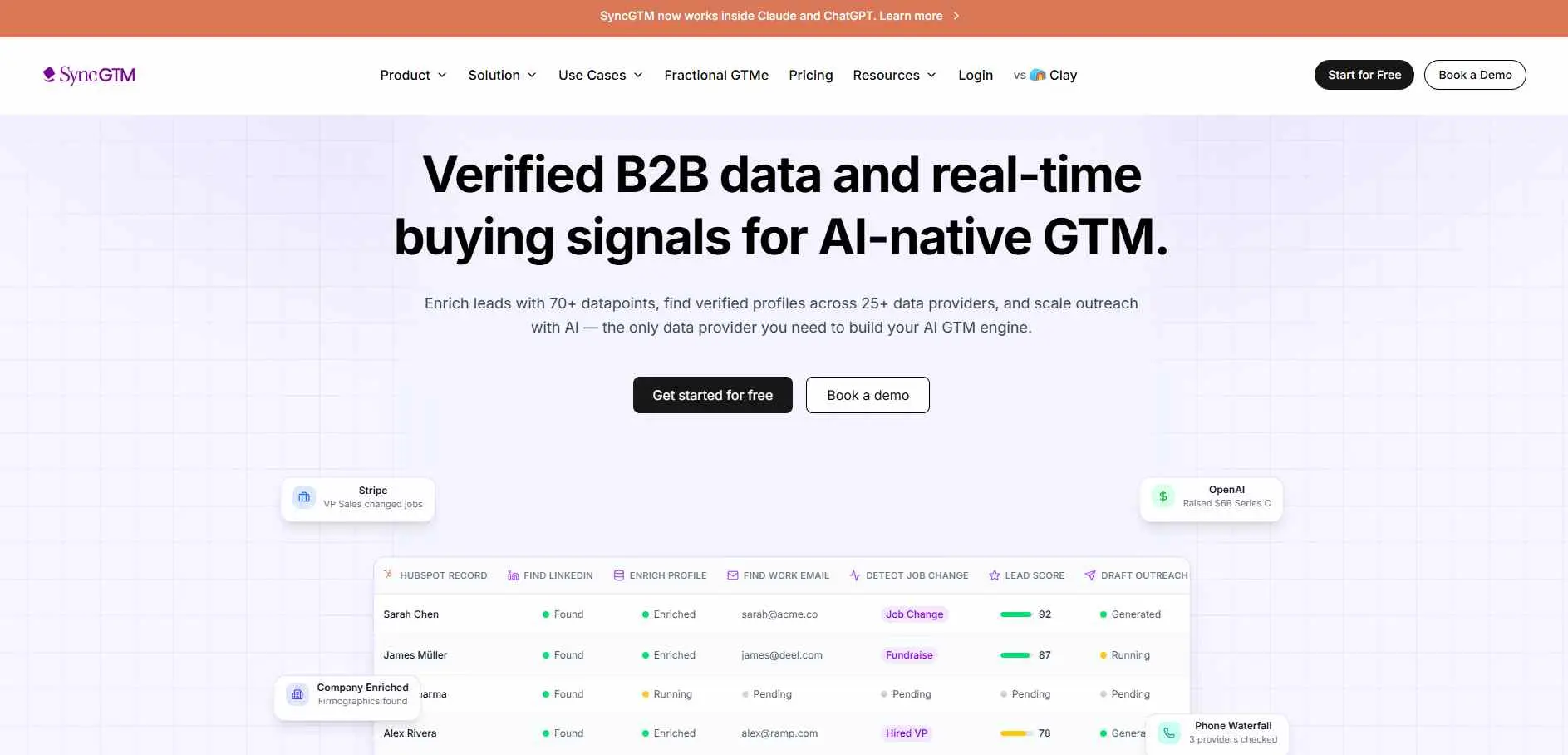
SyncGTM transfers data collected through scraping and enrichment process straight to your CRM, so you do not have to do time-consuming manual exporting and importing.
Key Features:
- Direct sync into CRM and sales engagement tools
- Enrichment layered on top of raw scraped data
- Built for GTM teams juggling multiple tools at once
Best For: Sales teams who already run a GTM stack and don't want another disconnected spreadsheet.
2. PhantomBuster
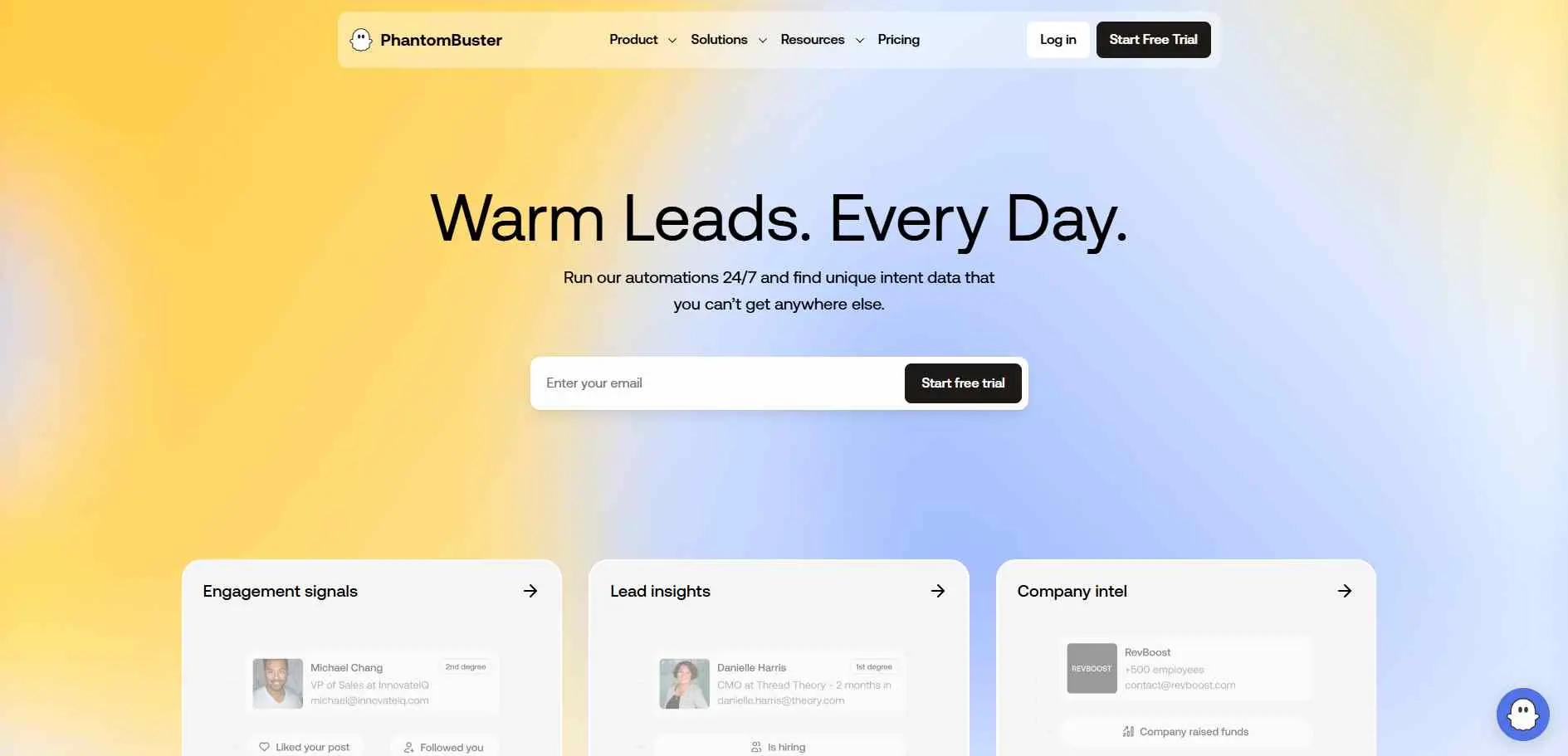
PhantomBuster automates LinkedIn and social data extraction through "Phantoms" - small bots that scrape profiles, connections, and engagement data on a schedule you set.
Key Features:
- Pre-built automations for LinkedIn, Sales Navigator, and other platforms
- Scheduling, so scrapes run without you triggering them each time
- Combines scraping with basic outreach automation
Best For: Teams doing heavy LinkedIn prospecting who'd rather it just run in the background.
3. Scrapy
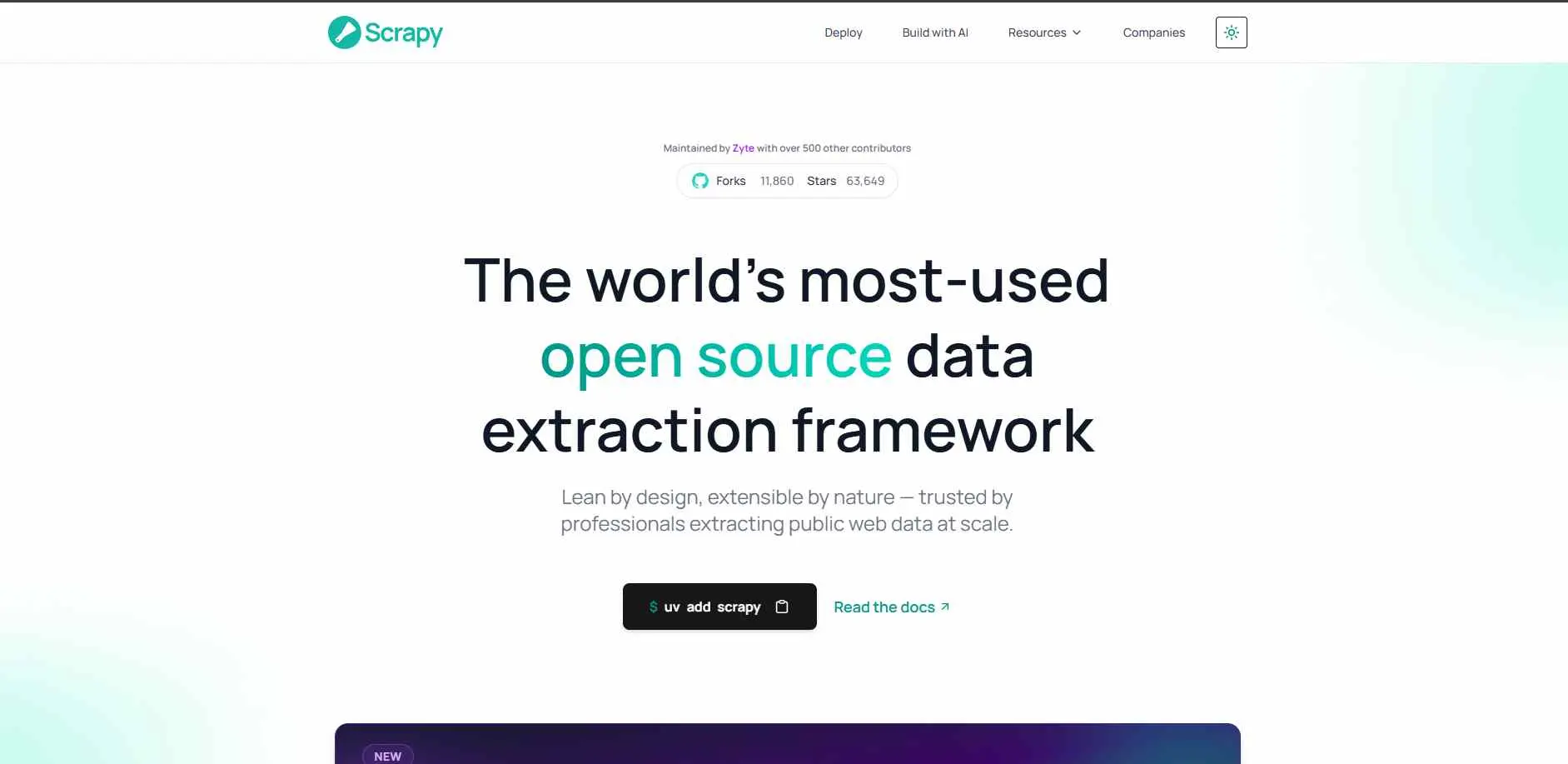
Scrapy is an open-source Python framework for building your own crawlers. There's no interface to click through here - you write the scraper yourself, which is either a dealbreaker or the whole appeal depending on who's asking.
Key Features:
- Full control over what gets scraped and how
- Free and open source, no per-lead pricing
- Handles large, complex crawling jobs well
Best For: Teams with developers who'd rather build the pipeline than rent one.
4. Octoparse
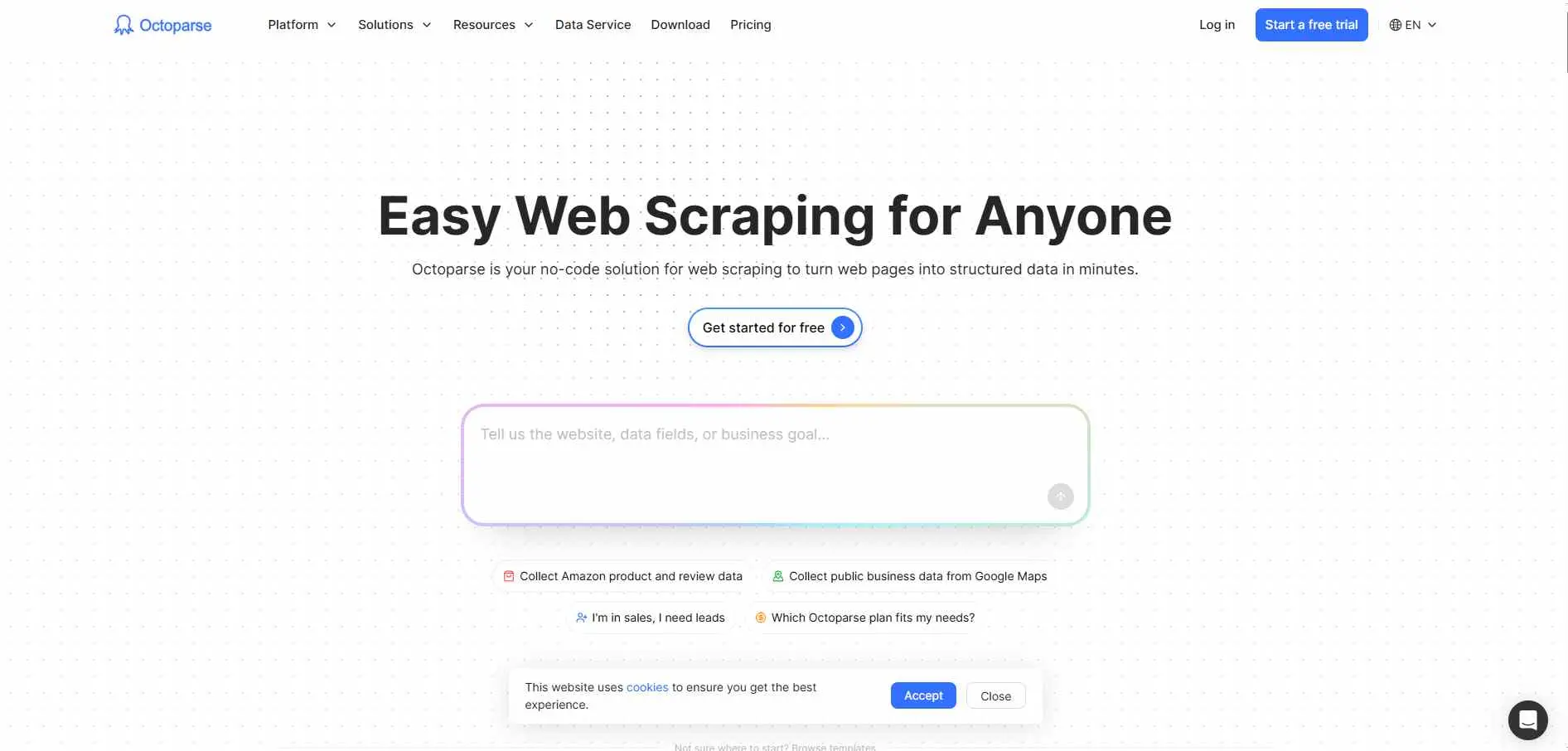
Octoparse is a no-code, point-and-click scraper. You highlight the data you want on a page, and it figures out the extraction logic on its own.
Key Features:
- Visual point-and-click workflow builder
- Templates for common sites, so you're not starting from a blank canvas
- Cloud-based scraping for jobs too big for a laptop to handle
Best For: Small teams or solo operators with zero coding background.
5. BrowserAct
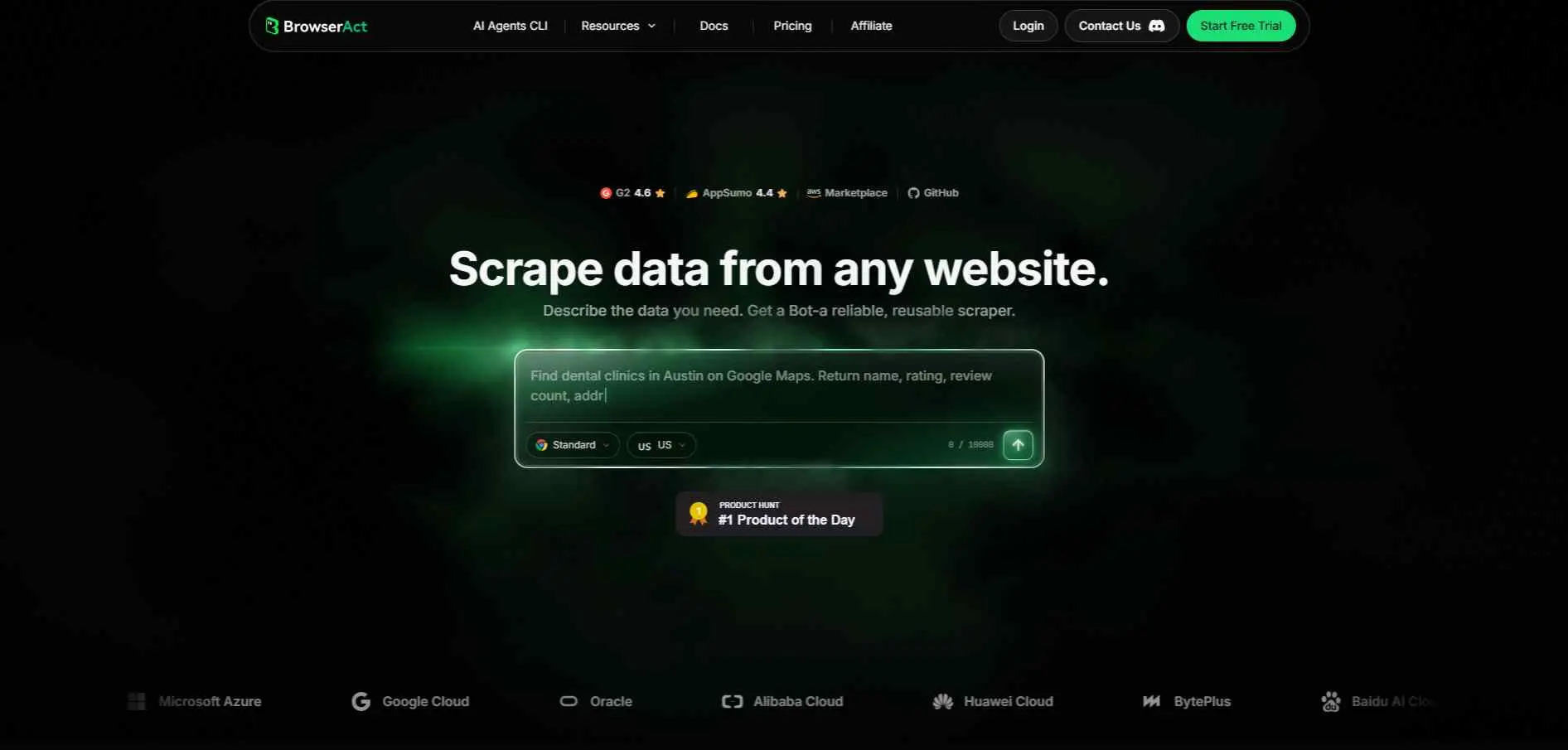
BrowserAct automates actual browser behavior - clicks, scrolls, form fills - to scrape sites that don't cooperate with basic scrapers, including ones that require a login first.
Key Features:
- Handles dynamic, JavaScript-heavy pages
- Navigates logins and multi-step flows before scraping
- No-code setup with a visual workflow builder
Best For: Teams scraping sites that trip up simpler tools.
6. Prospeo
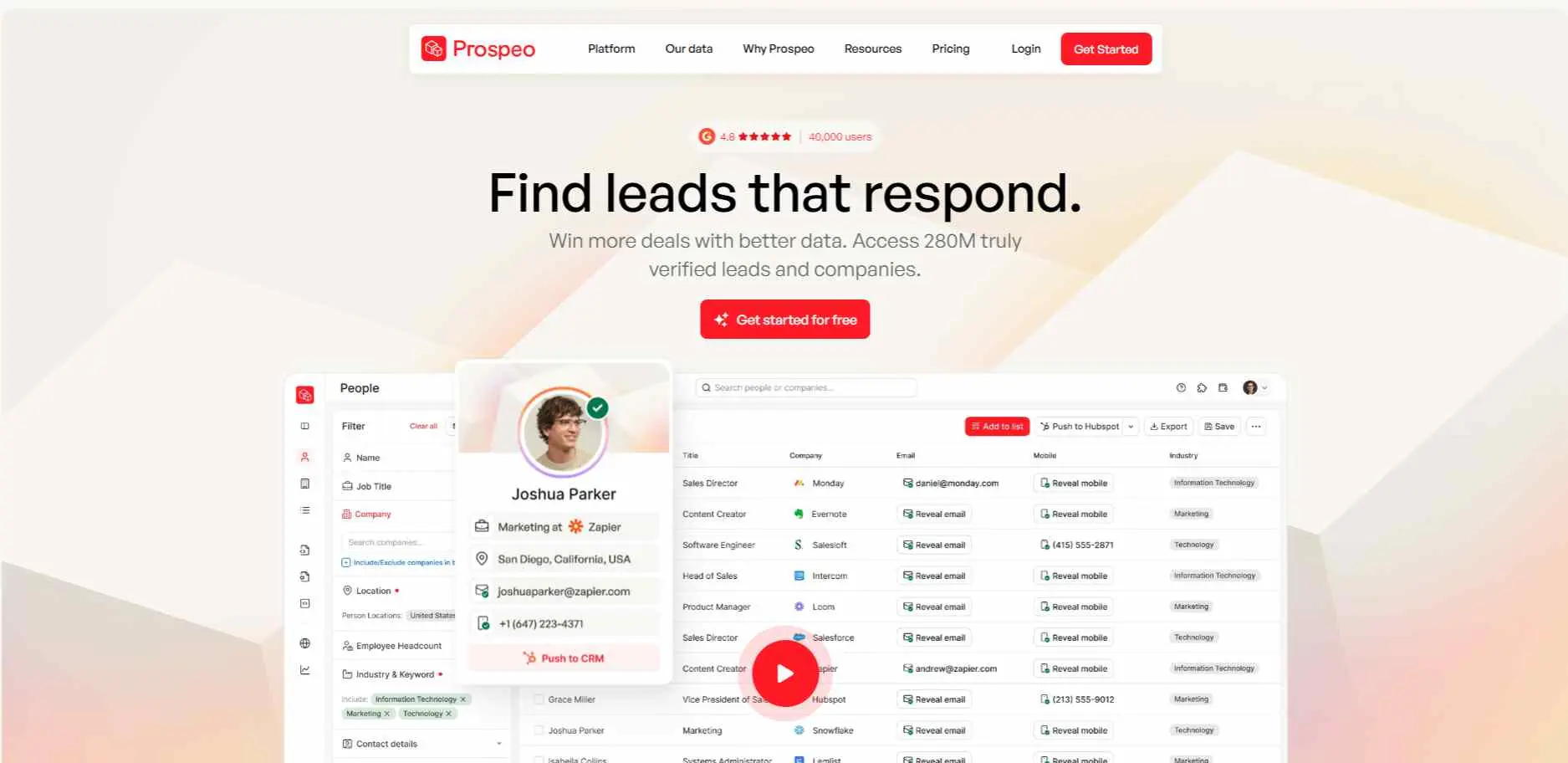
Prospeo isn't really a scraper in the traditional sense - it's built around finding and verifying emails. Feed it a name and a company, and it hands back a verified address.
Key Features:
- Real-time email verification, not just pattern guessing
- Chrome extension for pulling emails straight off LinkedIn
- API access for bulk lookups
Best For: Outbound teams who'd rather have 200 emails that actually land than 2,000 that might.
7. ScrapingBee
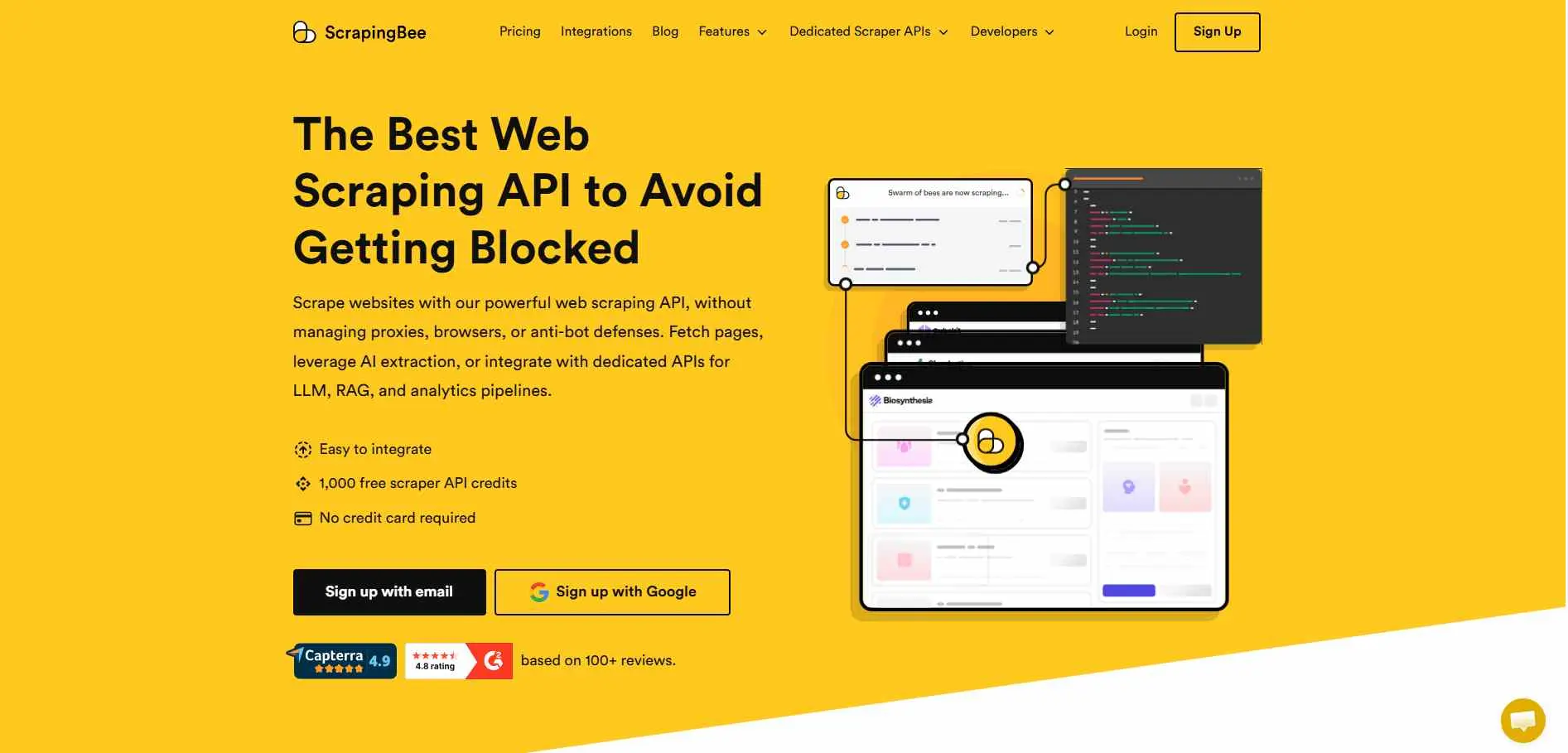
ScrapingBee is a scraping API that handles the boring infrastructure - proxies, browser rendering, CAPTCHAs - so you're not the one fighting them at 11pm.
Key Features:
- Handles JavaScript rendering and headless browser needs
- Rotating proxies built in to cut down on blocks
- Simple API calls instead of running your own scraping servers
Best For: Developers who want the infrastructure without maintaining it themselves.
8. Bright Data
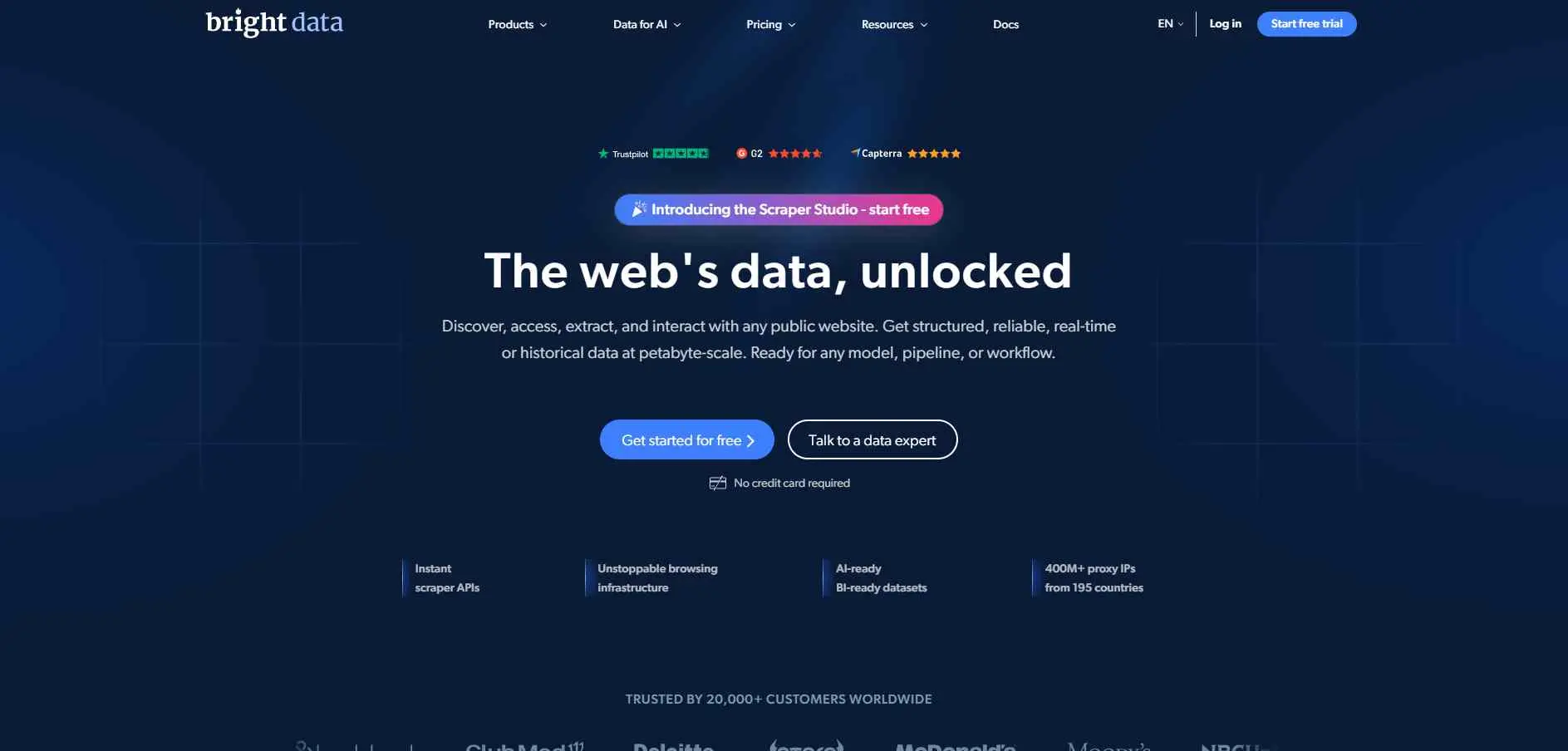
Bright Data is a large-scale web data platform with one of the biggest proxy networks out there, built for teams scraping at real volume, not a few hundred rows a week.
Key Features:
- Massive residential and datacenter proxy network
- Pre-collected datasets available, not just live scraping
- Enterprise-grade compliance and data collection tooling
Best For: Larger teams scraping at high volume who can't afford compliance to be an afterthought.
9. ParseHub
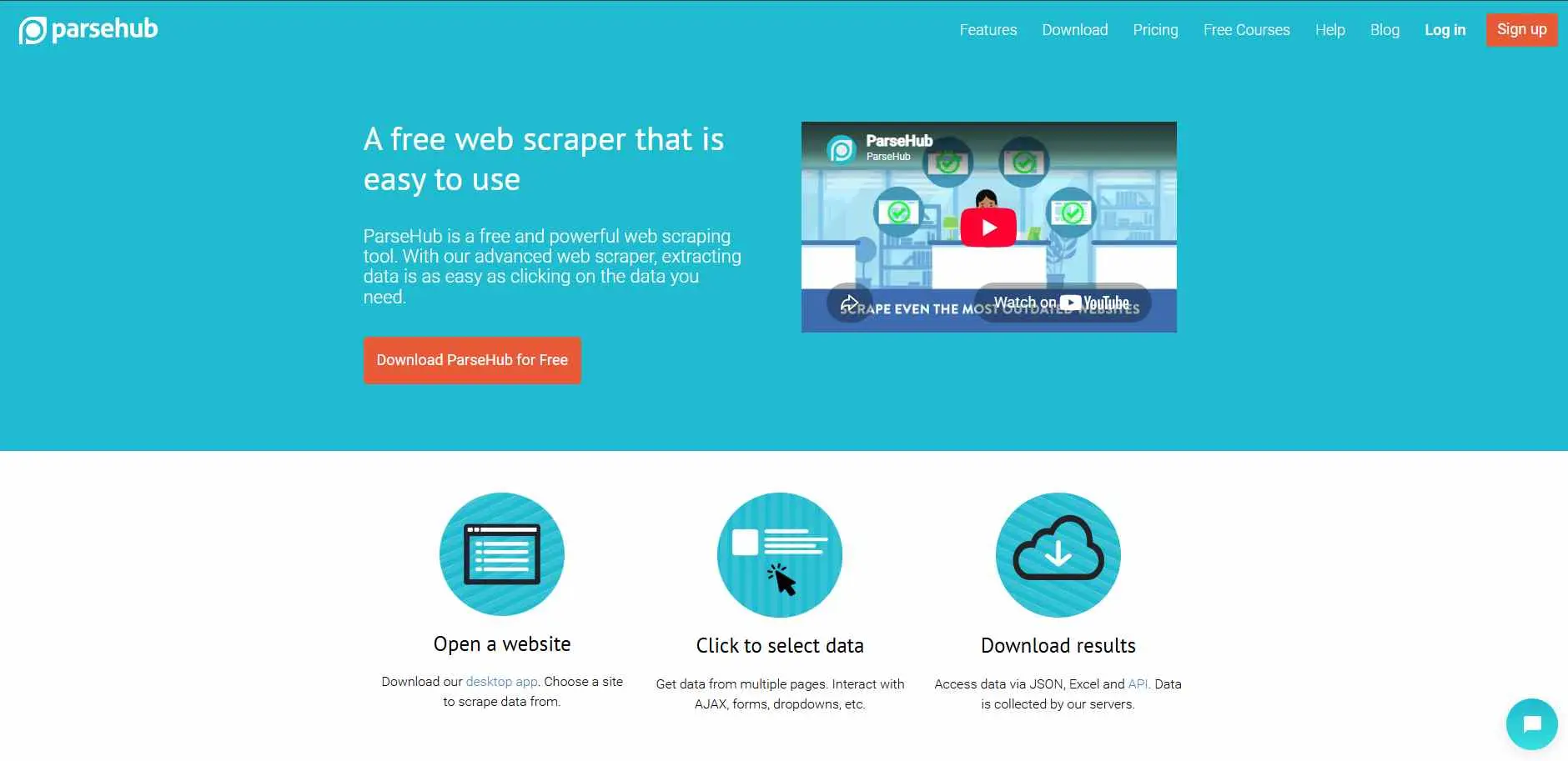
ParseHub is another visual, no-code scraper, built for pulling data off sites with pagination, dropdowns, and other interactive bits that trip up simpler tools.
Key Features:
- Handles interactive site elements like dropdowns and infinite scroll
- Desktop app with a visual selection interface
- Free tier available for smaller projects
Best For: Non-technical users who've outgrown a basic point-and-click tool.
10. LeadFuze
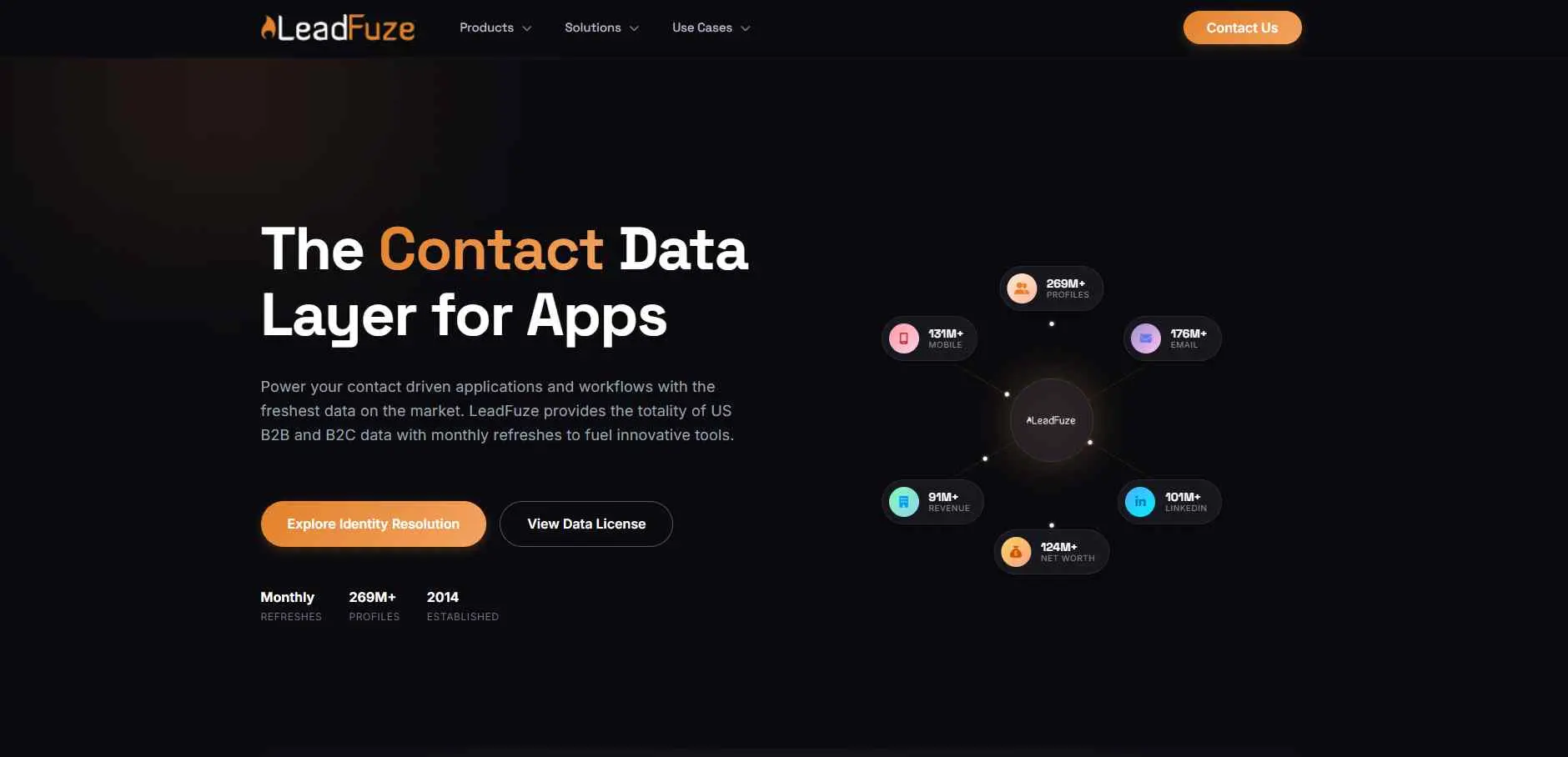
LeadFuze builds targeted lead lists from filters - job title, industry, company size - and verifies the contact data before it lands in your hands.
Key Features:
- Filter-based list building instead of raw page scraping
- Built-in email verification
- Integrates with common outbound and CRM tools
Best For: Teams who'd rather buy a filtered list than build a scraper.
Common Mistakes to Avoid When Choosing a Lead Scraping Tool
Scraping without verifying emails
A bounced email doesn't just fail to convert. It hurts your domain's sender reputation, and that follows you into every campaign after it. Verification isn't a nice-to-have anymore.
Ignoring compliance
GDPR and CCPA cover how you collect and use personal data, regardless of where your company sits. Scrape without any regard for consent or source, and you're carrying real legal risk, especially prospecting into the EU or California.
Picking a tool on price alone
The cheapest scraper that returns junk data isn't actually cheap. You pay for it later, in wasted rep hours and bounced sends. Weigh accuracy and integrations against the price tag, not just the number on it.
How to Pick the Right Tool for Your Team
- Small team, no-code: Octoparse, ParseHub, or BrowserAct – fast integration without any coding effort.
- Developer-heavy, custom pipelines: Scrapy or Bright Data - full control, built for scale
- Outbound-focused, enrichment and verification: Prospeo, LeadFuze, or SyncGTM - accuracy over raw volume
- LinkedIn and social automation: PhantomBuster - built for exactly that job
Conclusion
There's no single "best" lead scraping tool here. It depends on your team's size, your technical skill, and whether the real problem is scraping, verification, or both. If reps are stuck manually pulling LinkedIn data, start with PhantomBuster free. If your list quality is the actual bottleneck, skip straight to Prospeo or LeadFuze.