 Table of Content
Real influencers are expensive. A single sponsored post costs thousands. Shoots take days. And if the creator ghosts you, the entire campaign falls apart.
AI influencers solve a specific version of that problem. You design a digital character once, own it completely, and generate as many photos or videos as you want from the same face - no scheduling, no shoots, no usage rights to negotiate. The character is always available, always on-brand, and costs a fraction of what you’d pay a real creator.
This guide covers what AI influencers actually are, the 10 best tools to build one in 2026, and what to realistically expect if you’re trying to earn from one.
What is an AI Influencer?
An AI influencer is a digital persona - a character with a consistent face, style, and personality - that exists entirely inside AI tools. If you’re new to the space, this online influencer marketing for social media guide explains how the broader influencer ecosystem works before you dive into building one.
No real person is on camera. Using an AI generator, you create the character, then generate images and videos of that character for social media accounts, and/or appear in brand campaigns, or adverts.
Some AI influencers have millions of followers. Lil Miquela, one of the first, has been running brand deals since 2016. What changed in 2026 is that you no longer need a studio or a team of 3D artists to build one. Several tools let a solo creator spin one up in under an hour.
The catch: running an AI influencer account still takes the same thing real influencer accounts take - consistent posting, content that fits the platform, and a niche that attracts an audience. The AI handles the visuals. The strategy is still on you.
Why Build One in 2026?
A few things shifted this year that make AI influencers more viable than they were even 12 months ago.
Video generation improved enough to produce clips where the character’s face holds consistent across multiple shots - which was the biggest technical problem for years. You’d get a great photo but the moment you generated a second one, the face drifted. Most of the tools below have solved or significantly reduced that.
Brands also got more comfortable. UGC-style ad formats that use AI characters are running on paid social now. For a DTC brand that needs dozens of ad variations, an AI character they can clone into any scenario is genuinely useful. That created a real market for creators who own one.
How These Tools Actually Work
Each AI influencer generator in this list is based on pretty much the same logic: you specify a character (either by uploading photos of yourself, or choosing from pre-defined options or by typing), the tool trains a model based on that character and then use that trained model to create new photos and videos.
The key word is consistent. The same face, same skin tone, same energy across every output. That’s what separates a proper AI influencer tool from just prompting an image generator - which gives you a different-looking person every time.
For video specifically, tools like MakeInfluencer.ai and BeautyPlus use lip sync and motion control to put your character into talking videos or trending clips. The quality varies, but it’s good enough for social media formats at this point.
Quick Comparison
Tool | Best For | Video Support | Free Tier | Starting Price |
| MakeInfluencer.ai | Full income pipeline | ✅ Advanced | ✅ Sign up | $39/mo |
| Higgsfield AI | Short-form video | ✅ Core focus | ✅ Limited | Paid |
| The Influencer AI | Photo consistency | ⚠️ Limited | ✅ Trial | Paid |
| Picsart Persona | Picsart users | ⚠️ Basic | ✅ Limited | Picsart plan |
| HeyGen | Talking video/lip sync | ✅ Best-in-class | ✅ Limited | Paid |
| OpenArt | Batch/agency output | ⚠️ Limited | ✅ Credits | Paid |
| VEED | Finished video output | ✅ Yes | ✅ Limited | Paid |
| BeautyPlus | Ease of use | ✅ Yes | ✅ Yes | Paid |
| Kapwing | Text-to-character | ✅ Yes | ✅ Limited | Paid |
| APOB AI | Testing/free use | ⚠️ Basic | ✅ Yes | Free |
10 Best AI Influencer Generator Tools in 2026
1. MakeInfluencer.ai
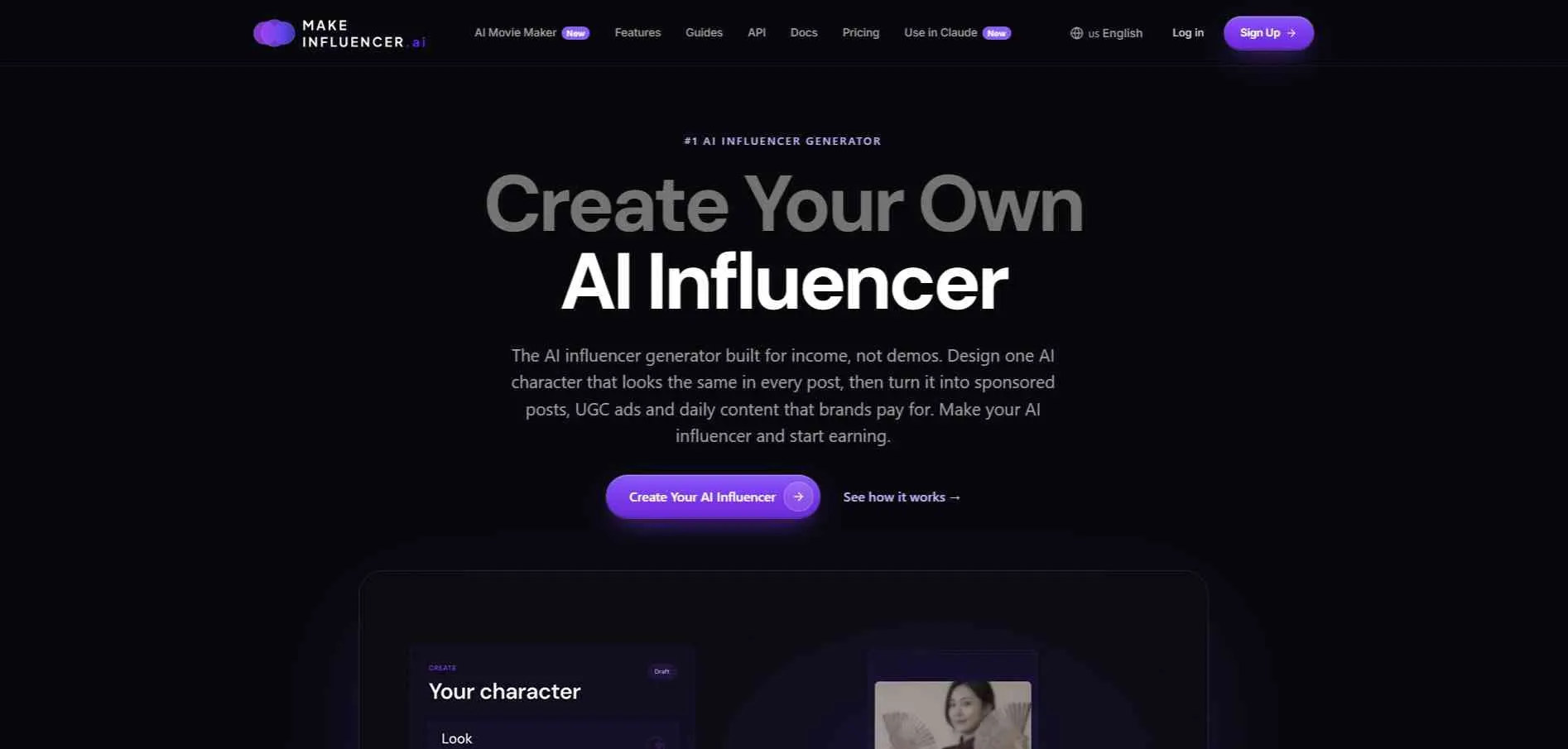
MakeInfluencer is the most complete tool for turning an AI character into a working income stream. You train one character (60,000 credits per training) and then generate photos, short videos, talking clips, and even short films from that same face. Runs on a mix of models including GPT Image 2.5, Seedance 2.5, and Kling v3 - you choose which model per generation. Brand deal templates, UGC ad templates, and hook variation generators are built in. Plans start at $39/month. The $10K/month playbook on their site is worth reading even if you never sign up.
2. Higgsfield AI
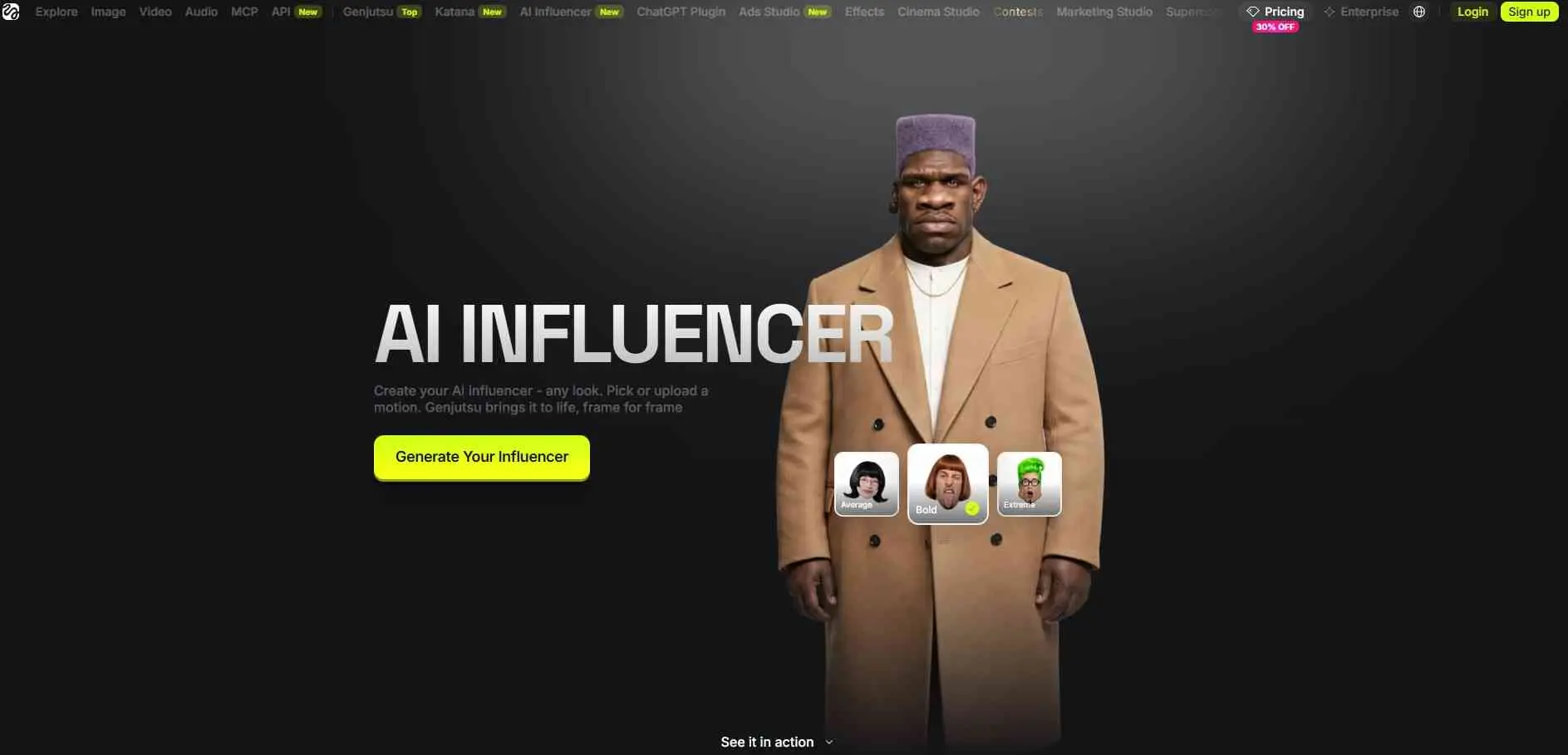
Higgsfiekd AI built specifically for video - you create an AI influencer from a single photo (or from scratch), then drop that character into any trending video format. The frame control is more precise than most tools here. Good if your primary output is short-form video for Reels or TikTok rather than still images.
3. The Influencer AI
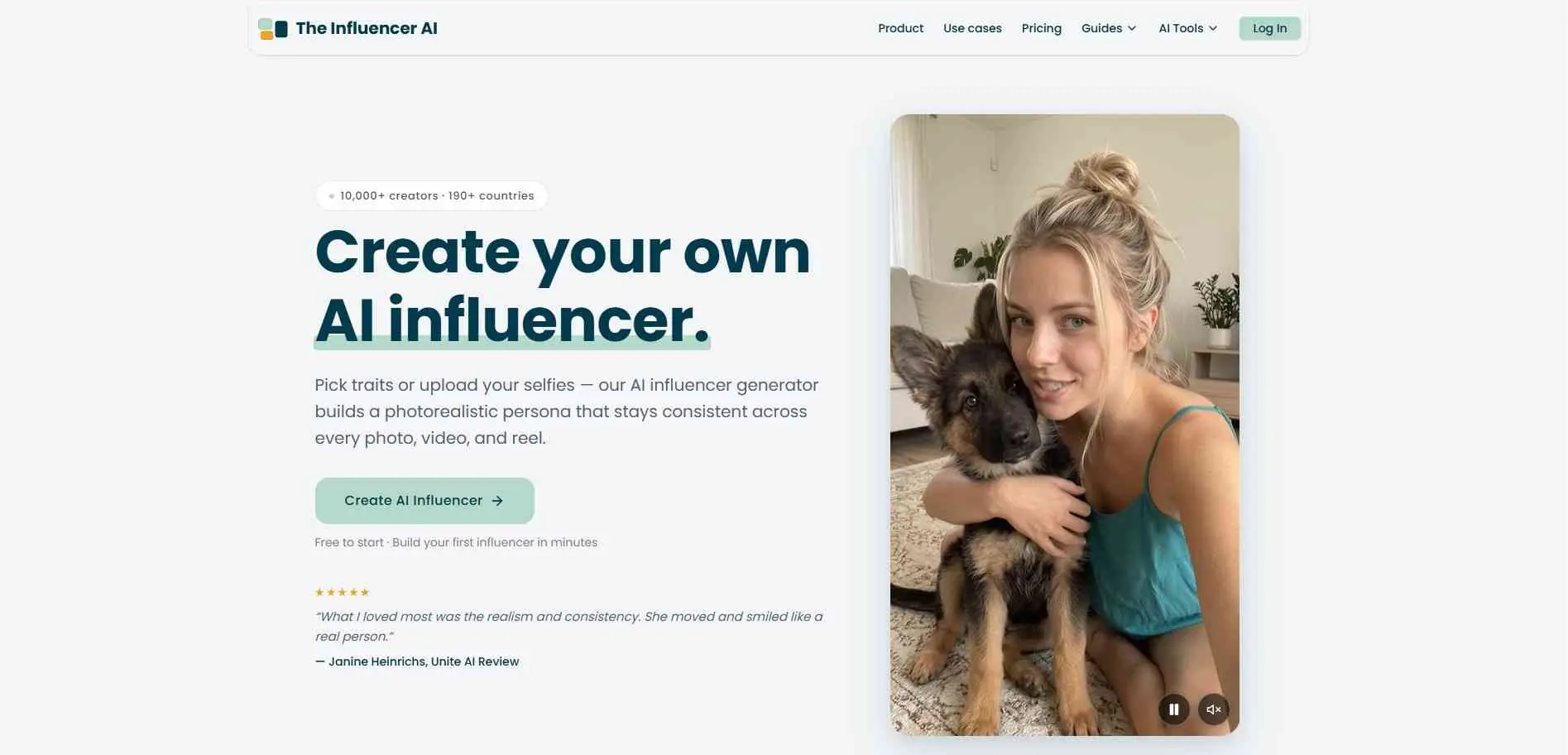
You pick traits from a list or upload your own selfies, and the tool builds a photorealistic persona that holds across posts. The Influencer AI focused on photo consistency - the character looks the same whether they’re in a café, at the beach, or at a product shoot. Good for fashion and lifestyle niches where photo posts carry the account.
4. Picsart Persona
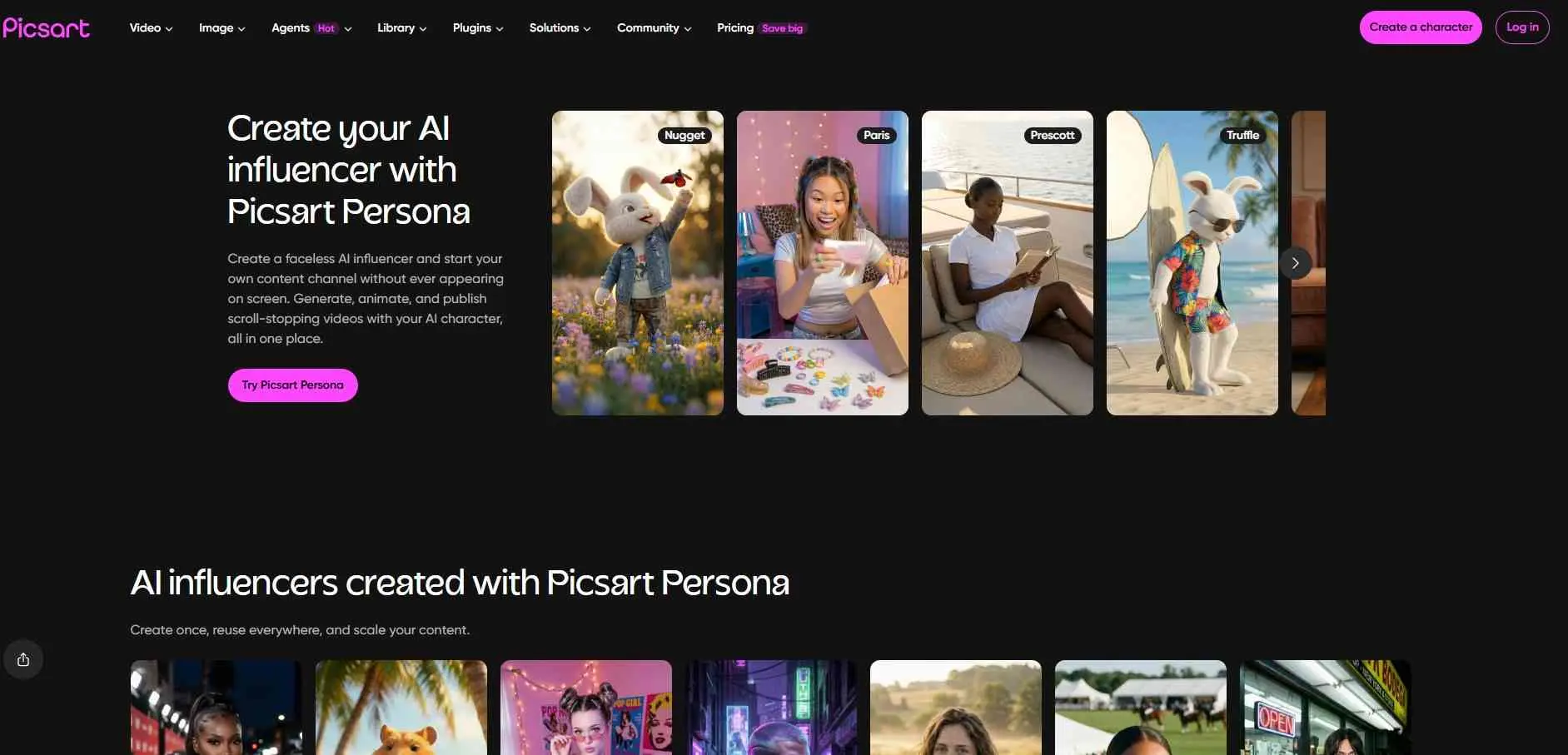
Picsart’s dedicated AI influencer module, separate from their main editor. Generates consistent on-brand AI personas with customizable appearance. The advantage over standalone tools is that Picsart’s full editing suite is right there - you can refine outputs without exporting to another app. Useful if you’re already in the Picsart ecosystem.
5. HeyGen
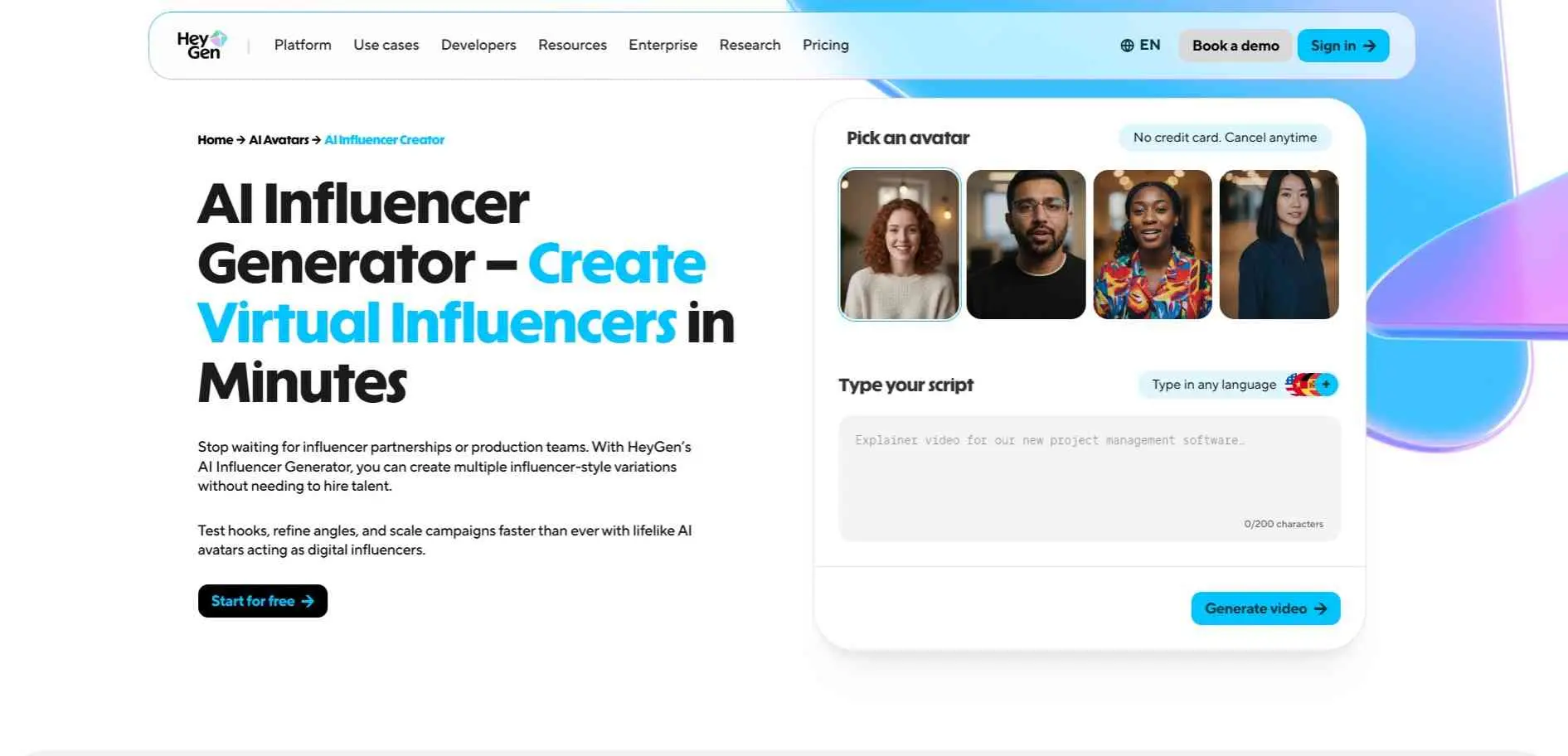
HeyGen’s strength is talking video. Their avatar library includes influencer-style characters, and their lip sync quality is among the best available. If your content involves the character speaking to camera - product reviews, tutorials, vlogs - HeyGen handles that better than most tools designed primarily for photos. Paid plans required for full resolution output.
6. OpenArt
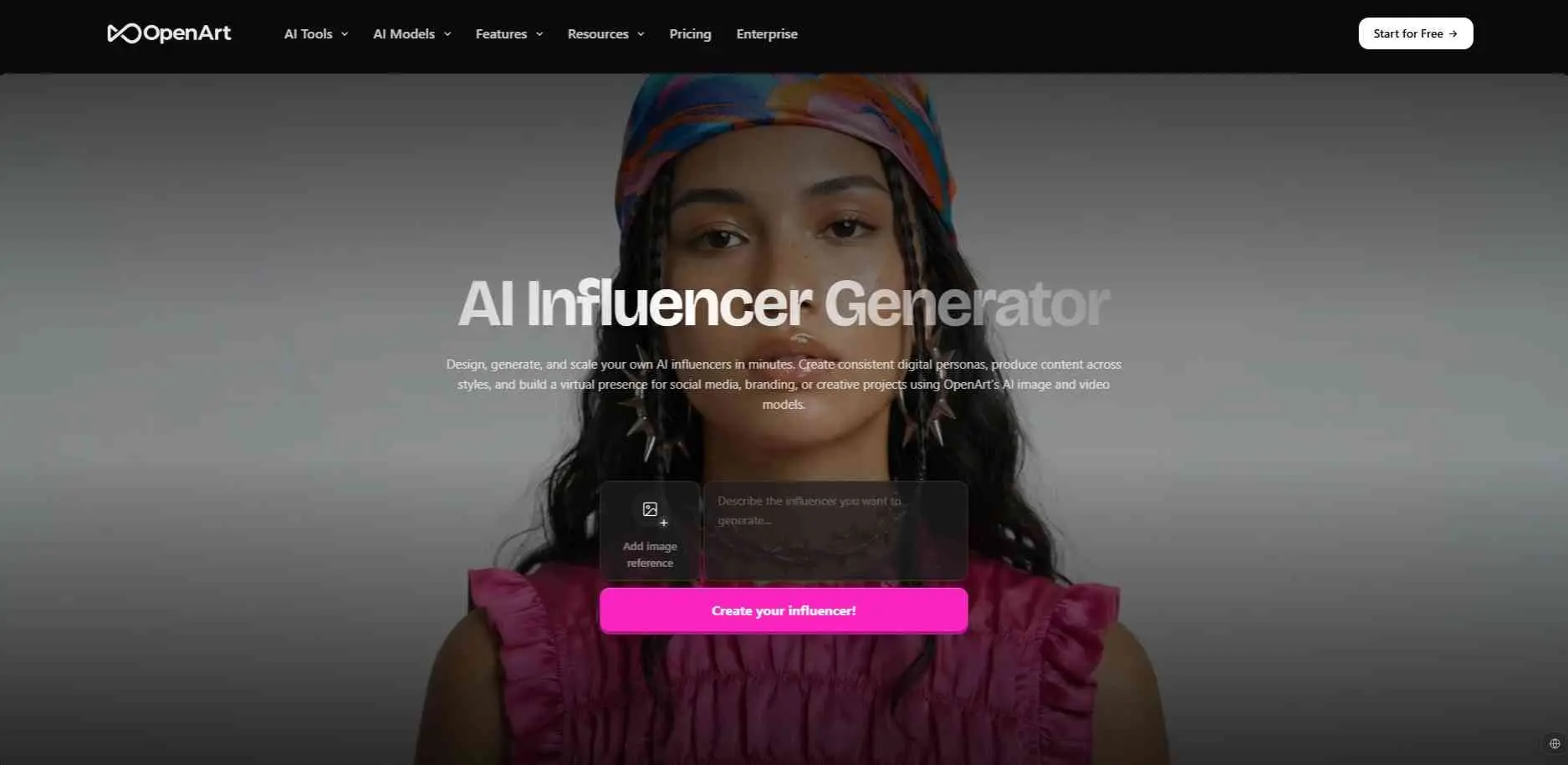
Focuses on building scalable content pipelines around a single AI persona. You create the character, then generate content in volume - batch image generation, consistent poses, multiple scenes from one session. Better suited for brands or agencies that need high-volume output from one character than for solo creators posting a few times a week.
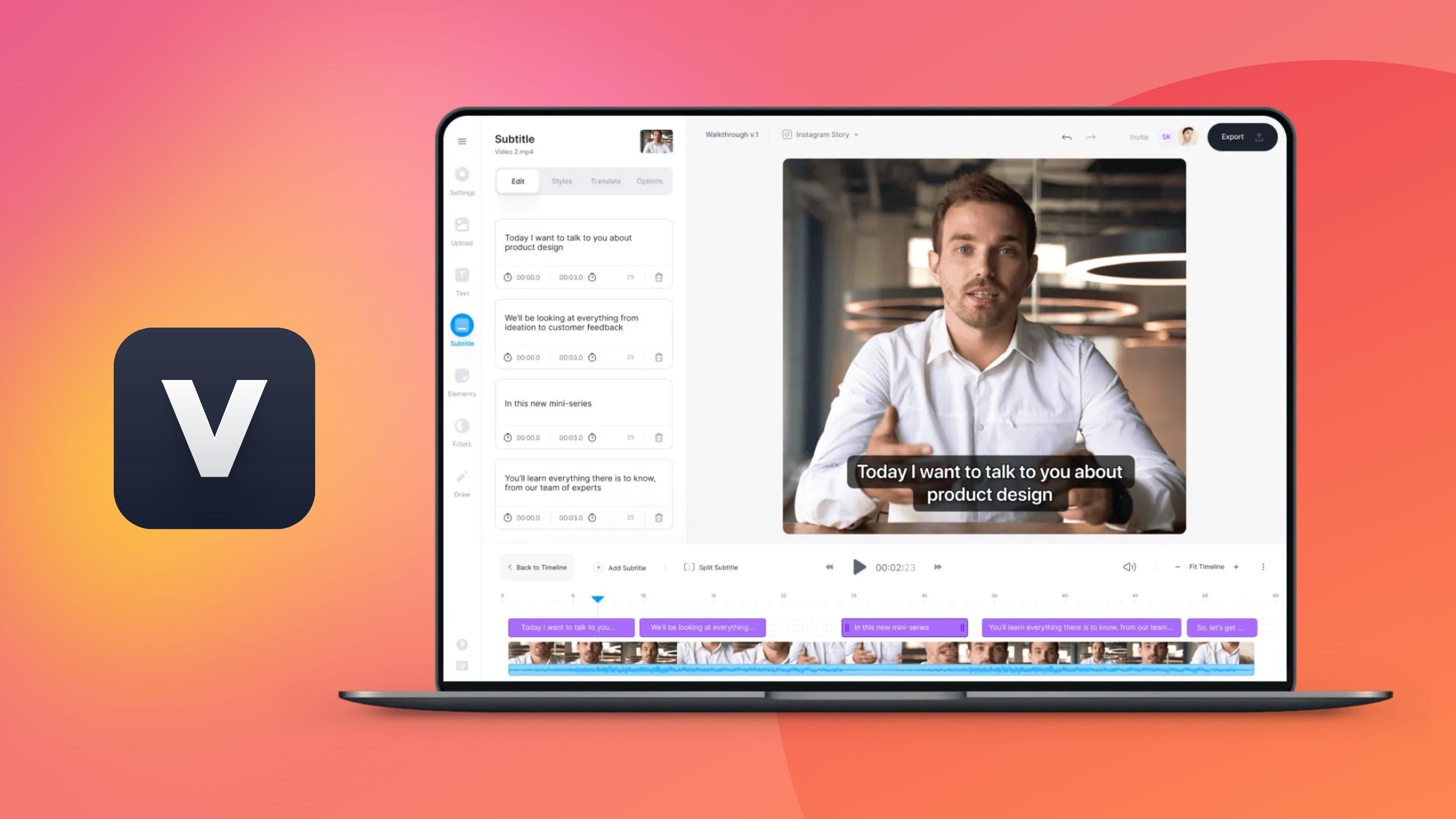
7. VEED
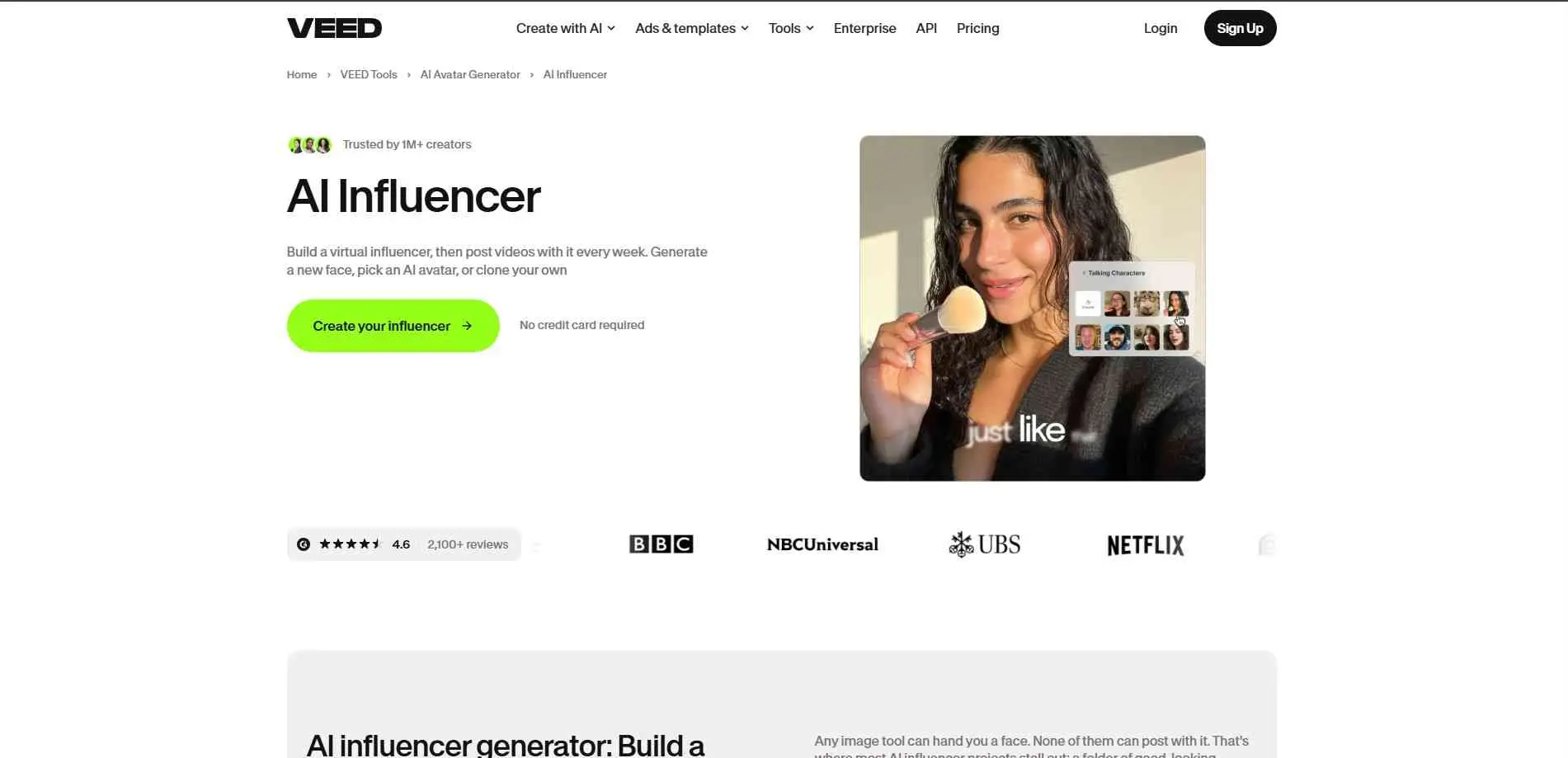
VEED’s AI influencer tool sits inside their broader video editing platform. You can build a face from scratch, clone yourself, or pick from preset avatars, then generate video content with voiceover.
The editing tools around the AI output are more polished than most tools here - captions, transitions, format resizing are all built in. Better for creators who want to produce finished videos rather than raw AI outputs. Before committing to a plan, read the full VEED review to see how it holds up.
8. BeautyPlus
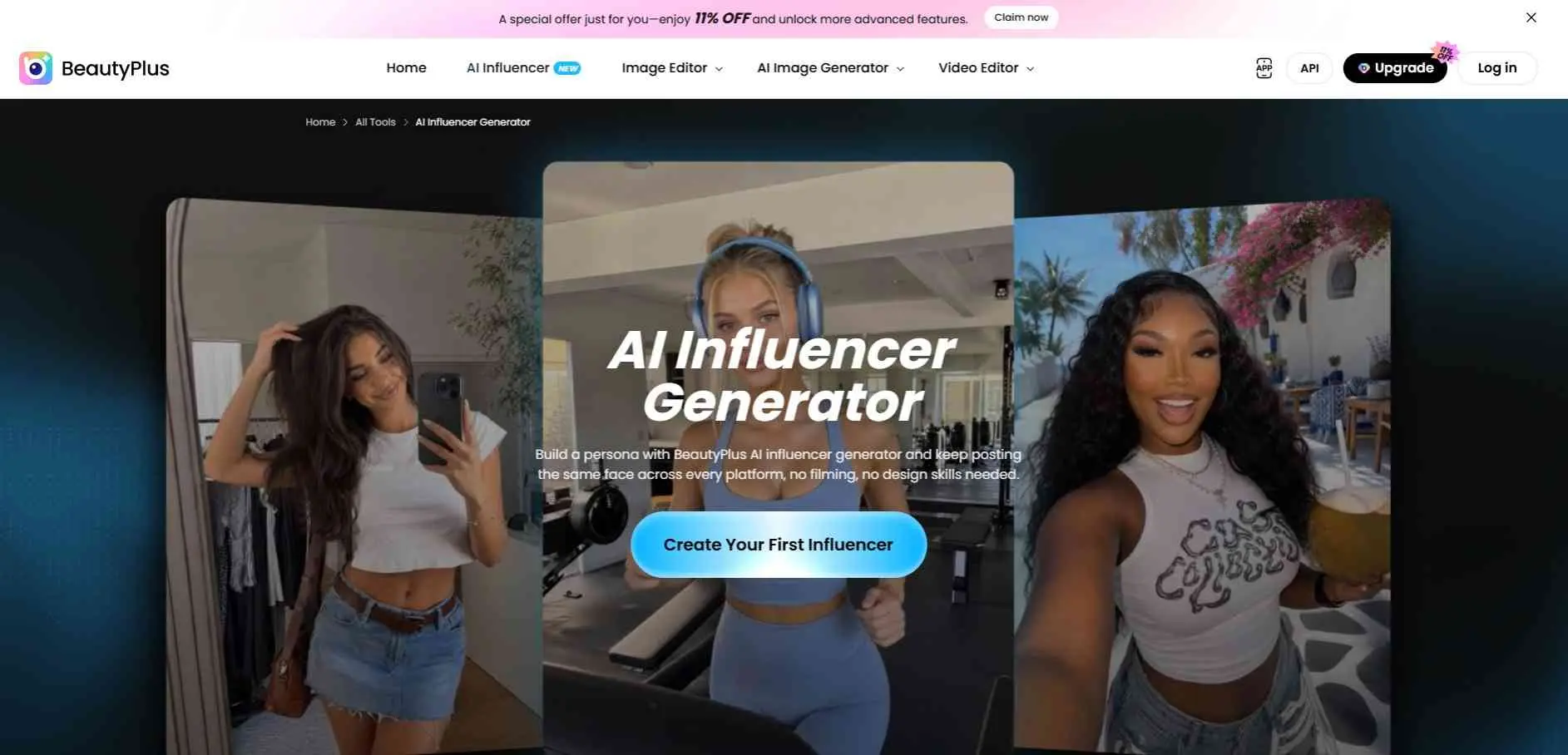
The most accessible tool here for creators who aren’t technical. Pick from a built-in persona library (fashion, fitness, lifestyle, street content) or customize age, gender, and style. The face holds consistent across every output - they’ve specifically built around that problem. Chat-based editing means you describe what you want changed and the tool updates the script, shot, or expression. Auto-formats for TikTok vertical and Instagram feed without manual resizing. Has a trending content template library that updates regularly.
9. Kapwing
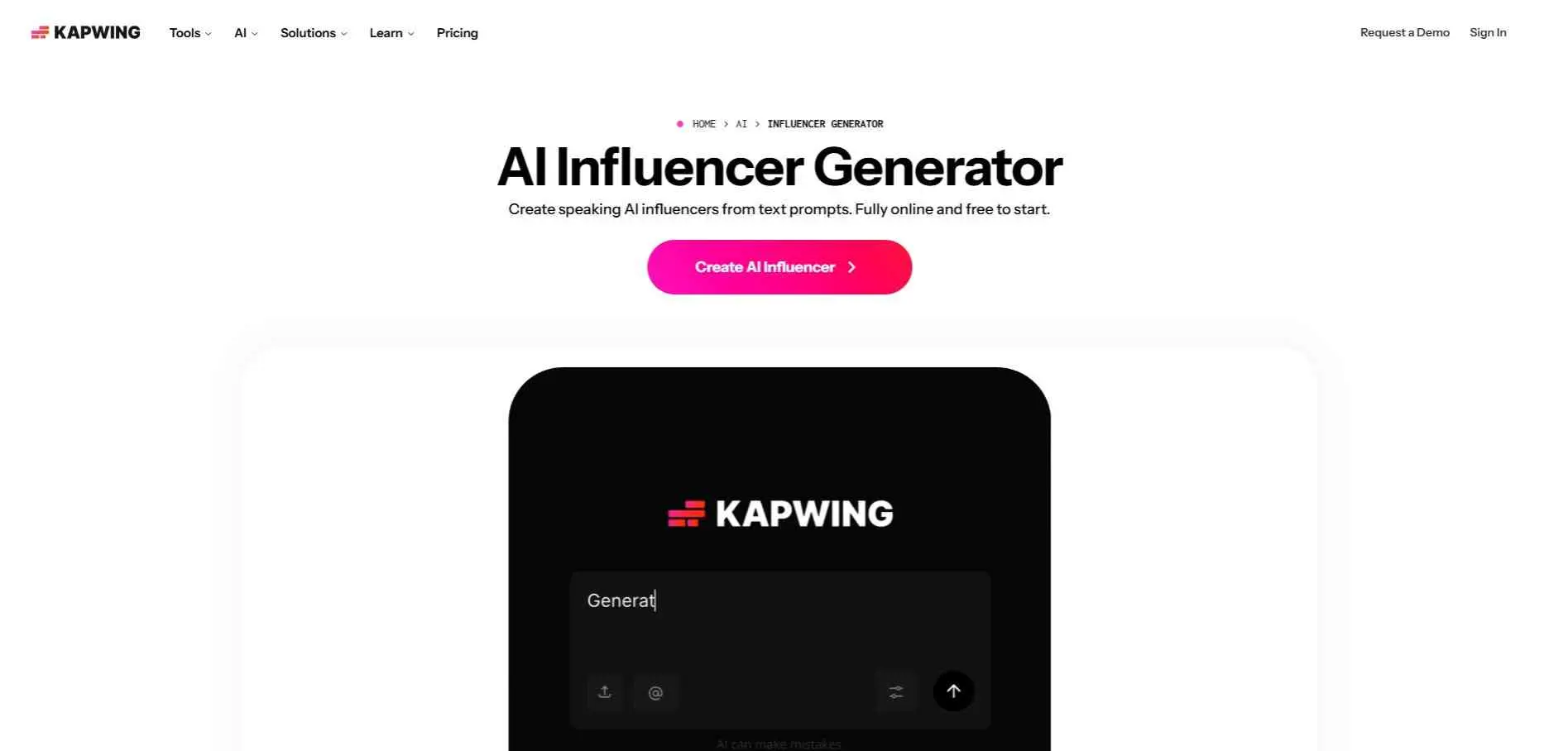
Generates AI influencers from text descriptions - you write what the character looks and sounds like, and Kapwing builds them. The voice customization is solid, and finished outputs go through Kapwing’s existing editor before export. Good option if you want to create a character entirely from a brief without uploading reference photos.
10. APOB AI
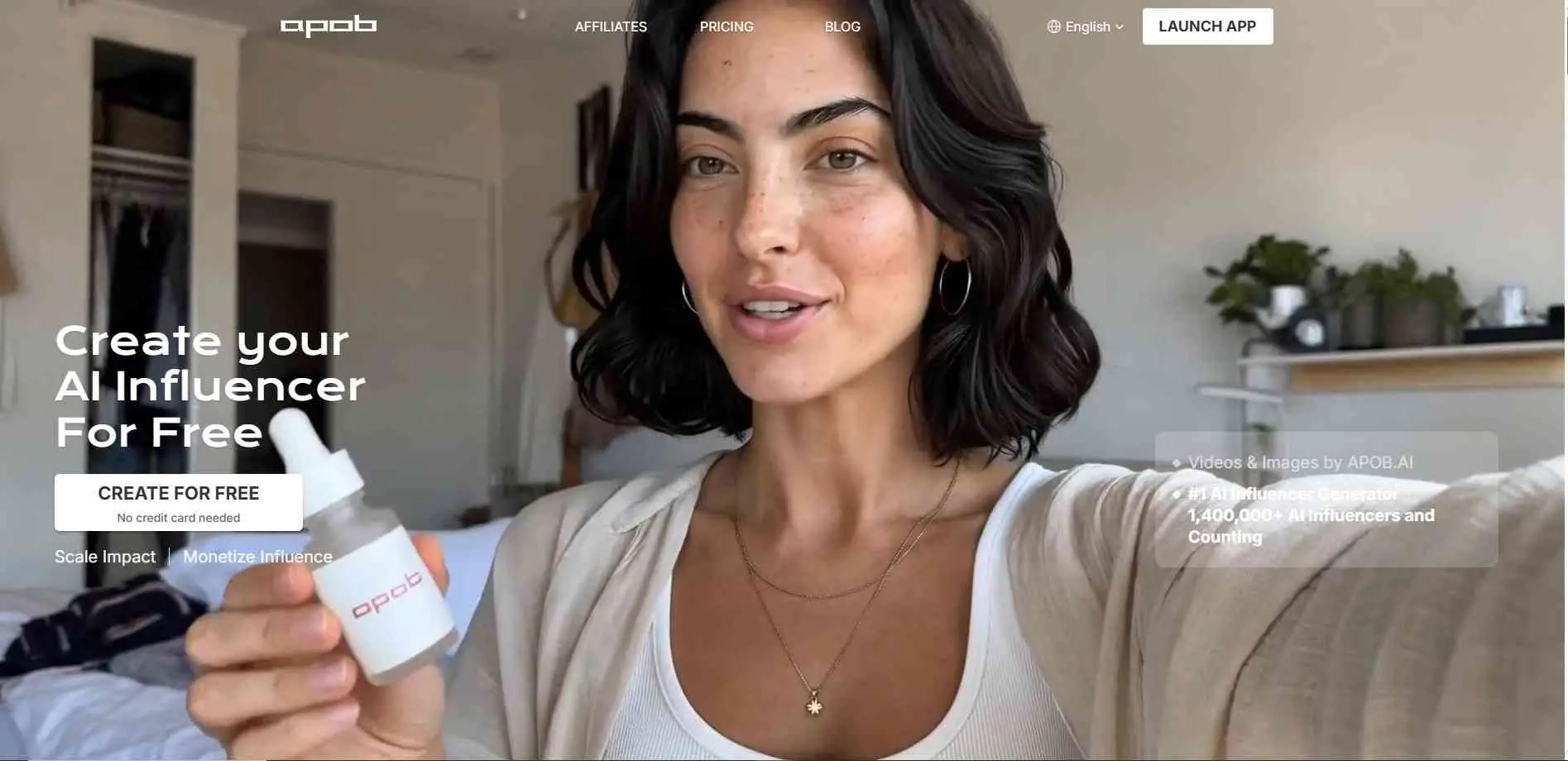
Free to start, which makes it worth mentioning. Core workflow covers AI influencer creation and basic video generation. Less polished than the paid tools above, but functional for testing the concept before committing to a subscription. Covers the basics: create a persona, generate content, export.
How to Make Your First AI Influencer
The process differs slightly per tool, but this covers the standard flow:
- Pick your niche first - fashion, fitness, travel, finance, tech. The niche decides the character’s look and tone. Skip this step and you’ll redesign the character twice.
- Design the persona - face, age range, hair, skin tone, style. Most tools either let you upload reference photos or select from presets.
- Train the model - tools like MakeInfluencer.ai run a training step (takes a few minutes) that locks in the character’s face. Cheaper tools skip this and generate fresh each time, which hurts consistency.
- Generate your first batch of content - aim for 7-10 posts before you start posting, so you have a buffer.
- Post consistently - three to five times a week minimum for a new account. The AI handles generation speed; the posting schedule is still your job.
Can You Actually Make Money with One?
Yes, but not immediately and not passively.
The income streams that work: UGC ads for DTC brands (they buy clips, not followers) affiliate links in content and direct brand deals once the account has an audience. Follower count matters less than engagement rate for brand deals. A 10K account with 5% engagement gets deals that a 50K account, with 0.5% engagement doesn’t.
One realistic note: most AI influencer accounts don’t hit $10K a month. A few do. The difference is usually niche specificity, posting consistency, and outreach - not which tool was used.
Bottom Line
The tools are good enough in 2026. That’s the honest answer. A year ago the face consistency issue made most AI influencer content look obviously artificial. That’s largely solved now, at least at social media resolution.
What isn’t solved: the audience-building work. AI handles the content. The strategy, niche selection, posting consistency, and outreach - that’s still what separates the accounts making money from the ones that stall at 400 followers.
If you’re starting fresh, BeautyPlus or APOB AI to test the concept, then MakeInfluencer.ai when you’re ready to treat it seriously.