
 Table of Content
Business-to-business (B2B) directories are where buyers go when they`re ready to compare and move. Think of them as the digital aisle for everything…from contract manufacturers to cloud security vendors!
Your directory profile is often the first (and sometimes only) impression you make when you want to reach new markets.
But something`s changed behind the scenes. Artificial intelligence (AI) now powers more of the searching, surfacing, sorting, and scoring in these directories. It`s fast. It`s picky. And it spots gaps.
When critical fields are blank, AI skips your profile. Not out of malice. Out of math. Incomplete data lowers confidence and match quality…so the system pushes you down or filters you out.
Missing details don`t look sloppy. They hide you from the exact buyers trying to find you. Learn the six fields you ought to complete for your B2B directory profile so AI favors your business.
Read on.
The Role of AI in B2B Directories
AI makes the directory experience feel instant. It ingests thousands of profiles and normalizes the data. It compares them against a buyer`s intent or brief.
Buyers get a tight list that looks tailor-made instead of slogging through page after page. That speed comes from models trained to weigh profile:
- Completeness
- Relevance
- Credibility
- Recency
The problem? Leave core fields empty, and the system has less to work with. Less to match on. Less to trust. Fewer impressions in search results and fewer shortlists!
This isn`t unique to directories. Data quality drives AI performance. Garbage in, garbage out. This still applies in 2026…just with fancier algorithms on top!
On the buyer side, digital self-serve and AI-supported evaluation are now the default. McKinsey has tracked the rise of remote and digital B2B purchasing since 2020 (the numbers below prove it). And those preferences stuck!
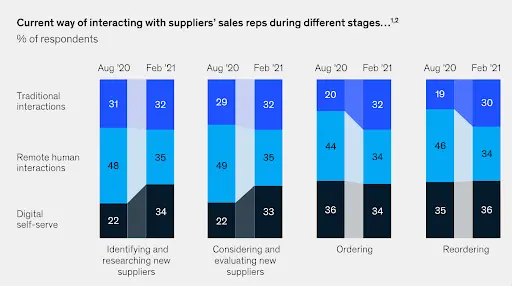
An incomplete profile means you`re opting out of how most modern buyers work.
Bryan Henry, President of PeterMD, knows clear information matters in telehealth, particularly for men exploring testosterone replacement therapy (TRT) online. Patients want to know what a provider offers and whether the treatment is right for them.
Henry says, “Men looking into TRT want clear information about the treatment… not to mention who it`s for and how to get started. If a provider`s online profile leaves these details out, they may turn to another provider.
He adds, “The same goes for B2B directories. Complete profiles help people find what they need and make it easier for AI to understand your services.”
The takeaway? Whether you offer healthcare or B2B services, complete and accurate information helps the right people find you.
Key Fields in Every B2B Directory Profile
Updating your B2B company`s directory profile should be part of a successful sales strategy. Why? Getting found online is the first step to attracting prospects and converting these potential leads into actual clients/customers.
That said, here are categories to fill out for your B2B directory profile:
Field 1: Company name and details
Start with the basics. However, make sure to do them right.
To begin, use your full legal company name, plus any DBAs…exactly as they appear in contracts and invoices. Then, add:
- Your website
- Year founded
- Headquarters location
- Tax IDs where relevant
A unique identifier like a D-U-N-S Number helps. Consistency across platforms helps AI connect the dots and prevents split identities. It also reassures human buyers who want to know they`re dealing with an established organization.

Take a tech provider of contract lifecycle management software, for instance, in the software technology industry.
The company uses its business name consistently across its website and LinkedIn profile. Not to mention third-party directories like:
- B2B Reviews
- Software Advice
Its profiles include details about its services, company background, contact information, and features. All these help potential customers understand who the company is and what it offers.
Field 2: Contact information
Make it easy to reach you. In Google Business Profile, prioritize your NAP details, using management tools to keep them updated.
Include a monitored email (ideally yourdomain.com, not a free mail address). Along with a direct phone number and a physical address. Likewise, list hours and time zones so buyers know when to expect a reply.
If you support multiple regions, provide regional contacts. Most platforms boost profiles with verified contact info. Why? Because it reduces buyer friction and spam risk.
Field 3: Product or service offerings
This is where matches are made. Don`t just say "industrial fasteners" or "IT consulting." Spell out:
- Categories
- Materials
- Specs
- Standards met
- Industries served
- Typical use cases
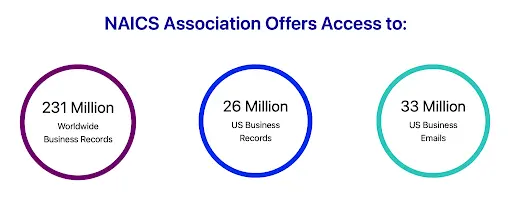
If you can, map to common taxonomies, such as NAICS and UNSPSC, or list GTINs where relevant. The more structured and specific your descriptions, the better AI can align you with the right buyer queries.
For example: a home renovation company offering bathroom remodeling in Sarasota should keep its local business directory profiles updated. Make sure to highlight your construction services and service areas.
Doing so helps local customers find your company when searching for bathroom renovation work in their area. That’s what it takes to optimize your GBP for local SEO!
Field 4: Business credentials and certifications
Certifications build trust fast. If you`re ISO 9001, say so. However, make sure to add the certificate number and expiration date.
- Software and services – list SOC 2, ISO/IEC 27001, other relevant audits
- Manufacturing operations – include CE, RoHS, REACH, or FDA registrations
While AI can parse and prioritize the above-mentioned, procurement teams often filter by them.
Note: don`t bury this info in a PDF alone. Instead, summarize it in fields the directory can read. Then attach the documents for human review.
Field 5: Business size and scaling capacity
Buyers want to know you can deliver. Share employee count bands, annual throughput or production capacity, MOQs, and lead times. Add the regions you can ship or service.
If you can surge capacity seasonally or have redundancy across sites, mention it. These signals help AI determine whether you`re suited for enterprise-scale deals or mid-market engagements.
For example: an e-commerce or online retailer selling bulk T-shirts should clearly list its minimum order quantities, available sizes and colors, as well as estimated shipping times. If it runs volume-based offers, adding an active promo code for first-time bulk orders gives buyers one more reason to shortlist it over a comparable supplier.
Keeping this information up to date helps buyers find suppliers that can meet their order volumes and delivery needs.
Field 6: Reviews and testimonials
It’s abundantly clear: social proof STILL does heavy lifting. For all you know, specific testimonials from recognizable customers help both humans and algorithms.
That said, include project outcomes. Not just kind words. If you maintain profiles on third-party review sites like Capterra and Trustpilot, make sure to link them.
Research on local consumer behavior shows just how influential reviews can be. BrightLocal`s annual survey found that 97% of people read online reviews for local businesses. Nearly half trust them as much as personal recommendations.
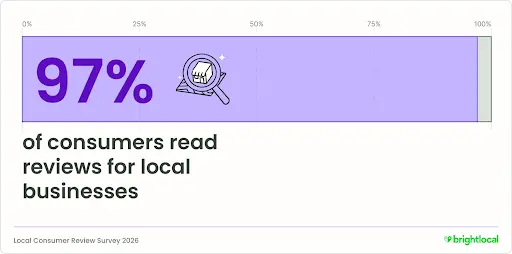
B2B isn`t the same as local retail. However, the credibility effect carries over.
Consequences of Missing Information
What actually happens when details are missing? A few quiet but costly things.
You`re filtered out before anyone ever sees you. For instance:
- Blank field on business details: If a buyer`s brief requires ISO 9001 or a certain production capacity, AI won`t take chances on a blank field. Your relevance score drops!
- Thin product descriptions: They make it harder to match your offer to nuanced queries, so you slide down the results. Your credibility takes a hit!
- No reviews, fuzzy contact info, outdated certifications: They all reduce confidence scores and invite human second-guessing.
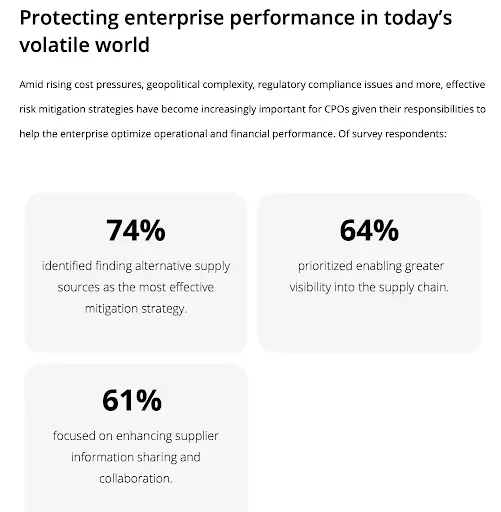
You`ll see similar patterns in procurement research: digital channels and structured information increasingly shape shortlists and awards. CPOs are leaning on analytics to standardize and speed supplier selection (see facts and figures below). Missing details mean missing deals!
In aged care and disability services, clear information helps people find the right support. Conrad Wang, Managing Director of EnableU, understands how vital it is to make service details easy to understand.
Wang explains, “People need to know what support is available and how to access it. When information is missing, they may look elsewhere. The same applies to B2B directories. Buyers need clear details about a supplier’s services and credentials…Even their capabilities to decide if they’re the right fit.”
Ultimately, complete and accurate information helps people make informed decisions, whether they’re looking for care or choosing a business partner.
Tips for Optimizing Your B2B Directory Profile
A few practical moves can turn your profile from skippable to shortlist-worthy. That said, here’s how to optimize your B2B directory profile:
- Appoint an owner. Assign one person/team to own your directory profiles..with a quarterly update cadence. Start by building a single source of truth. Then, keep a master profile doc with approved business details. Finally, copy it to every B2B directory to stay consistent!
- Structure your data. To start, use standard categories like NAICS and UNSPSC. Then, list specs in ordered fields and avoid jargon-only descriptions that models can`t map. Meanwhile, to verify and refresh, confirm emails and phone numbers, add certification expiration dates, as well as set reminders 60 days before renewals.
- Add proof (no fluff). Case studies with measurable outcomes, review links, certificate IDs, and sample part numbers. They all beat vague claims every time. However, make use of visuals wisely. Upload a clean logo and a handful of labeled product or dashboard images.
- Track what works. Add Urchin Tracking Module (UTM) parameters to links where allowed. Tag inbound leads in your CRM as "directory" to measure ROI.
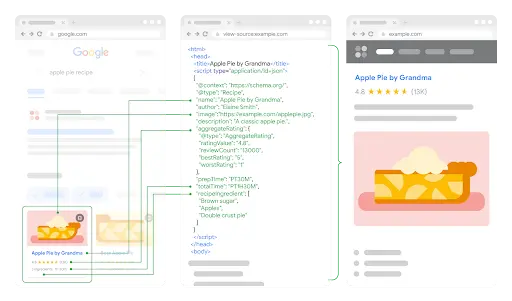
For your guide and reference, Google`s guidance on structured data is a handy point. Even if you`re not chasing web SEO, the principles map well to platform search.
Conclusion
In AI-driven directories, completeness isn`t cosmetic. It`s how you get seen, connected, considered, and selected. If a field looks optional, assume the algorithm treats it as a signal anyway. Fill it!
To begin, audit your current profiles against the six fields mentioned above. Likewise, close the biggest gaps first: certifications, product detail, capacity. Finally, assign an owner and set a quarterly review rhythm.
The buyers you want are already searching and searching. Ultimately, make sure the AI they rely on can find you.
If you’re looking to optimize your B2B directory profile for AI and Google search, Zumvu can help as your online visibility platform. To book a demo, sign up today!