 Table of Content
AI detectors have become part of academic writing, whether they are used by students reviewing a final draft or by universities checking submitted work.
Still, these tools do not all do the same thing. Some are simple web checkers. Others are built around research papers, plagiarism detection, or university workflows. Some also show exactly which sentences were flagged, while others mainly provide an overall score.
One important point should stay in mind throughout: an AI detection score is an estimate, not proof of who wrote a document. Turnitin, Trinka, Proofademic, and Compilatio all note limitations around detection accuracy and the need for human judgment.
Quick Comparison
Tool | Main Focus | Best For |
| Proofademic | Academic AI detection | Universities and academic review |
| Scribbr | Free AI checking | Students |
| Trinka | Academic and technical writing | Researchers and educators |
| Turnitin | Institutional integrity | Schools and universities |
| SciSpace | Academic text and PDF checking | Researchers and students |
| Paperpal | AI, grammar and research checks | Academic authors |
| aicheckr.io | Quick AI detection | Individual checks |
| Compilatio | AI and plagiarism detection | Educational institutions |
| Quetext | AI and originality checking | Students and educators |
| StrikePlagiarism | AI and similarity reports | Universities and academic teams |
1. Proofademic
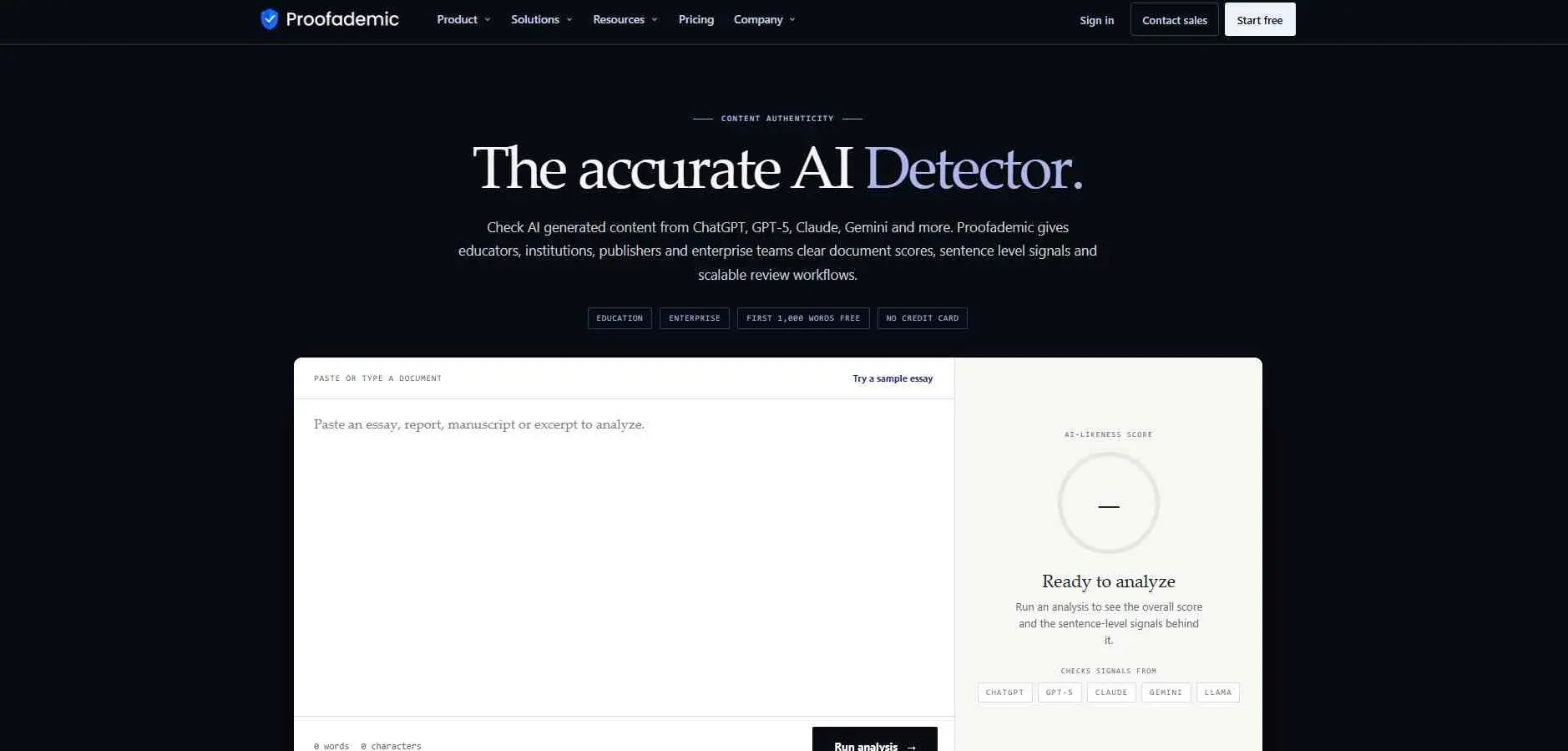
Proofademic is built specifically around academic review. It checks essays, papers, and reports for AI-generated patterns and gives sentence-level signals instead of relying only on one document score. The current platform supports 23 languages, checks for paraphrased AI text, and combines AI detection with plagiarism and grammar checking. It also offers downloadable and shareable reports.
Key Features
- Academic-calibrated detection
- Sentence-level evidence
- Plagiarism and paraphrase checking
Pros & Cons
Pros: Strong academic focus and detailed reporting.
Cons: More useful for proper document review than a very quick one-line check.
Best For
Students, teachers, and institutions that want more context behind a detection result.
2. Scribbr
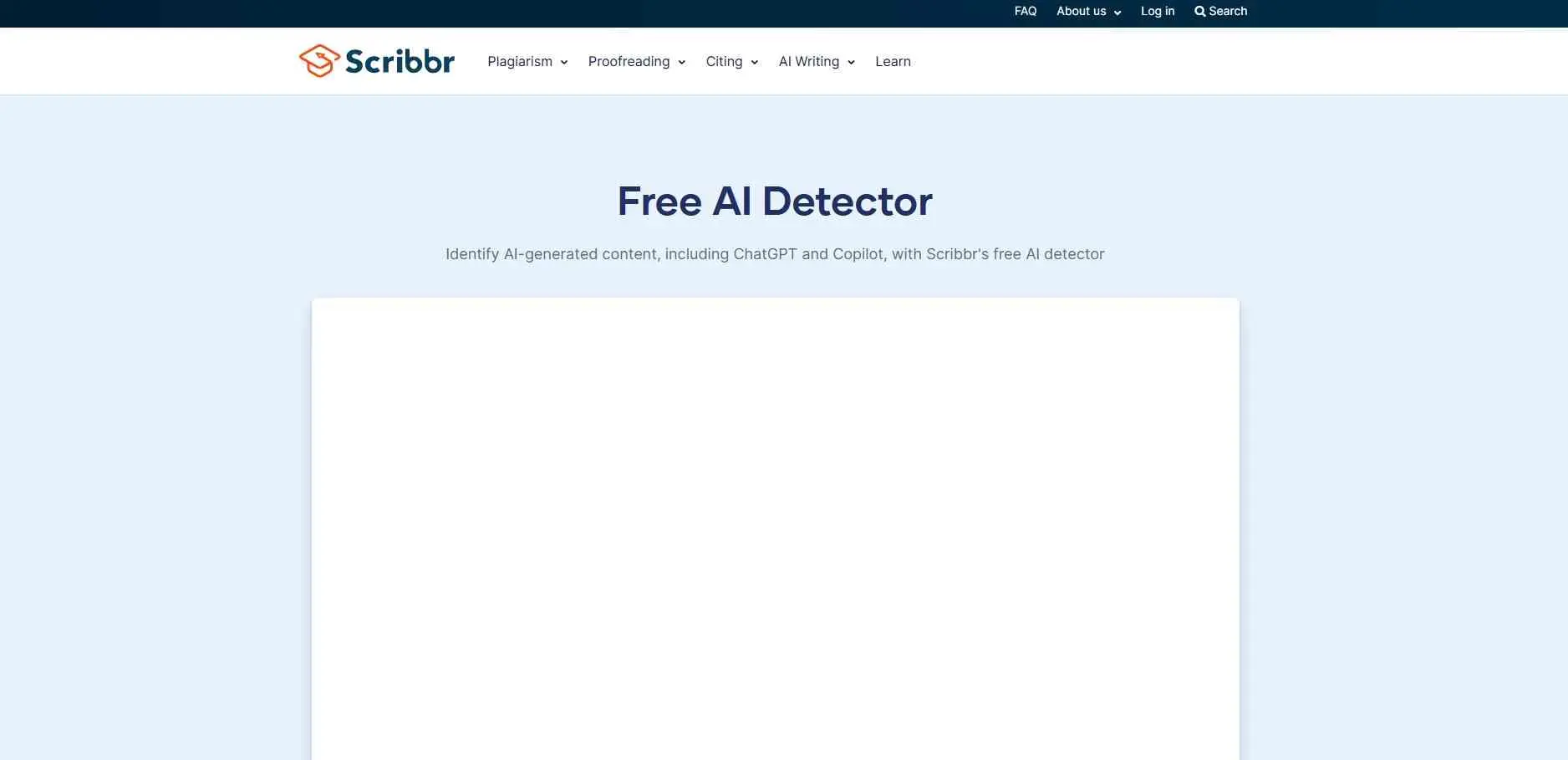
Scribbr is popular for proofreading, citations and plagiarism checking and Scribbr’s AI detector follows the same student‑focused approach. The Scribbr detector is free, requires no sign‑up and allows checks of up to 1,200 words at a time. Scribbr says it can distinguish between human‑written, AI‑generated and AI‑refined writing.
Key Features
- Unlimited free checks
- 1,200-word limit per scan
- No account required
Pros & Cons
Pros: Simple and convenient for students.
Cons: Long papers need to be checked in sections.
Best For
Students checking essays, assignments, theses, and dissertations.
3. Trinka
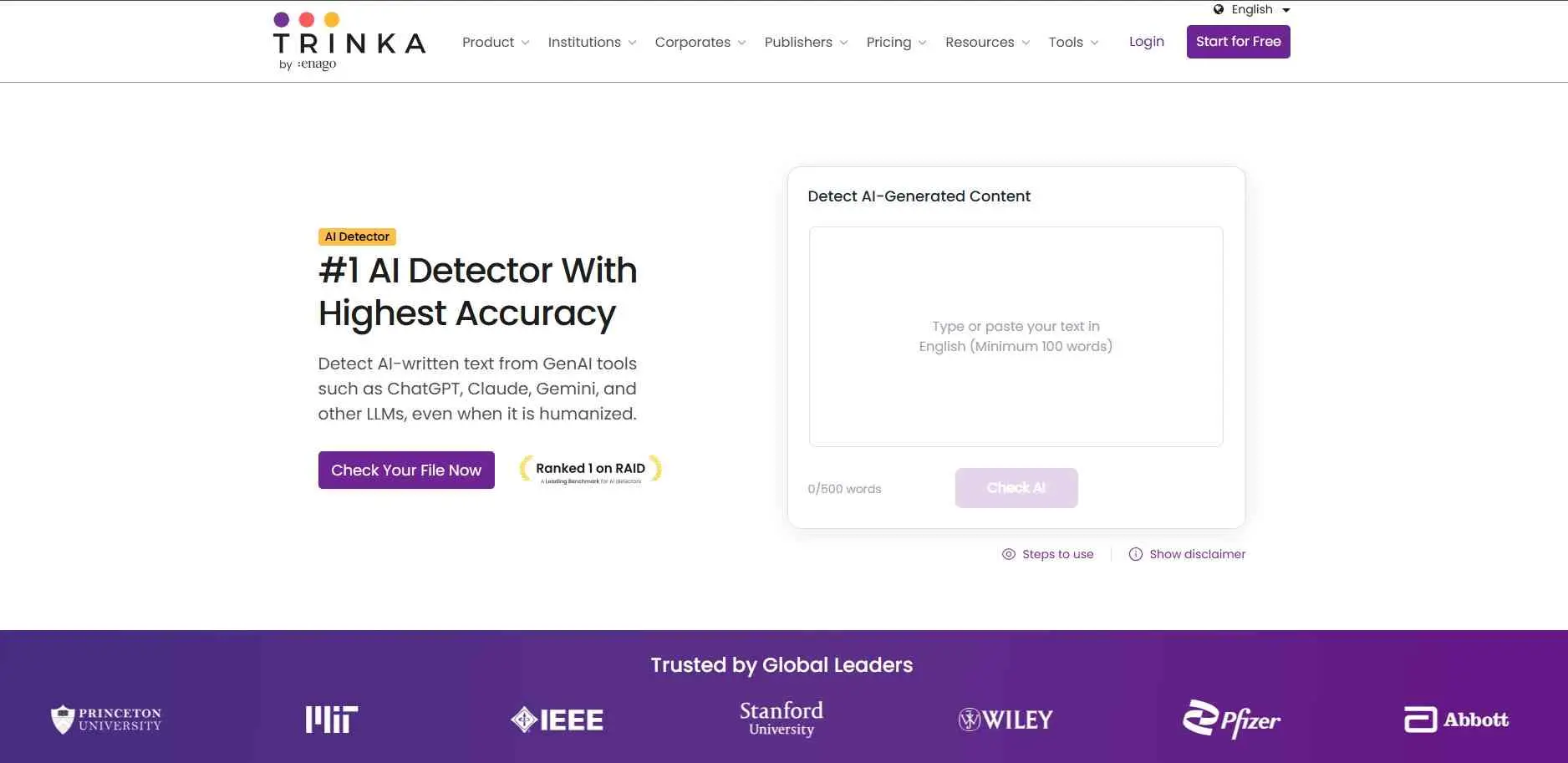
is designed around academic and technical writing, so its detector is a natural fit for researchers and educators. It provides an overall score, paragraph-level analysis, and a downloadable PDF report. Trinka also says its detector has been tested against paraphrased and altered AI text and has been benchmarked on academic material.
Key Features
- Paragraph-level detection
- Paraphrased-text detection
- Downloadable reports
Pros & Cons
Pros: Strong academic orientation and useful reporting.
Cons: Some advanced capabilities are available only in higher-tier or institutional plans.
Best For
Researchers, educators, and institutions needing academic writing checks.
4. Turnitin
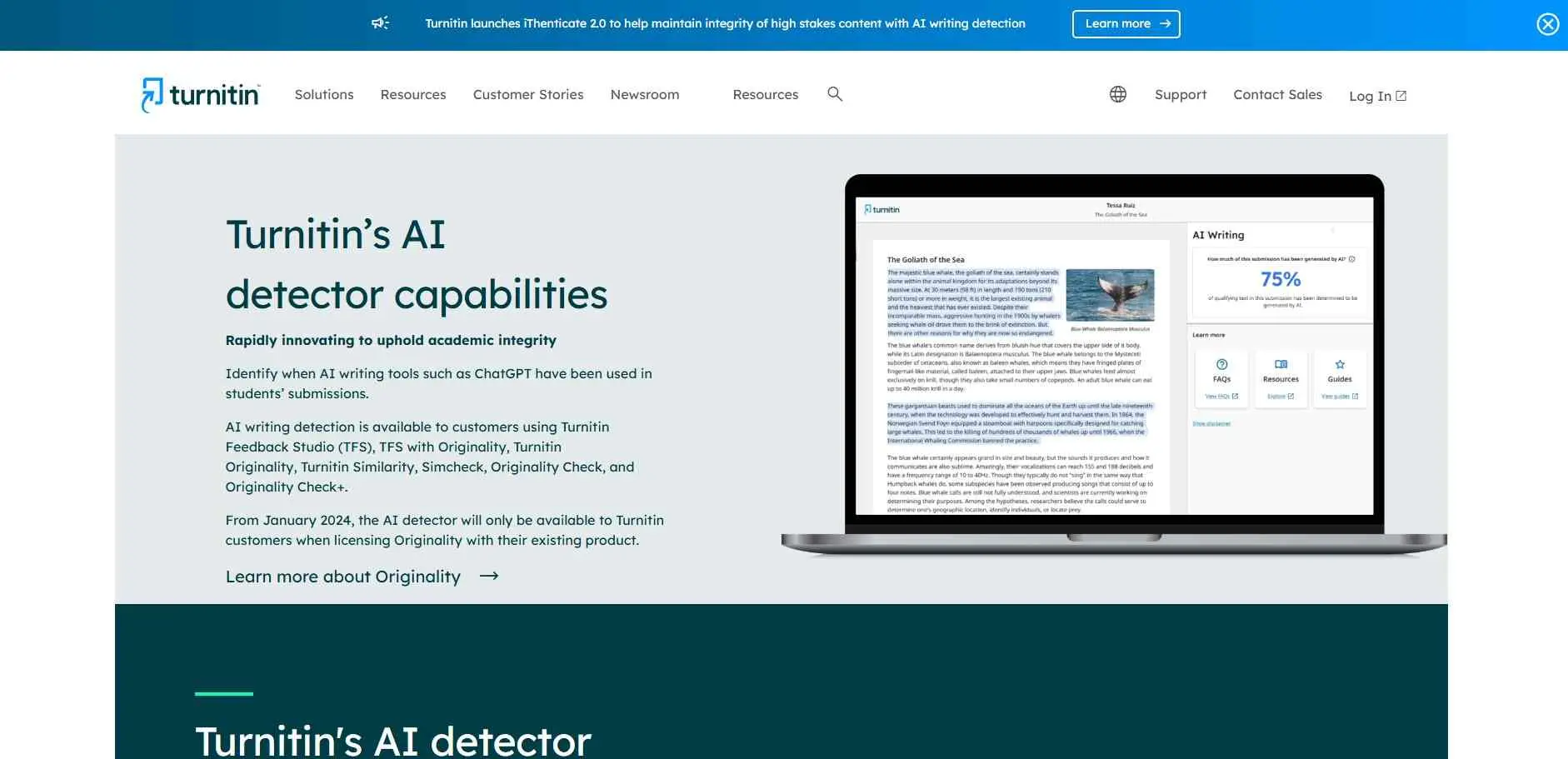
Turnitin is mainly an institutional product rather than a casual online checker. Its AI writing detection works inside supported Turnitin reports and is designed specifically around student writing. Its current guidance also says the result should not be used alone to make misconduct decisions. Turnitin updated its AI detection model in February 2026 and changed its report presentation in August 2026.
Key Features
- AI detection within Similarity Reports
- LMS and institutional integration
- AI and similarity checking
Pros & Cons
Pros: Fits established academic assessment workflows.
Cons: Access normally depends on institutional licensing.
Best For
Schools, colleges, universities, and research institutions.
5. SciSpace
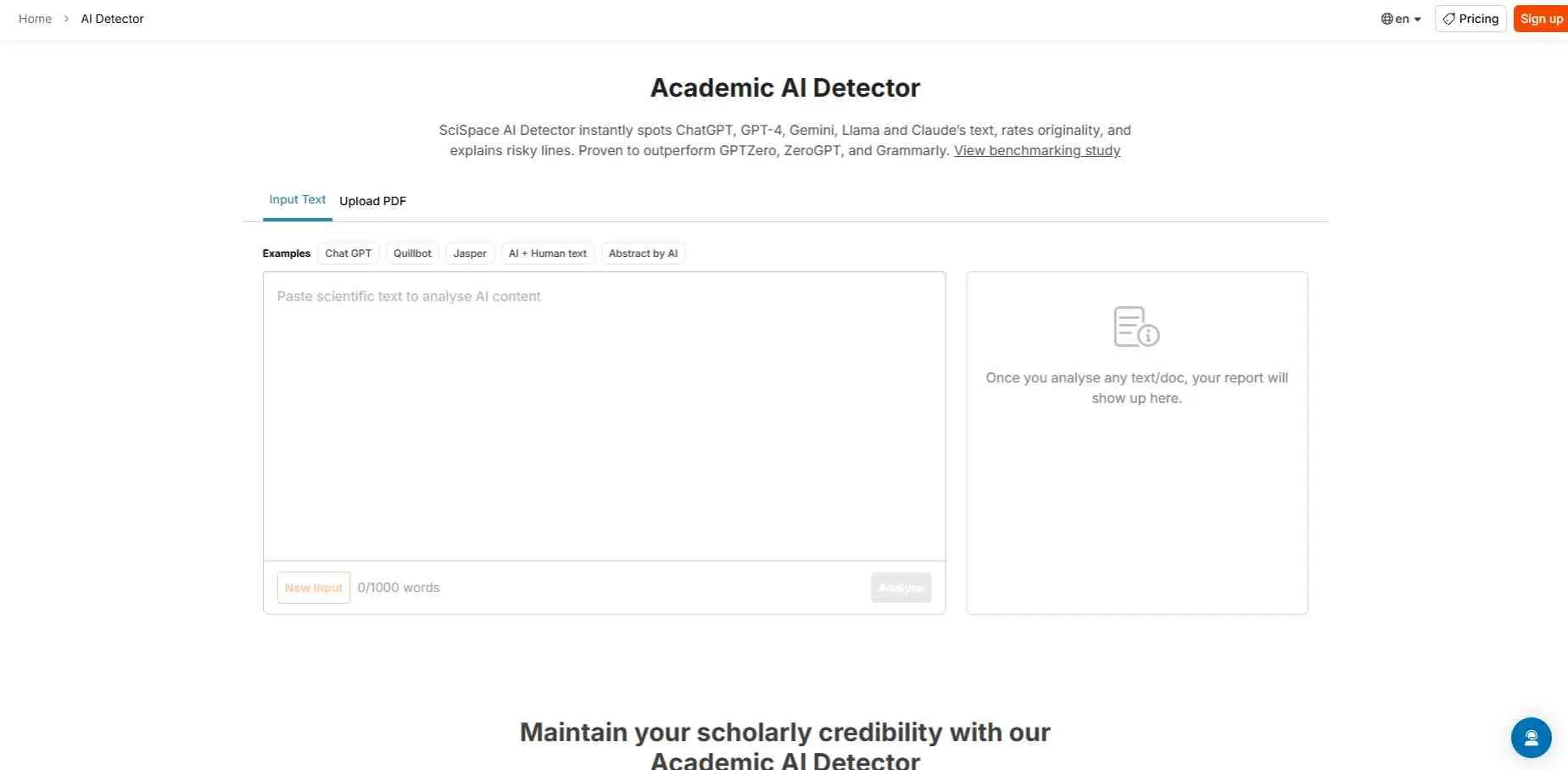
SciSpace is closely tied to research and academic papers, which carries over to its AI detector. The tool accepts uploaded documents, gives an AI usage probability, identifies content at sentence level, and provides a downloadable report. SciSpace currently lists support for up to 1,500 words of text or 50 pages of PDF.
Key Features
- PDF and text support
- Sentence-level detection
- Downloadable reports
Pros & Cons
Pros: Useful for researchers already working with PDFs.
Cons: Long text may need to be split because of the stated limits.
Best For
Students and researchers working with papers, reports, and PDF documents.
6. Paperpal
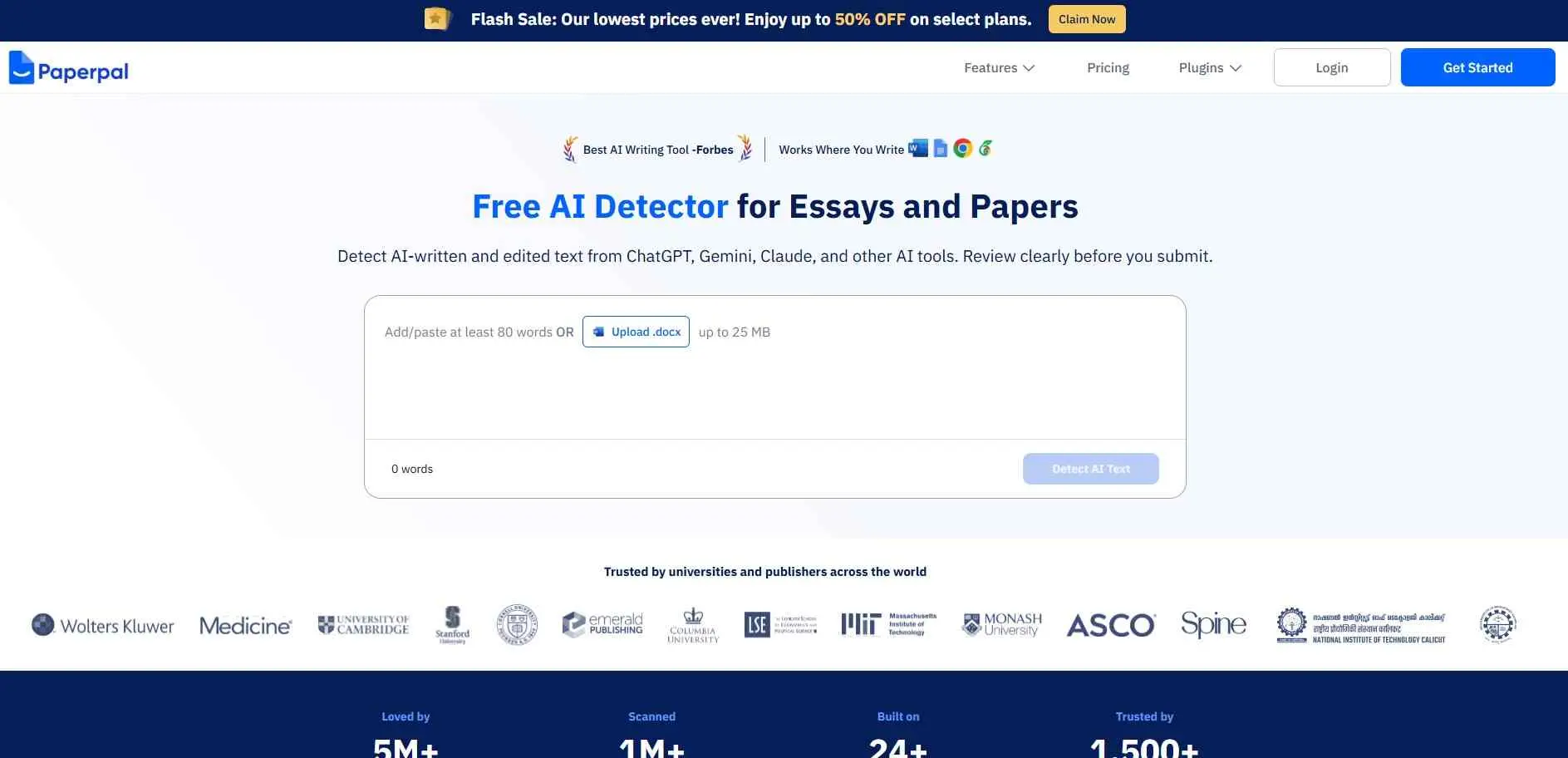
Paperpal goes beyond detection. Its AI detector is built for essays, theses, dissertations, research papers, and journal manuscripts, while the wider platform also handles grammar, references, plagiarism, and submission checks. The detector uses three result categories - human, mixed, and AI - with sentence-level highlights. The current free tier allows five scans a day, with 1,200 words per scan.
Key Features
- Human, mixed, and AI result bands
- Sentence-level highlights
- Grammar, plagiarism, and reference checks
Pros & Cons
Pros: Useful when detection is only one part of the writing process.
Cons: Its wider toolset may be unnecessary for someone who only wants an AI check.
Best For
Researchers and academic authors preparing manuscripts for submission.
7. aicheckr.io
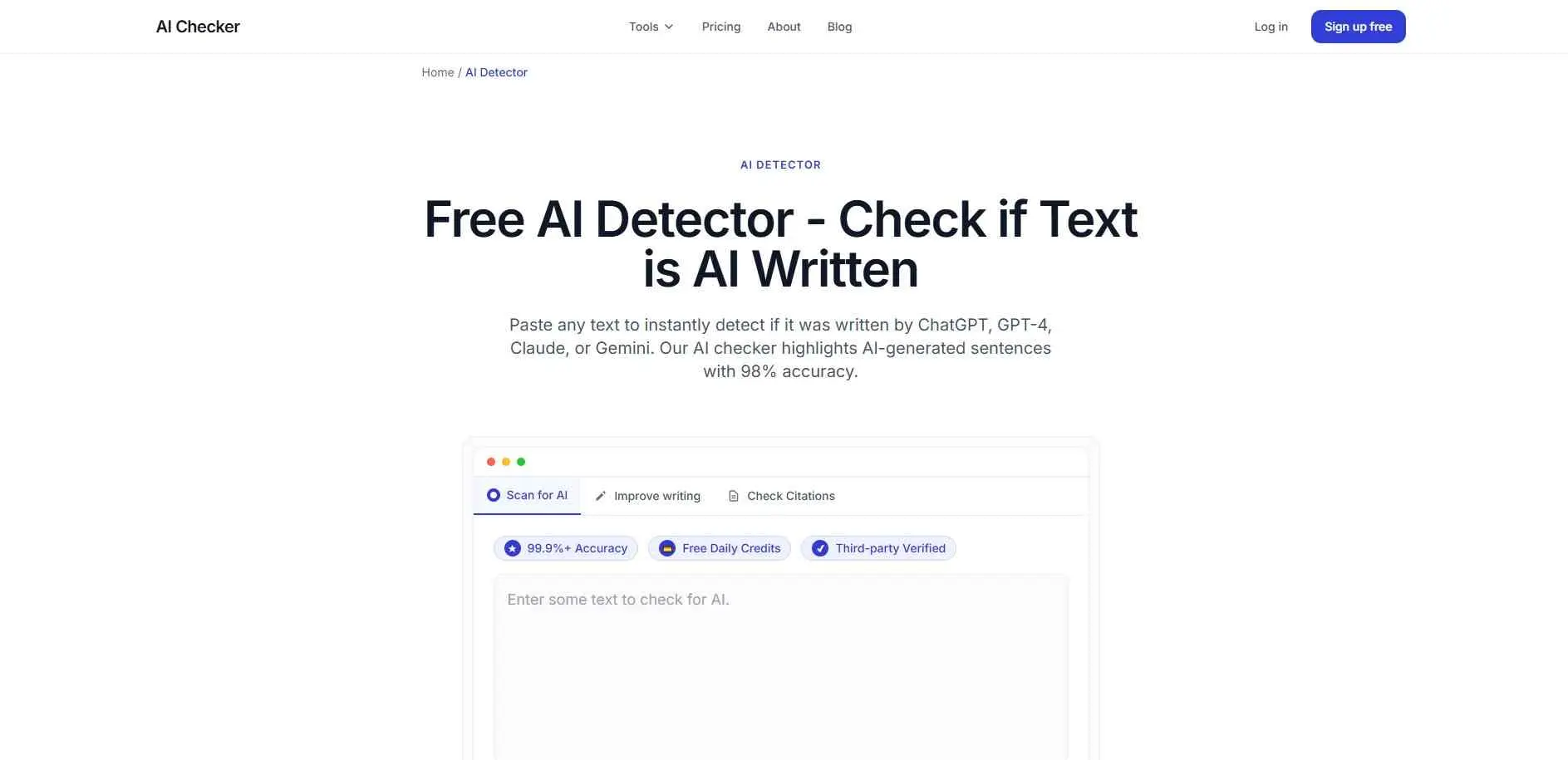
aicheckr.io keeps the checking process straightforward. Users can paste text or upload content and receive an AI probability score with highlighted sentences. The service says it checks text linked to ChatGPT, GPT-4, Claude and Gemini. It also includes citation verification, hallucination detection and an AI phrase checker. This allows users to go beyond just looking at authorship signals.
Key Features
- AI probability scoring
- Sentence-level highlights
- Citation and hallucination checks
Pros & Cons
Pros: Quick interface and several related tools.
Cons: The detector is better suited to shorter, quick checks than very long academic documents.
Best For
Students and writers who want a quick first check before submission.
8. Compilatio
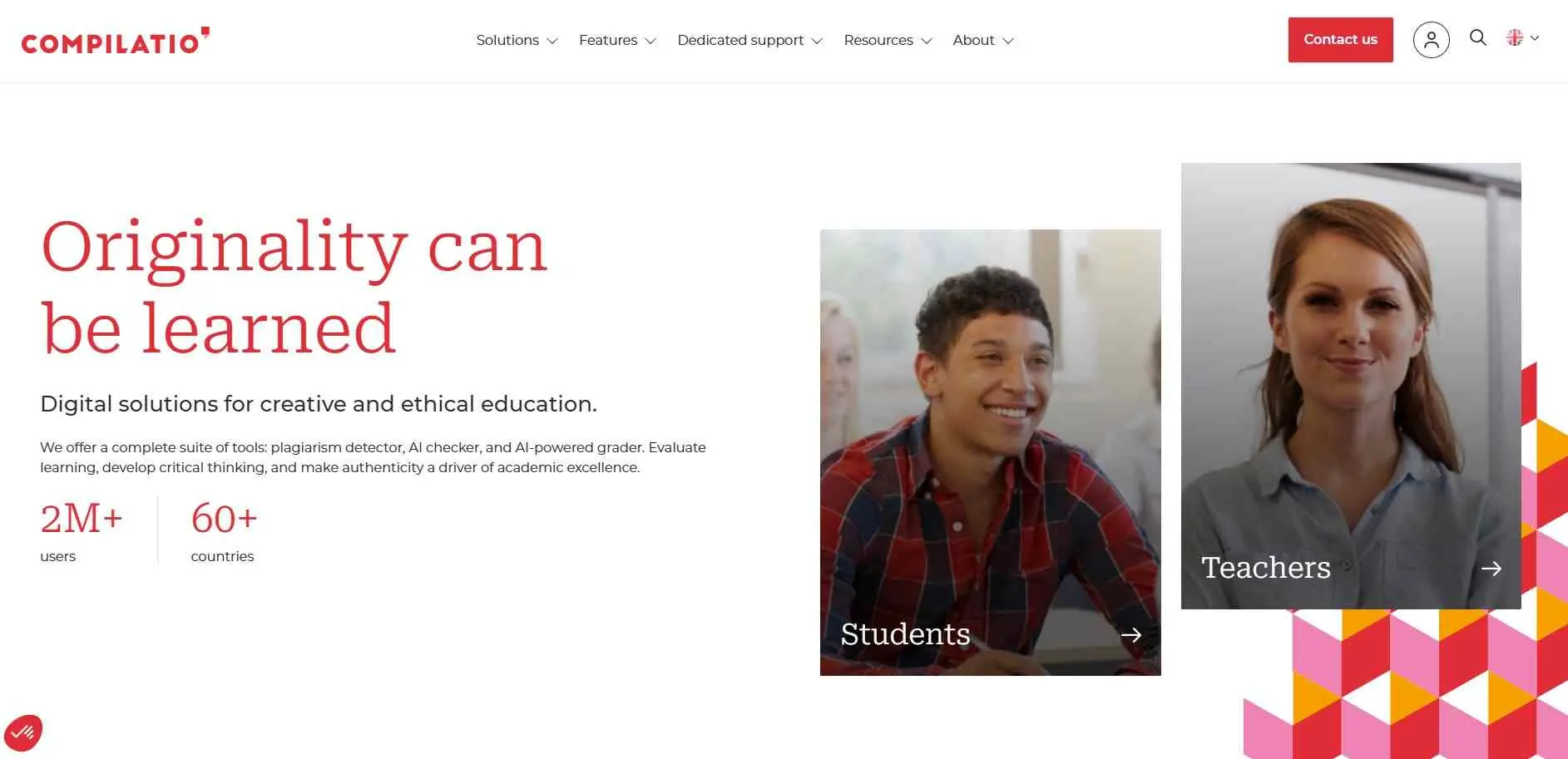
Compilatio focuses heavily on academic integrity. Its AI detector works alongside similarity and plagiarism checking, with separate products for students and educators. It supports more than 35 languages and multiple document formats. The company also explains that its score is an estimate and that flagged passages should be reviewed in context rather than treated as automatic proof.
Key Features
- AI and plagiarism detection
- 35+ languages
- Multiple document formats
Pros & Cons
Pros: Well suited to academic institutions and broader originality checks.
Cons: Its products are more education-focused than casual consumer tools.
Best For
Schools, universities, teachers, and academic coordinators.
9. Quetext
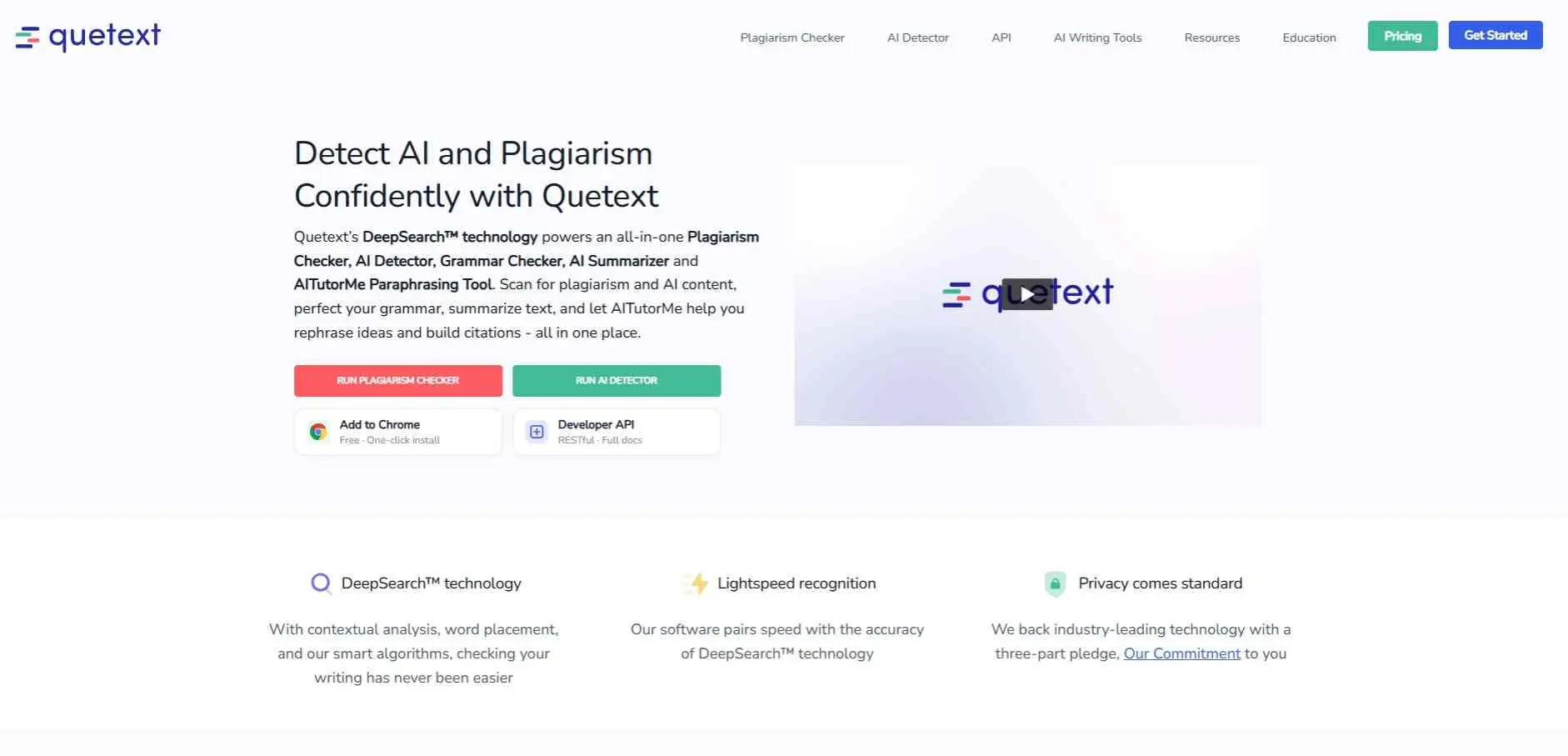
Quetext combines AI detection with its existing plagiarism and citation tools. Its detector provides line-by-line analysis and confidence information based on linguistic patterns, repetition, and sentence structure. The platform also offers a Chrome extension and API access, which can be useful for educators or teams checking content regularly rather than only once in a while.
Key Features
- Line-by-line analysis
- Confidence information
- Browser extension and API
Pros & Cons
Pros: AI and originality checking can happen in one workflow.
Cons: Some features are aimed at subscribers and higher-volume users.
Best For
Students, educators, and teams that need both AI and plagiarism checks.
10. StrikePlagiarism
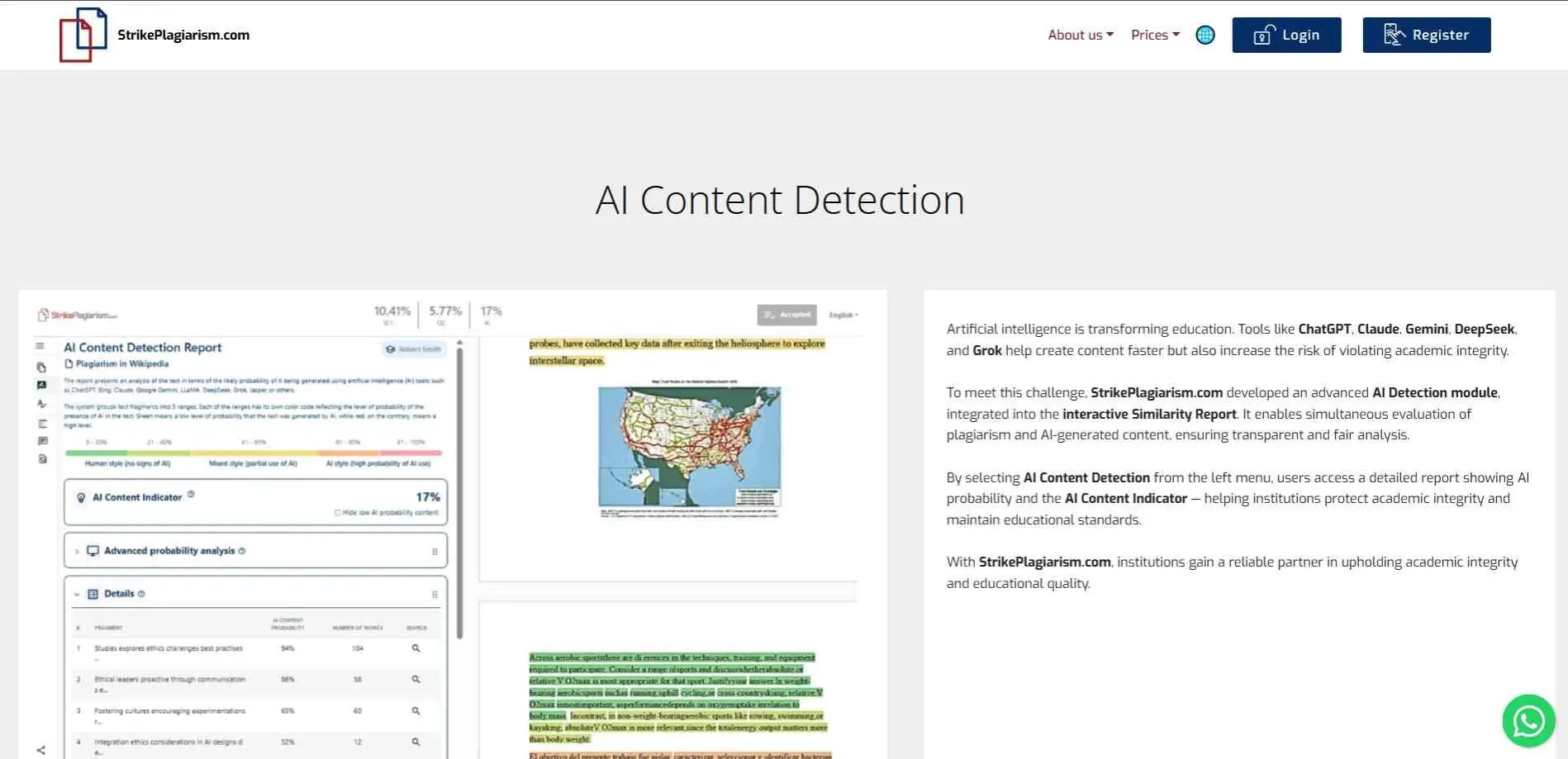
StrikePlagiarism is built around academic institutions and combines AI detection with its Similarity Report. Users can see AI probability, inspect highlighted fragments, and adjust the threshold used to display higher-probability passages. Its current system supports more than 100 languages. The company also recommends looking at multiple documents and the surrounding context instead of treating one report as a final judgment.
Key Features
- AI detection inside similarity reports
- 100+ languages
- Fragment-level probability analysis
Pros & Cons
Pros: Strong institutional workflow and multilingual coverage.
Cons: It may be more than an individual student needs for occasional checking.
Best For
Universities, academic departments, and larger education teams.
How to Choose an AI Detector for Academic Writing
Start with the type of document you are checking.
For a student checking a short essay, a free option such as Scribbr may be enough. Someone working on a research paper may prefer SciSpace, Trinka, or Paperpal because they are already built around academic writing.
Institutions have different needs. Turnitin, Compilatio and StrikePlagiarism are built to fit into academic integrity systems. They are not meant to work as standalone tools.
The report itself matters too. A percentage can be useful as a starting point, but sentence- or paragraph-level information gives you more to investigate.
Privacy deserves attention as well. See what happens when you upload various documents. Keep in mind, unpublished research, student records and manuscripts should be treated as confidential.
In the context of academics, you should never use a score as the final basis of your judgment. A human-written document can be flagged, and generated text can be missed. Draft history, citations, notes, and the writer`s previous work can all provide additional context.
Conclusion
These 10 tools cover quite different needs. Proofademic, Trinka, Paperpal, and SciSpace are closely aligned with academic writing. Scribbr is particularly convenient for students who want a browser‑based check. Turnitin, Compilatio and StrikePlagiarism are built around institutional use while Quetext combines AI checking with plagiarism and citation tools. Aicheckr.io takes an approach, for quick checks.
There is no detector that makes sense for every academic setting. The better choice depends on document length, reporting detail, privacy, language support and whether you also need plagiarism or citation checking.
For academic work, the detector should be treated as one piece of evidence, not the final word.