
 Table of Content
Buying an online business sounds simple until you actually start looking at the listings.
One website might be making money from affiliate commissions. Another might depend on a single product. A SaaS business can have good revenue but still require the founder to handle almost everything.
Then there is the question of where to buy it.
Flippa, Empire Flippers, Acquire.com, Motion Invest and the other marketplaces in this list are not really targeting the same buyer. Some are built around small websites and side projects. Others are aimed at established businesses and much larger deals.
So instead of asking which marketplace is "the best," it makes more sense to ask a different question:
Which marketplace fits the business you are actually trying to buy or sell?
That`s what this list looks at.
10 Online Business Marketplaces to Know in 2026
Platform | Main focus | Usually makes sense for |
| Flippa | Websites, ecommerce, SaaS and digital assets | Buyers looking for a wide range of options |
| Empire Flippers | Established profitable online businesses | Buyers looking for more established businesses |
| SideProjectors | Side projects and early-stage products | Developers and indie founders |
| Niche Investor | Content sites and creator-led businesses | Content-site buyers |
| Motion Invest | Websites and YouTube channels | Smaller content businesses |
| Acquire.com | Startups and SaaS | Software and startup buyers |
| Latona`s | Digital assets and M&A | Established online businesses |
| FE International | Technology M&A | Larger technology transactions |
| Investors Club | Online businesses | Buyers who want a curated marketplace |
| Quiet Light | Online business brokerage | Owners who want help with the selling process |
1. Flippa

Flippa is probably the name most people come across when they start looking for an online business.
That`s mainly because it covers a lot of ground. You can find websites, ecommerce stores, SaaS businesses, apps, domains and other digital assets on the platform. It also has both self-service listings and broker-assisted deals.
The advantage is obvious: choice.
The downside is that you need to do more filtering yourself.
Two websites can have similar asking prices while being completely different businesses underneath. One might have stable traffic and diversified revenue. Another might rely almost entirely on one SEO channel or one affiliate program.
So Flippa can be useful if you want plenty of options, but don’t confuse a large marketplace with a guarantee that every listing is a good business.
2. Empire Flippers
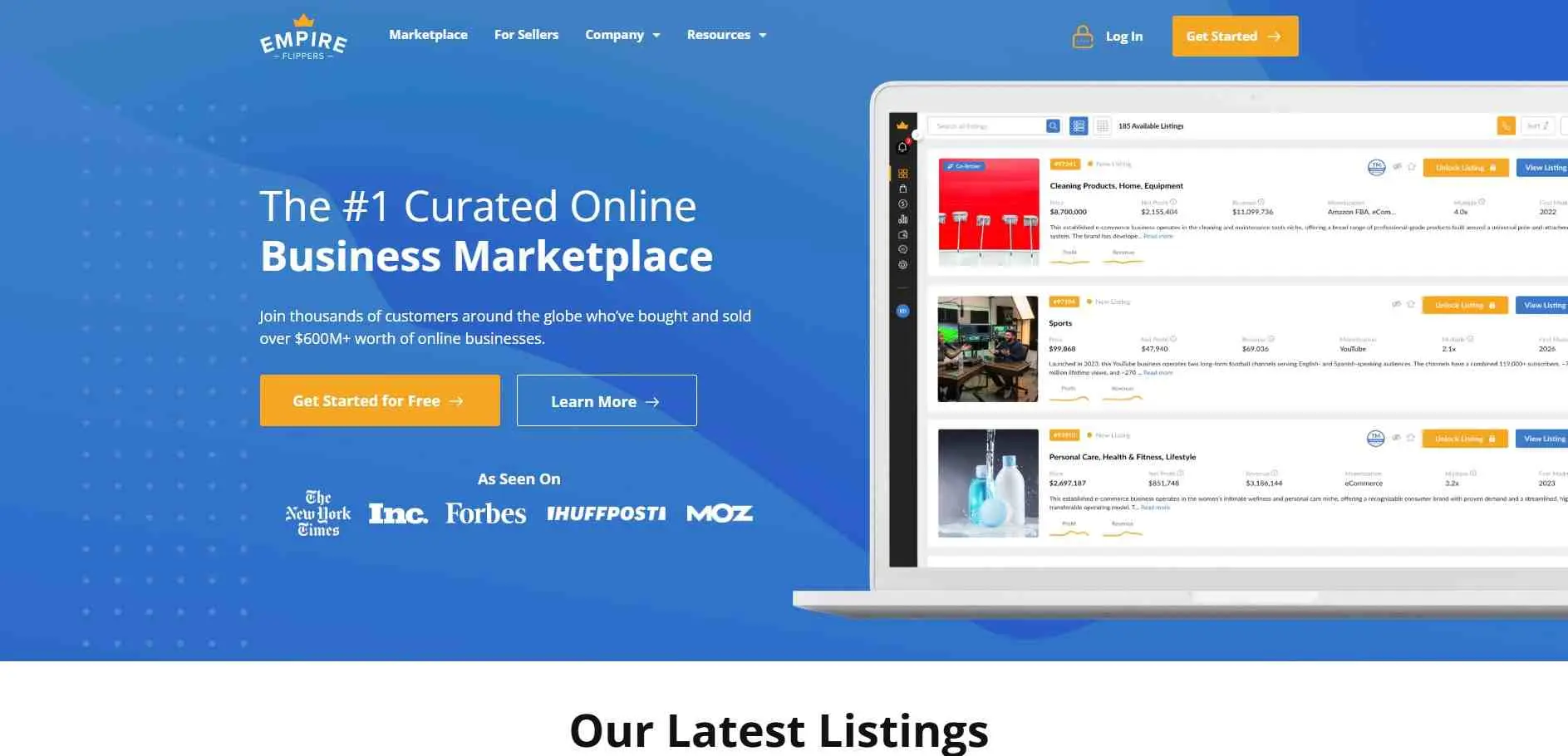
Empire Flippers takes a more selective approach.
The platform focuses on established, revenue-generating online businesses and says listings are vetted before appearing on the marketplace. Its businesses include SaaS, ecommerce, affiliate sites and Amazon FBA, along with established content businesses.
This makes it a different proposition from a marketplace where almost anything can be listed.
But there is an important point here.
Vetting is not the same thing as due diligence.
You still need to know how the business makes money, where its traffic is coming from, how stable those numbers are and how much of the business is tied to the current owner.
A screened business can still be the wrong acquisition for a particular buyer.
3. SideProjectors
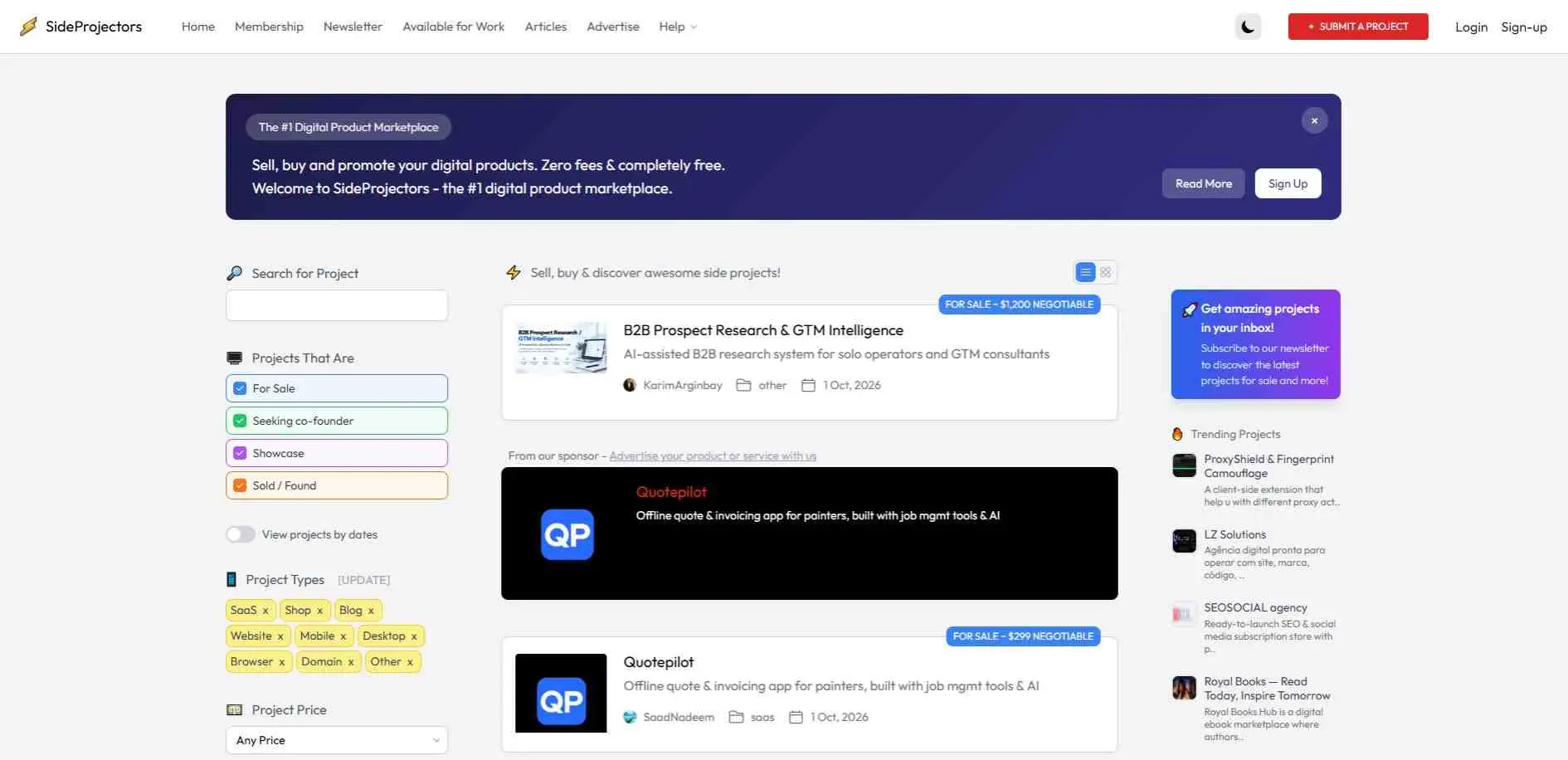
SideProjectors is a different kind of marketplace altogether. It is built more around side projects, small websites, apps and early-stage products than traditional business acquisitions. Some projects already have users and revenue. Others are still very early and may have little or no income.
That makes the platform interesting for developers and indie founders who are comfortable buying something unfinished and building it further. The mistake would be to evaluate every listing as though you`re buying an established business.
Sometimes you`re really buying a starting point. That means the code, existing users, product idea and amount of work required after the purchase can matter more than the current revenue.
4. Niche Investor
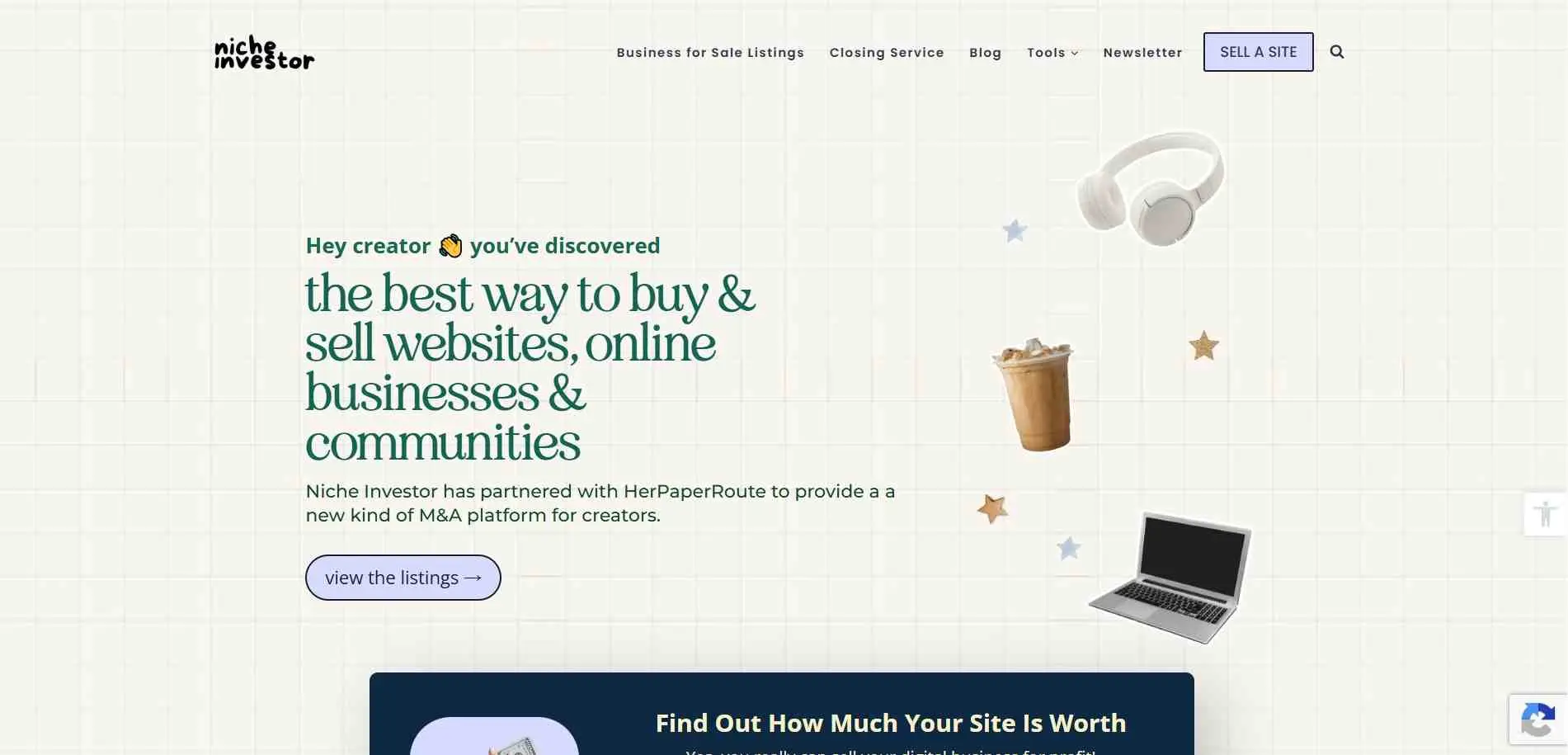
Niche Investor is much more focused on content and creator-led businesses.
Its marketplace includes blogs, content brands, newsletters, communities, ecommerce businesses and digital products. It also has starter sites for buyers who are not necessarily looking for an established business.
For a content-site buyer, especially attention to one thing:
How dependent is the business on its current owner?
The site might be making good money but if the owner writes every piece of content, manages every partnership and handles the whole audience relationship the buyer is not just buying a website.
They`re taking on a job. That distinction is easy to miss when you`re looking only at the monthly profit.
5. Motion Invest
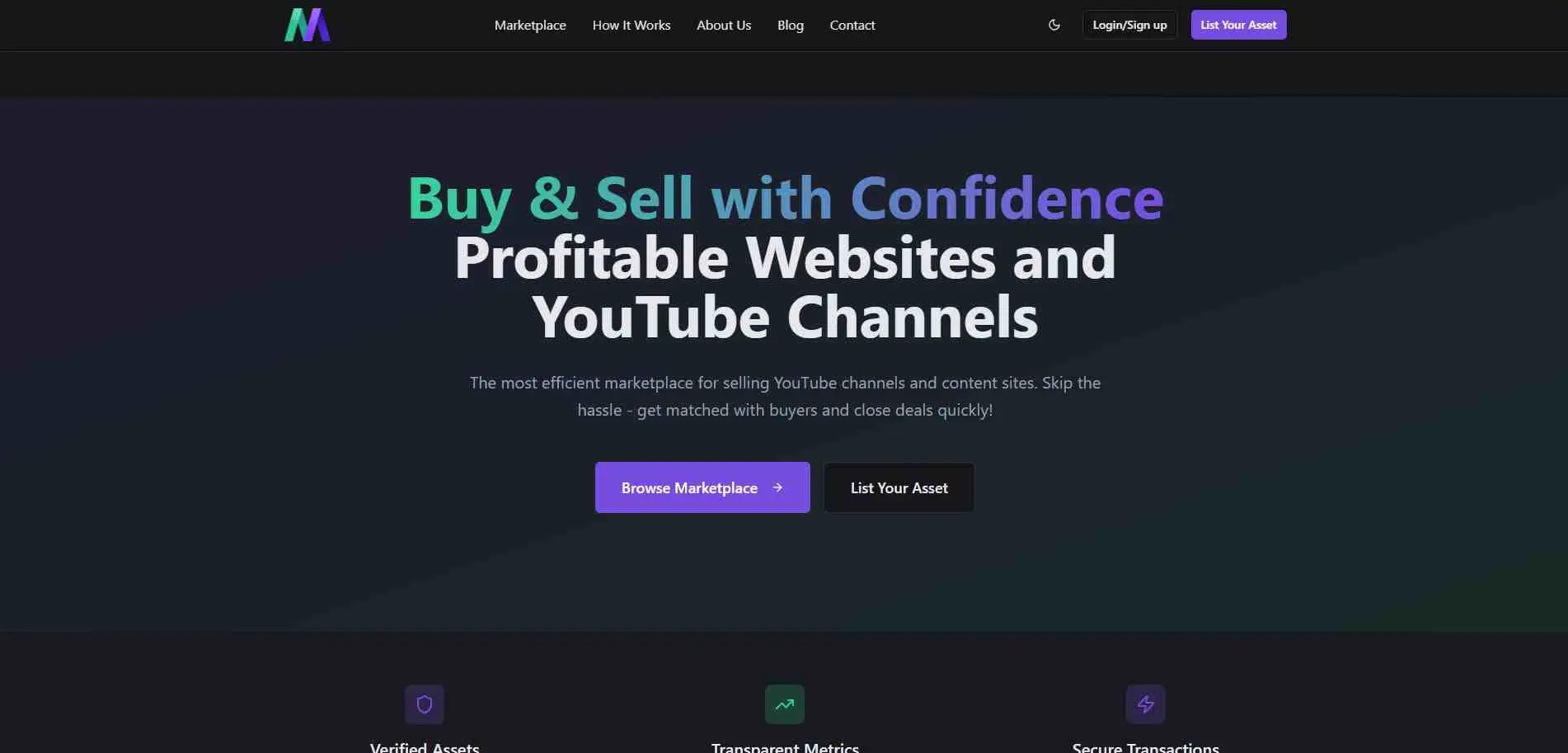
Motion Invest focuses heavily on websites and YouTube channels, particularly smaller content businesses. Listings can include figures such as traffic, monthly income, subscribers and asking price. The company also describes a vetting and escrow process.
For content websites, don`t make the mistake of treating traffic as the business. You should know:
- Where is the traffic coming from?
- Which pages bring it?
- How much revenue does each source generate?
- And how dependent is the business on one traffic channel?
A website getting 100,000 visits a month isn`t automatically a better acquisition than one getting 30,000. What matters is what those visitors are worth and how stable that traffic is.
6. Acquire.com
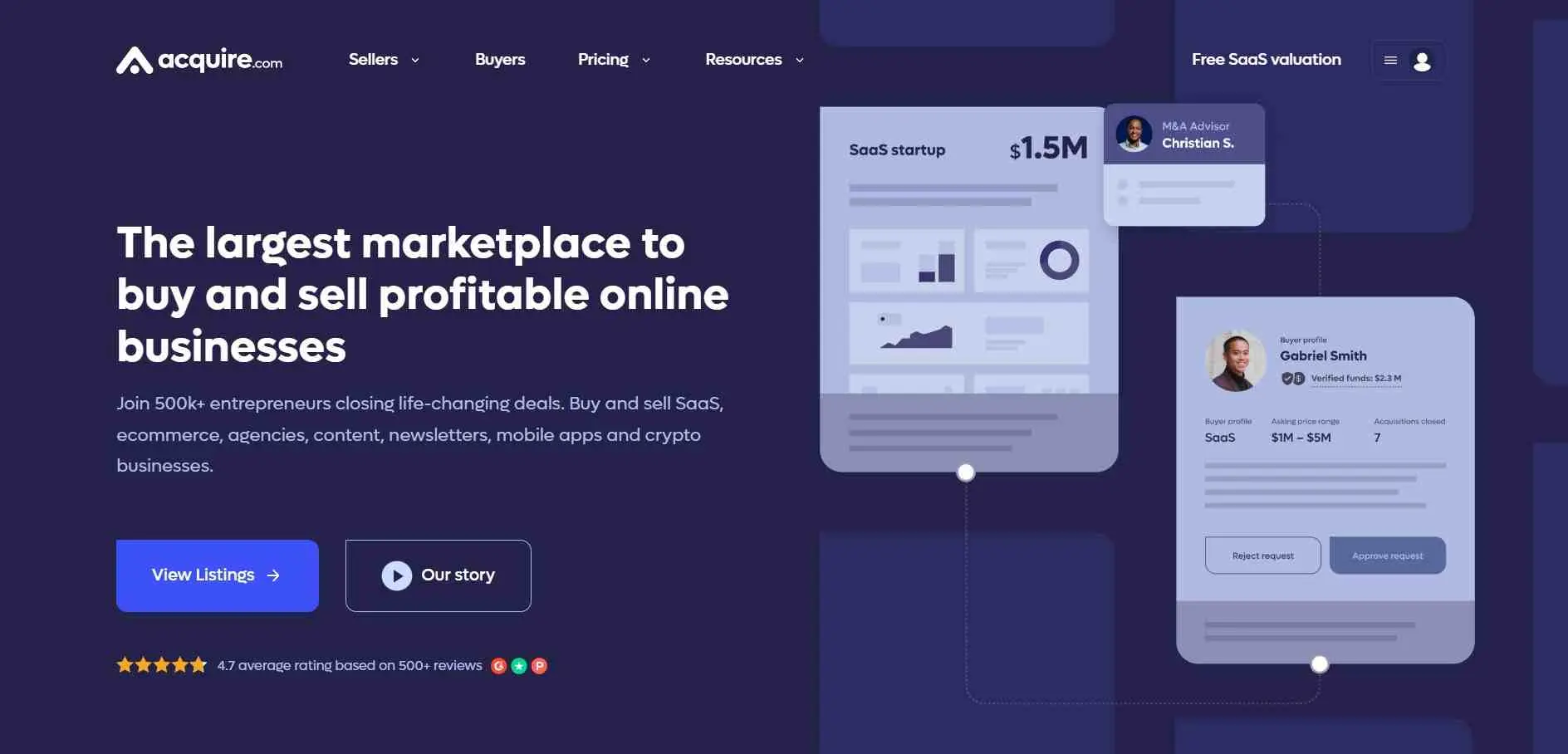
Acquire.com sits much closer to the startup side of the market. SaaS is a major part of the platform, but it also covers ecommerce, agencies, marketplaces, mobile apps, AI businesses and newsletters. Buyers can search businesses using factors such as industry, location, business model and financial performance.
This is where looking only at revenue becomes particularly dangerous. For SaaS, understand recurring revenue, customer concentration and how much of the product is still dependent on the founder.
A SaaS company making $20,000 a month can be a very different business depending on whether the founder spends five hours a week running it or fifty. The revenue number doesn`t tell you that.
7. Latona`s
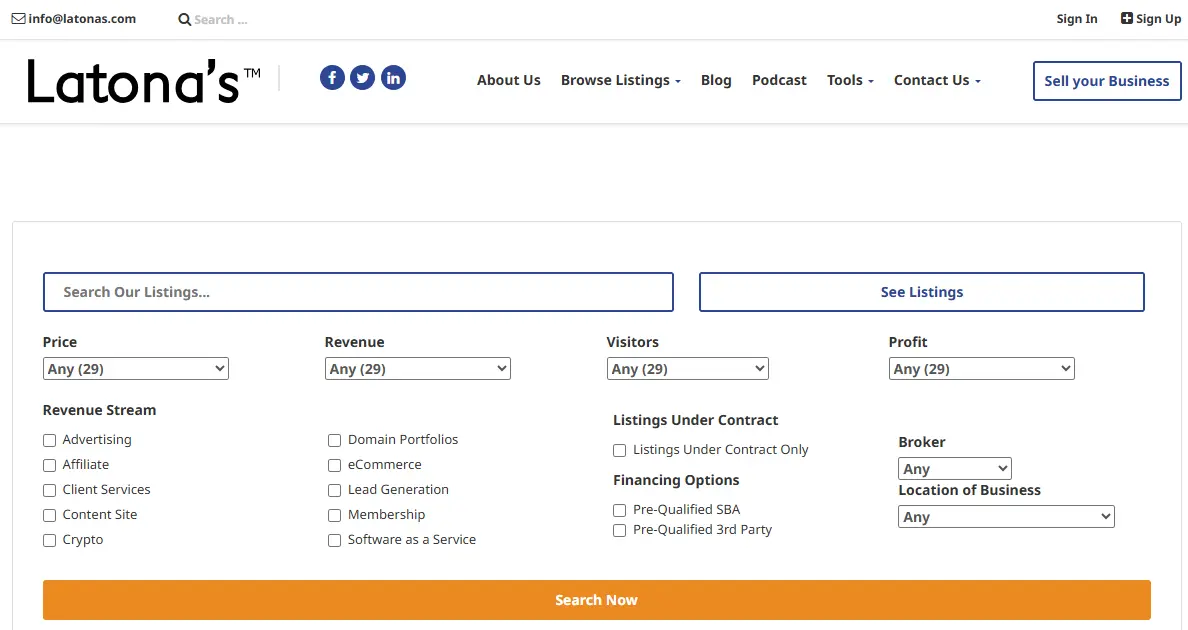
Latona`s operates closer to the brokerage and M&A side of the market. It deals with digital assets including content sites, ecommerce businesses, Amazon FBA, Shopify stores, lead- generation businesses, memberships and SaaS. Buyers can also filter listings using factors such as price, revenue, visitors, profit and business age.
At this level, buying an online business starts looking less like buying a website and more like buying a company. That means the questions become bigger too.
- Who are the customers?
- How concentrated is the revenue?
- What contracts are involved?
- What intellectual property is being transferred?
- What does the owner actually do every week?
Those questions can matter far more than the headline asking price.
8. FE International

FE International is not simply another marketplace where you scroll through website listings. It operates as a technology M&A advisor and works with SaaS, ecommerce, content, AI, cybersecurity, fintech and other technology businesses. Its services include valuation, due diligence, private sales and transaction advice.
That makes it more relevant to larger or more complicated transactions. For a small content site, this level of involvement may be unnecessary. For a larger technology business, however, issues such as contracts, intellectual property, financial statements, employees and ownership structure can become a major part of the deal.
9. Investors Club
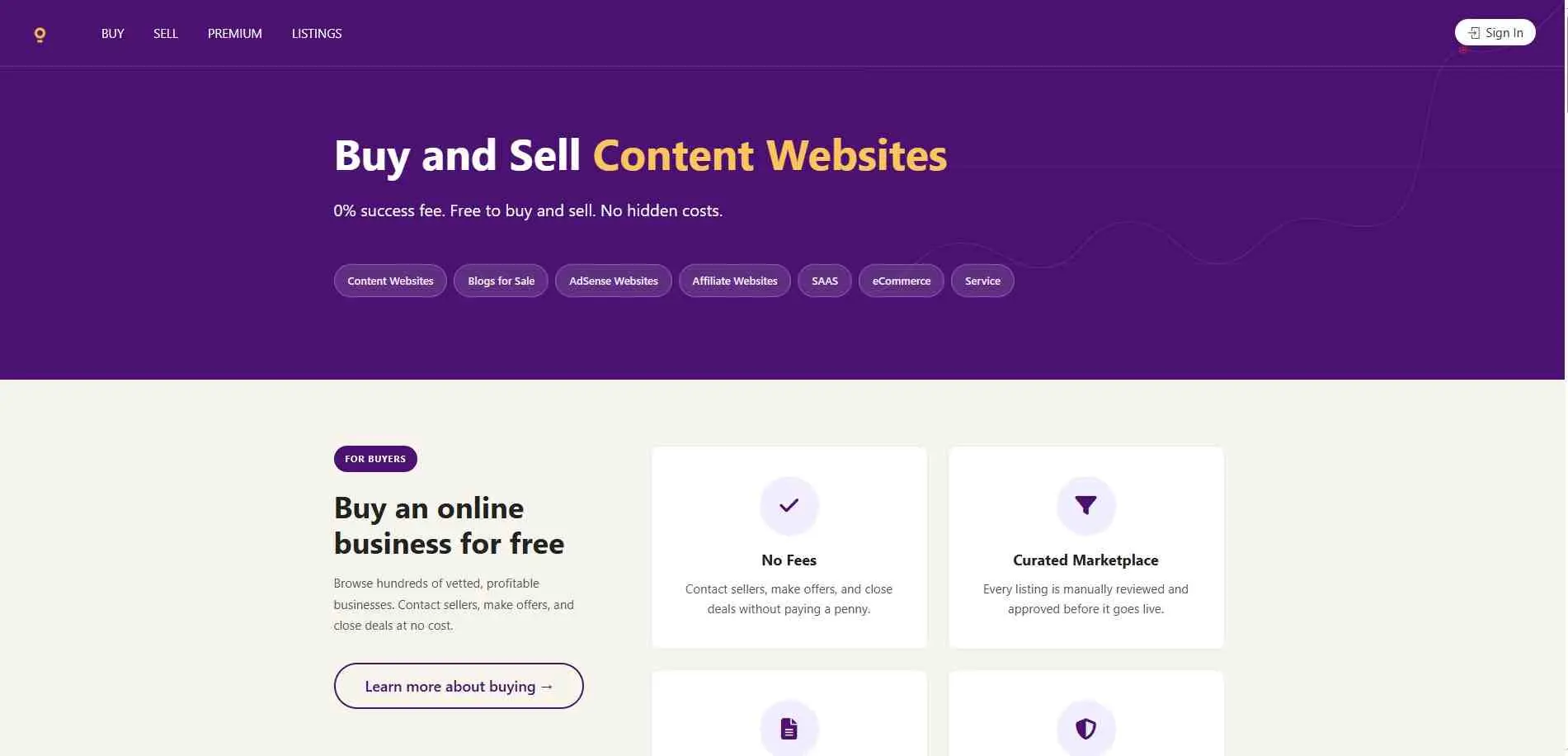
Investors Club focuses on online businesses and uses a more curated marketplace model. The company says its listings are manually reviewed and that buyers can receive an independent due-diligence report covering areas such as financials and traffic. It lists content, affiliate, SaaS, ecommerce and service businesses.
That can save a buyer some research time. But I`d still treat the report as a starting point, not a substitute for your own investigation. When your money is going into an acquisition, you should understand the numbers yourself.
10. Quiet Light

Quiet Light is closer to a traditional business broker than a simple public marketplace. Its advisors help business owners value, prepare and sell their companies, while also supporting buyers through the acquisition process. The businesses it works with include ecommerce, Amazon FBA, content, SaaS, agencies and membership businesses.
That kind of support can be useful when the deal is complicated or the seller does not want to manage the entire process alone. For buyers, the trade-off is that you`re dealing with a more involved acquisition process rather than simply finding a listing and making an offer.
The Part Most Marketplace Lists Get Wrong
Most "best online business marketplace" articles stop at the comparison table.
That`s not particularly useful. Knowing that one platform sells websites and another sells SaaS doesn`t tell you whether a particular business is worth buying.
The harder part is figuring out what the listing isn`t telling you.
Thighs You Should Look into
Look at the traffic, not just the traffic number
Ask where the visitors actually come from.
A business getting most of its traffic from Google has a different risk profile from one that relies on diversified online marketing strategies across search, email, direct visitors, referrals and social platforms.
The same monthly traffic number can hide a very different business underneath.
Look at revenue concentration
Don`t just ask, "How much does it make?"
Ask, "Where does that money come from?"
If almost all revenue comes from one customer, one affiliate network, one product or one advertising relationship, that`s something the buyer needs to understand before paying the asking price.
Figure out how replaceable the owner is
This is one of the biggest blind spots when people buy content businesses. The listing may show profit. It may show traffic. It may show revenue. But how many hours does the owner spend every week?
If the answer is 30 hours, then the buyer isn`t purchasing a passive income stream. They`re purchasing a business that still needs a person to run it.
Find out what actually transfers
The domain is only one part of the deal. You also need to know whether the sale includes the website, content, source code, customer database, social accounts, email list, software accounts, contracts, intellectual property and other assets needed to keep the business operating.
That needs to be clear before you sign anything.
A Simple Example
Let`s say two websites are both listed for $25,000. Both make $1,500 a month.
At first glance, they look almost identical. But Site A gets traffic from several sources, uses freelance writers and takes the owner five hours a week to manage.
Site B gets almost all of its traffic from Google. The owner writes every article, answers every customer email and manages all the partnerships.
Same monthly revenue. Very different businesses.
This is why comparing online businesses using only asking price and monthly profit can give you a completely misleading picture.
So Which Marketplace Should You Use?
Start with the business, not the platform. Looking for a small website or side project? A platform such as SideProjectors or Motion Invest may be more relevant.
Looking for a broader selection of digital assets? Flippa covers more categories. Looking for an established online business? Empire Flippers, Investors Club or a brokerage such as Quiet Light may fit the type of transaction you`re considering.
Looking for a SaaS or startup? Acquire.com is built much more around that market. And when the transaction becomes large or complicated, firms such as Latona`s or FE International operate further into the brokerage and M&A side.
There isn`t a universal answer. There is only a better match between the business, the buyer and the type of transaction.
Don`t Skip Due Diligence
Whatever marketplace you use, don`t let the listing do your thinking for you. Verify the financial records. Check the analytics. Look at traffic sources. Understand the expenses. Confirm domain and intellectual-property ownership.
Check contracts and platform accounts. And most importantly, find out what the current owner actually does to keep the business running. The marketplace helps you find the opportunity.
Due diligence tells you whether the opportunity is real.