
 Table of Content
Picking a community platform sounds simpler than it is. On the surface, every one of these ten does discussions, events, and memberships. The real differences show up in where each one sits on the spectrum between "courses with community bolted on" and "pure community with courses bolted on," and how the pricing actually works once you factor in transaction fees that rarely make the headline number.
A couple of these platforms also publish their own "best community platform" roundups and rank themselves at the top. That`s not uncommon in this category, so treat any vendor- published comparison list as a starting point, not a verdict.
Here`s a straight look at all ten, written without a horse in the race.
Before You Compare Anything
Circle and Mighty Networks are the clearest pure community platforms on this list, everything else is built around a different primary job. Kajabi and Thinkific are course-first platforms where community is a supporting feature. Podia is built for solo creators selling digital products. Disco is an AI-powered learning platform that starts at nearly $400 a month, expensive compared to most here. Hivebrite is even more expensive, starting at $895/month, and is designed for universities, alumni networks and large professional associations, not individual creators. Skool is the cheapest genuine option at $99 flat, but its community format is deliberately basic. And Bettermode quietly dropped its free tier in March 2026, so older comparisons showing it as free are out of date.
At a Glance
Platform | Starting Price | Best For |
| Circle | $89/month | Creators wanting professional paid communities with courses |
| Hivebrite | $895/month | Universities, alumni, large professional associations |
| Mighty Networks | $95/month | Mobile-first community builders wanting gamification |
| Kajabi | $179/month | Course creators wanting an all-in-one business stack |
| Skool | $9/month | Coaches wanting a simple, flat-priced community |
| Disco | $499/month | Learning academies wanting AI-driven course automation |
| Bettermode | $199/month | Brands wanting a deeply customizable community |
| Thinkific | $40/month | Course creators who want to add basic community features |
| Podia | $42/month | Solo creators selling courses, downloads, and memberships |
| Swarm | $19/month | Video-first coaches and small groups |
1. Circle
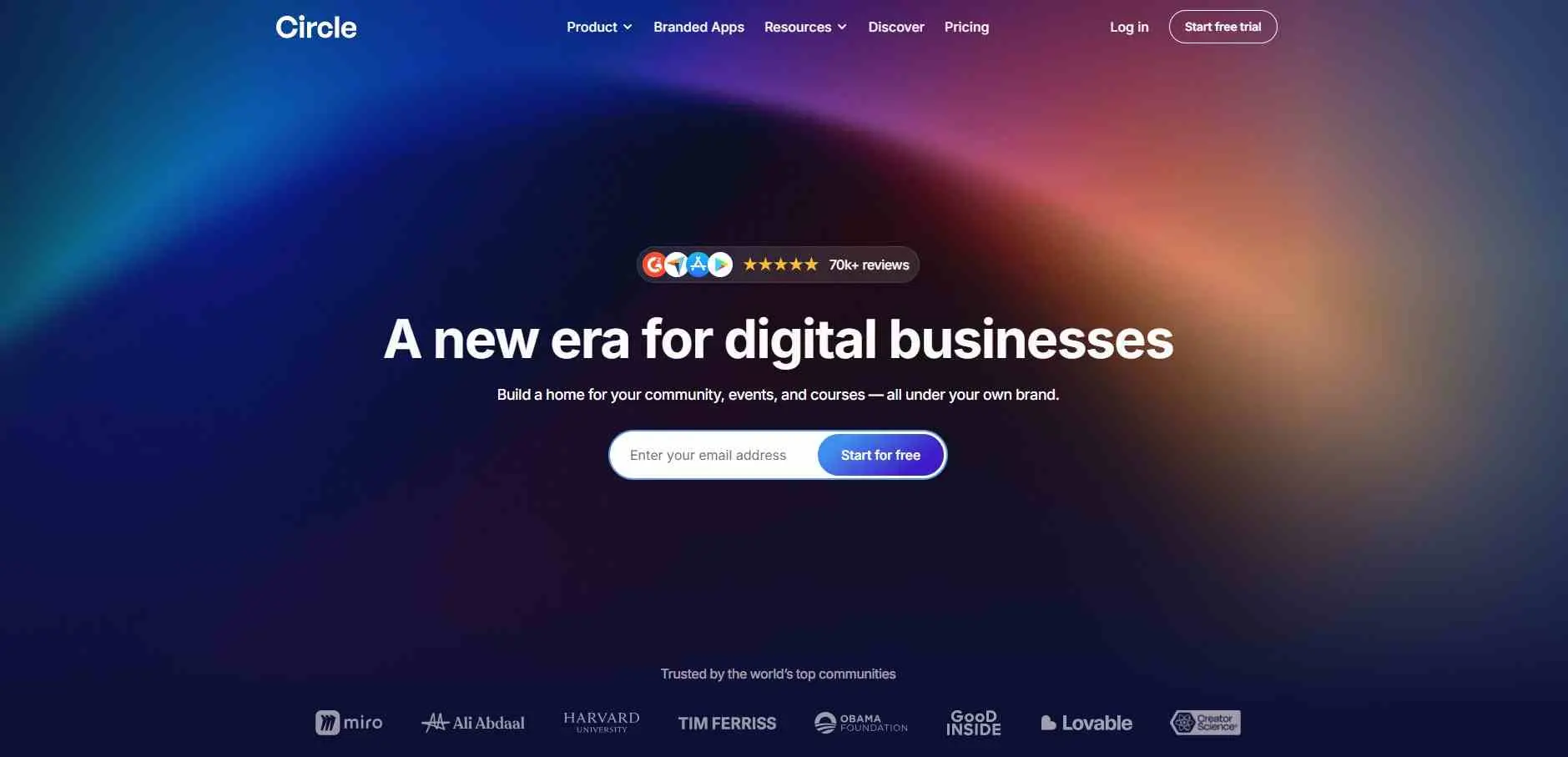
Circle gets compared to every other platform in this space because it does the most in one place - community, courses, live events, and memberships. The $89 a month plan lets you get started, but the features most people actually need - unlimited automations, branded email, and proper analytics - cost $199 a month. The platform takes 2% of payments on the base plan and 0.5% on the Plus plan. AI agents and more advanced automations show up on higher tiers.
What It Does Well
- Structured spaces let you organize community content exactly how members need to find it
- AI agents answer member questions using your own content, available on higher plans
- Clean, professional UI that holds up well for paid communities compared to forum-style tools
Best For: Creators and professionals running paid communities who want the most polished all-in-one experience.
2. Hivebrite
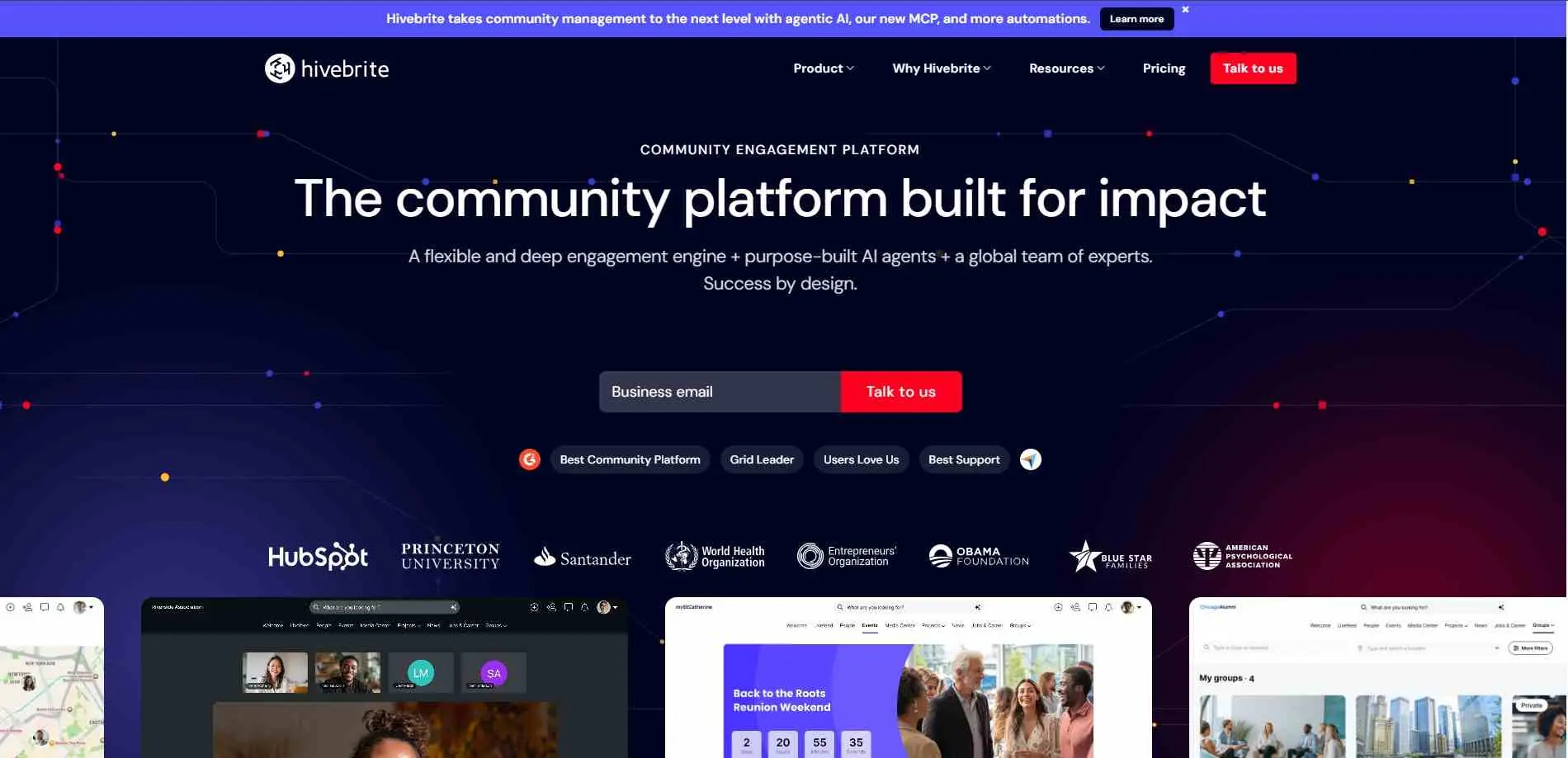
Hivebrite starts at $895/month and isn`t trying to hide who it`s for. Alumni networks, professional associations, organizations with actual staff running member programs - that`s the customer. It includes alumni directories (searchable lists of former members), mentoring tools, event management, and data tracking in detail. This isn’t a platform for a solo creator starting a community, and the price tells you that right off the very beginning.
What It Does Well
- Purpose-built alumni and membership directory tools that general platforms don`t replicate
- Mentoring program management as a native feature
- Advanced branding and governance tools for large organizations with various community managers
Best For: Universities, large nonprofits and professional associations with established alumni or membership programs.
3. Mighty Networks
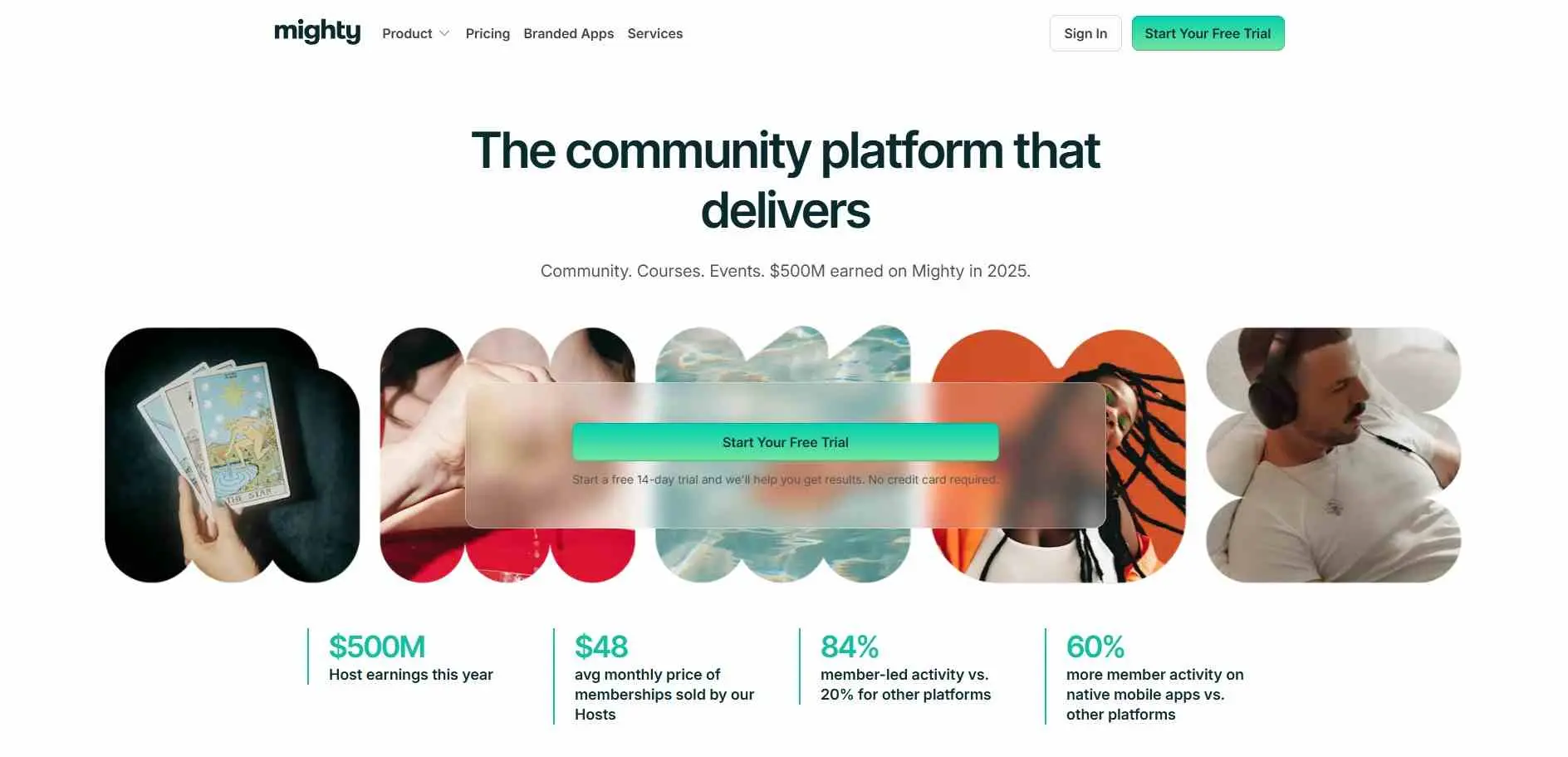
Mighty Networks is close to Circle in what it does, but it`s built differently. The platform pushes member-generated content to the front - the company claims 84% of content comes from members rather than hosts, which is either a selling point or a warning depending on what you need. Gamification is baked in: streaks, badges, icebreakers. Basic community starts at $95/month, courses at $179/month, with a 2% fee on the lower tiers.
What It Does Well
- Gamification features that actually drive daily member engagement, not just one-time visits
- Native mobile apps included at lower price points than Circle
- Member-focused feed design, encouraging participation rather than passive consumption
Best For: Community builders looking for an active, mobile-first community where members drive the discussion.
4. Kajabi
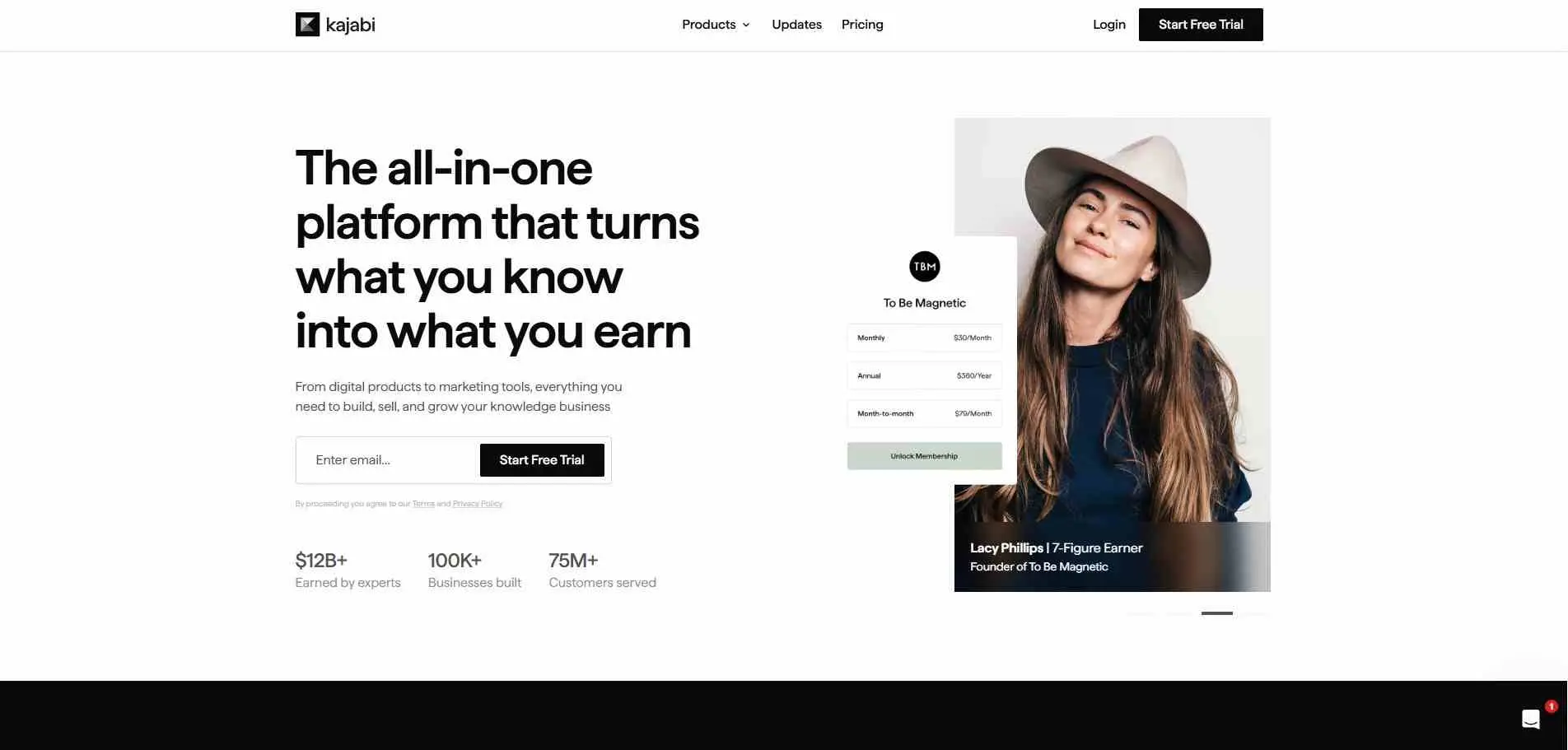
Kajabi is a unified solution for digital business platform. It has email marketing, landing pages, sales tools, courses, memberships and community all in one subscription. Community is not the focus, just part of it. If you’re already on Kajabi for courses or email, adding a community to the same place is the next step. But if community is all you need and you have no use for the other tools, paying $179 a month and up for things you will never use is not a good deal.
What It Does Well
- Replaces multiple tools: email, landing pages, payments, courses, and community
- Strong marketing and sales infrastructure that pure community platforms don`t offer
- Simple onboarding for those who already building a digital product business
Best For: Course creators and coaches looking to manage marketing, sales and community from 1 subscription.
5. Skool
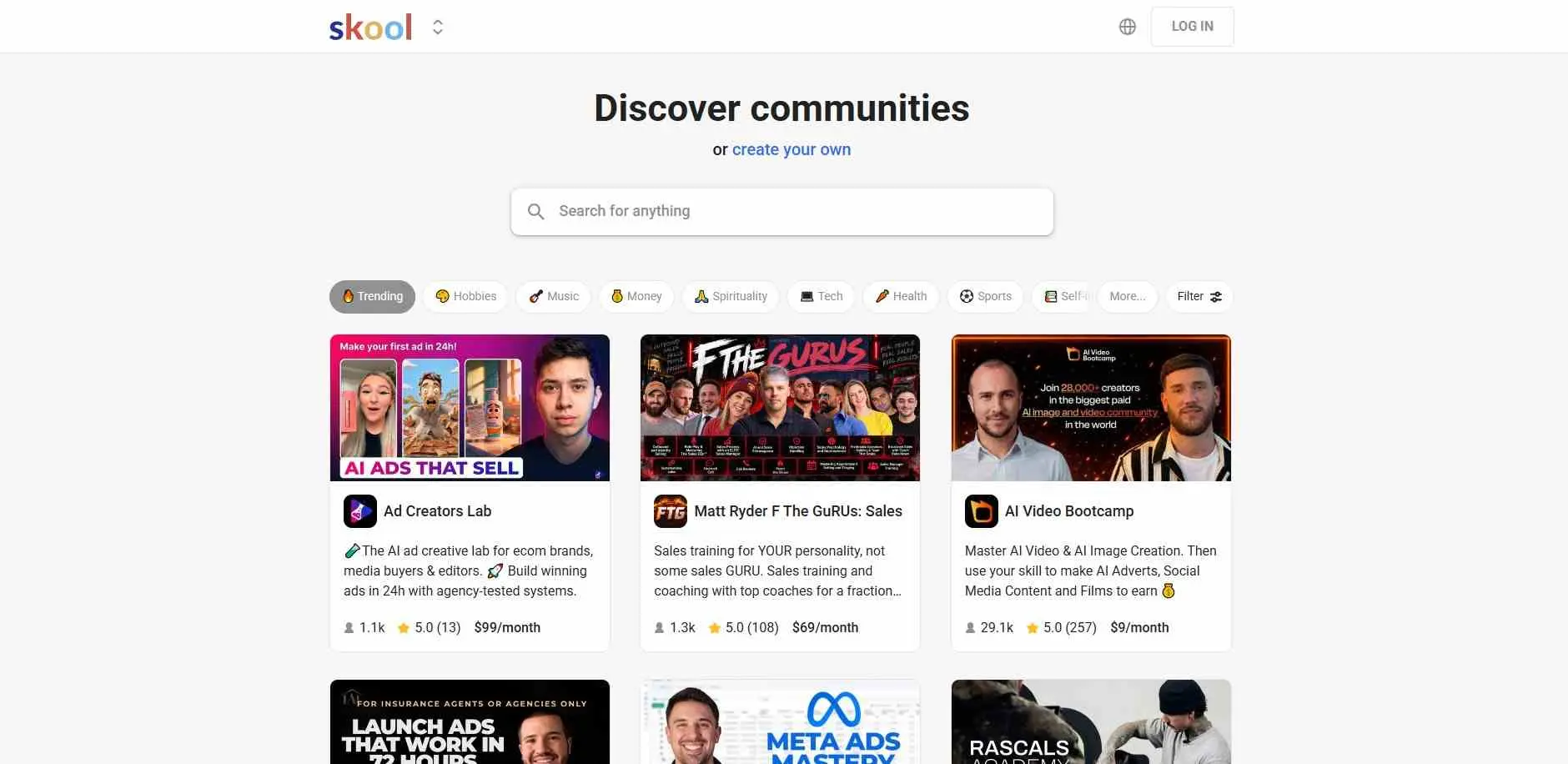
Skool is simple by design. One flat price, $9 a month, covers unlimited members with no per-seat or per-member fees. The community interface is deliberately forum-like and lean, closer to a structured Reddit than a polished community product. Gamification is built in through a points and leaderboard system. Courses are basic. Co-founded partly by Alex Hormozi, who has heavily promoted it, Skool has grown fast among coaching and creator audiences who value pricing simplicity over feature depth.
What It Does Well
- Flat $99/month for everything, no surprise fees as your community grows
- Leaderboard and points gamification that drives member activity
- Discovery feed lets new members find your community without a separate marketing effort
Best For: Coaches and creators who want a simple, gamified community at a predictable price.
6. Disco
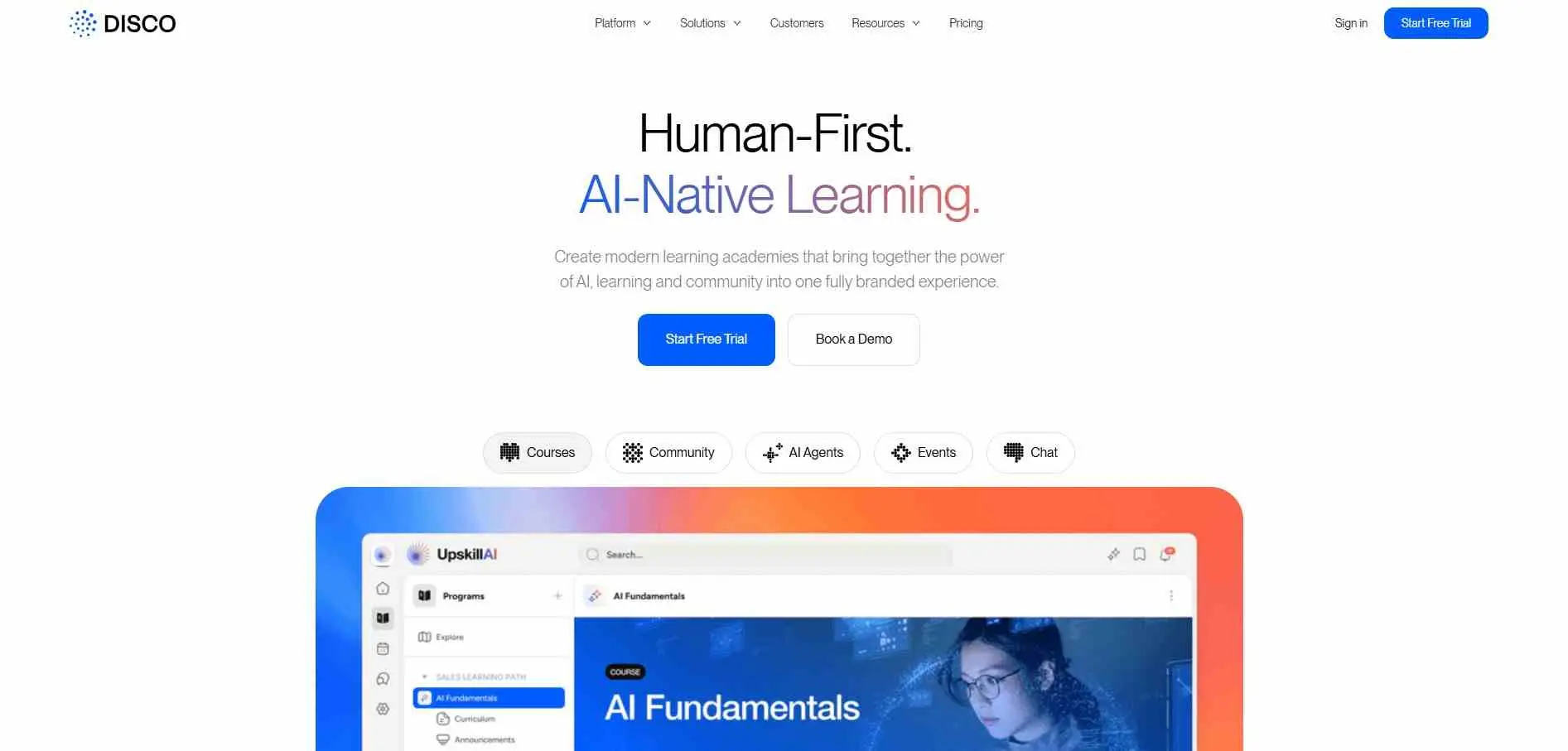
Disco is for companies that run large training programs - things like corporate learning courses or group study programs with lots of students. It uses AI to create lessons, keep learners engaged, and track who is learning what. Smaller platforms don`t offer this. It costs $499 a month to start, and big companies can get a custom price. It connects directly to Slack and Zoom, which shows you the kind of customer it`s made for.
What It Does Well
- AI-powered curriculum generation and automated engagement workflows
- Designed for cohort-based and structured learning programs, not casual communities
- Actionable analytics on completion rates and learner progress
Best For: Organizations running formal learning academies, corporate training programs, or large cohort-based courses.
7. Bettermode
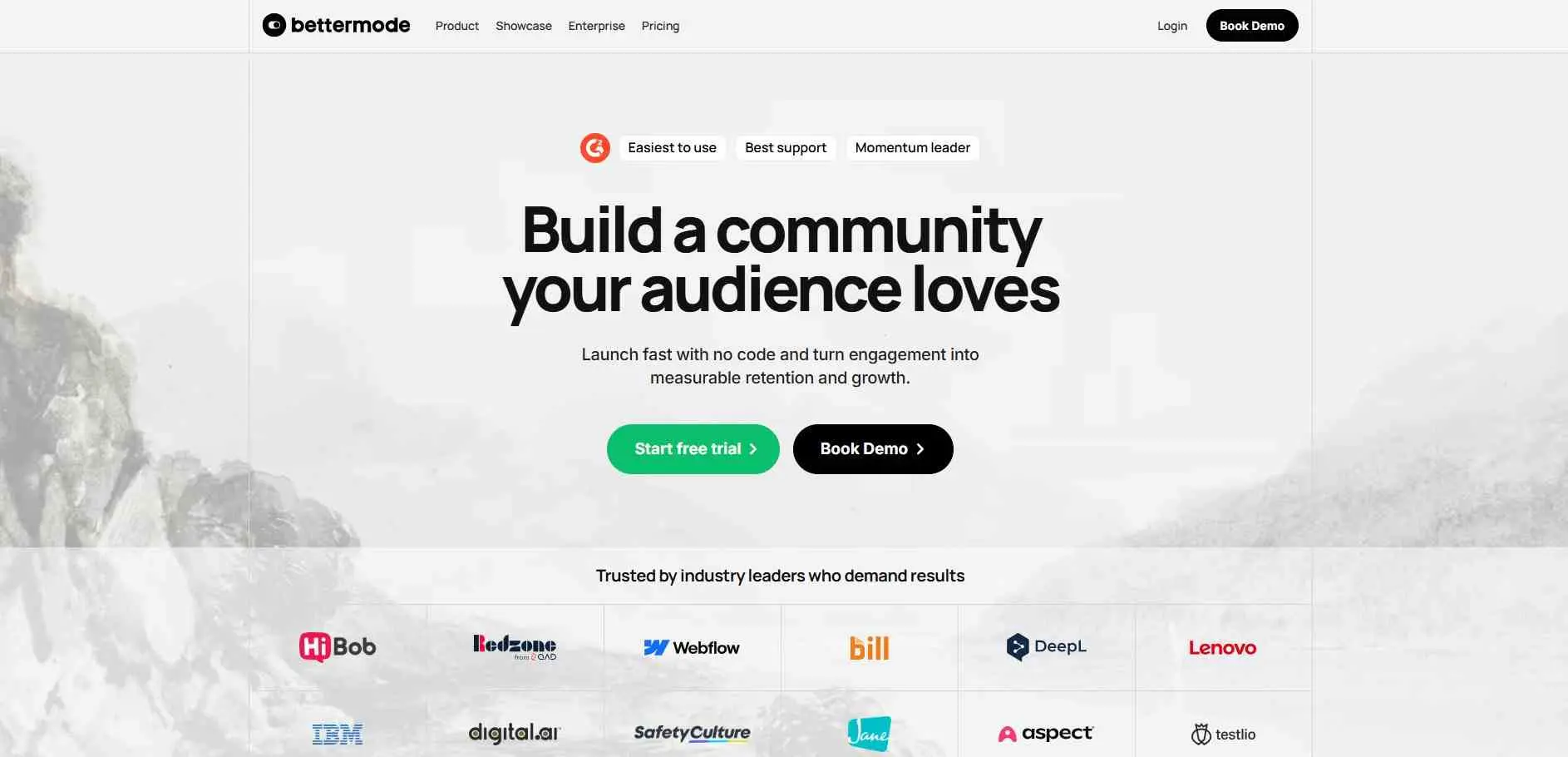
Bettermode gives brands the most control over how their community looks and works. There`s no set template - you build it your way. It connects directly to tools like Salesforce and HubSpot (software that helps businesses manage customer data), so information from your community goes straight into those tools. Bettermode removed its free plan in March 2026. It now starts at $199 a month, and the price goes up a lot on higher plans.
What It Does Well
- Modular layout editor lets you build the exact experience you want
- Native CRM and marketing integrations that most community platforms don`t offer
- Multilingual support for global communities
Best For: Brands and companies wanting a heavily customized community that integrates with business tools.
8. Thinkific
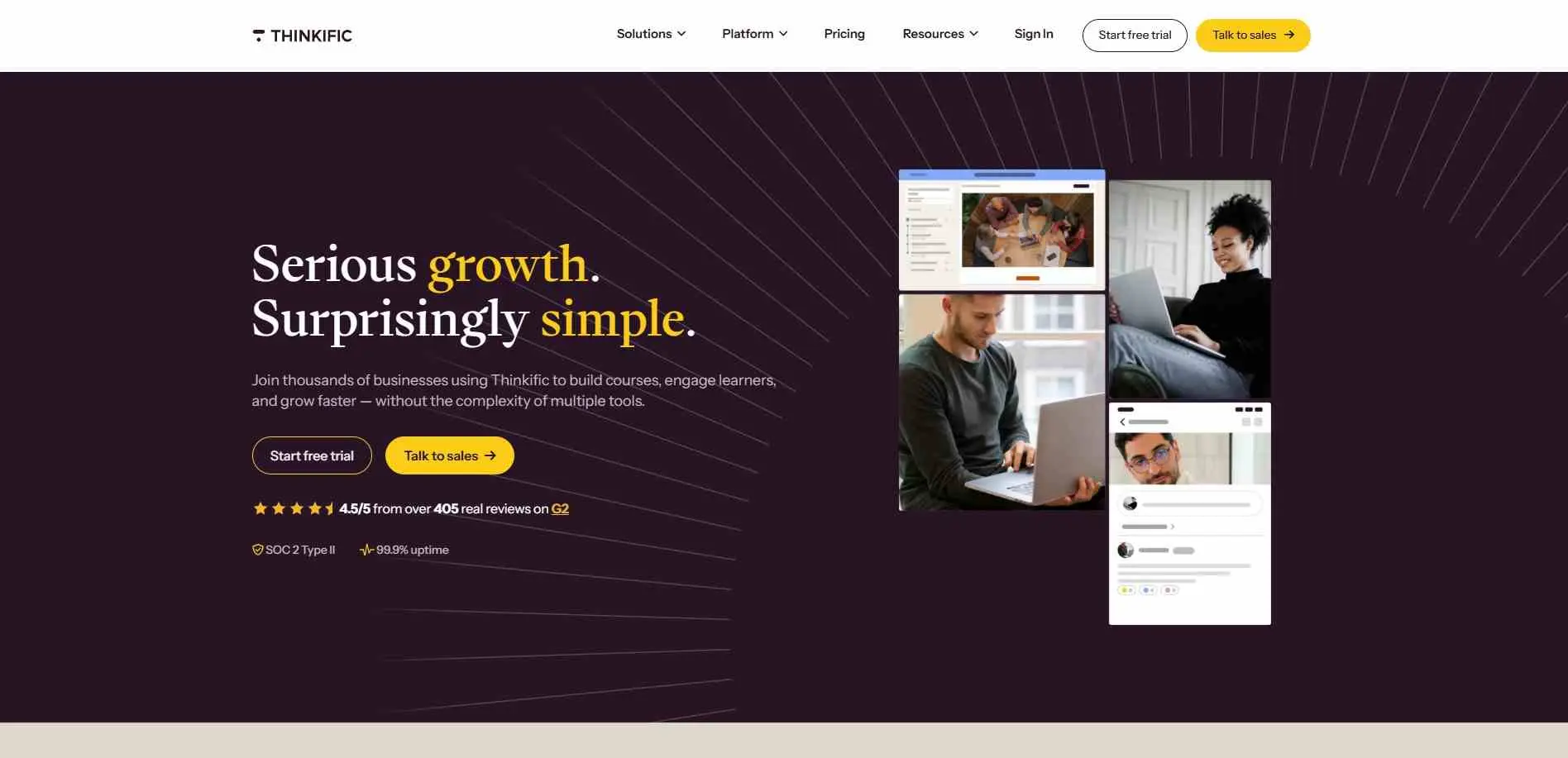
Thinkific is a course platform where community is a supporting feature, not the main event. It does courses very well, drag-and-drop builder, live lessons, memberships, and a proper LMS. The community spaces it added are functional but not deep, you can host discussions and group spaces, but it doesn`t compete with Circle or Mighty Networks on community engagement. A basic plan now starts at $40/month following a price adjustment in mid-2026, with a free plan still available for getting started.
What It Does Well
- Course creation and delivery is the strongest on this list, including drip content and certifications
- Clean, easy-to-use interface for instructors who aren`t technically savvy
- Community adds a social layer to courses without needing a separate platform
Best For: Educators and course creators who want a proper LMS with basic community features added on.
9. Podia

Podia is made for solo creators who sell digital products - things like courses, file downloads, webinars, and memberships - from one online shop. Community is included, but it is set up as a place where your members connect around what you sell. It is not designed to be a community on its own. It starts at $42/month with a 5% transaction fee on that tier, dropping to 0% at $84/month. It`s the easiest on this list to set up from scratch, deliberately so.
What It Does Well
- Fastest setup of any platform here, designed to get you selling in one day
- Products, email, payments and community. All in one place.
- Clean shopfront experience for digital product sellers selling directly to customers
Best For: Solo creators who want to sell courses and digital products and add community without having to build a separate platform.
10. Swarm
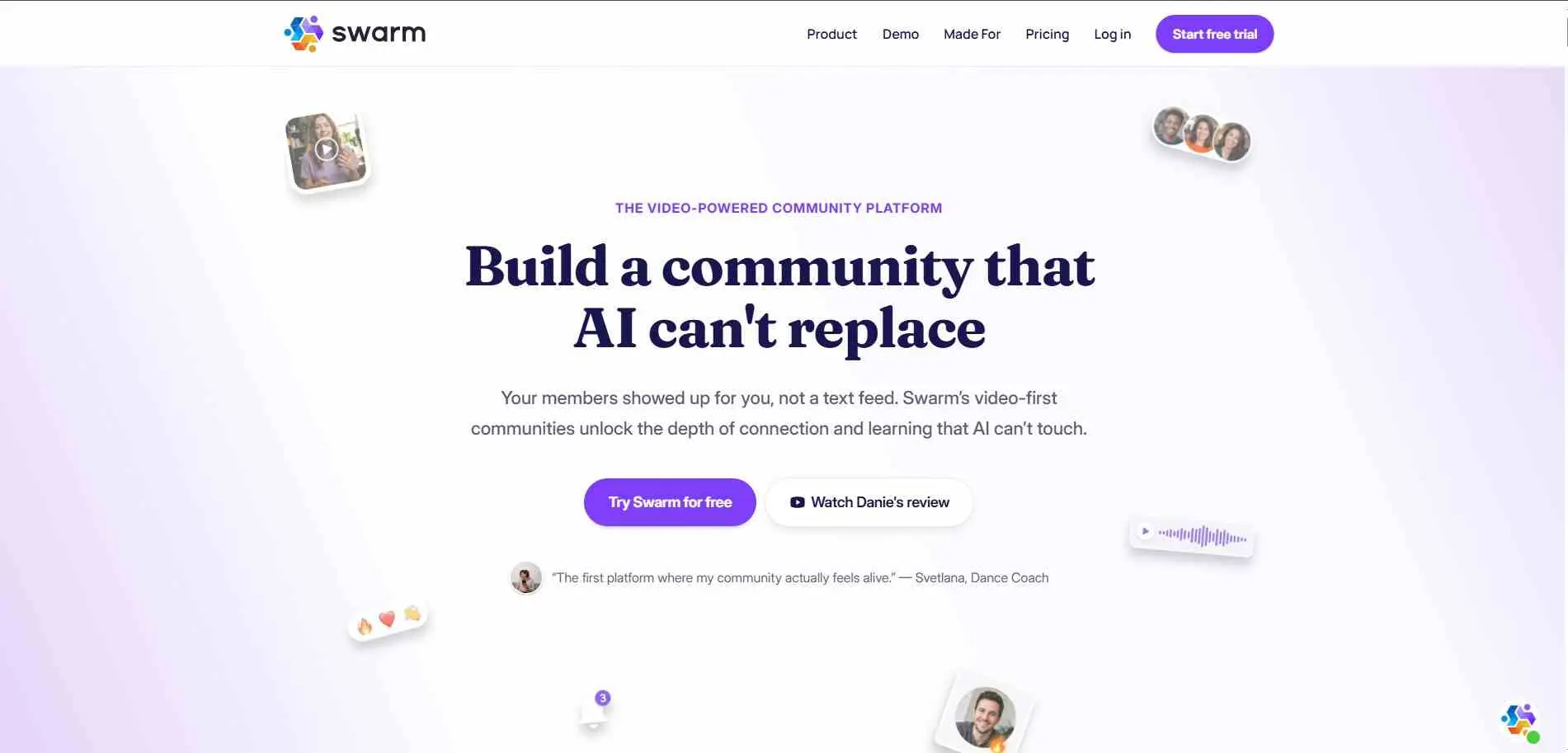
Swarm is built on video, not text. It offers live events, pre-recorded video messages, live video rooms, and AI-written replays (automatic text versions of video calls). Plans start at $19 a month. But the cheapest plan takes 10% of every payment you collect from members. Once you start charging real money, that 10% adds up quickly. That adds up fast once you charge real money. For coaching groups or small accountability groups where seeing each other`s faces matters more than typing back and forth, it`s one of the more different options on this
list.
What It Does Well
- Video-first design makes community feel closer to a real group, not a forum
- Real-time and async video in the same space, not separate tools for each
- AI transcriptions turn live sessions into searchable, on-demand content automatically
Best For: Coaches and groups where face-to-face video connection is the point, not a nice-to-have.
Which One Fits You
The simplest way to get to the right answer is to answer one question at the beginning. Is community the main thing you are creating, or is it a means to an outcome?
If community is your main product, Circle and Mighty Networks are the two best options. Circle is simpler and looks more professional. Mighty Networks works better on mobile and has built-in game-like features such as badges and streaks. Skool is the easiest to understand in terms of pricing, if you do not need a lot of customization.
If you are selling courses and want a community to go with them, Kajabi handles the full business side, Thinkific does courses better than the others on this list, and Podia is the quickest way to get up and running.
Hivebrite and Bettermode are for organizations and brands with real budgets and specific technical needs, not individual creators. Disco is the right call for formal learning programs, not community-first businesses. And Swarm is the right call only if video is genuinely the way your community functions, not just a feature you might use occasionally.
Mistakes to Avoid
The biggest one is not factoring transaction fees into the real monthly cost. Swarm`s $19/month entry plan charges 10% per transaction, Mighty Networks and Circle both charge 2% on entry tiers. At $3,000/month in member revenue, that`s $300 to $600 on top of the subscription before payment processing. Run the actual numbers at your expected revenue, not the headline price.
Assuming Bettermode still has a free plan is another live mistake from March 2026 onwards. And choosing a course-first platform like Kajabi or Thinkific when community is the real goal means paying for a full marketing stack you won`t touch.
Bottom Line
The best option isn’t necessarily the one with the longest list of features. First, figure out what you want members to do when they join, then choose a platform that makes it easy for them to do that.
Most community platforms charge less upfront than the real cost of running a paid community on them. The advertised price is almost never all inclusive of transaction fees and the features that matter for growing a paid community are usually behind the second or third tier. Before you get to label prices, compare what you need to what each tier actually contains. That`s where the real differences show up.