
 Table of Content
If you've ever stared at a blank ChatGPT window not knowing what to type, you're not alone. Getting AI to actually do what you want - precisely, efficiently - isn't as obvious as it looks. The prompt is everything. A vague one gets you a vague answer. A sharp one gets you something you can actually use.
That's where prompt library websites come in. These platforms are all about gathering, sharing, and sometimes selling AI prompts across tons of categories - writing, design, marketing, coding, image generation. Instead of spending twenty minutes guessing at phrasing, you find a prompt that already works - and build from there.
This guide is for writers who want to produce content faster, marketers who need campaign copy without the guesswork, designers hunting for image generation prompts, developers building AI workflows, and honestly anyone who's new to AI tools and wants a running start.
Why Prompt Library Websites Matter in 2026
Prompts aren't just instructions. They're the interface between you and the model. To be honest, writing fresh prompts every single time is troublesome. Most people never catch on to this: you don’t have to start from zero every time you start.
Prompt libraries save real time. When someone has already tested dozens of variations of a customer email prompt or a product description template, you get to skip that trial-and-error phase. You also get to see how experienced users phrase things - which teaches you a lot about prompt structure without any formal training.
Beyond time savings, these libraries help you discover prompts for tasks you didn't even know AI could handle. Image prompts, automation templates, chain-of-thought reasoning prompts, social media campaigns - there's more range out there than most people explore. Jumping between tools like ChatGPT, Midjourney, Claude, and Gemini gets old fast.
For help deciding which LLM best fits your specific use case - whether reasoning, coding, or multimodal work - see our guide on the best Large Language Models (LLMs) to use in 2026. One library that brings it all together is way better than going through five different forums.
Best Prompt Library Websites for Ready-to-Use AI Prompts in 2026
1. PromptDen
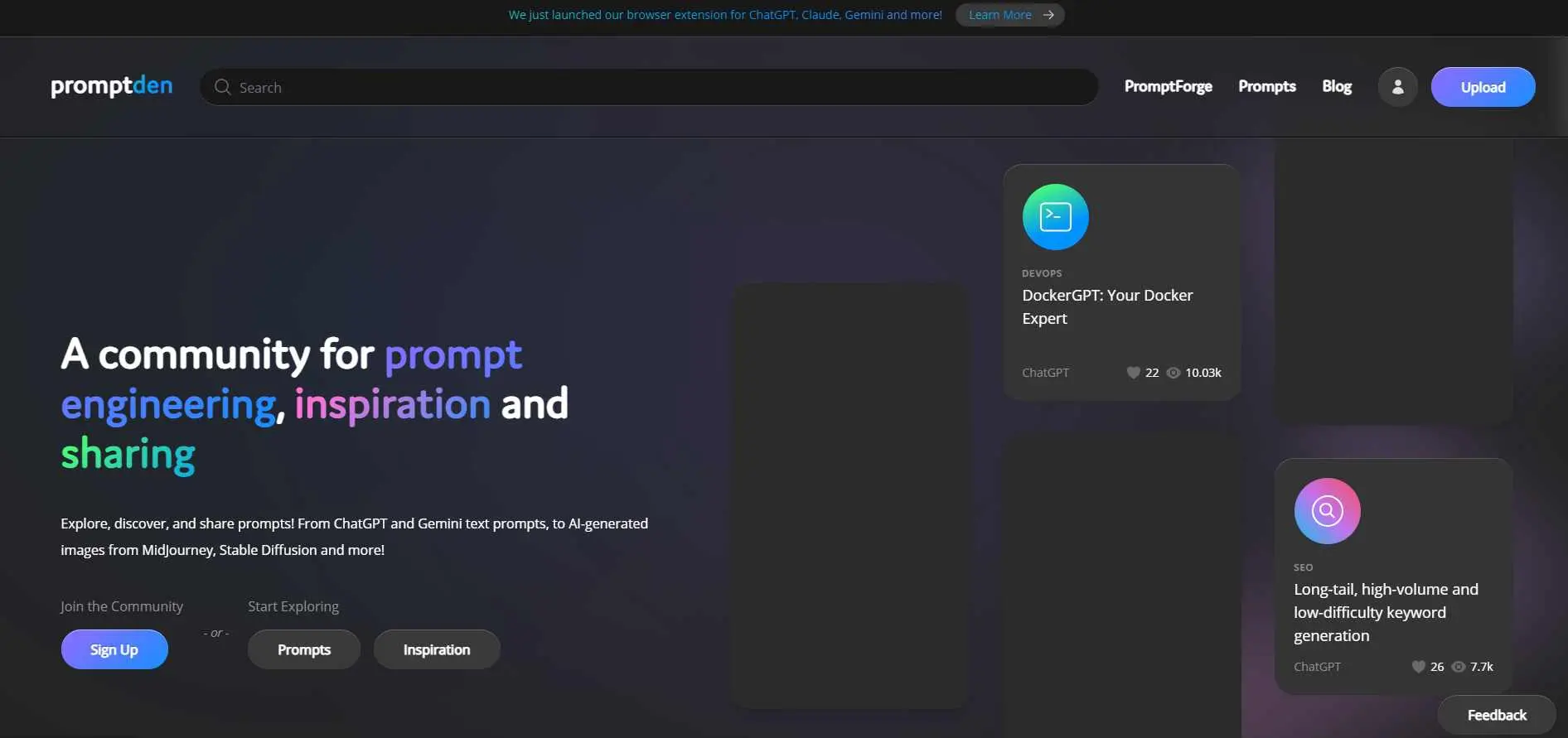
PromptDen is one of those places where the community does most of the heavy lifting for you. It's a shared space for discovering both text prompts and AI image prompts - all in one spot. If you like browsing and fall upon something useful, check it out. The categories are general enough that writers and designers don't have to dig very far to find relevant information.
2. Snack Prompt
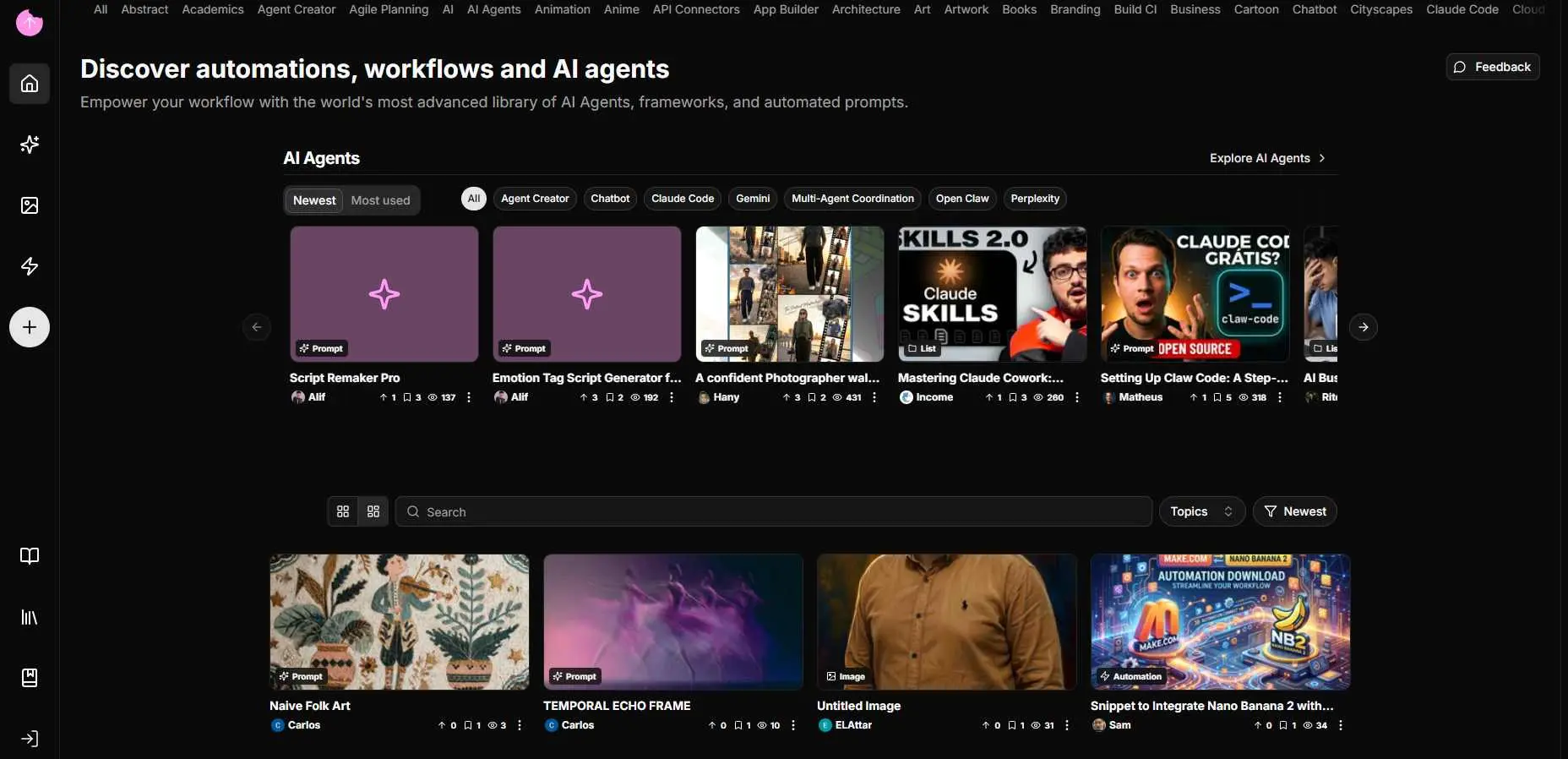
Snack Prompt feels more like a social platform than a database. Users share, remix, and react to prompts across text, images, and automation. What I find useful here is the remix culture - you can see how others have adapted a base prompt for different goals, which gives you a faster way to customize rather than starting fresh. It's particularly good if you want to stay plugged into what the AI community is actually using week to week.
3. PromptHub
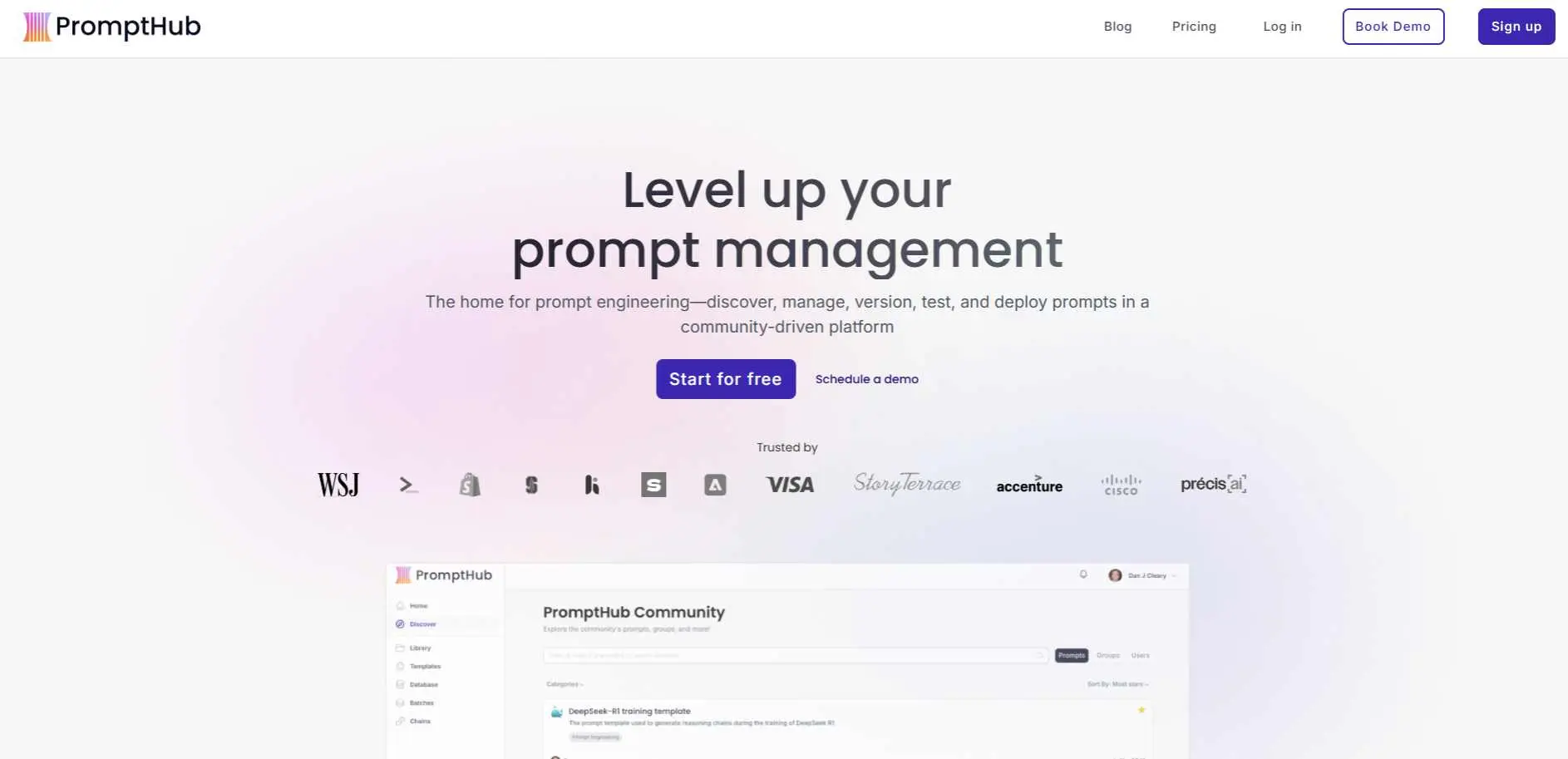
PromptHub is built differently from the others on this list. It's not just a library - it's a collaboration and management tool. Teams can host their own prompt collections, version them over time, and share internally. If you're working with other people on AI-driven content or workflows, this is probably the most professional option available. Solo users can still benefit, but this one's really designed with teams in mind.
4. PromptBase
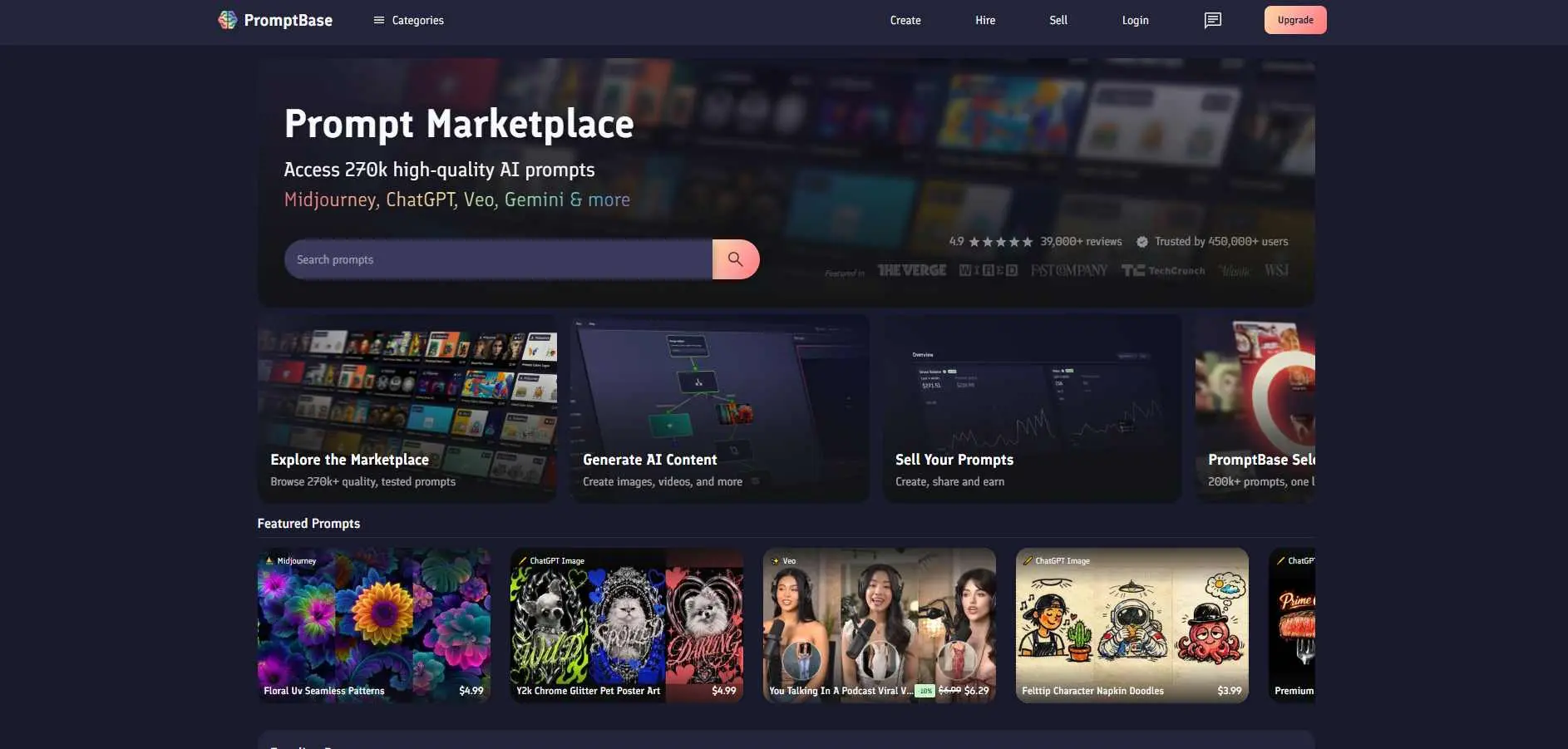
PromptBase is the most established marketplace on this list. By now, these sites have collected a big collection of top-notch prompts for tools like ChatGPT, Gemini, Midjourney, DALL·E, and others. Since creators actually sell their prompts here, you generally get much higher quality than the random stuff floating around in free forums. If you’ve got a specific need or just don’t feel like wasting hours testing, a few dollars to get a reliable prompt can make your life easier.
5. PromptHero
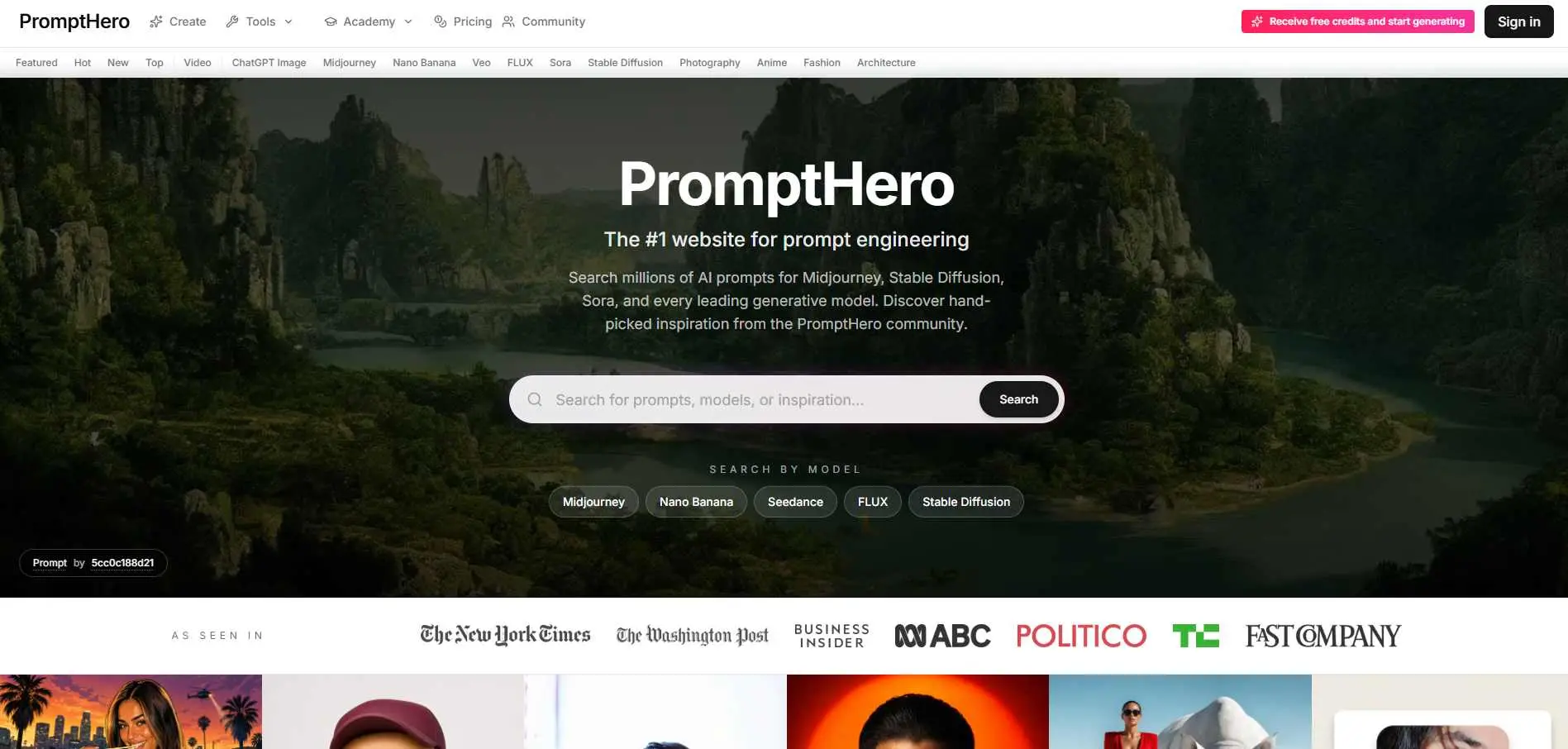
PromptHero is probably the biggest search engine for AI image prompts specifically. When you need inspiration for Midjourney or Stable Diffusion outputs, this is where people go. The search and filter system is genuinely good - you can browse by model, style, or subject. Text model prompts exist too, but the image side is where PromptHero really shines. I'd say if visual content is your focus, this should be your first stop.
6. Promptly AI
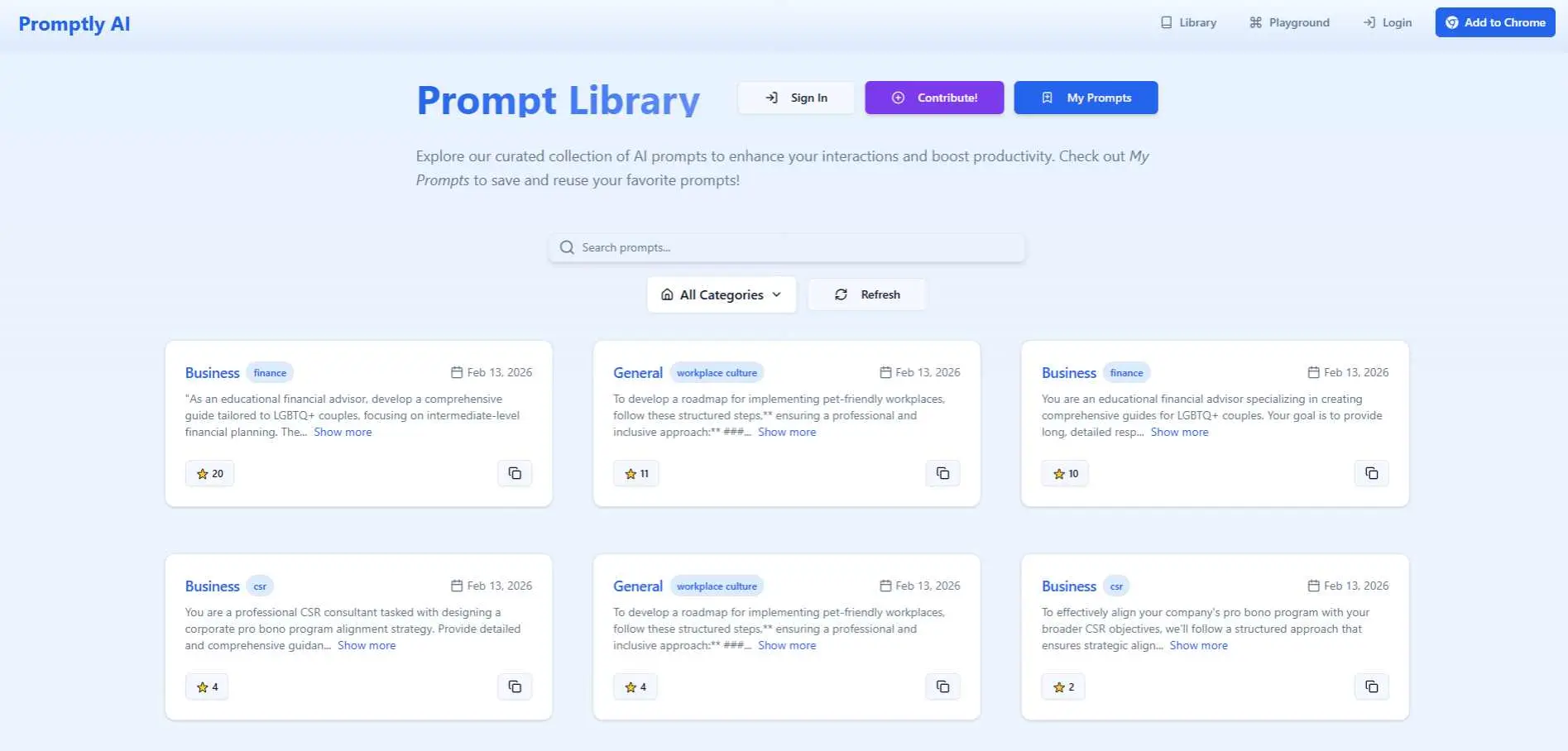
Promptly AI takes a slightly different angle - it's more about saving and organizing your own best prompts than browsing other people's. Plus, their curated library covers ChatGPT, Claude, Perplexity, Gemini, and DeepSeek. So it's one of the few places that actually plays well with a lot of different AI models. This works if you jump around a bunch of platforms and need a spot to keep your favourite prompts organised.
7. The Prompt Index
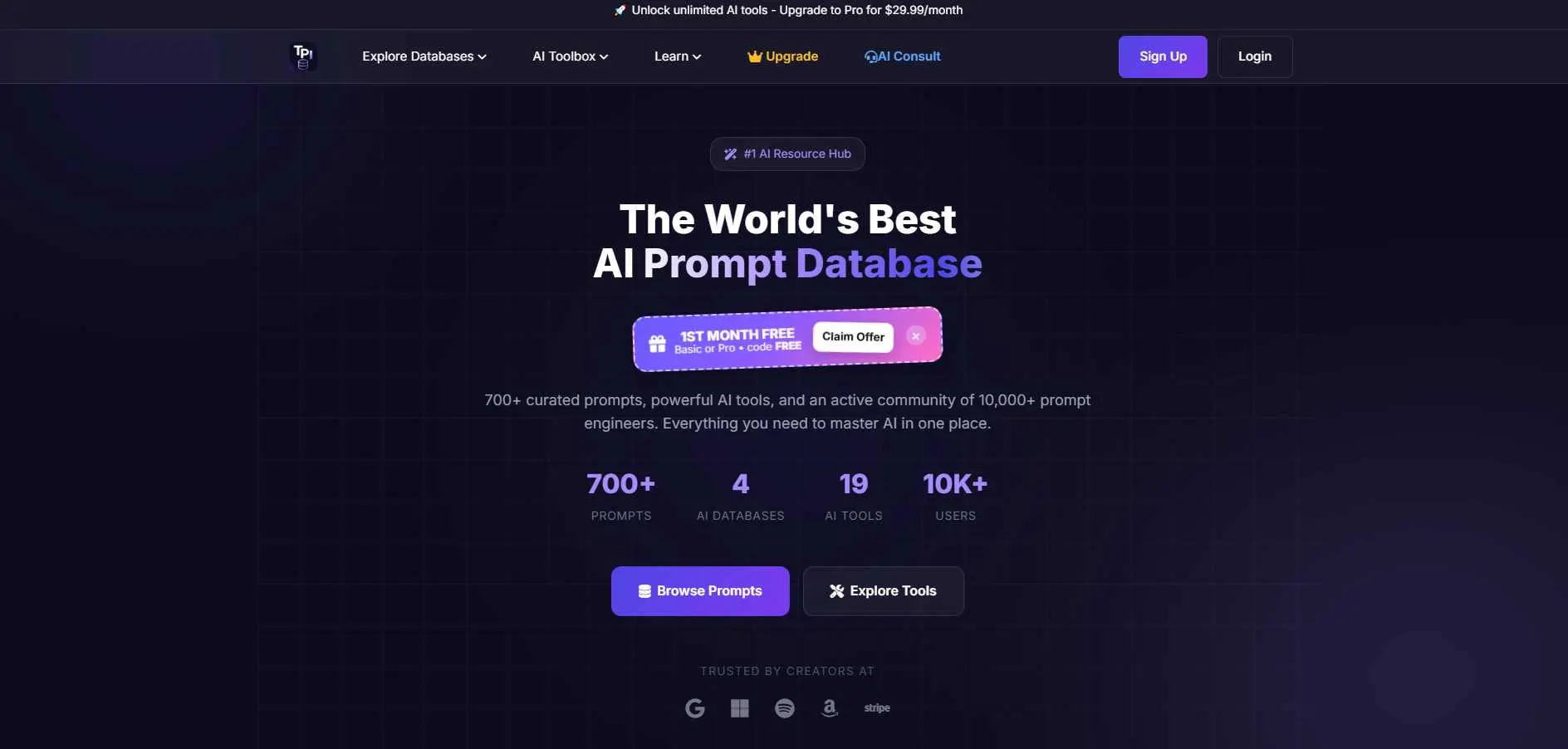
The Prompt Index is broad by design. It combines a wide variety of prompts across different topics, tools and use cases, and includes some community features along with. It doesn’t go super deep into any one niche, which is actually what makes it useful for general-purpose exploration. If you’re simply looking around with no specific goal and want to see what is there, this one allows for that kind of open-ended searching.
8. God of Prompt
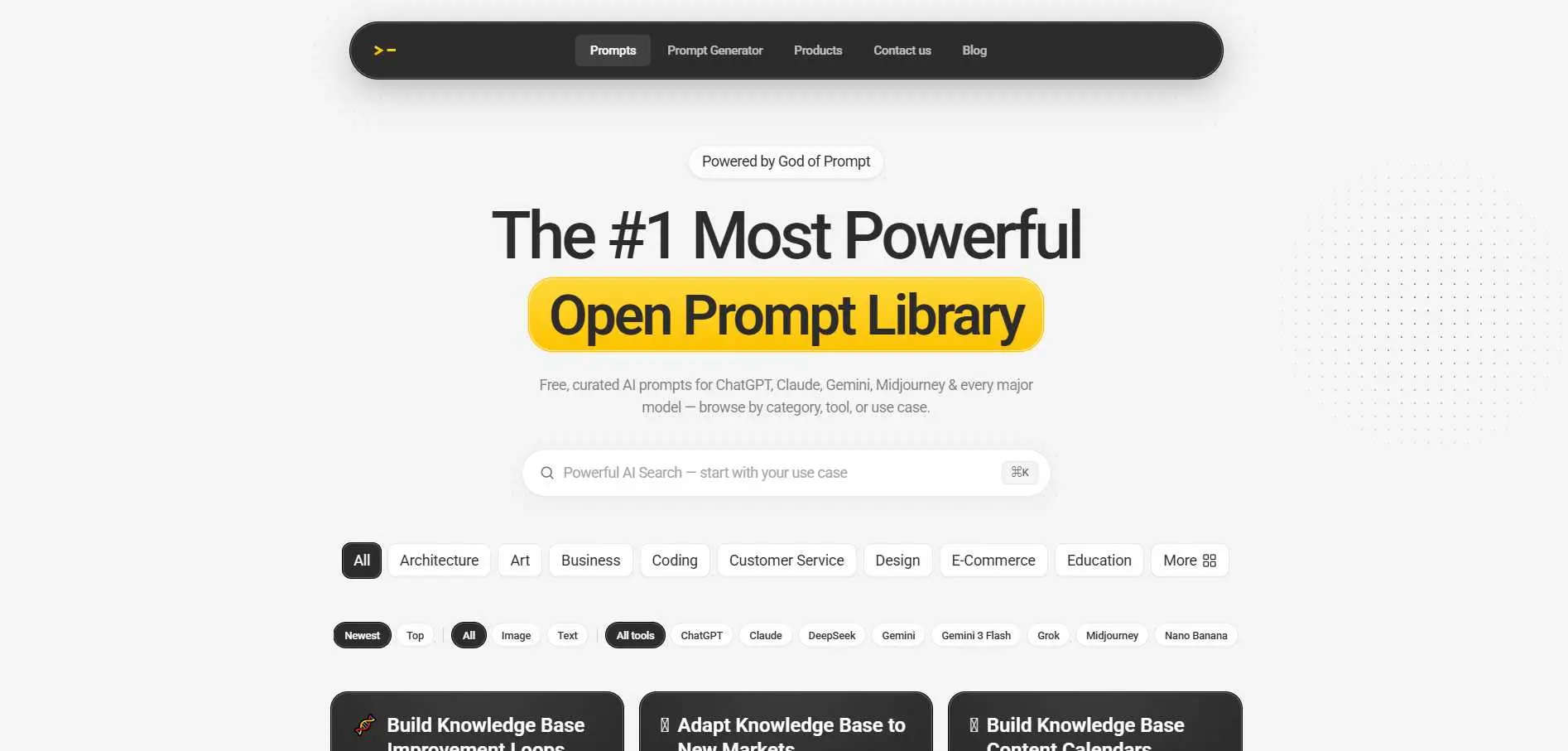
God of Prompt has one of the larger curated collections available, with thousands of prompts organized by category, tool, and media type. The filtering system is one of the better ones I've used - you can actually narrow things down without wading through irrelevant results. It’s somewhere in between a free library and a premium marketplace, so there’s stuff at different price points depending on what you need.
9. PrompTag
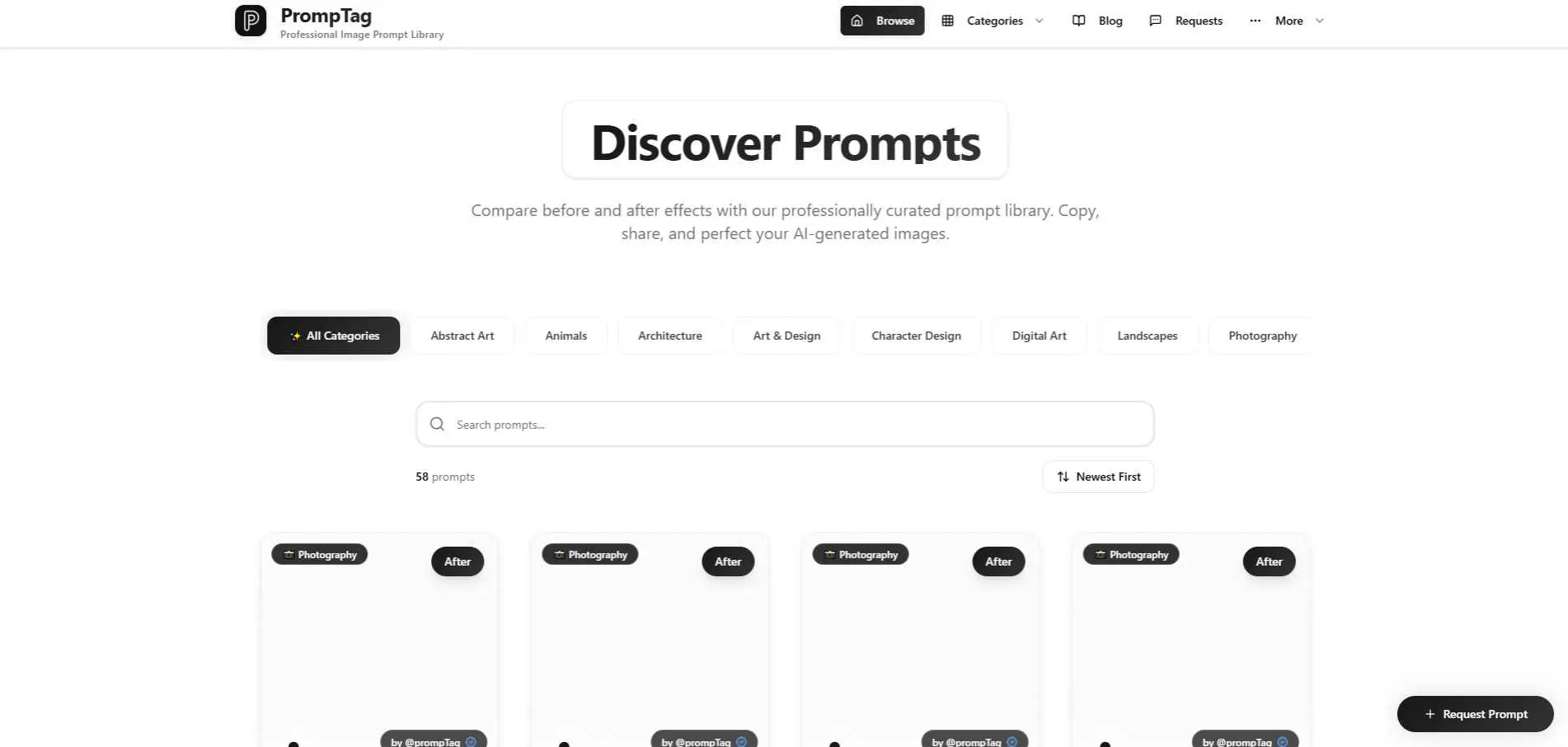
PrompTag is purpose-built around image prompts. The standout feature is the before-and-after comparison slider, which shows you exactly what a prompt produces versus a baseline. That kind of visual evidence removes a lot of guesswork. If you're working with image generation regularly and want to see results before committing to a prompt style, PrompTag gives you something other platforms don't.
10. AI Prompt Library
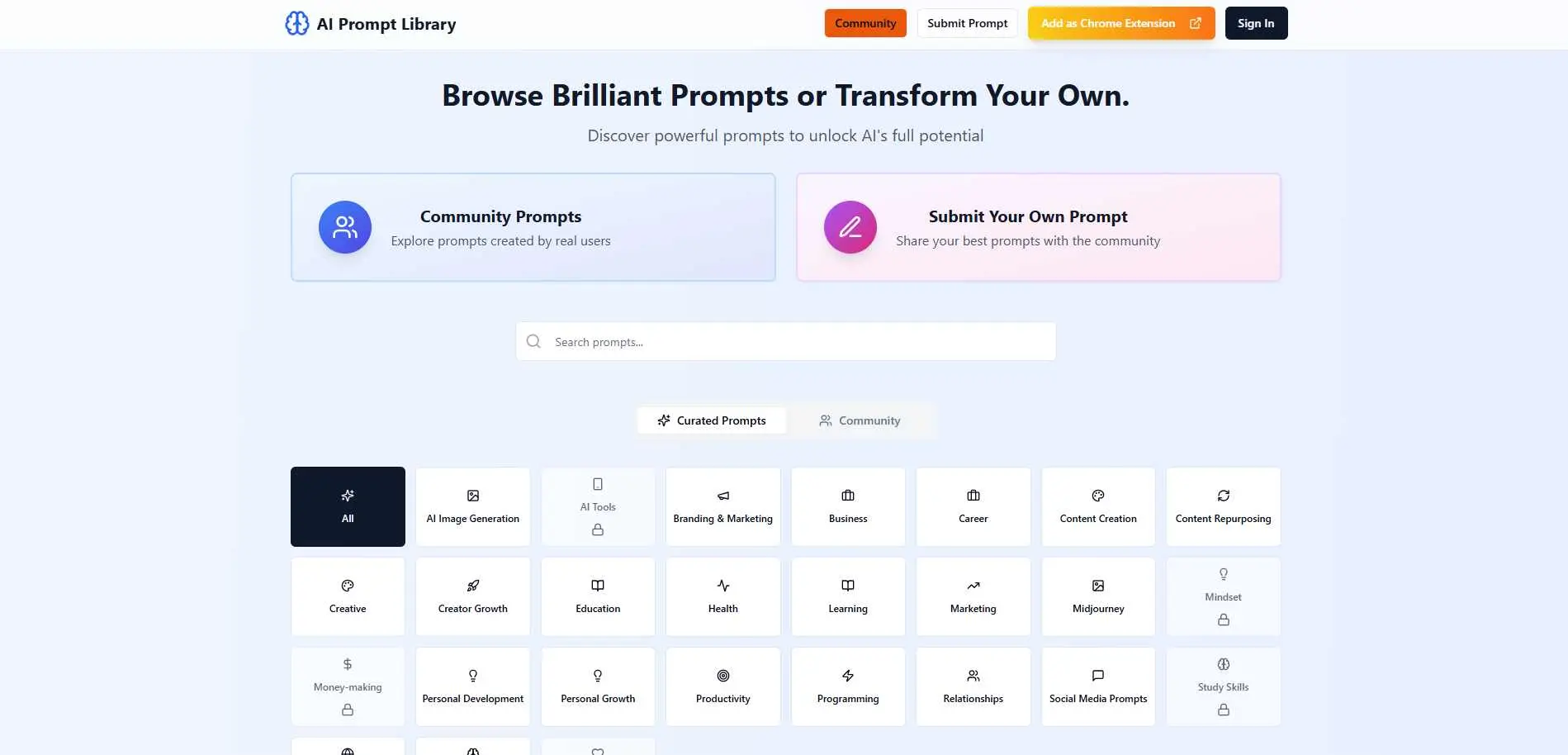
AI Prompt Library covers practical, everyday use cases - things like study prompts, email writing templates, relationship communication, money-related queries, and side-by- side AI comparisons. It's not trying to be the biggest or most comprehensive platform. What it does well is serve users who want grounded, useful prompts for daily tasks rather than creative or technical workflows.
Which Prompt Library Is Best for Which User
Not every platform fits every person. Here's a quick breakdown based on actual use cases rather than feature lists.
If you want to discover new prompts without a specific goal, PromptHero, PromptDen, and Snack Prompt all reward browsing. If you're willing to pay for proven quality, PromptBase and God of Prompt have the premium catalogs. Teams that need structured prompt management should look at PromptHub first.
For image-heavy work, PromptHero and PrompTag are the clearest choices. If you use multiple AI models and want to save your best prompts in one place, Promptly AI handles that better than most. And for sheer range across topics, The Prompt Index and AI Prompt Library cover ground others don't.
How to Choose the Right Prompt Library Website
Start with your actual workflow, not the platform's feature list. Free access matters if you're just exploring - most libraries offer at least a partial free tier, but some require payment for the better material. It's not about quantity, so check out the example prompts before you decide. More valuable a library of 500 well-tested prompts than 5,000 mediocre ones.
Use the platform for what you actually do. If you are doing text-based content work in Claude, a prompt library built around Midjourney is not going to do much for you. Choose platforms that allow for category filtering or keyword search – open-ended scrolling can get old fast. And if you’re using a lot of AI tools, you want to use libraries that recognize that and not assume everyone is living in one ecosystem.
Prompt libraries are a powerful but specific part of the broader AI toolkit. If you want to check out plenty of other AI tools including content creation and analytics then check out our Best AI Tools Directory for 2026.
Best Practices for Using Ready-to-Use Prompts
This is where most people get stuck: they copy a prompt, paste it in, get a mediocre result and blame the library. The truth is that ready-made prompts are just starting points, not finished products.
Edit before you use. Add your specific goal, your audience, the tone you want, and limitations that matter to you. A generic email prompt is much more useful if you tell the model who is sending it and why. Test the same prompt across different AI tools - you'll often find that one platform handles a particular phrasing better than another.
When a prompt works well, save it. Build your own collection over time. And always check the output. Don't trust any result blindly, no matter how well-crafted the source prompt seemed. The model can misfire even with good input.
Where to Start
The best prompt library isn't a universal answer - it depends entirely on what you're building and which AI tools you're using. PromptBase works well if you want proven, premium material. PromptHero is the clear winner for image work. PromptDen and Snack Prompt are better for exploration and community. PromptHub stands apart if you're working on a team.
Pick one platform that matches your current work. Spend a week on it try the prompts, tweak them, keep what works, remove what doesn’t. Over time, your own curated collection becomes more valuable than any library – because it’s built around exactly how you work.