
 Table of Content
To be honest, the business world is full of risk, and most companies still use their trusty spreadsheets, hoping they will work. Manual processes can't keep up with the pace of regulatory change, economic volatility, or fast-moving cyber threats - let's not fool ourselves. First, Enterprise Risk Management (ERM) and Governance, Risk and Compliance (GRC) software makes that role much easier to do.
But don’t fall for the fantasy that just buying software will instantly transform a flawed risk culture. These platforms only amplify what’s already there. If your processes are structured and make sense, GRC tools will help you work faster and smarter. But if your processes are messy, undocumented, and all over the place, all you’ll get is a computerized mess that costs a ton.
The reality is that leadership rarely invests enough in risk management until they suffer consequences - after a major breach or regulatory slap. This guide will go through the noise so that you know where the ERM and GRC tools fit in the ecosystem, why you need to be looking at them now, and how the various tools cultivate different opportunities for 2026.
First, let’s get clear on what we’re talking about.
What is ERM and GRC Software?
ERM
Enterprise Risk Management is basically how you pull back and look at your organization’s entire “spectrum of risks”. It’s not just for ticking boxes but everything that could trip you up as you chase your long-term goals. It’s not about checking boxes or filling out paperwork; it’s about really seeing what’s out there, big or small.
- Core Purpose: Since leaders can’t afford to keep guessing anymore. ERM helps you make informed decisions, not blind guesses.
- Key Components: At its core, good ERM means you’re always spotting risks, sizing them up (impact vs. probability), and keeping watch in real time.
GRC
is more practical. It’s the system that makes sure your organization actually follows the rules, stays in line legally, and acts with integrity.
- Governance: Governance is all about setting up clear rules and a framework so day-to-day activities are handled the right way.
- Risk: Risk is where you manage tactical risks—think IT security, financial reporting, anything that might trip you up.
ERM vs GRC: Key Differences and Synergies
ERM is your big picture. It maps out strategic growth and protects against company-ending threats. GRC is the mechanics behind it all, strictly managing the rules, audits, and daily controls.
| Feature | Enterprise Risk Management (ERM) | Governance, Risk, & Compliance (GRC) |
| Focus | Strategic & Holistic | Tactical & Regulatory |
| Primary Goal | Maximize Opportunity/Minimize Loss | Ensure Integrity & Adherence |
| User Base | C-Suite, Board, Strategy Teams | IT, Legal, Audit, Compliance Teams |
| Synergy | ERM provides the "Why" and "What If" | GRC provides the "How" and "Audit Trail" |
3. Benefits of Using ERM & GRC Software
Investing in these platforms isn't just about avoiding fines - it's about operational excellence.
- Improved Risk Visibility: All your risk data in one place. You finally see how a cyber attack in one office spreads to everything else.
- Regulatory Compliance Efficiency: Automation reduces manual compliance work—sometimes by up to 80%. Your team can focus on real strategy, not paperwork.
- Better Decision-Making: Data-driven maps and scenarios take over for those gut-based decisions, especially at board level.
- Reduced Operational Losses: Spotting “close calls” early means you stay ahead of disasters.
- Enhanced Cybersecurity Posture: Boards are losing sleep over cyber risks. These tools connect technical problems to business outcomes.
Top ERM & GRC Software to Use in 2026
1. MetricStream
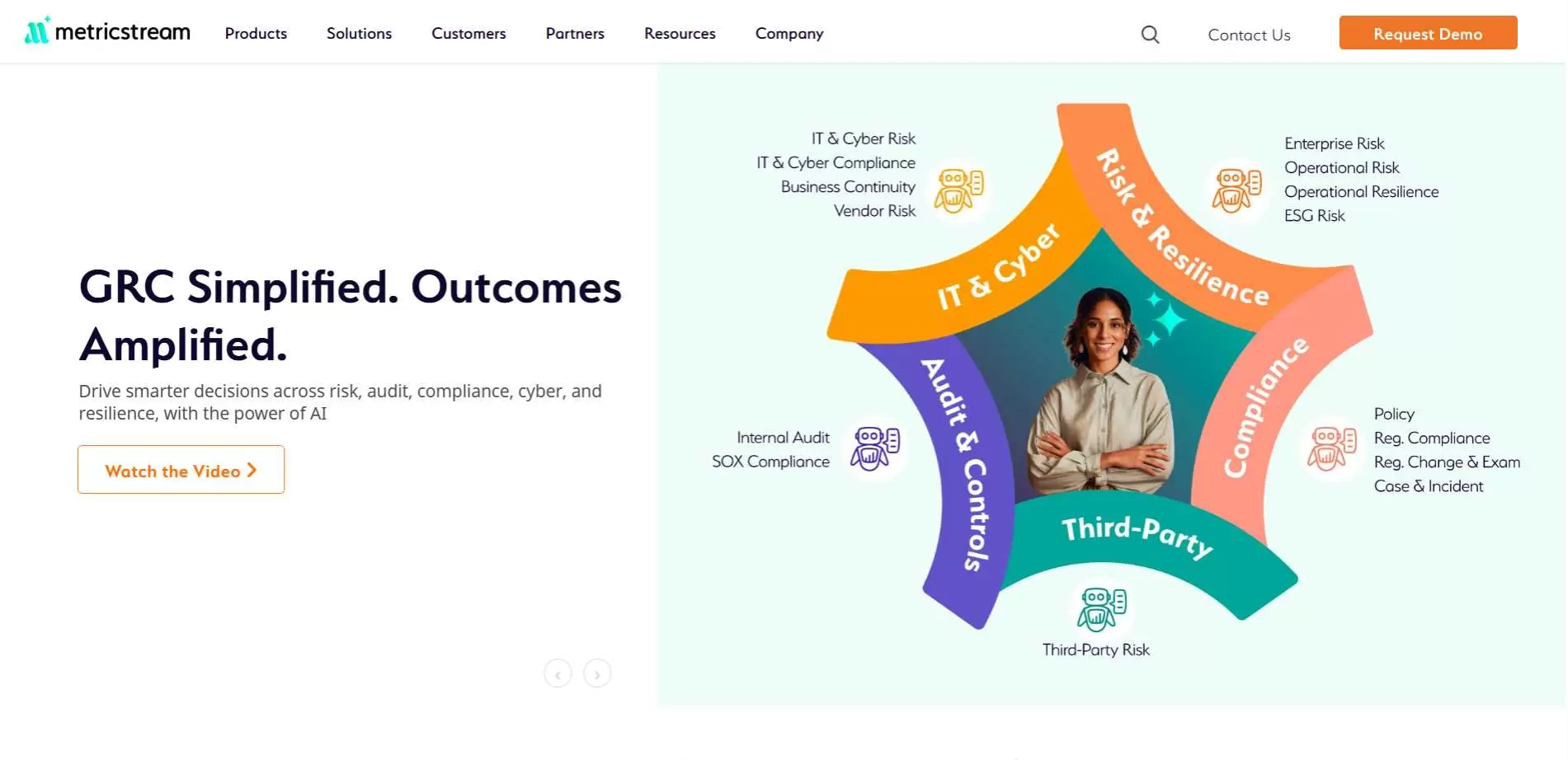
MetricStream is still a major player. It’s built for big organizations that need the whole governance stack, not a simple add-on. You’ll get risk registers, heat maps, assessments, audit planning, and reports.
Key features
- centralized risk identification
- assessment
- monitoring
- reporting
- audit workflows
Pros
- Broad enterprise depth
- Strong for heavily regulated companies
- Combines risk and audit
Cons
- Plug-and-play tool for small teams.
- It is built for organizations that can handle a heavier enterprise platform
Ideal use cases: It’s a perfect fit for massive global companies and businesses in heavily regulated fields. It's also exactly what internal audit teams or any enterprise needing formal, board- level risk reports are looking for.
2. Archer
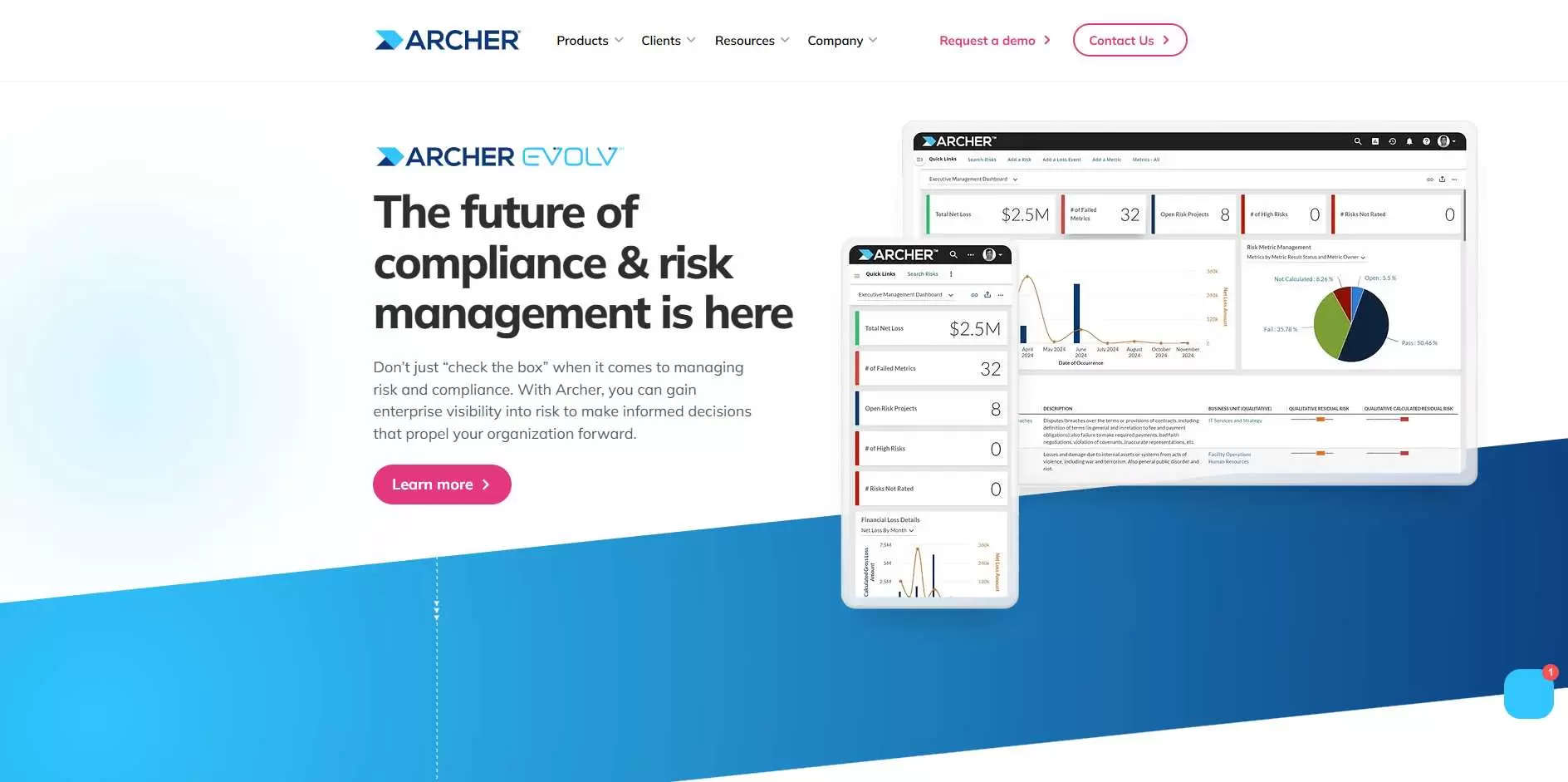
Archer is all about configurability and covering all bases - enterprise, operational, IT, and more. You want risk data centralized and responsible? Archer’s there. Its public positioning emphasizes holistic integrated risk management, accountability across internal teams and third parties, and stronger decision-making through unified risk intelligence.
Key Features
- single configurable integrated risk platform
- enterprise, operational, IT, third-party, and resilience risk coverage
- AI-powered risk quantification
- stakeholder data collection and engagement workflows
- compliance and control management
Pros
- Strong breadth across multiple risk domains
- Good fit for complex enterprise environments
- Useful when risk data needs to be centralized across functions
Cons
- Not a lightweight tool for small teams
- Broader scope may require a more structured rollout and ownership model
Ideal use cases: Ideal use cases encompass large enterprises and highly regulated industries, as well as organizations seeking to consolidate enterprise, IT, third-party, and resilience risk management onto a single platform.
3. LogicManager
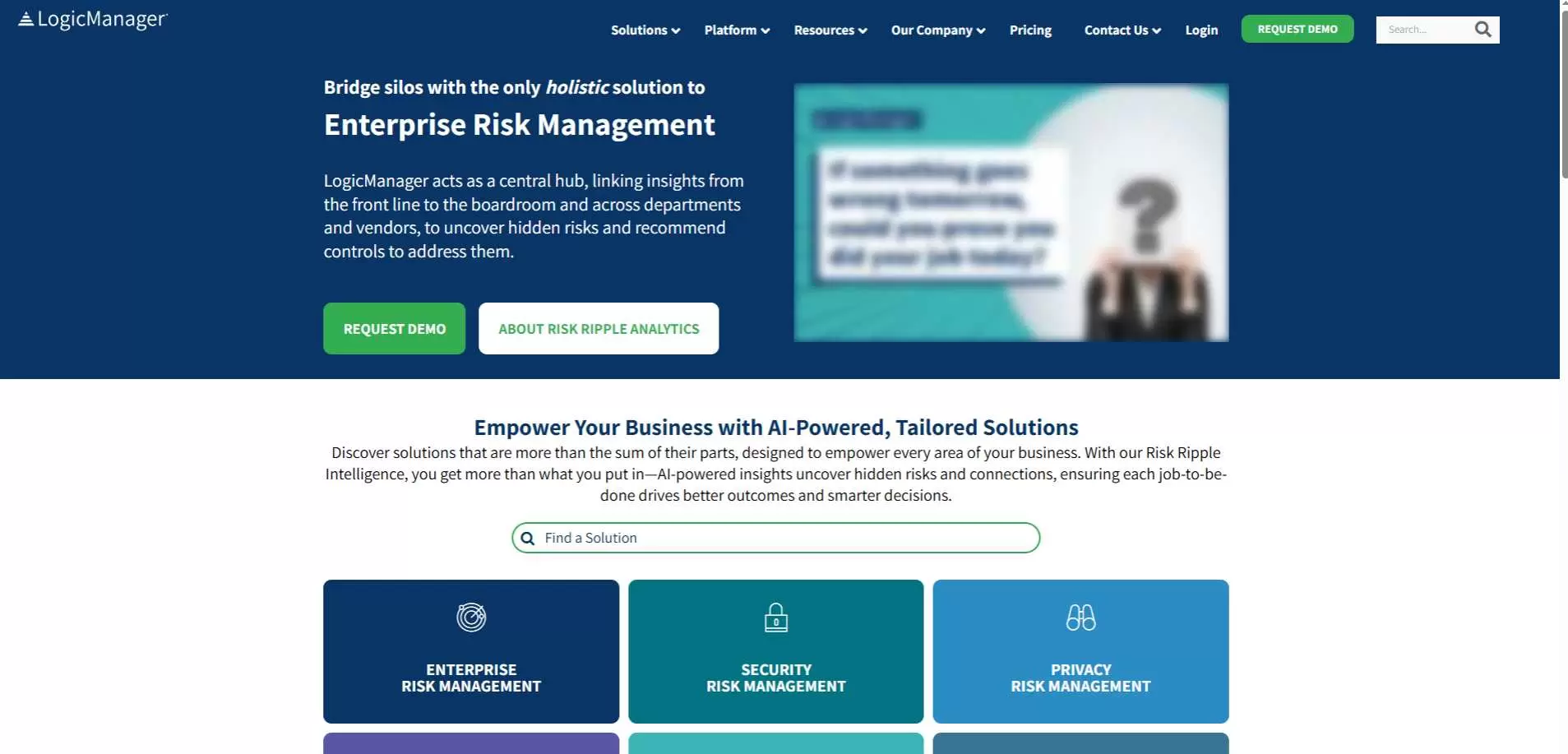
LogicManager is all about connecting front-line insights to board-level reporting. It’s built for organizations that need a holistic view to uncover hidden risks, mature their governance, and finally bridge the gaps between departments and vendors so leadership isn’t flying blind.
Key features
- centralized enterprise risk oversight
- enterprise risk assessments
- root-cause-driven risk analysis
- cross-department and vendor risk visibility
- control recommendations and monitoring
Pros
- Clear ERM-first orientation
- Strong fit for organizations building a formal risk program
- Helpful for improving structure and consistency across business units
Cons
- Lean toward ERM rather than traditional, compliance-heavy GRC tools
- Consider ERM software when basic compliance falls short or when legacy GRC systems prove too inflexible.
Ideal use cases: ERM shines in mid-sized to large organizations that are starting to formalize how they handle enterprise risk, leadership reporting, and cross-functional risk governance.
4. OneTrust
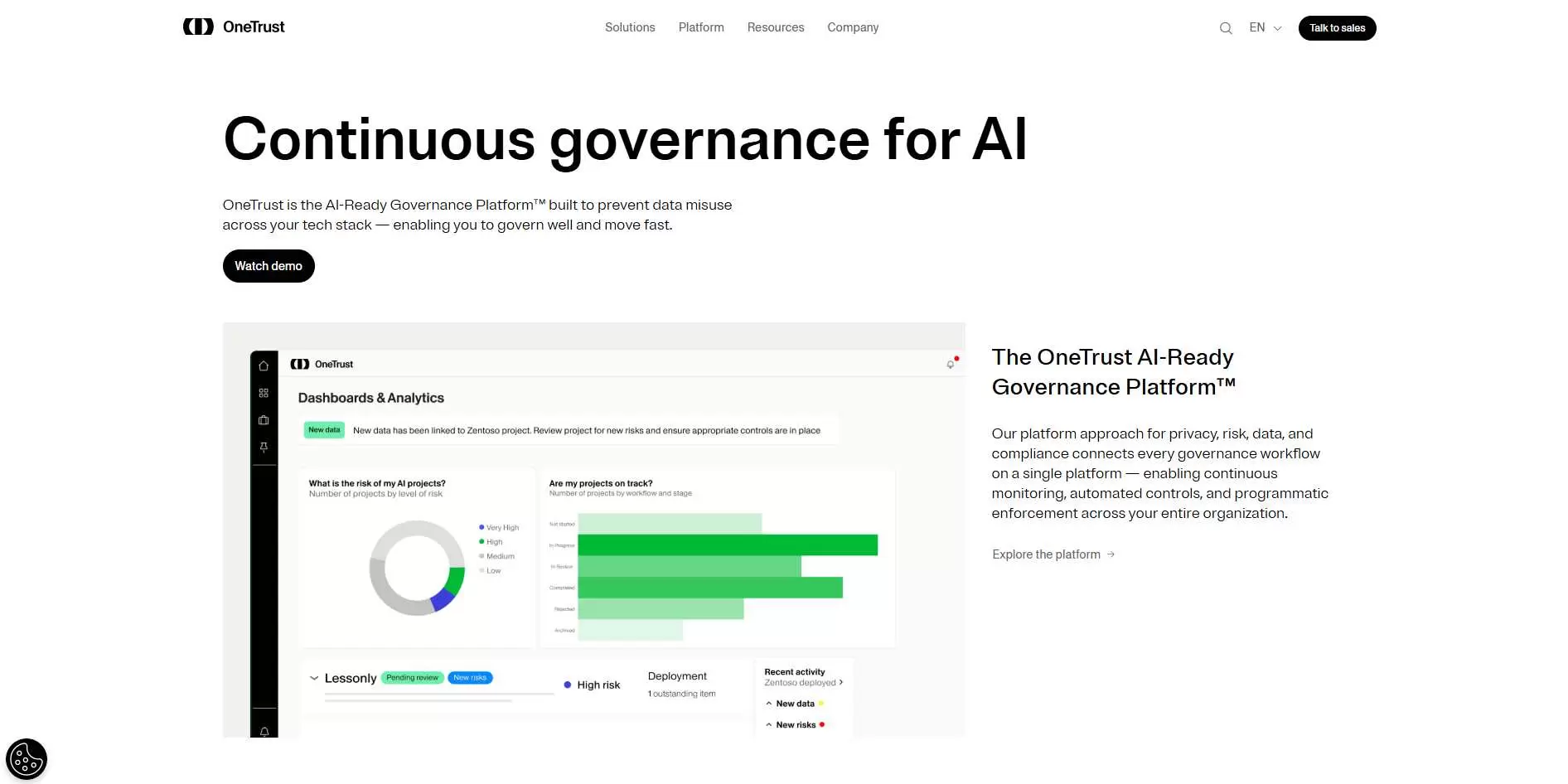
Everyone knows OneTrust for privacy and data governance. But their Tech Risk & Compliance platform has established a real presence in modern GRC. They put a lot of focus on process automation, tying risk and compliance operations together, handling AI governance, and supporting just about any framework you can think of—especially useful when regulations and technology keep shifting.
Key features
- tech risk and compliance automation
- AI governance capabilities
- extensive integrations and partner ecosystem
- support for 55+ frameworks
- IT risk management and risk relationship mapping
Pros
- Strong for privacy, tech risk, and AI governance use cases
- Broad framework coverage out of the box
- Good fit for organizations managing digital trust and compliance together
Cons
- Feels more compliance- and technology-risk-led than classic ERM-led
- If you need a pure ERM platform for your board, OneTrust probably isn’t it
Ideal use cases: Information security teams, privacy programs, tech compliance leaders, and any company managing AI, IT, and compliance risks on a single platform
5. Diligent
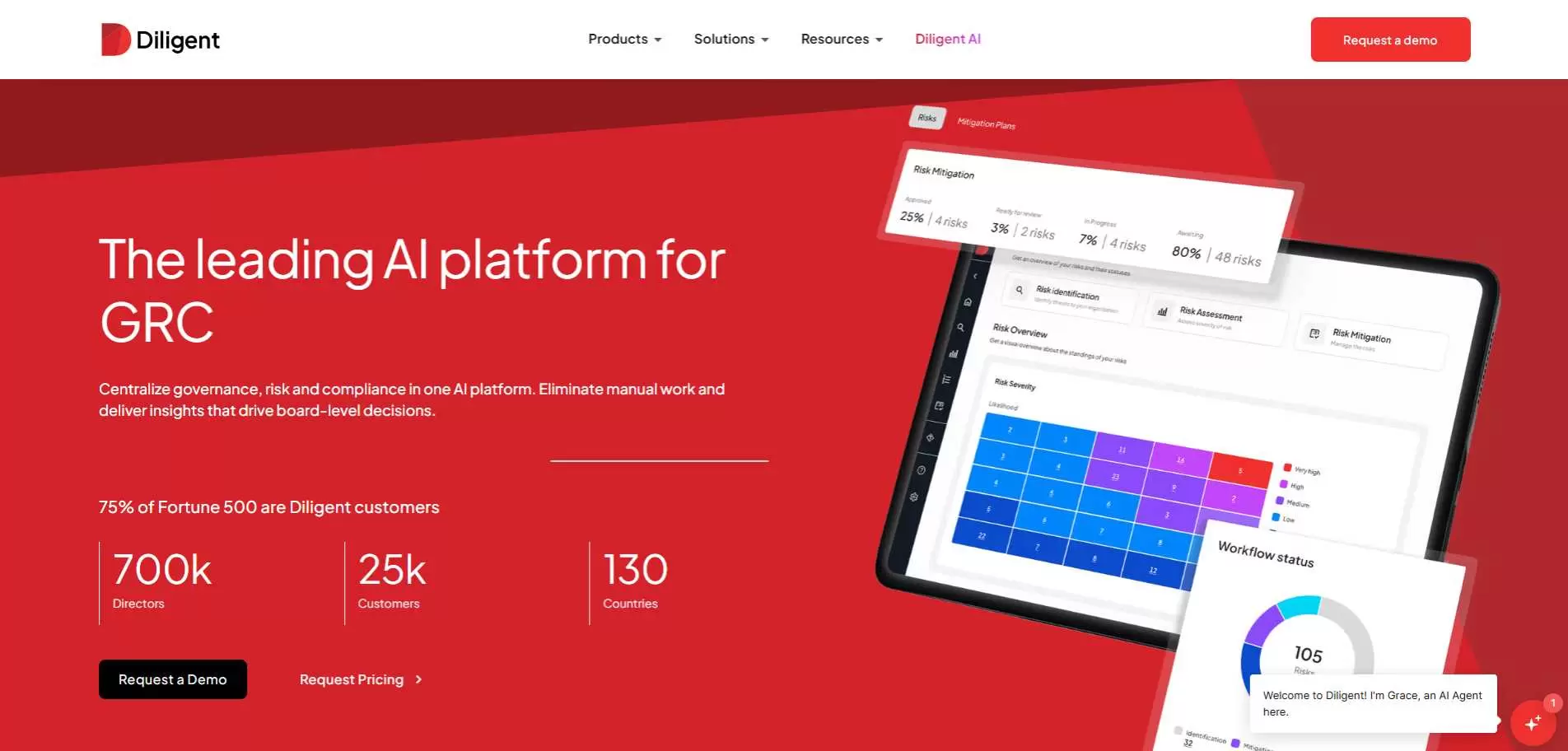
Diligent tackles ERM and GRC with a strong governance focus—think leadership visibility and risk reporting suitable for the board right out of the gate. The platform emphasizes bringing all your risk data into one place, automating assessments, delivering real-time insights, using AI for analysis, and seriously integrating risk, compliance, cybersecurity, and executive decision- making.
Key features
- centralized enterprise risk data
- automated risk assessments
- real-time risk insights
- AI-powered analytics and risk intelligence
- integrated governance and GRC workflows
Pros
- Strong fit for organizations with board-facing risk programs
- Combines governance and risk in a practical way
- Useful for executive reporting and connected oversight
Cons
- Broader governance footprint may be more than some teams need
- Best value is likely realized in organizations with mature reporting needs
Ideal use cases: enterprises, public-sector teams, boards, and risk leaders that need ERM, governance, and compliance closely connected in one platform.
6. LogicGate
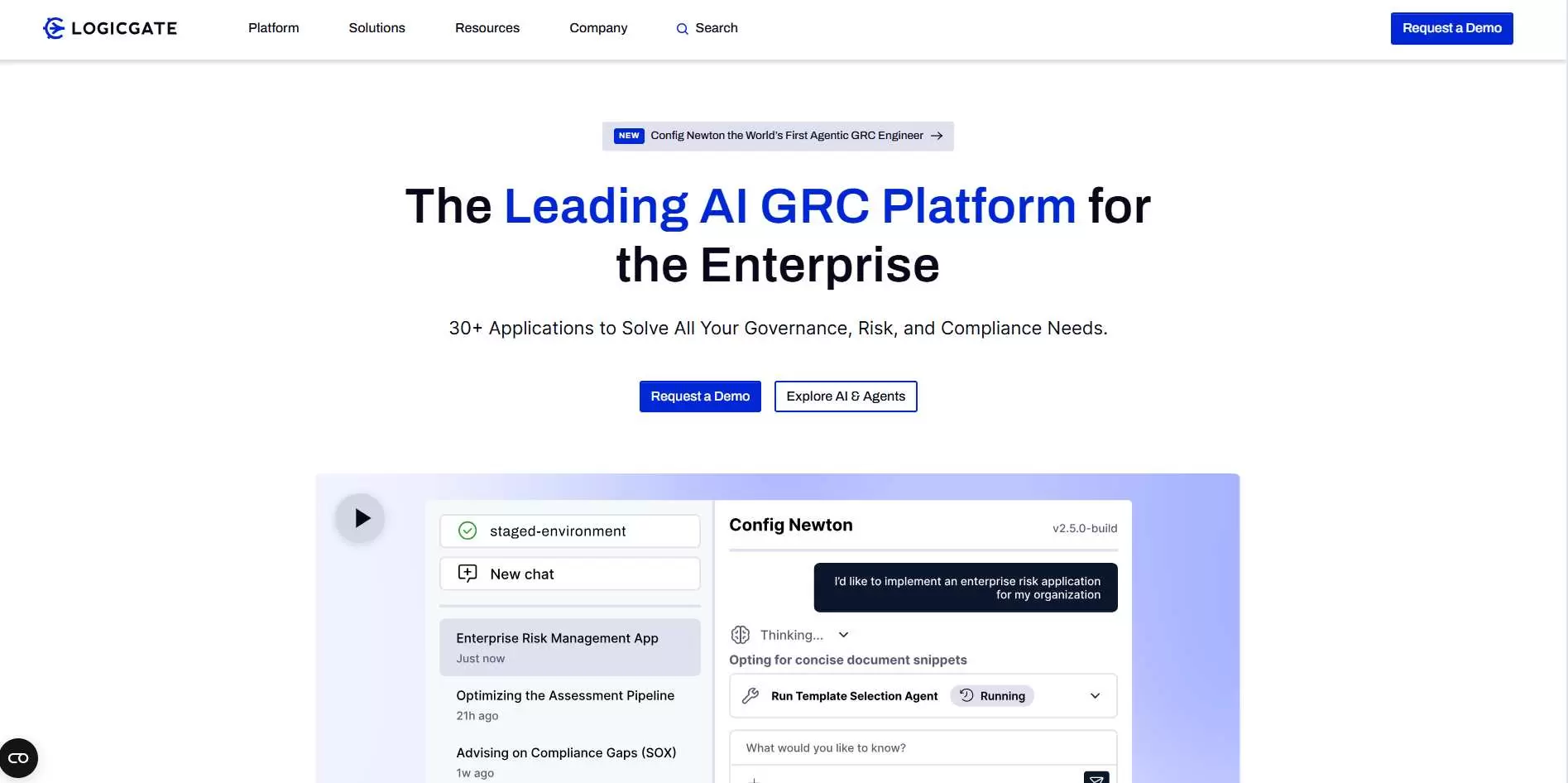
LogicGate is a flexible GRC platform centered on its no-code Risk Cloud platform. What really sets these platforms apart is their focus on workflow automation, real-time reporting, and AI features. You can adapt GRC processes to your needs - without getting stuck in endless custom development. That’s a big win for teams who want flexibility, but don’t want to drag around the weight of old-school enterprise tools.
Key features
- no-code GRC workflow configuration
- real-time reporting and analytics
- board-level risk dashboards
- financial risk quantification with Monte Carlo and Open FAIR support
- AI features through Spark AI & Agents
Pros
- Highly adaptable for changing workflows
- Strong option for teams that want flexibility without coding
- Good balance between automation and customization
Cons
- Success depends on thoughtful internal process design
- Flexible platforms still need clear governance to avoid messy configuration
Ideal use cases: If you’re looking for fast, scalable automation across risk, compliance, and operations - and you want GRC workflows you can tweak as you go - this platforms are a good fit.
7. Hyperproof
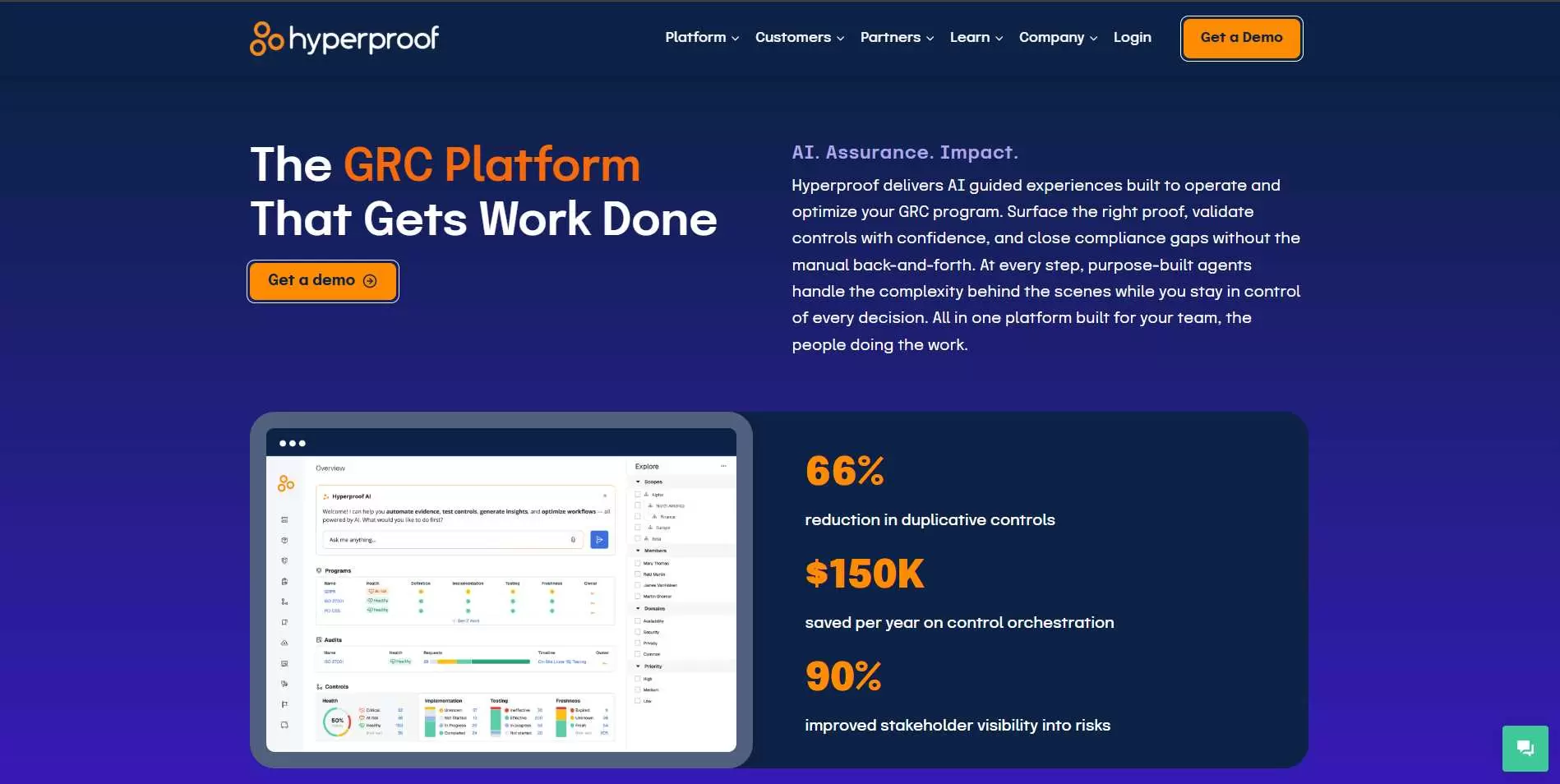
Hyperproof is a modern GRC platform powered by AI that stays focused on compliance operations. It’s all about bringing compliance, risk, and security workflows into one place. With shared control mapping, automated evidence collection, continuous monitoring, and real-time risk insights, it’s built for companies ready to step up their governance without losing agility.
Key features
- centralized compliance, risk, and security workflows
- automated control mapping and common control management
- centralized evidence collection and reuse
- continuous controls monitoring
- third-party risk support
Pros
- Very strong for compliance-heavy and audit-heavy environments
- Helps reduce duplicate effort across multiple frameworks
- Useful for teams trying to operationalize continuous assurance
Cons
- More compliance-led than traditional strategy-first ERM tools
- Organizations wanting deep classic enterprise risk governance may want broader ERM depth
Ideal use cases: cloud-first companies, security and compliance teams, multi-framework environments, and organizations that want automated evidence collection with continuous monitoring.
8. Optro
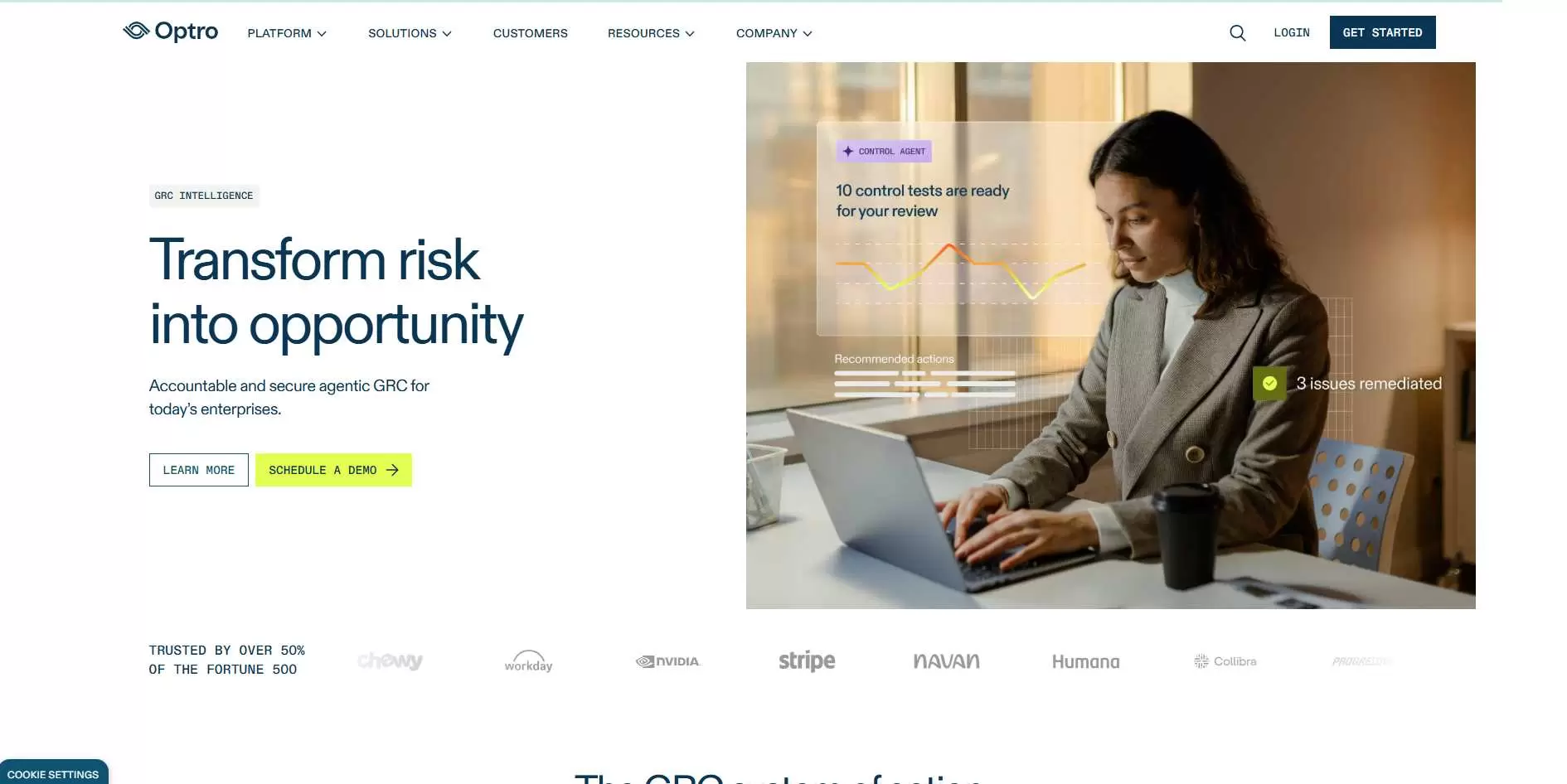
Optro steps in here, marketing itself as a smart, AI-driven GRC platform that pushes teams to act early - not just react when something goes wrong. Their pitch centers on a unified data core, AI that’s trained for risk domains, connected workflows, real-time visibility, plus coverage for audit, risk, compliance, cybersecurity, and AI governance.
Key features
- unified risk foundation across audit, cyber risk, compliance, and AI governance
- domain-trained AI for GRC workflows
- centralized risk registers and standardized assessments
- KRI tracking and automated reporting
- continuous control monitoring and testing
Pros
- Modern AI-first approach
- Strong visibility across audit, risk, and compliance in one environment
- Good fit for teams wanting a connected, action-oriented platform
Cons
- More modern and forward-leaning than traditional ERM suites
- To really see the ROI on these platforms, your team needs to move past basic record-keeping and actually embrace AI-driven workflows.
Ideal use cases: For enterprises looking for up-to-date, AI-powered GRC, integrated audit and risk processes, and ongoing monitoring for better operational insight, these platforms are a strong fit.
9. Riskonnect
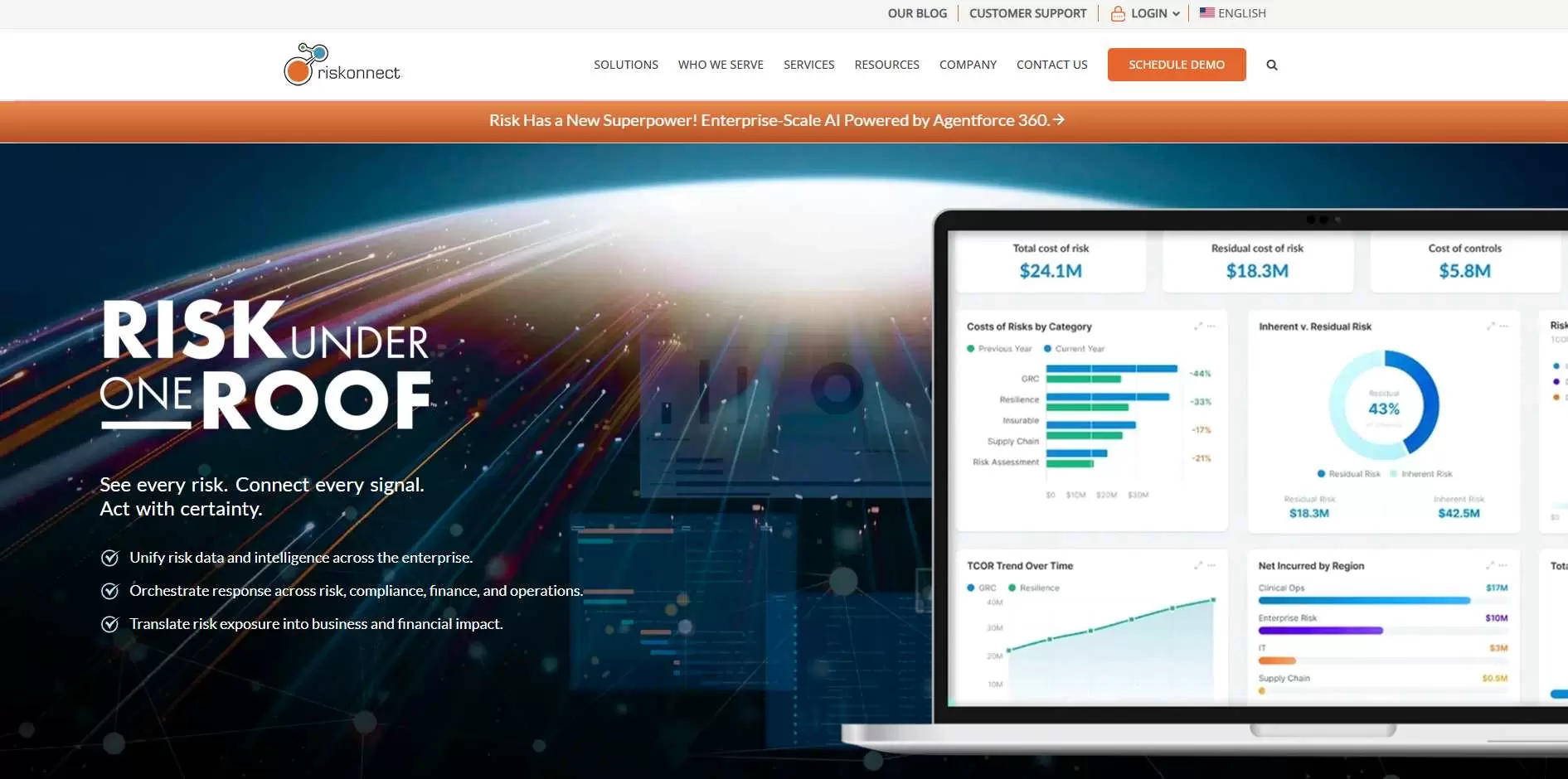
Riskonnect is a Connected Risk Management Solution that connects different types of risk in the same environment. The main selling points are centralized visibility, common standards, and stronger teamwork between departments. It gives your organization one clear view of all your risk, making better decisions easier.
Key features
- centralized integrated risk management
- enterprise-wide risk visibility
- connected data across risk disciplines
- shared standards and workflows
- collaboration across teams
Pros
- Strong integrated risk viewpoint
- Useful for organizations managing many overlapping risk programs
- Helps reduce silos across risk functions
Cons
- May be broader than needed for smaller or single-purpose teams
- Most applicable organizations: those with connected enterprise-wide risk data
Ideal use cases: large organizations with multiple risk disciplines, especially for those who require one connected platform for operational, compliance and enterprise risk visibility
10. Onspring
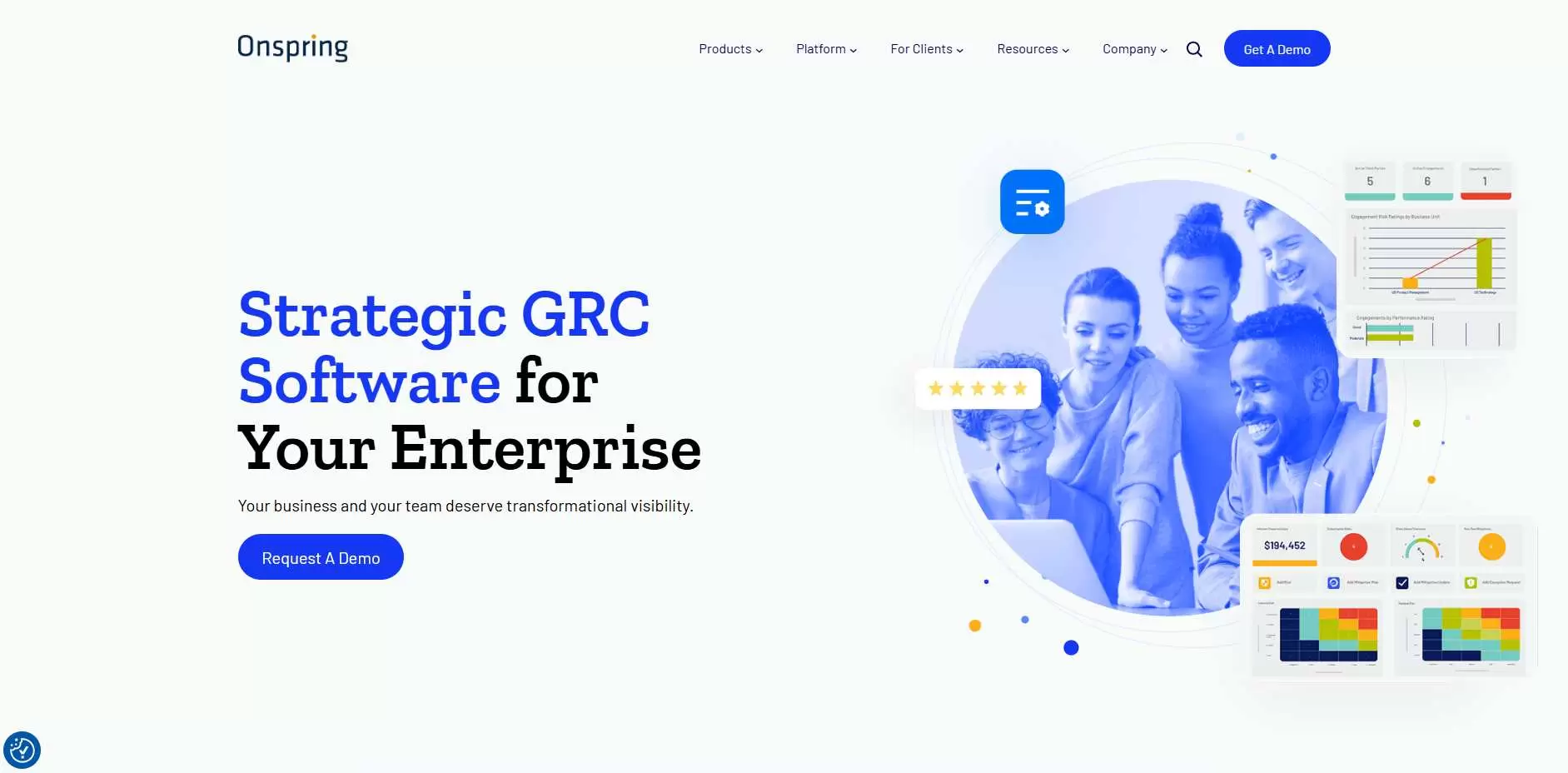
Onspring is a cloud-based GRC solution that you can customize to fit your requirements. It focuses on making life simpler by automating essential governance, risk, and compliance work. It focuses on centralized visibility, connected products across risk and compliance areas, AI-assisted workflow improvements, and reasonably quick value for teams who want automation without adding too much weight.
Key features
- centralized GRC suite
- risk management, compliance, policy, audit, and third-party risk modules
- automated risk assessments
- centralized risk registration
- AI-assisted duplicate detection and data cleanup
Pros
- Practical and approachable platform design
- Good mix of automation and usability
- Strong fit for teams that want connected GRC without excessive complexity
Cons
- Very large enterprises with highly specialized requirements may still compare it against heavier platforms
- Best strength is usability and process automation, not necessarily maximum enterprise depth
Ideal use cases: mid-market and enterprise teams that want flexible GRC automation, centralized visibility, and connected risk and compliance workflows with a faster time to value.
How to Choose the Right ERM or GRC Tool
First, figure out your real pain point. If you’re missing solid reporting for the board or a clear view of risk across the company, put your energy into finding strong ERM features and easy-to-read dashboards. But if compliance is where the headaches are, look for something that’s great at pulling together evidence, managing policies, and handling audits.
If you’re stuck dealing with both, go after a tool that truly brings risk, audit, compliance, and controls together in one place—no more bouncing between different systems. Make sure it’s actually easy to use and flexible enough to fit how you work, not just a pretty interface for the demo.
Check how well it connects with the other programs you rely on and whether it can grow as you do. Otherwise, all the bells and whistles won’t mean much in real life.
Conclusion
In 2026, the strongest ERM and GRC tools are not the ones with the longest feature sheets. They are the ones that turn scattered risk data into something leaders can actually use. MetricStream, Archer, Riskonnect, and Optro lean toward deep enterprise risk management.
OneTrust, Diligent, LogicGate, Hyperproof, and Onspring bring broader GRC strengths, with different balances of compliance, governance, automation, and flexibility. The real decision is not which platform looks impressive in a demo. It is which one will still make sense when your risk program gets larger, messier, and more accountable.