

 Table of Content
Press release distribution is not dead in 2026. It’s simply more competitive, more automated and less tolerant of sloppy execution. A press release still offers brands an orderly format with which it can announce news, control the messaging and reach journalists, search engines and syndication networks that social posts alone cannot be consistently seen. The big platforms have also been updated with stronger analytics, multimedia capabilities, targeting and AI-aware visibility.
This guide structures the best press release distribution service and websites in 2026 comparing their reach, valuing signals, readability, and accuracy. You will also see which types of platforms work for budget-conscious users, which are best suited to enterprise teams and the ones that are guaranteed bets if you need actual media-grade distribution instead of cheap noise.
Why Press Release Distribution Still Matters in 2026
If you believe a press release will instantly catapult your startup to the front page of the New York Times, you are operating on a fundamental misunderstanding of the media landscape. You must strategically leverage these networks for what they actually do.
SEO and backlink benefits
Do not fall for the trap of buying PR distribution purely for "do-follow" backlinks. Search engines in 2026 are aggressively discounting syndicated wire links. Here’s the real secret with SEO and press releases. The biggest win isn't the release itself, but what happens after. If you get your news on a trusted site, bloggers and reporters are going to notice it. Then, they start writing their own articles and linking back to you without you even asking. Getting those natural links from other writers is what actually makes your website grow.
If you want to be more proactive about building that same kind of editorial link equity, pairing your press release strategy with a structured guest posting approach is one of the smartest moves you can make.
Brand visibility and credibility
Perception dictates reality in B2B and high-ticket B2C markets. Having your corporate announcement natively hosted on Yahoo Finance, Bloomberg, or AP News provides a necessary trust signal. Investors, stakeholders, and prospective enterprise clients look for this footprint. It proves you are a functioning, active entity.
Media outreach and journalist access
Journalists do not browse PR feeds for fun. They use customized RSS feeds and terminal alerts tuned to highly specific keywords. Distribution platforms provide direct access to these terminals. If your headline lacks immediate, undeniable newsworthiness, you will be ignored. But if you have actual data or a disruptive market move, the wire is the most efficient pipeline to a reporter's screen.
Role in digital PR strategies
A press release is the baseline of a digital PR strategy, not the entire strategy itself. It serves as the official, unedited statement of record. Your outreach team should use the wire link as the canonical source when aggressively pitching bespoke angles to individual journalists, and having the right cold email outreach tools in place is what separates teams that actually land coverage from those who just send and hope.
AI-driven news aggregation impact
This is the most critical shift in 2026. AI models (like Perplexity, ChatGPT, and Google's Gemini) scrape wire services continuously to synthesize answers for users. If your company's news is not on a recognized distribution network, it does not exist in the training data or real-time retrieval streams of these AI agents. You must be on the wire to ensure AI aggregators report your narrative accurately.
Best Press Release Distribution Services in 2026 (Top Picks)
1. EIN Presswire
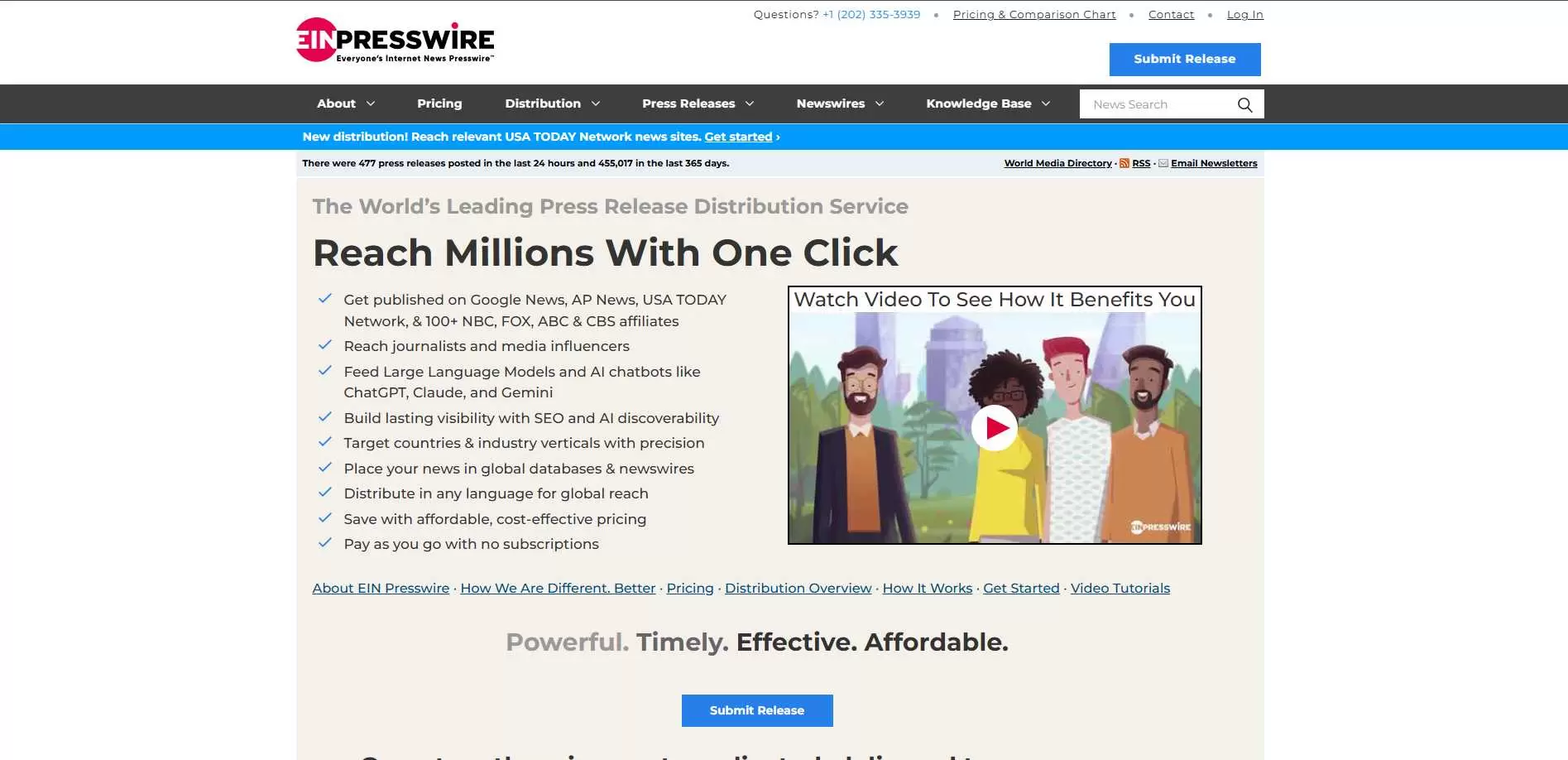
EIN Presswire is great if you're on a budget but still want decent coverage. They send your news out to all the big news aggregators, and you get some cool perks included. There's an AI writing tool, SEO tags, and reports that show you exactly who picked up your story. Honestly, if you run a small business or an agency, it gives you everything you need without the crazy price tag.
2. GlobeNewswire
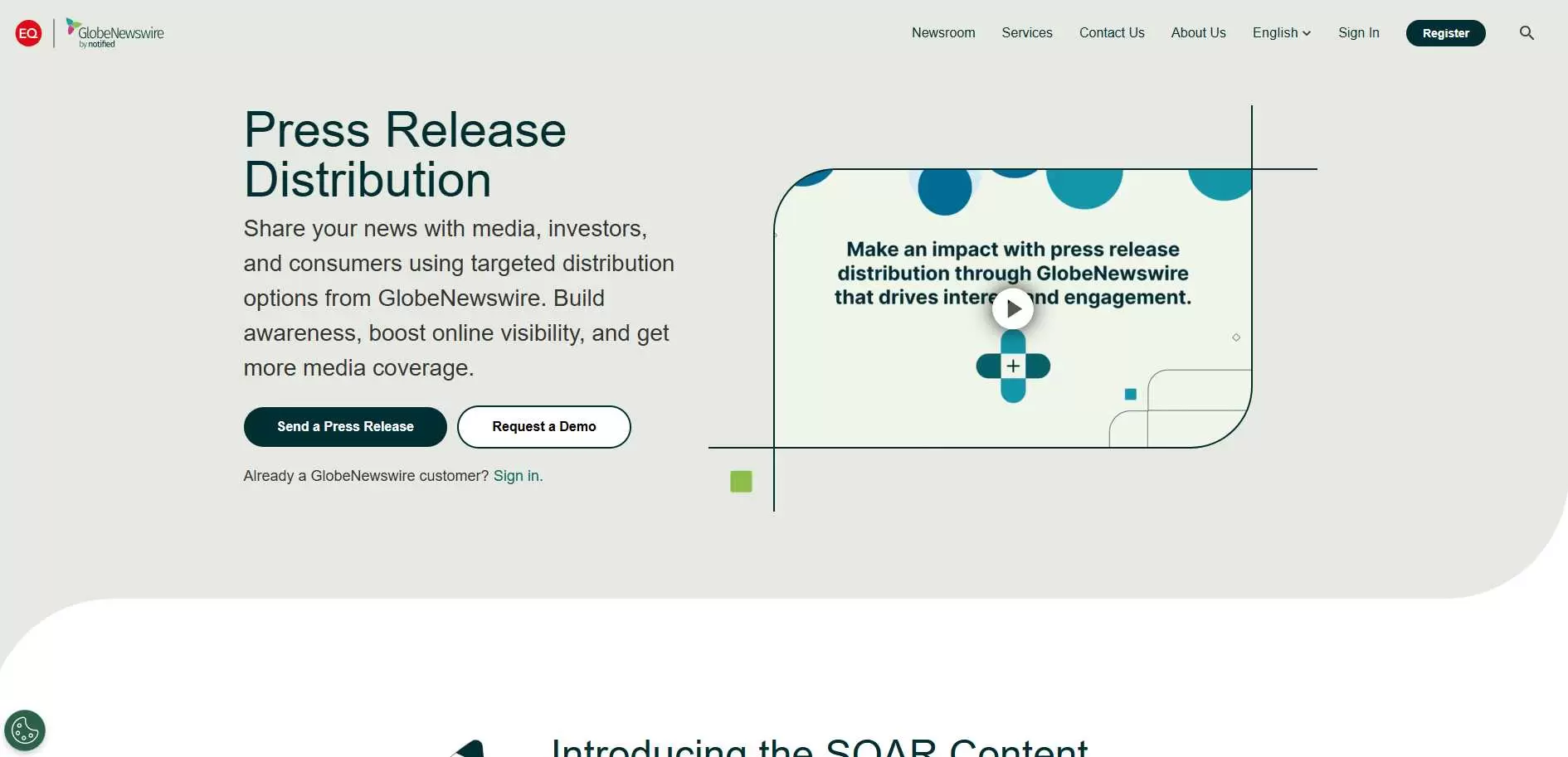
GlobeNewswire is a strong premium option for teams that care about global targeting and measurement. The service says releases reach 158 countries in 35 languages, with more than 1,000 newslines to target by geography, industry, and media type, and its analytics tools track media pickups, engagement, and AI search performance. Best for companies that want international reach and detailed reporting.
3. PR Newswire
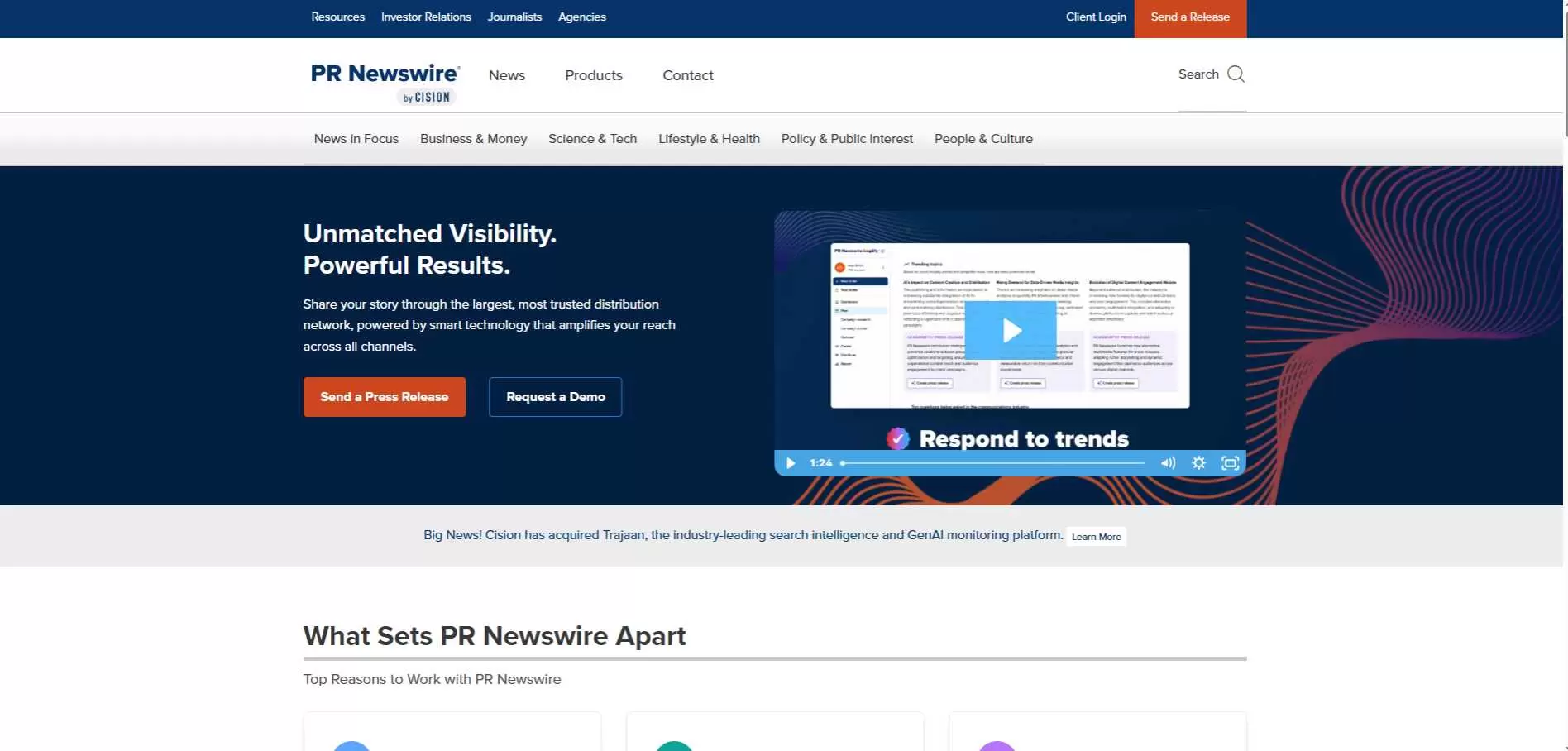
If you have the budget and want to go big, PR Newswire is pretty much the heavy hitter. They have this system called Amplify that handles almost everything for you. It helps you write the draft, builds out your campaign pieces, and gives you deep tracking on how the release performed. But the real selling point is the reach - they push your news out to over half a million journalists, newsrooms, and influencers. If you're an established brand or a public company that needs massive visibility, this is the way to go.
4. Newswire
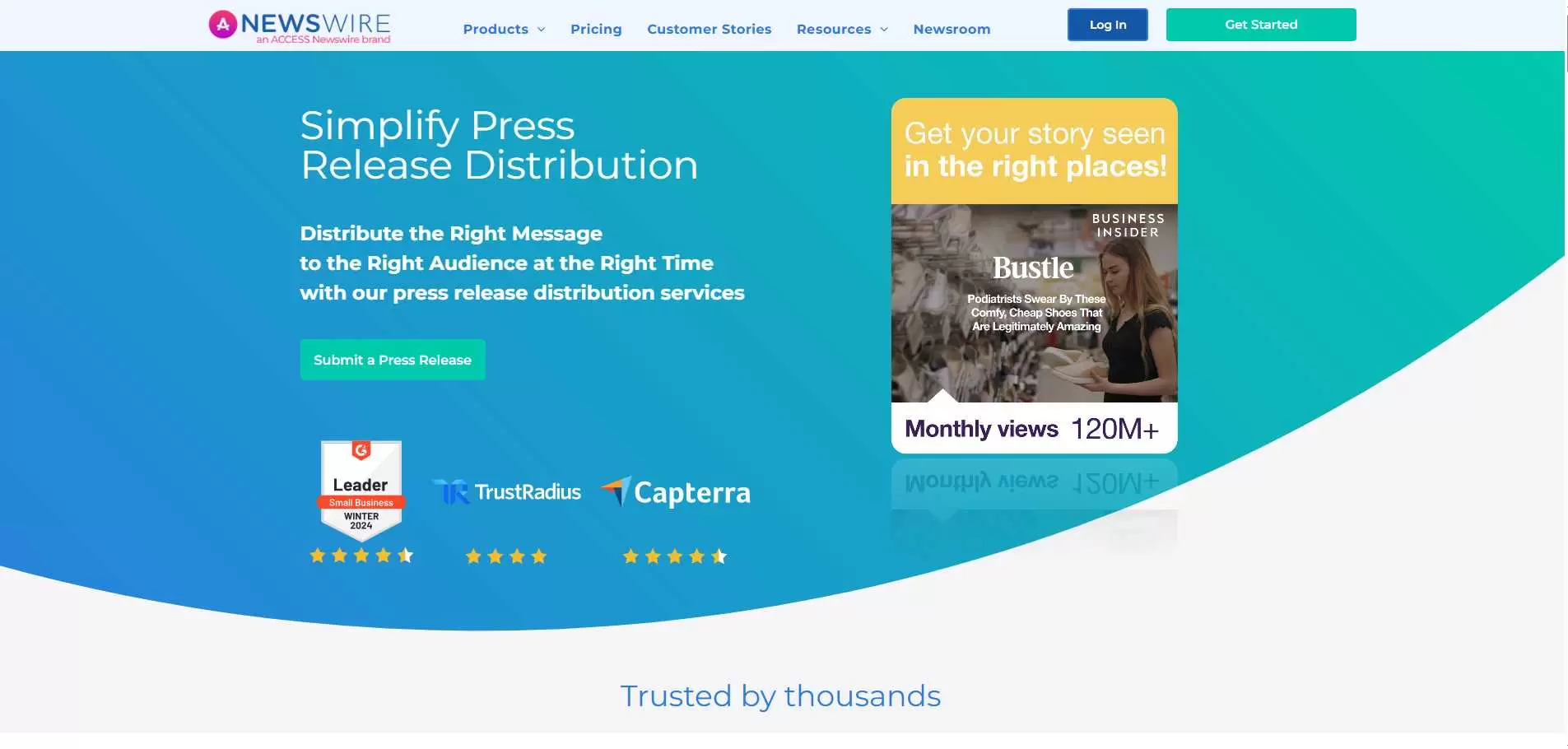
Newswire.com is targeted toward companies seeking a balance between accessibility and pricing. Whether you're handling PR for a small company or a larger corporation, it's a flexible option because it offers a variety of packages that include distribution to major news sites, financial networks, and industry-specific channels. Additionally, they have some helpful features like targeted lists, media monitoring, and analytics to assist you assess the success of your news and adjust your PR plan.
5. eReleases
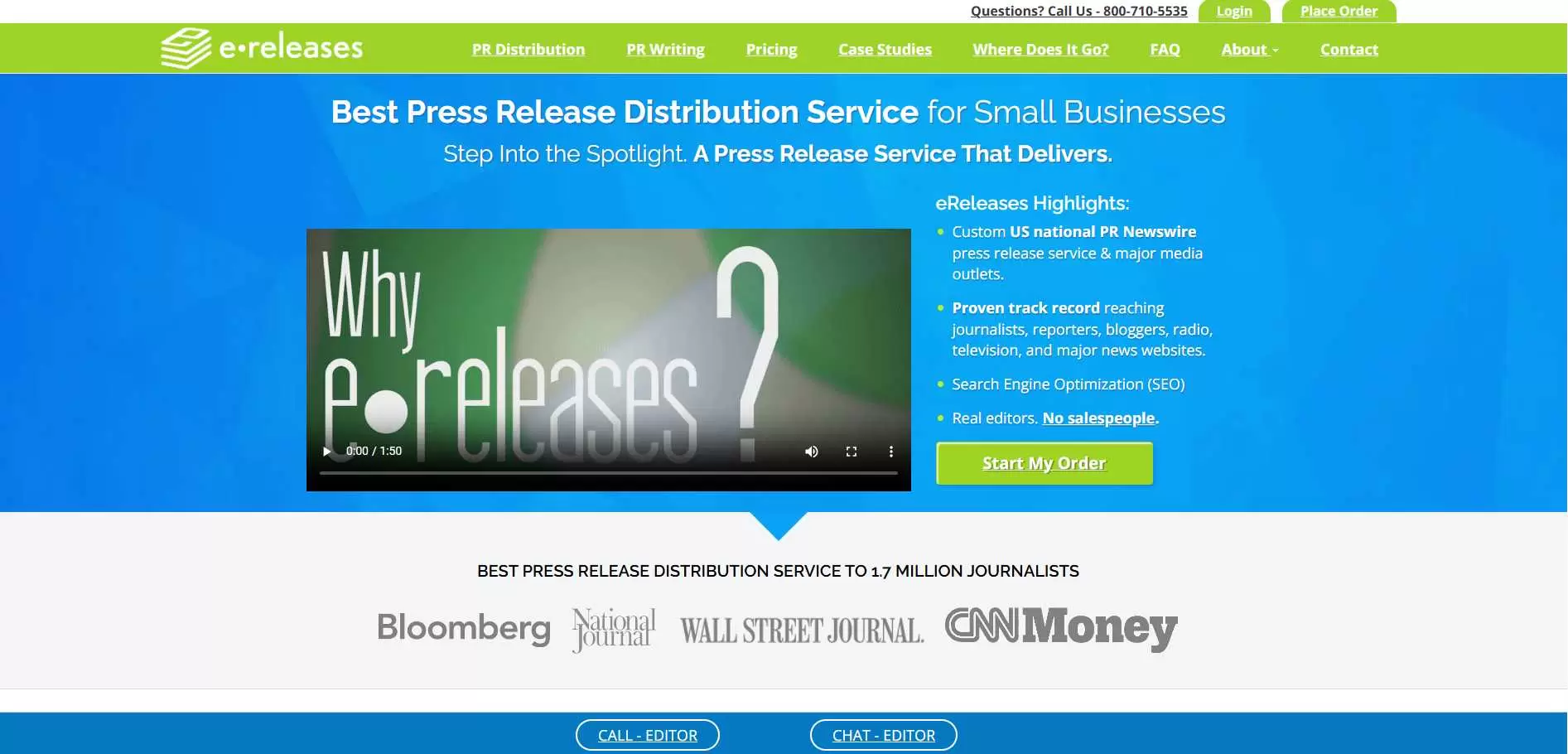
For small companies, start-ups, & creators who want the reach of a larger wire service with a more personalized approach, EReleases is a good option. They collaborate with PR Newswire, which gives you access to their credibility - reaching journalists, major media outlets, and specialized publications - as well as an additional benefit of having a team which checks the quality of your release before it is distributed. Because of this, it's a wonderful choice if you want to reach as many people as possible without going over budget.
6. IssueWire
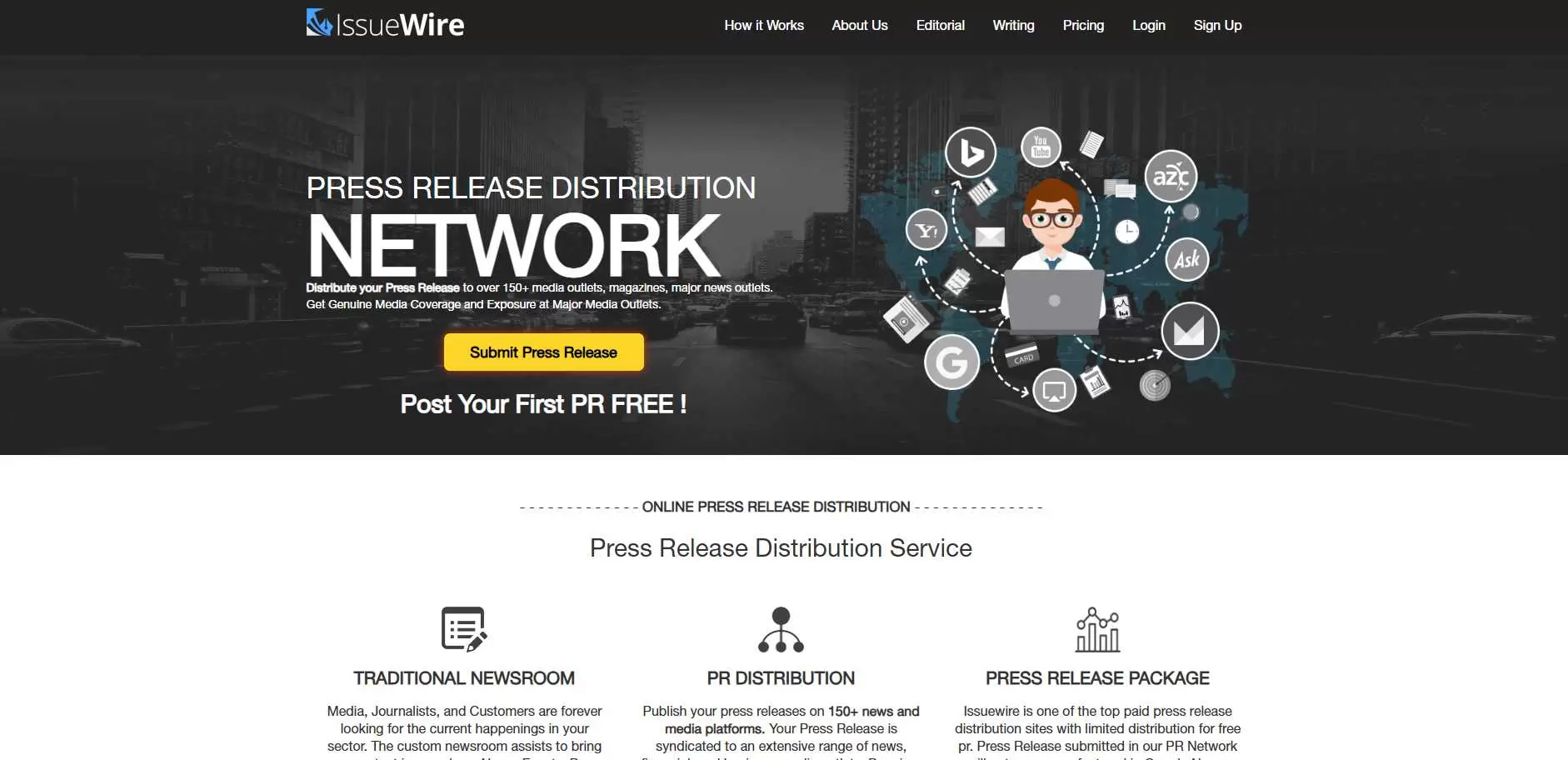
IssueWire is one of the more accessible options on the list. The site says users get one free PR, plus paid distribution options, and it claims an integrated network of more than 150 media outlets. Its pricing pages also mention free limited distribution and paid tiers starting around $21 and $45, which is why it keeps showing up in budget-focused comparisons.
It is best for startups, local businesses, and users who want to test press release distribution without spending much. The catch is that low price does not automatically mean high impact. Use it for reach on a budget, not for prestige.
7. Presswire

Presswire feels more Europe-focused and more consultative than some of the mass-market options.
If you look at their pricing, sending out a single release will set you back around £150 to £250. But keep in mind, that’s just the base price. They’ll charge you extra if you actually want a report on who read it, need it pushed to more websites, or want to look up contact info for journalists.
The site also emphasizes media monitoring and syndication, which makes it a useful option for teams that want distribution plus follow-up intelligence.
8. PR.com
PR.com offers both free and paid press release distribution, and it pushes the idea of wide syndication across media outlets, social media, major newsrooms, and more. Its pricing page indicates bulk and service-based options, while its main site positions the platform as a way to increase visibility, attract customers, and expand reach.
Businesses that want a broad distribution layer without immediately moving into the top-tier wire cost bracket. PR.com is useful, but you should judge it by outcomes, not by the fact that it is free or low-cost.
9. PRLog
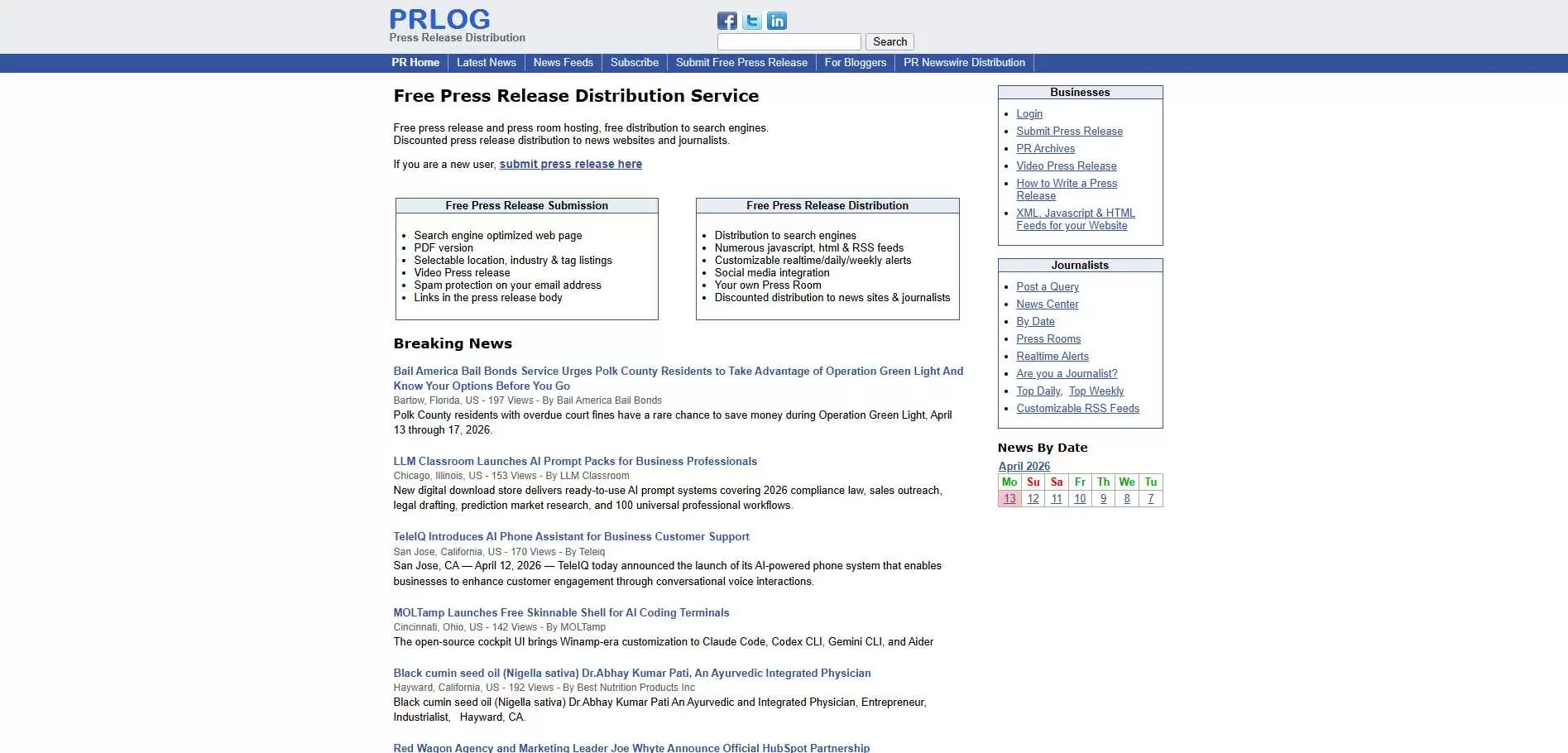
PRLog is the strongest free-first platform on this list. Its comparison page shows a free ad-supported option, with paid upgrades at $29, $49, and $99 per release. It also includes SEO-friendly web pages, PDF versions, selectable location and industry tags, video press release support, and links in the body.
The negative aspect is clear: free usually means less reach and less polish. It's not the end; it's the beginning.
10. Business Wire

Business Wire is the premium choice for organizations that want reliable distribution, especially when accuracy and presentation matter. Its site highlights investor relations services, analytics and reporting, multimedia support, and targeted distribution lists. On the pricing page, it states that a 400-word U.S. domestic local distribution starts at $475, but also implies custom plans available. Best for big brands, public companies and teams wanting a polished high-trust platform.
Best Practices For Press Release Distribution in 2026
Executing a distribution without a stringent tactical plan is a waste of resources. Follow these hard rules.
Writing for AI + human journalists
Stop writing marketing fluff. Actual journalists hate corporate speak, and AI algorithms consider unclear and confusing words. Use a hard news focus using an inverted triangle, facts, data, core announcement in the first 50 words. If an AI aggregator is unable to generate a summary of your announcement from the first paragraph, you are doing it wrong.
Optimal timing and frequency
Do not publish on the hour or half-hour (e.g., 9:00 AM or 9:30 AM). Terminals are flooded at these exact times by automated scheduling. Publish at an odd time, like 9:12 AM, to stand out in the feed. Tuesday and Wednesday mornings remain optimal. Friday afternoon releases are a deliberate tactic used to bury bad news; avoid them for positive announcements. Frequency must be dictated by actual news, not an arbitrary monthly quota.
Multimedia usage (images, video, infographics)
Text-only releases are dead. Journalists are already stretched and need assets that are pre-packaged. You can embed high-resolution, un-watermarked images your own short-form video explainers or data-driven infographics straight into the wire.
Keyword optimization
Keyword stuffing will get your release flagged as spam by both search engines and wire editors. Optimize for "entity recognition." Use precise industry terminology, exact company names, and specific geographical locations so that AI models map your release to the correct knowledge graph.
Avoiding spammy distribution
Cheap, secondary networks syndicate your content to scraped, low-quality blogs. This creates a toxic backlink profile and damages your brand's association. Pay for quality networks or do not pay at all. It is better to have three high-authority syndications than three hundred spam links.
Conclusion
The PR distribution industry in 2026 is divided between legacy giants offering compliance and reach, and agile platforms offering better software and targeting. AI has made baseline distribution a requirement for digital relevance in modern times, but behold - the spray-and-pray strategy is dead.
Final recommendations (best overall, best budget, best premium):
- Best Overall: Newswire. It provides the most logical balance of premium reach and modern campaign analytics.
- Best Budget: eReleases. It is the smartest tactical choice for acquiring PR Newswire's premium network at a fraction of the cost.
- Best Premium: Business Wire or PR Newswire. Reserved strictly for enterprise corporations and publicly traded entities where compliance and guaranteed terminal access are required.
Stop making assumptions, and stop wasting capital into PR strategies that don't work. Select the platform that suits your specific aim, set aside your budget and run a data-driven press release campaign today.