
 Table of Content
It is 2026, and healthcare administration looks nothing like it did five years ago. Practices still require rock-solid scheduling, claims and billing, and secure charting, but now they also expect embedded AI for revenue-cycle optimization, native telehealth, two-way patient messaging, and automation that actually decreases headcount rather than simply adding another dashboard.
Picking the right practice management system (PMS) isn’t so much “pick a calendar and go” anymore; it’s a strategic decision that impacts cash flow, compliance risk, & clinician burnout for years. Below are the details of the top performers from its results; describe what each does and doesn’t do, who it might or might not be for, and how to look at them all in 2026 to pick the best choice for your practice.
What Matters in 2026 and Why
Buyers should prioritize four capabilities above all:
1. Revenue Cycle Automation with Smart Denial Reducation -- quicker and better claims. Vendors are using AI into RCM to accelerate reimbursements and reduce denials.
2. True EHR + PM integration - Real EHR+PM integration - schedule, chart, bill, and use telehealth all from one system with no duplication of effort or missed charges.
3. Patient engagement & payments - Two-way SMS/email, online payments, and automated recare. These lift cash collection and retention.
4. Security, HIPAA compliance, and scalability - cloud solutions are great, but only if they give you certs, role-based access, and reliable audits.
If a vendor doesn’t focus on these four, treat it like a hobby product - nice UI, but weak finance operations.
How I evaluated these platforms
I looked for (a) integrated PM + billing, (b) telehealth and patient portal, (c) AI or automation features that reduce manual work, (d) suitability by practice size/type, and (e) real-world commercial posture (pricing model trials). The vendor pages you provided were the source for feature and positioning claims; below I distill what matters and call out the likely tradeoffs.
The contenders (what they are and who each is for)
1. PracticeSuite

PracticeSuite markets itself as a cloud billing and practice-office platform built to speed claims and reduce denials through automation and AI-assisted workflows. It’s particularly strong on claims processing, denials management, and revenue reports - making it a sensible choice for practices that bleed time on billing. Expect a full RCM stack and many billing-centric features; implementation can be heavier than “single-user” systems, but the payoff is faster reimbursements.
Best for: multi-provider clinics that want enterprise-grade billing without migrating to a hospital platform.
Watch out for: potential implementation overhead and fees tied to advanced RCM modules.
2. Zanda Health

Zanda Health focuses on holistic and allied health practitioners, offering an EHR/PM tailored to these niches: customizable treatment notes, booking/calendars, invoicing, and HIPAA-compliant telehealth. If you run an acupuncture, Chinese medicine, or small holistic clinic, Zanda reduces the “fit gap” you’ll find in generalist EHRs.
Best for: specialty and holistic practices that need clinical templates and simpler billing.
Watch out for: not aimed at complex, insurance-heavy, multi-specialty environments.
3. MicroMD

MicroMD’s practice management system centers on automated billing, eligibility verification, scheduling, and robust reporting. It’s been positioned as a cost-effective solution with strong revenue reports and claim rejection tracking - good for smaller to mid-sized offices that still rely on traditional workflows but want a dependable commercial PM.
Best for: small to mid-sized clinics requiring solid billing and reporting on a budget.
Watch out for: user experience and modern UI, which can lag behind newer cloud-native players.
4. SimplePractice
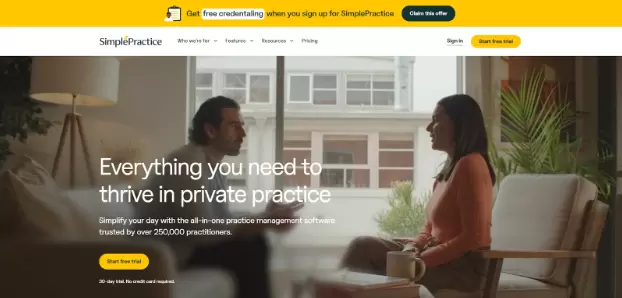
SimplePractice is designed for behavioral health and therapy practices. It’s got scheduling and documentation features, secure messaging, and telehealth, all rolled into an aesthetically pleasing, clinician-friendly user interface. If you’re a solo therapist or small group practice where clinical ease of use matters more than enterprise RCM, SimplePractice remains a top practical choice.
Best for: therapists, counselors, and small behavioral health clinics.
Watch out for: insurance-heavy practices; they may outgrow it for complex RCM needs.
5. Athenahealth

Athenahealth leans heavily into AI-native RCM, large-scale interoperability, and analytics for financial performance. It’s engineered for practices that are scaling or want robust partner ecosystems (clearinghouses, analytics). If you need rigorous RCM and interactive insights dashboards, athena is worth the investment - but it’s not the cheapest option.
Best for: multi-specialty groups and practices with heavy payer mix complexity.
Watch out for: cost and complexity; negotiate on scope and onboarding.
6. Adit

Adit’s platform is built with dental practices in mind and differentiates on call intelligence: AI that listens to calls, recovers missed bookings, automates outreach, and scores staff performance. Combine that with standard PM/EHR features, and you have a system tuned to patient acquisition and retention in dentistry.
Best for: dental offices focused on growth and patient experience.
Watch out for: feature set optimized for dental workflows - not a universal physician PM.
7. Tebra
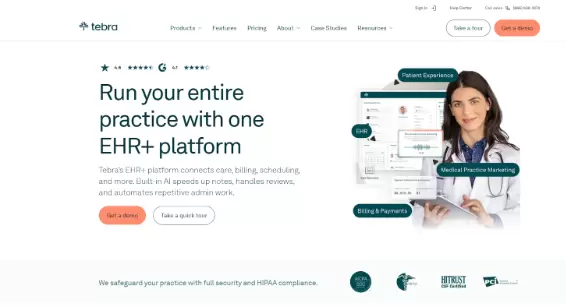
Tebra brands itself as an EHR+ that ties scheduling, billing, charting, and patient engagement under one roof - with built-in AI to speed notes and automate repetitive admin tasks. It’s modern, HIPAA-secure, and focused on small-to-mid private practices that care about growth as well as operations.
Best for: solo and small group practices that want modern UX + automation.
Watch out for: as with any all-in-one, ensure the billing depth matches your payer complexity.
8. CareCloud
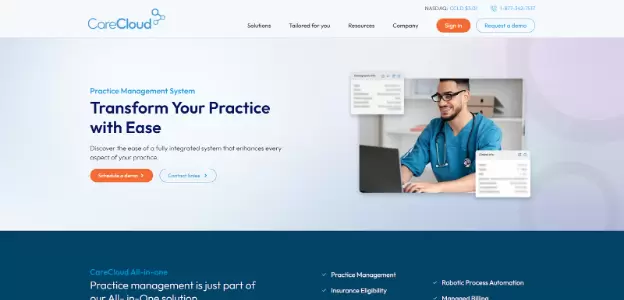
CareCloud emphasizes modular practice management features (scheduling, billing, patient management) with strong integration abilities. It’s a solid pick for practices that want cloud benefits while preserving choices about which modules or third-party systems to connect.
Best for: practices that want configurable modular systems and strong integration options.
Watch out for: modularity sometimes means stitching modules together during rollout.
9. PracticeQ

PracticeQ is an affordable, cloud-first PM that includes telehealth, automated intake, billing and pricing plans explicitly aimed at smaller practices (starter plans with monthly pricing). It’s competitive for behavioral health and small clinics that need decent automation without a long contract.
Best for: solo providers and small clinics seeking low-cost entry with telehealth included.
Watch out for: feature ceilings as you scale (but their API/integrations help).
10. CureMD
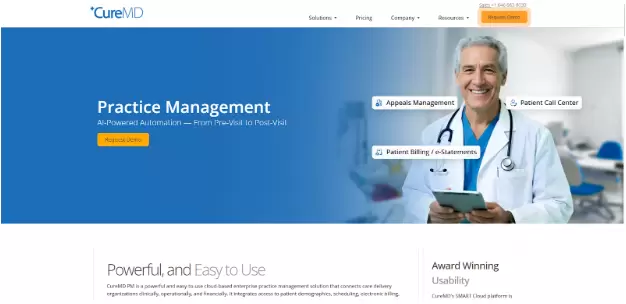
CureMD advertises a cloud-based PM that tightly integrates scheduling, billing, workflow, and reporting. It positions itself as a productivity booster that reduces reimbursement delays and communication friction across front and back office functions.
Best for: practices wanting an integrated operational solution with strong workflow tools.
Watch out for: compare depth of payer features vs. pure RCM specialists.
Quick Checklist - What to Test During Your Demo
1. Run a real claim - Ask for a demo of a full charge-to-payout scenario. If the vendor can’t show it, walk away.
2. Telehealth flow - Patient books, receives reminder, joins session, clinician documents and generates superbill without jumping apps.
3. Denial dashboard & appeals flow - ask to see denial root cause and automated resubmission steps.
4. APIs & Integrations - confirm connectors for labs, clearinghouses, payment processors, and your local pathology/LIS.
5. Security & Compliance Pack - request SOC/HITRUST/HIPAA documentation and breach notification procedures.
Recommendation
- If you’re a solo therapist or small behavioral clinic, start with SimplePractice or PracticeQ for speed-to-value.
- If you’re a growing multi-provider clinic that needs serious RCM, you can try PracticeSuite and Athenahealth - ask for RCM case studies and baseline AR days improvement.
- If you’re dental, evaluate Adit for the call intelligence and patient-experience features.
- If you’re a niche or holistic provider, Zanda Health will save you custom template grief.
Final Thought
By 2026 the difference between a “nice” PMS and a practice-shifting one is measurable: denials cut, days-in-AR reduced, smoother patient payments, and less front-desk churn. Don’t buy on UI or price alone - buy on what reduces your manual billing hours and increases cash collected. Perform the five checklist tests at each live demo and negotiate implementation commitments around measurable KPIs (e.g., denial rate reduction, AR days). If a vendor hesitates to commit to measurable outcomes, they’re selling features, not results.
Frequently Asked Questions :
1. What is medical practice management software?
Medical practice management software allows clinics to manage business operations, including appointment scheduling, billing, and reporting, on one system. Most tools also now offer telehealth and patient portals as well as automation to cut down on manual admin work.
2. Which practice management software is best for small clinics?
It depends on the size and specialty of your practice. Smaller clinics derive value from simple, user-friendly, cloud-based systems; larger or multi-specialty practices require robust billing, denial management, and integrations with labs and payers.
3. Is practice management software secure and HIPAA compliant?
Yes. Modern systems automate eligibility checks, claims submission, and follow-ups on unpaid claims. This reduces errors, speeds up and lowers claim denials, all of which impact cash flow positively.
4. Can practice management software improve revenue?
The top platforms adhere to HIPAA guidelines and leverage data encryption, access controls, and secure cloud hosting. Always check for compliance documentation and security certifications before choosing a vendor.
5. Should I choose an all-in-one system or separate tools?
All-in-one systems work well for most practices because they reduce data duplication and errors. Larger practices may prefer modular tools if they need advanced customization or already use specialized systems.